

Circa 1867
The Deoband School, a purist Islamic seminary, was established in the United Provinces (UP) of India.
Book Podcast
Book Profile
جناح: موفقیتها، ناکامیها و نقش او در تاریخ
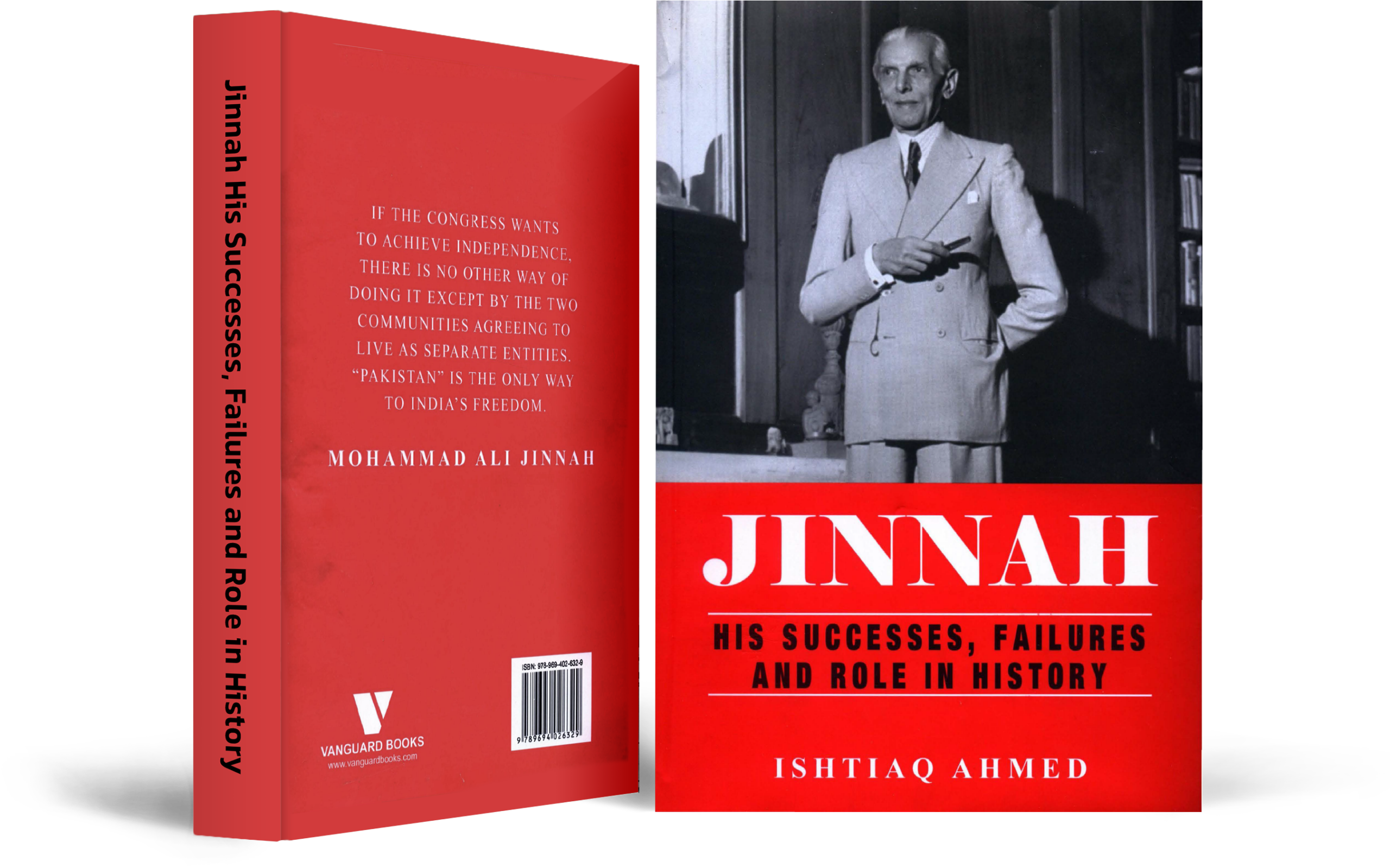
Compiler & Author: Dr.Ishtiaq Ahmed
This book offers an analytical and critical examination of Muhammad Ali Jinnah’s life and role in the politics of the Indian subcontinent. Drawing on historical documents, the author explores both Jinnah’s achievements in leading Muslims and founding Pakistan, as well as the shortcomings and consequences of his decisions. It traces his transformation from a secular constitutional politician to the leader of the Muslim movement. The book also evaluates his role in the Partition of India, its political and human consequences, and the early challenges faced by Pakistan, presenting a balanced view of both accomplishments and mistakes.
The Deoband School, a purist Islamic seminary, was established in the United Provinces (UP) of India.
Syed Ahmed Khan published the book "The Causes of the Indian Revolt" criticizing Britain for alienating the natives.
The Indian National Congress (INC) was founded in Bombay; two Muslims were among the 72 delegates.
The partition created a rift between Hindu and Muslim elites.
Muhammad Ali Jinnah joined the Indian National Congress.
Lord Morley, the British Secretary of State, announced constitutional reforms.
A delegation led by Sir Aga Khan met Viceroy Minto, seeking recognition of Muslims as a distinct community in reforms.
The All-India Muslim League (AIML) was founded in Dhaka.
The Indian Reforms Act was passed to grant more representation to natives.
The partition of Bengal was annulled, which had intensified religious divides.
World War I began; Jinnah attended a reception for Gandhi in London.
Mahatma Gandhi returned from South Africa and became a prominent Congress leader; Hindu Mahasabha was founded.
Muhammad Ali Jinnah became the president of the All-India Muslim League for the first time; the Lucknow Pact, an agreement between Congress and the Muslim League, was signed.
The Khairi brothers presented the idea of an Islamic state based on Islamic socialism at the International Socialist Conference in Stockholm.
The Bolshevik Revolution occurred in Russia.
Sir Aga Khan proposed the idea of a Muslim state beyond India.
The Rowlatt Act was passed; Jinnah resigned from the Imperial Legislative Council in protest; the Jallianwala Bagh massacre occurred; the Government of India Act (1919) was enacted; the Khilafat Movement began.
Jinnah opposed Gandhi's proposal for achieving 'Swaraj' through 'all legitimate and peaceful means' at the annual Congress session in Nagpur and left the Congress.
1929: Jinnah's political approach shifted towards Muslim communalism.
The Moplah rebellion occurred on the Malabar Coast.
The Treaty of Lausanne was signed, and Turkey renounced its claims in the Middle East.
The All-India Muslim League, led by Jinnah in Lahore, called for a radical revision of the Lucknow Pact.
The All-India Parties Conference was held in Delhi, initiated by Congress to improve Hindu-Muslim relations.
The Simon Commission was established to review constitutional reforms.
The Congress called an All-Parties Conference to draft a constitution.
The Motilal Nehru Report, advocating for Dominion Status for India and rejecting separate electorates, was published.
Jinnah presented his 'Fourteen Points' advocating for the retention of separate electorates for Muslims.
Viceroy Lord Irwin announced that Britain was committed to granting Dominion Status to India.
The Simon Commission published its report, removing the territorial status for India.
Gandhi began the "Salt March" to protest the British salt tax.
Jinnah and Shafi reunited, and the All-India Muslim League became a single entity again.
January 1931: The first Round Table Conference was held in London.
Allama Muhammad Iqbal proposed the vague idea of a Muslim nation and a separate country at the annual Muslim League session in Allahabad.
Chaudhry Rehmat Ali and other students published the pamphlet 'Now or Never' and introduced the term 'Pakistan'.
The Congress approved the Gandhi-Irwin Pact at the Karachi session and passed a resolution on fundamental rights and economic policy.
December 1931: The Second Round Table Conference was held in London.
The Poona Pact was signed between Gandhi and Ambedkar, providing reserved seats for the depressed classes instead of separate electorates.
Jinnah returned to India and was elected to the Central Legislative Assembly in January 1935.
The Government of India Act (1935) was announced, abolishing the dyarchy and incorporating provincial autonomy.
The Progressive Writers' Association held its first meeting in Lucknow.
Jinnah became the leader of the Muslim League and intensified Muslim communal positions.
The Muslim Personal Law (Shariat) Application Bill was introduced in the Central Legislative Assembly.
Gandhi spoke about 'Ram Rajya' in Bihar.
Jinnah changed his Western appearance at the annual Muslim League session in Lucknow.
Nehru moderated his socialist threat in Faizpur, Maharashtra.
The Muslim League established a committee to review the education plan for wards.
The Jamiat Ulema-e-Hind raised concerns about anti-Muslim sentiments.
The All-India Muslim League issued a report on the education plan for wards.
World War II began. The Congress declared support if India was granted independence.
The Congress High Command asked its provincial governments to resign.
Jinnah urged Muslims to celebrate December 22 as 'Deliverance Day'.
Jinnah rejected the Indian Federation and called for a new constitution based on the 'Two-Nation' theory.
March 25: The 27th session of the All-India Muslim League was held in Lahore; Jinnah proposed the Two-Nation theory and called for the creation of Muslim states in the northwestern and northeastern regions of India.
Police fired on Khaksar paramilitary agitators, resulting in at least 19 deaths.
The Lahore Resolution (later known as the Pakistan Resolution) was proposed and passed by Maulvi Fazlul Haq.
Viceroy Linlithgow established war committees to garner support for the war efforts.
Lord Amery, the British Secretary of State, announced the "August Offer" declaring dominion status as Britain's "ultimate aim".
The first edition of Dr. Ambedkar's book "Thoughts on Pakistan" was published.
Jinnah spoke at the special session of the Punjab Muslim Students Federation in Lahore, calling for the mobilization of Punjab Muslims for Pakistan.
Jinnah addressed the Aligarh Muslim University Union, emphasizing the distinction between Hindus and Muslims.
The 'Rajaji Formula' was proposed, urging the Muslim League and Congress to cooperate for a joint interim government.
The 'Dawn' newspaper was established in Delhi as the organ of the Muslim League.
Jinnah criticized the British government and Viceroy Linlithgow for ignoring the Muslim League.
The Cripps Mission arrived in India, offering post-war dominion status proposals, which were rejected by both Congress and the Muslim League.
The Indian National Congress passed the 'Quit India' resolution; Congress leadership was arrested.
Jinnah spent several weeks in Punjab and met with representatives of the Dalit and Sikh communities.
Jinnah told British and American journalists at Aligarh University that the foundations of Pakistan were laid with the conversion of the first Hindu to Islam.
September 27: The Gandhi-Jinnah talks in Bombay failed.
The Muslim League government in Punjab collapsed due to internal conflicts.
July: The Simla Conference was held to resolve constitutional issues but reached no agreement.
Jinnah released his Eid message from Karachi, emphasizing the authority of the Quran.
Jinnah spoke at the Frontier Muslim League Conference (NWFP).
Jinnah reportedly met with Pir Sahib of Manki Sharif regarding support for Pakistan in NWFP.
Viceroy Wavell presented his emergency plan for Britain's withdrawal from India.
General elections were held in India; the Muslim League won the Muslim seats.
Dr. Khan Sahib (elder brother of Ghaffar Khan) formed the Congress ministry in NWFP.
The Cabinet Mission arrived in India.
Sikh leaders met with the Cabinet Mission and demanded a coalition government or a separate Sikh state.
Jinnah told Muslim League legislators that their goal was to divide India and create Hindustan and Pakistan.
Huseyn Shaheed Suhrawardy, the Prime Minister of Bengal, met with the Cabinet Mission and demanded all of Bengal and Assam in Eastern Pakistan.
The Cabinet Mission met with P.C. Joshi of the Communist Party of India and Abul Kalam Azad.
Cripps reported that Jinnah insisted on non-compromise regarding Pakistan.
The Cabinet Mission proposed a three-tiered federal plan for a united India, rejecting territorial status for Pakistan.
The Congress opposed the Cabinet Mission's plan in a resolution.
Jinnah accepted the Cabinet Mission's proposal in a confidential meeting of the All-India Muslim League Council.
Nehru made statements at a press conference in Bombay that, according to Jinnah, ruined the chance for cooperation.
Jinnah announced at the All-India Muslim League Council that the League would change its methods and ways to achieve Pakistan.
The 'Great Calcutta Killings' (Direct Action Day) began with intense violence.
Viceroy Wavell warned all governors that inviting Nehru to form a government before the Muslim League could lead to problems.
Dr. Ambedkar wrote to Prime Minister Attlee requesting two guaranteed seats for the Depressed Classes in the government.
Wavell announced the formation of an interim government headed by Jawaharlal Nehru.
The interim government led by Nehru was sworn in.
A coalition interim government of Congress and the Muslim League was formed.
Jinnah told foreign reporters in Delhi that the "only solution" for India's communal situation was "Pakistan and Hindustan."
Wavell blamed Jinnah and the Muslim League for the outbreak of communal violence.
Jawaharlal Nehru presented the Objectives Resolution outlining the principles of India's Constitution.
Finance Minister Liaquat Ali Khan proposed the 'Socialist Budget'.
Khurshid Hayat Khan, the Prime Minister of Punjab, resigned.
Jinnah welcomed the resignation of Khurshid Hayat Khan in a statement.
Lord Mountbatten took office as the last Viceroy of India.
Gandhi wrote to Mountbatten stating that India should not be partitioned until Britain has left.
Suhrawardy discussed Bengal unity with Bengal Congress leader Kiran Shankar Roy and Sarat Bose.
Jinnah supported the right of princely states to independence.
Attlee told Ambassador Douglas that elected representatives of Punjab and Bengal would decide on joining the two main dominions.
The 'Partition Plan' was announced by Britain, envisioning the division of India into two independent dominions, India and Pakistan, on August 15, 1947.
The Indian Independence Act was passed.
Muhammad Ali Jinnah addressed Pakistan's Constituent Assembly, emphasizing equality for all citizens regardless of religion.
Mountbatten delivered a speech at a dinner hosted by Jinnah.
Muhammad Ali Jinnah was sworn in as the first Governor-General of Pakistan. Power transfer in India and Pakistan was completed.
The Radcliffe Award regarding the borders of Bengal and Punjab was announced to political leaders and made public on August 17.
Ethnic violence in Punjab peaked, leading to mass migration.
Dr. Khan Sahib's ministry in NWFP was dismissed by Jinnah.
Attack on a train carrying Sindhi Sikhs occurred in Nawabshah, Sindh.
In his Eid message from Karachi, Jinnah emphasized the authority of the Quran.
Pakistan accepted the accession of Junagadh, leading to Indian military intervention.
Pakistani militias and tribal fighters entered Kashmir.
Maharaja Hari Singh requested assistance from India.
Maharaja Hari Singh signed the Instrument of Accession to India.
Jinnah visited the Walton refugee camp in Lahore.
The All-India Muslim League decided to split into the Pakistan Muslim League and the Indian Muslim League.
Jinnah separated Karachi as a federal territory from Sindh.
Jinnah delivered a speech at the Karachi Bar Association on the Prophet's birthday, clarifying the connection between Islam, Sharia, and Pakistan.
In the Sindh Assembly, Prime Minister M.A. Khuhro spoke about Gandhi's assassination.
Jinnah spoke at a press conference in Balochistan about declaring it a province under the Governor-General's rule.
Jinnah visited Bihari refugees in Karachi.
Jinnah visited East Pakistan and declared Urdu as the national language, which angered the Bengalis.
Jinnah delivered a speech at the University of Dhaka's graduation ceremony.
Kehro was dismissed by the Governor of Sindh on charges of corruption and mismanagement.
The Government of Pakistan withdrew the Pakistan Army from tribal areas.
Jinnah extended greetings on the occasion of Eid al-Fitr.
Jinnah commemorated Pakistan's first anniversary and warned Muslims about the "great conspiracy" of Indian leadership.
Muhammad Ali Jinnah passed away.
The Objectives Resolution was presented and adopted as a preamble to the Constitution of Pakistan by the Constituent Assembly.
The Liaquat-Nehru Pact was signed to ensure minority rights.
Jogendra Nath Mandal, Pakistan's Law Minister, resigned and moved to India.
Radical nationalist military officers were arrested for plotting to overthrow Liaquat Ali Khan's government.
Liaquat Ali Khan was assassinated; Khawaja Nazimuddin became Prime Minister and Ghulam Muhammad became Governor-General.
Anti-Ahmadiyya riots began in Punjab.
Ghulam Muhammad dismissed Nazimuddin for incompetence and appointed Muhammad Ali Bogra as Prime Minister.
The Muslim League government in East Pakistan was ousted by the Jugto Front.
Iskander Mirza completed the 'One Unit' scheme, merging West Pakistan provinces into a single province.
The Constitution of Pakistan was adopted; Pakistan became an 'Islamic Republic'.
Iskander Mirza suspended the 1956 constitution and declared martial law.
A conflict occurred in Kalat, leading to the suppression of a separatist uprising.
Pakistan and India signed the Indus Waters Treaty.
The first presidential election was held in Pakistan; Fatima Jinnah, Jinnah's sister, was the opposition candidate but Ayub Khan won.
Pakistan used American military equipment in a conflict with India in the Rann of Kutch.
Indian forces crossed the border and attacked Lahore, leading to a full-scale war.
General elections were held in Pakistan.
East Pakistan became Bangladesh.
Pakistan's new constitution was adopted, declaring Islam as the state religion and accepting Islamic socialism as the economy.
The National Assembly declared Ahmadis as non-Muslims.
Zia-ul-Haq dismissed Prime Minister Zulfikar Ali Bhutto and declared martial law.
Zia-ul-Haq introduced the Hudood Ordinances.
Zia-ul-Haq died in a plane crash; elections were held and Benazir Bhutto became Prime Minister.

AI Assistant
Fast and reliable answers