


1300 - Indus Valley Civilization
The Indus Valley Civilization existed in various forms.
Book Podcast
Book Profile
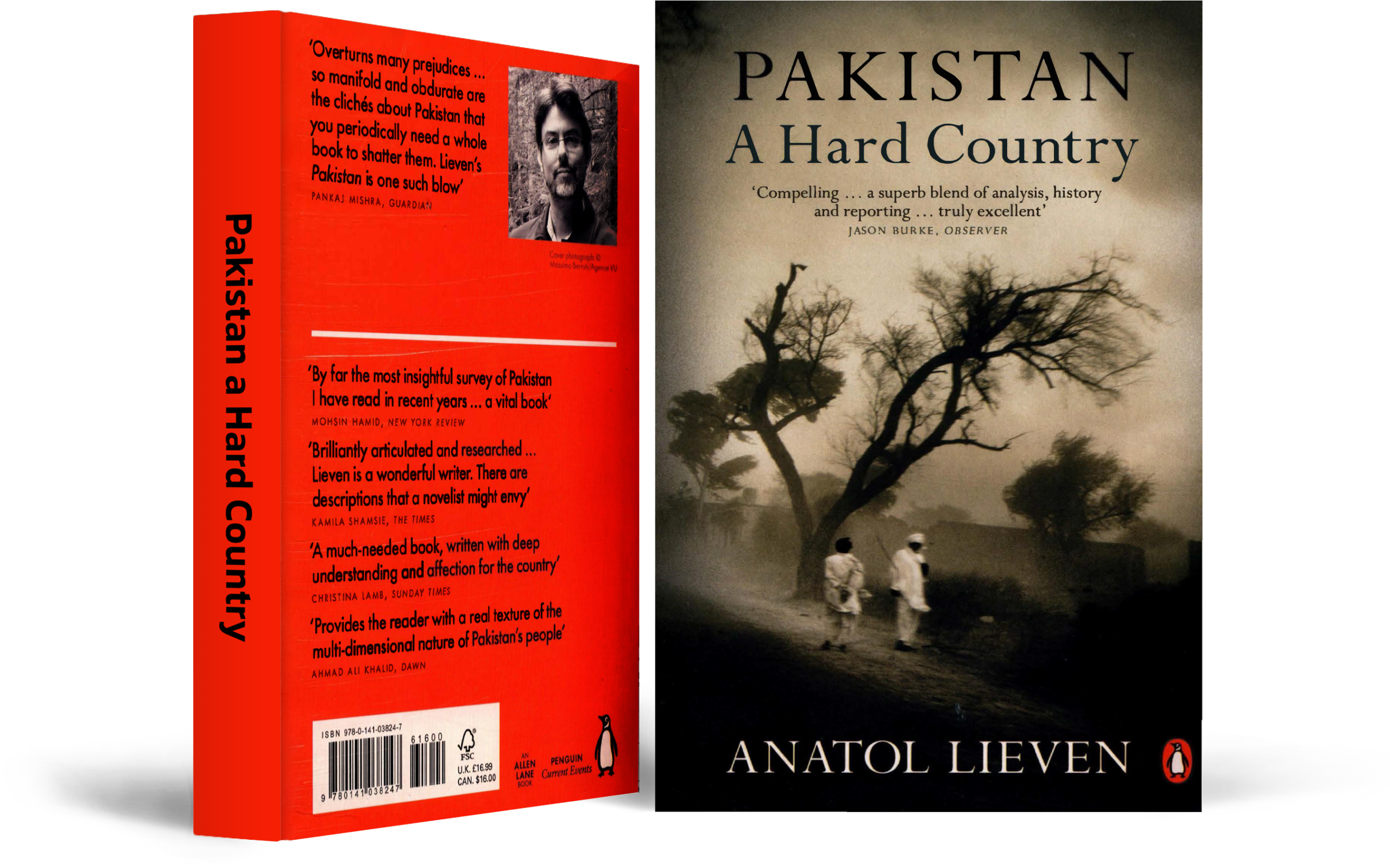
پاکستان؛کشوری دشوار
Compiler & Author: Anatol Lieven
Translator: Anatol Lieven
Pakistan: A Hard Country offers a comprehensive analysis of Pakistan’s politics, society, history, and power structures. Anatol Lieven challenges the common portrayal of Pakistan as a “failed state” and explains why, despite recurring crises, the country remains resilient. He examines the role of the military, tribal structures, religion, nationalism, political institutions, and foreign relations—particularly with the United States and Afghanistan. Lieven argues that understanding Pakistan requires attention not only to elite politics but also to deep-rooted kinship networks, local loyalties, and religious identities. The book presents a nuanced portrait of a complex nation that is both fragile and enduring.
The Indus Valley Civilization existed in various forms.
The Indus Valley Civilization was likely destroyed by Aryan invaders from Central Asia.
The Maurya Empire conquers most of northern India and Afghanistan. During this period, the Buddhist Gandhara civilization flourishes in Afghanistan and northern Pakistan.
The Kushan and Gupta Empires.
The death of Prophet Muhammad (PBUH).
Muslim raids on Sindh.
Muhammad bin Qasim, a general of the Umayyad Caliphate, invades Sindh by sea, initiating Muslim rule in South Asia. He extends Muslim rule to Multan in southern Punjab.
The spread of Islam begins in Sindh.
Mir Chakar, chief of the Rind tribe, conquers parts of Punjab and Sindh, paving the way for large-scale Baloch migration.
Some Sufi leaders condemn Akbar, the Mughal emperor, for attempting to create a new syncretic religion.
Sindh comes under Mughal Empire rule, but central control is very weak.
The rule of Kalat, recognized by Baloch nationalists as the historic national state of the Baloch, is established.
The Badshahi Mosque in Lahore is completed.
Some Sufis support Aurangzeb's strict Islamist policies.
Shah Waliullah, a reformist Islamic thinker, is active. Sikh power rises in Punjab.
The Afghan kingdom never managed to assert its claim over all or most Pashtuns, due to the conquest of Pashtun areas by Sikhs and then the British.
1839: Maharaja Ranjit Singh's Sikh rule in Punjab.
Shah Alam II, the Mughal ruler, accepts the support of the British East India Company.
1847: Britain engages in a fierce war with the Bugti tribe, a precursor to Pakistan's current conflict with the Bugtis.
The First Anglo-Afghan War begins.
The British conquest of Sindh.
The British defeat the Sikhs and annex Punjab.
The British reorganize the Indian army with units based in Punjab.
The British annex Awadh, the last major independent Muslim state in northern India.
The rebellion of Muslims and Hindus against British rule, termed the 'Indian Rebellion' by the British. Delhi and Lucknow are largely destroyed, and the last Mughal emperor is deposed. Severe suppression of North Indian Muslims.
Swat and neighboring areas were the scene of major tribal jihads against the British Raj's approach to their borders.
Followers of Shah Waliullah establish a school in Deoband, North India, laying the foundation for the Deobandi movement in South Asian Sunni Islam.
Sir Syed Ahmed Khan establishes the Muhammadan Anglo-Oriental College (later Aligarh Muslim University) in Aligarh.
Sir Robert Sandeman, a British frontier official, signs a treaty with the Khan placing Kalat and its dependencies under British control.
The Second Anglo-Afghan War occurs.
Faisalabad, originally named Lyallpur, is founded by the British.
The Indian National Congress is established.
The British draw the Durand Line to demarcate the border between British India and Afghanistan. It is never accepted by Afghans.
Muhammad Ali Jinnah joins the Congress.
1899: Major uprisings in the name of Islam among the Pashtun tribes against British rule.
Pashtun areas of Punjab are grouped into a Chief Commissioner's province.
Formation of the Muslim League in Dhaka, Eastern Bengal.
World War I begins.
Jinnah becomes leader of the Muslim League and initiates the Lucknow Pact.
Around 20,000 Indian Muslims attempt to migrate to Afghanistan.
The Caliphate is abolished by Kemal Atatürk, establishing the new secular Republic of Turkey.
The Pashtun region is separated from Punjab, forming the new North-West Frontier Province (NWFP).
Sindh is established as a separate province.
The Muslim Shariat Law is enacted.
Elections held under British rule. The Congress and Muslim League split after Congress rejects League's participation in provincial governments.
World War II.
The Muslim League adopts the Lahore Resolution, calling for an independent and autonomous Pakistan.
Syed Abul A'la Maududi establishes the Jamaat-e-Islami party in Lahore.
The British Cabinet Mission fails to negotiate a united independent India with a loose federal constitution and guaranteed power-sharing between Hindus and Muslims.
Terrible bloodshed begins in Punjab.
Independence and partition of India. Mass migration of refugees between India and Pakistan. Muhammad Ali Jinnah becomes the first Governor-General of Pakistan. Karachi becomes the capital of Pakistan.
1949: Armed resistance in Balochistan after the annexation of Kalat to Pakistan (under heavy pressure).
Nasir Jamal's family flees from India to East Pakistan.
Nawaz Sharif is born in Lahore.
Assassination of Liaquat Ali Khan, the first Prime Minister of Pakistan.
The Muslim League is dissolved. The Pakistan Army decides to invest its share from the British military reconstruction fund into commercial ventures.
1970: Sindh Province is dissolved and merged into the 'One Unit' of West Pakistan.
Unrest in Balochistan following its merger into the 'One Unit' and the breach of promises of full autonomy to the State of Kalat.
Military coup, Field Marshal Muhammad Ayub Khan comes to power.
1969: Muhammad Ayub Khan is the military ruler.
1969: Average annual economic growth of 6.8% under Ayub Khan's rule.
Pakistan-India War.
Military industries and charitable institutions are renamed to 'Fauji Foundation'.
General Yahya Khan comes to power, abolishes 'One Unit', and restores provinces. The princely rule in Swat ends, and the region joins Pakistan.
A catastrophic cyclone in East Pakistan results in approximately 1 million deaths, and the government is accused of negligence.
Operation 'Searchlight' is launched by the Pakistan Army in East Pakistan.
1977: Zulfikar Ali Bhutto is the Prime Minister.
All major industries and banks are nationalized. The Jamiat Ulema-e-Islam (JUI) forms a short-lived government in the North-West Frontier Province in coalition with the Awami National Party (ANP).
1977: Serious insurgency in Balochistan follows the dismissal of the moderate nationalist government by Zulfikar Ali Bhutto.
1977: Average annual economic growth of 2.7%.
Nasir Jamal's family flees newly established Bangladesh to Karachi.
General Muhammad Zia-ul-Haq, a military ruler, comes to power. Faisalabad is renamed in honor of the late King Faisal of Saudi Arabia.
1988: General Muhammad Zia-ul-Haq is the military ruler.
The Muttahida Qaumi Movement (MQM) is founded to represent Urdu-speaking migrants in Karachi and other Sindh cities.
Nawaz Sharif becomes Chief Minister of Punjab. Ethnic riots begin in Karachi.
MQM holds its first major rally at Nishtar Park, declaring migrants as a separate nation in Pakistan.
MQM wins local elections in Karachi and Hyderabad.
Protests against fraudulent elections in Indian Kashmir are harshly suppressed by Indian forces, leading to a prolonged insurgency with tens of thousands of deaths. Pakistan supports the insurgents with weapons and volunteers from Islamist militant groups. Benazir Bhutto is born.
General Zia and senior staff are killed in a plane crash, widely considered sabotage. The military and civil services manage a 'transition to democracy'. The Islamic Party begins its political movement in Pakistan.
The Islamic Democratic Alliance (IJI), a coalition of conservative Islamic parties, is formed to counter Benazir Bhutto's Pakistan People's Party.
Benazir Bhutto becomes the Prime Minister of Pakistan.
The then Interior Minister, Aftab Khan Sherpao, becomes the Chief Minister under the PPP-led government but later separates from the PPP.
Nawaz Sharif becomes the Prime Minister of Pakistan for the first time.
Maulana Sufi Muhammad, founder of Tehreek-e-Nafaz-e-Shariat-e-Mohammadi (TNSM), separates from Jamaat-e-Islami in protest against opposition to armed revolution.
1996: Second government of Benazir Bhutto. The government regains control of Karachi. Pakistan shifts its support in the Afghan civil war to the newly organized Taliban in Kandahar.
Maulana Sufi Muhammad is arrested (but later released). The Taliban capture Kabul.
The Tehreek-e-Nafaz-e-Shariat-e-Mohammadi (TNSM) begins widespread protests in Swat and other Malakand areas to enforce Islamic law.
President Farooq Leghari dismisses the PPP government on charges of corruption. Elections result in a decisive victory for Nawaz Sharif's Muslim League.
1997: Mumtaz Ali Bhutto briefly becomes Prime Minister again.
1999: Nawaz Sharif's second government. The administration implements significant economic reforms but becomes increasingly authoritarian. The Chief Justice is dismissed, and dissenting journalists are targeted.
MQM changes its name to 'Muttahida Qaumi Movement'.
Pakistan conducts its nuclear tests. Nawaz Sharif successfully recruits 5,000 Pashtun soldiers from the Frontier Corps to attack Osama bin Laden and Al-Qaeda in Afghanistan.
General Pervez Musharraf becomes the Chief of Army Staff of Pakistan.
A military coup led by General Pervez Musharraf overthrows Nawaz Sharif's government and seizes power.
2008: General Pervez Musharraf, military ruler.
Musharraf removes A.Q. Khan from nuclear program leadership.
September 11 attacks.
Maulana Sufi Muhammad re-imprisoned at U.S. insistence.
Western-backed Afghan forces fail to capture Al-Qaeda stronghold in Tora Bora near Pakistan border.
The Tehreek-e-Nafaz-e-Shariat-e-Mohammadi (TNSM) and other extremist Islamist organizations are banned.
Attack on an airbase in Miranshah, Waziristan. A group of Pakistani Taliban (TTP) conducts its first attack in Waziristan.
2008: Annual economic growth between 6.6% and 9% under Pervez Musharraf's rule.
An assassination attempt on Musharraf occurs, allegedly with low-level assistance from within the armed forces.
The Taliban insurgency begins in Pashtun areas.
The conflict between the Bugtis and the army escalates into a full-scale rebellion.
Maulana Sami-ul-Haq receives a message from Ayman al-Zawahiri, the leader of Al-Qaeda in Iraq.
Pervez Musharraf visits Kohlu in Balochistan, and his helicopter is attacked by rockets.
Nawab Akbar Bugti, the Baloch rebel leader, is mysteriously killed by the army. The Baloch insurgency intensifies.
July 2007: Islamic extremists turn the Red Mosque complex in Islamabad into an armed stronghold. In July, security forces storm the Red Mosque, resulting in 154 deaths.
Dozens killed in Karachi as activists of the Muttahida Qaumi Movement (allied with Musharraf) prevent the Chief Justice from visiting the city.
Musharraf wins presidential election. Declares martial law but soon retreats under US pressure. Resigns as army chief. Nawaz Sharif and Benazir Bhutto allowed to return from exile.
Elections held. Awami National Party (ANP) wins the general elections.
Assassination of Benazir Bhutto.
Pakistani army launches an offensive against the Pakistani Taliban in Bajaur tribal agency.
Pervez Musharraf resigns from the presidency.
Zardari is elected president by members of the National Assembly and provincial assemblies. He breaks his promise to reinstate Iftikhar Chaudhry as Chief Justice.
The Marriott Hotel in Islamabad is severely damaged by a car bombing. Terrorist attacks by the Pakistani Taliban and their allies intensify across Pakistan.
An assassination attempt on Asfandyar Wali Khan, ANP leader, in Charsadda results in the death of one of his guards.
A terrorist attack occurs in Peshawar.
Relations between India and Pakistan severely deteriorate again after terrorists from the Pakistan-based group Lashkar-e-Taiba carry out attacks in Mumbai, India, killing 185 people.
The national government and the North-West Frontier Province (NWFP) government reach the 'Nizam-e-Adl' agreement with the Pakistani Taliban in Swat.
Zardari's government dismisses Sharif's government in Punjab. The Muslim League organizes a large march to Islamabad. Zardari is forced to back down, allowing Chaudhry to return as Chief Justice and permitting the Muslim League to continue.
The Taliban in Swat seize the neighboring Buner district, which is closer to Islamabad.
The Pakistani army launches a major operation to reclaim Swat and Buner.
President Asif Ali Zardari meets with President Mahmoud Ahmadinejad of Iran and Hamid Karzai of Afghanistan in Tehran.
General Nadeem Ahmed, commander of the First Corps, is appointed to coordinate relief and reconstruction in Swat and other areas.
The Pakistan Army in South Waziristan.
The National Finance Commission Award, agreed between the national government and provinces, adjusts revenue allocation in favor of Sindh, NWFP, and especially Balochistan.
Hakimullah Mehsud, leader of the Pakistani Taliban.
Over ninety people are killed in a Taliban suicide bombing at a volleyball game in Laki Marwat, NWFP.
Jamaat-ud-Dawa condemns the killing of Muslims in suicide bombings as un-Islamic.
Failed attempt to bomb Times Square in New York.
Devastating floods in Pakistan.
Assassination of Governor Salman Taseer.
Osama bin Laden is found and killed in Abbottabad.

AI Assistant
Fast and reliable answers