

1000 - Mehrgarh Civilization
The Mehrgarh civilization (Neolithic civilization) developed in the Kachi plain of Balochistan near the Bolan Pass, considered older than the Indus and Gandhara civilizations.
Book Podcast
Book Profile
بلوچستان: تعارض روایتها
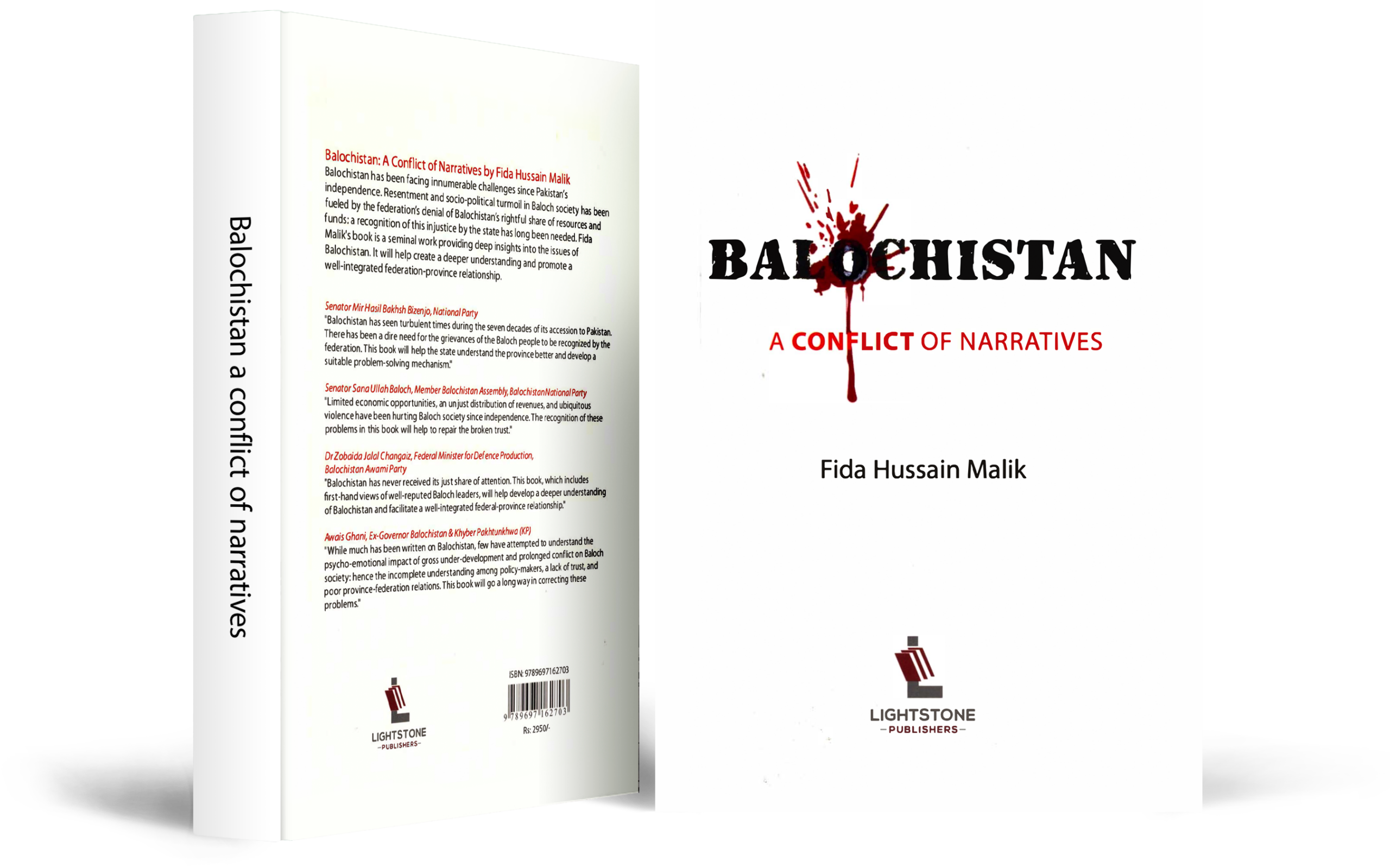
Compiler & Author: Fida Hussain Malik
کتاب «بلوچستان: تعارض روایتها» به این میپردازد که چرا دربارهی وضعیت بلوچستان روایتها و برداشتهای متفاوت و متضادی وجود دارد. نویسنده با مرور تاریخ سیاسی و اجتماعی منطقه، احساس محرومیت بلوچها، نقش دولت مرکزی، موضوع منابع طبیعی و مسائل امنیتی را توضیح میدهد. کتاب نشان میدهد که ریشهی اصلی بحران، اختلاف روایت میان دولت و مردم بلوچ است و راهحل را در گفتوگو، درک متقابل و توجه واقعی به حقوق و توسعهی مردم میبیند.
The Mehrgarh civilization (Neolithic civilization) developed in the Kachi plain of Balochistan near the Bolan Pass, considered older than the Indus and Gandhara civilizations.
Mir Chakar Khan Rind emerged as a powerful Baloch leader and a great hero in Balochistan's history. He introduced major political changes, including moving the confederation's capital from Kach to Sibi in 1487, and brought vast areas of Balochistan under his control.
In the early 16th century, Mir Chakar advanced into Punjab and captured Multan.
Nasir Khan I (1749-1793), the sixth Khan of Kalat, emerged as the most powerful and dynamic ruler of the Khanate. He claimed sovereignty over all Baloch lands and expanded his territory to include new areas like Karachi and large parts of Iranian Balochistan.
Early 19th century: At the start of the 19th century, Ranjit Singh rose to power in Punjab, and Iran became more powerful in the west.
Iran formally proposed the demarcation of the border between Persian and Baloch territories through a joint commission. Iranian and Baloch Khanate delegations met in Bampur on December 1, 1869, under the supervision of General Goldsmid, the senior commissioner of the joint Baloch border commission. The Baloch delegations were
An agreement was reached between Britain and the Khan of Kalat, whereby the Khan pledged not to establish direct relations with any country without British approval and to allow British forces to be stationed in his territory if needed.
Further negotiations with the Khan of Kalat led to another agreement in Jacobabad, where Britain leased control of Quetta and surrounding areas, as well as the Bolan Pass, from the Khanate.
The Balochistan Agency was established with its headquarters in Quetta.
Robert Sandeman was appointed as the first Agent to the Governor-General (AGG) and head of the Balochistan Agency. He implemented the "carrot and stick" policy in dealing with Baloch tribes.
Britain invaded Afghanistan and after a six-month campaign, signed the Treaty of Gandamak with the Afghan ruler in May 1879.
Sandeman occupied the Zhob Valley and secured a protected route connecting Quetta to the Federally Administered Tribal Areas (FATA).
Robert Sandeman died in Bela, the capital of Lasbela State, and was buried there.
Sir Mortimer Durand was tasked with negotiating an agreement with Amir Abdur Rahman of Afghanistan to demarcate a permanent border between British India and Afghanistan.
Baloch nationalist awareness began to grow in this decade. The Baloch Youth Movement and Anjuman-e-Ittehad-e-Balochan (also known as the State of Balochistan) were prominent organizations raising awareness among the Baloch people about their political and civil rights.
Ghaus Bakhsh Bizenjo founded the Pakistan National Party (PNP) despite strong resistance from Baloch youth and his own tribe.
The Anjuman-i-Ittehad-i-Balochan party changed its name to the "Organization for Baloch Unity" and became a political party.
A massive earthquake struck Quetta, and among the casualties was the young and inspiring leader Yusuf Aziz Magsi. After his death, the nationalist movement lost significant momentum.
The National Party was banned by the Prime Minister of Kalat, and its activists were ordered to leave the territory immediately. The party then moved its headquarters to Quetta.
Britain divided India into two countries, Pakistan and India. The Khan of Kalat, Mir Ahmad Yar Khan, declared independence.
On March 29, 1948, the Khan of Kalat acceded to Pakistan.
In September 1959, Pakistan purchased the Gwadar region from the Sultanate of Oman and incorporated it into Balochistan province in 1977.
In 1970, two initial uprisings took place.
In August 2006, Nawab Akbar Shahbaz Khan Bugti, a senior Baloch leader, was killed in a clash with security forces. This event led to a wave of insurgent activities over the next seven years.

AI Assistant
Fast and reliable answers