


REFUGEE CITIES

Book Podcast

Book Profile

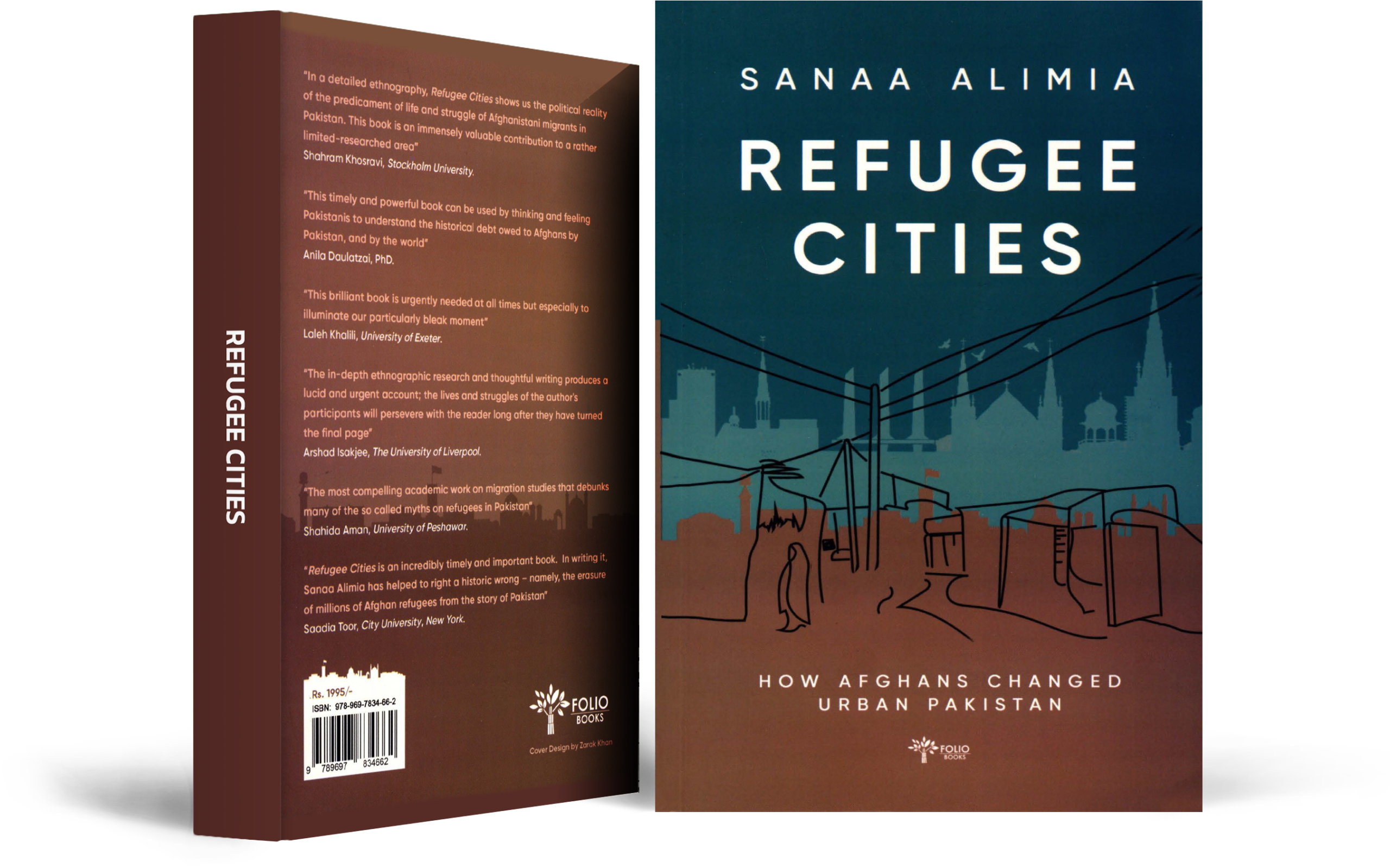
REFUGEE CITIES

شهرهای پناهندگان

Compiler & Author: Sanaa Alimia

This book explores the impact of Afghan refugees on urban Pakistan. Sanaa Alimia demonstrates how the long-term presence of Afghan migrants reshaped social, economic, and spatial structures in Pakistani cities. She challenges the dominant narrative that views refugees as temporary outsiders. The book offers a nuanced account of coexistence, tension, and urban transformation.

Pages 274
Timeline Stops 16
Book Timeline

Book Timeline

October 2007

Benazir Bhutto's return to Pakistan and the emergence of security challenges in ensuring her protection. Bhutto's refusal to seek security assistance from Musharraf and reliance on personal protective gear, including Dragonskin armor, highlighted deep divisions and absolute distrust among political leaders.

December 27, 2007 (5:16 PM)

Assassination of Benazir Bhutto in Rawalpindi after an election rally. This tragedy created a sudden power vacuum, dealt a severe blow to the democratic process, and completely altered the course of the Pakistan People's Party (PPP) under Asif Ali Zardari's leadership.

August 18, 2008

Pervez Musharraf's resignation from the presidency to preempt parliamentary impeachment. This event marked the official end of a long military rule and the beginning of a new era of fragile democracy under security pressures.

September 2008

Election of Asif Ali Zardari as the new President of Pakistan. This election strengthened the power of the Pakistan People's Party, and Zardari, by stating 'Parliament is sovereign; this President must be subordinate to Parliament,' sought to assert parliamentary authority against authoritarian traditions.

November 26, 2008

Mumbai terrorist attacks by militant groups based in Pakistan. This crisis brought India and Pakistan to the brink of war and placed Pakistan under intense diplomatic pressure and international isolation.

April 2009

Signing of the Sharia implementation bill in Swat Valley by the government following an agreement with militants. This event was seen as a clear retreat of authority in the face of religious extremism and heightened global concerns about the loss of government control over key areas.

March 2009

Victory of the 'Long March' by lawyers and the reinstatement of Iftikhar Chaudhry as Chief Justice. This event was a brilliant victory for civil society against the will of the military and government, establishing judicial independence as a new force in Pakistan's power structure.

March 16, 2011

Release of Raymond Davis, a CIA contractor, after blood money was paid to the victims' families. The United States declared Davis as a diplomat, leading to unprecedented tension between ISI and CIA, and a blow to national pride in Pakistan.

May 2, 2011

Operation Neptune Spear and the killing of Osama bin Laden in Abbottabad by US special forces. This operation was a blatant violation of Pakistan's national sovereignty and exposed a major intelligence failure for the military with the revelation of the Al-Qaeda leader's presence near military centers.

July 11, 2011 to May 2012

The Abbottabad Commission's investigation into national failures. Over 52 sessions, the commission sought to uncover the truth behind bin Laden's presence and foreign infiltration, revealing the depth of the country's security disarray.

November 25, 2011

The Salala incident and NATO forces' attack on border posts in the village of Maya. This attack, conducted on a 'moonless night' using 'night vision goggles', resulted in the death of 24 soldiers from the '7 Azad Kashmir Regiment' (77 Brigade), leading to the closure of NATO supply routes.

June 2014

TTP attack on Jinnah Terminal at Karachi Airport. This attack highlighted the vulnerability of the country's strategic infrastructure and confirmed the need for a comprehensive military operation.

15 June 2014

Launch of Operation Zarb-e-Azb. This was a decisive military effort to clear North Waziristan and regain physical control of the western borders from militants.

2016

Panama Papers Leak. The revelation of offshore wealth of Nawaz Sharif's family challenged politics as a 'family business' and dynastic patronage, ultimately leading to his political downfall.

2018

Cutting of IMET military training funds by the Trump administration. This move, repeating a strategic mistake of the 1990s, significantly reduced US soft influence on future generations of Pakistani officers.

2018

General elections and the rise of new political forces (PTI). The defeat of traditional dynastic leaders indicated a shift in the political taste of society; simultaneously, changes in military command hierarchy provided an opportunity for the government to potentially redefine civil-military relations.