


The Upstairs Wife

Book Podcast

Book Profile

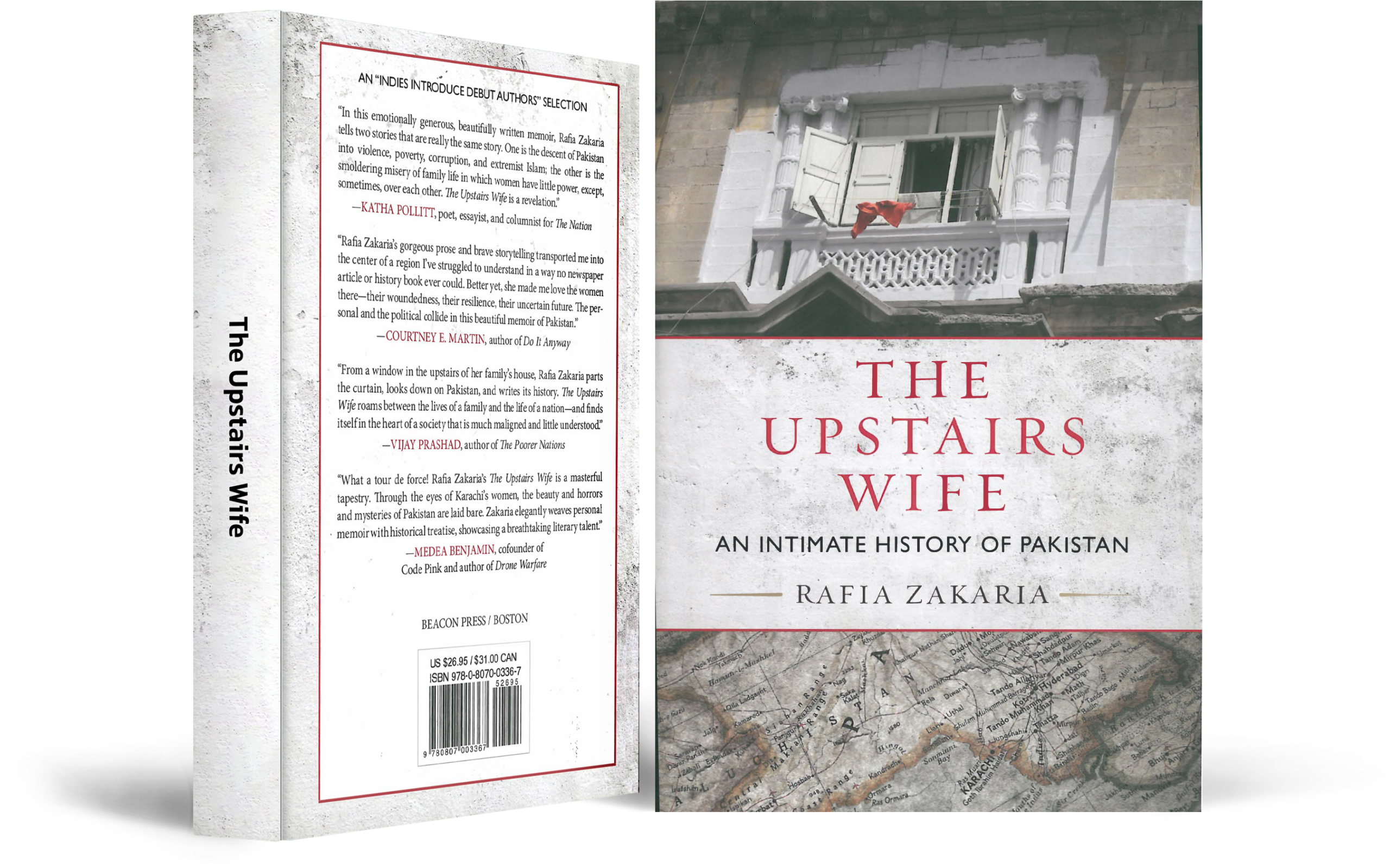
The Upstairs Wife

همسرِ طبقهٔ بالا: تاریخ صمیمی پاکستان

Compiler & Author: Rafia Zakaria

This book offers a personal and intimate account of Pakistan’s history through the lives of women. Rafia Zakaria intertwines the political evolution of the country with her family’s story, particularly her mother’s experience as an “upstairs wife.” She explores themes of polygamy, class, migration, and identity. The book presents a deeply human perspective on Pakistan’s social and political transformation.

Pages 270
Timeline Stops 39
Book Timeline

Book Timeline

July 1947

Abdullah, the author's father, was born in Bombay amidst the political turmoil before the partition. His birth in a still-united India, just one month before its division, symbolized the last moments of a land on the brink of disintegration.

17 July 1947

The passenger ship Ramdas sank off the coast of Bombay, claiming over 600 lives. This event, the worst maritime disaster in the city's history, became a political symbol on the eve of partition; the survival of the ship's Muslim captain was seen as a metaphor for Muslim betrayal.

18 July 1947

The Indian Independence Act of 1947 was signed by the British Parliament. This act had a significant consequence: the formal partition of India and the creation of two separate nations, India and Pakistan.

August 1947

Before departing for Karachi, Muhammad Ali Jinnah visited the grave of his late wife, Rati Jinnah, in Bombay for the last time. It is said that the founder of Pakistan wept by the grave of the woman he had lost, highlighting the deep contrast between his personal loss and his national mission.

11 September 1948

Muhammad Ali Jinnah, the founder of Pakistan, passed away. His death, just one year after the country's creation and nearly twenty years after his wife Rati's death, left the young nation in a leadership vacuum.

November 1950

Aunt Ameneh was born.

1958

Zainullah Saifuddin, the author's great-grandfather, passed away. His death revealed the fragility of the family's life in Bombay and prompted thoughts of migrating to Pakistan, especially after community elders asked the author's grandfather to take responsibility for a mosque.

May 1961

The author's family arrived at Karachi port amidst a sandstorm. Despite the hardships of the journey and the strong smell of dried fish and sea salt, finding a clean and functional public toilet was the 'first pride of the motherland' and a symbol of hope for a better future.

1961

The Muslim Family Laws Ordinance was signed into law by General Ayub Khan. This law, a result of women's struggles, had a vital impact on the lives of Pakistani women and required men to obtain written permission from their first wife before a second marriage.

6 September 1961

The Pakistan Army closed the Pakistan-Afghanistan border. This action had a profound impact on nomadic tribes like the Suleimankhel, who for the first time in their history were unable to make their seasonal migration to the Gomal Valley.

September 1965

The India-Pakistan war began. This war transformed civilian life in Karachi, leading people to hoard water in their homes, while a kind of 'water war' erupted among neighbors in apartment buildings.

8 July 1967

Fatima Jinnah, the 'Mother of the Republic', passed away in the isolation of Mohatta Palace. Marginalized in her final years, she was discovered when her room key was not dropped from the balcony as usual. Her death symbolized the nation's drift from its founders' ideals.

November 13, 1970

The Bhola cyclone devastated East Pakistan, killing over half a million people. The delayed and inadequate response from West Pakistan deepened the divide between the two halves of the country, fueling a sense of alienation.

November 1970

The author's family purchased a plot of land for their new home in the suburbs. This event was the realization of an immigrant's dream and a symbol of social progress; the ownership papers were 'a reassuring song that a home is more than just an idea.'

December 7, 1970

The first nationwide general elections were held in Pakistan. Sheikh Mujibur Rahman's decisive victory created a political crisis, as West Pakistani leaders, particularly Zulfikar Ali Bhutto, were unwilling to transfer power.

March 24, 1971

The Pakistani army attacked Dhaka University, particularly the Rokeya Hall dormitory. This attack, aimed at suppressing the Bengali nationalist movement, became a symbol of violent repression, although most female students had fled before the soldiers arrived.

December 1971

The Pakistani army surrendered in a humiliating public ceremony at the Dhaka Racecourse. This event marked the official end of the war and the birth of the independent nation of Bangladesh, reducing Pakistan geographically and psychologically by half.

1979

The Zina and Hudood Ordinance was enacted by General Zia-ul-Haq. This law had severe consequences for women, creating regulations under which women like Shahida Parveen could be punished by stoning for adultery or even for reporting rape without four male witnesses.

April 10, 1986

Benazir Bhutto returned to Pakistan after seven years in exile. Her return, welcomed by hundreds of thousands, posed a direct challenge to General Zia's military regime and marked the beginning of a new democratic movement.

December 1986

Aunt Amna returned to her parental home. Her unexpected presence at the breakfast table, 'a tear-streaked face, like a discordant portrait among toast and tea,' signaled a deep personal and social crisis. Her husband, Uncle Sohail, had announced his intention to marry again.

December 14, 1986

The massacre in Qasba Colony, Karachi occurred. This attack, in response to a government operation in the Sohrab Goth area, was a brutal manifestation of escalating ethnic tensions between Pashtuns and migrants, marking a new chapter of violence in the city.

January 1987

The writer's family held a special Sufi prayer ceremony. Lighting sixteen silver lamps and reciting prayers with a hundred dried hazelnuts was an attempt to seek divine intervention in the face of Aunt Amna's marital crisis and their sense of helplessness.

Late January 1987

Aunt Amna quietly left her parents' home and returned to her husband.

1987 - Benazir Bhutto's Wedding

Benazir Bhutto and Asif Ali Zardari's wedding turned into a major political gathering. Benazir's appearance, described as 'something between a bride and a warrior,' and her bracelets in her party's colors sent a clear message to the ruling military government.

1987 - Aunt Amna's Painful Anniversary

The thirteenth wedding anniversary of Aunt Amna and Uncle Sohail turned into a painful night. Sister-in-law Aziza Apa invited them to her son's birthday party instead of the celebration Aunt Amna expected, humiliating her by reminding her of her infertility.

1988 - Ojhri Camp Explosion

A massive explosion occurred at the Ojhri Camp ammunition depot in Rawalpindi. Missiles and rockets rained down on the city, exposing Pakistan's covert role in supplying American weapons to Afghan Mujahideen and the military's disregard for civilian safety.

1988 - Death of General Zia-ul-Haq

President General Zia-ul-Haq died in a plane crash. This event ended eleven years of military rule and paved the way for democratic elections.

1988 General Elections

General elections were held, marking the first democratic elections in over a decade. Benazir Bhutto won a national majority but lost Karachi to the newly emerged Muttahida Qaumi Movement (MQM) following the death of Bushra Zaidi.

1988 - Benazir Bhutto Sworn In

Benazir Bhutto was sworn in as the first female Prime Minister of a Muslim country. This historic event involved compromises, including wearing a headscarf to appease religious forces.

1991 - Police Siege and Massacre

The police siege and subsequent massacre in Pacca Qila, Hyderabad, primarily targeted migrant women and children. Women who came out with the Quran on their heads for protection were met with bullets, escalating the brutal ethnic conflict between Sindhis and migrants.

1991 - Sharia Implementation Law Passed

The Sharia Implementation Law was passed. Enacted after Benazir Bhutto's dismissal, it was a political move to 'purify' the country, further entrenching conservative religious laws in society.

1992 - Operation Clean-up Begins

The military's 'Operation Clean-up' began in Karachi. Aimed at suppressing the Mohajir Qaumi Movement (MQM), it had a devastating impact on the city, leading to years of martial law, extrajudicial killings, and enforced disappearances.

1994 - Grandfather's Sudden Death

The author's grandfather, Saeed, suddenly passed away from a heart attack. It happened on a day when a citywide strike had paralyzed the city, preventing the family from getting him to the hospital in time. His death had a profound personal impact on the family, especially his widow, Suraiya.

1990s Violence and Personal Grief

The violence and personal grief of the 1990s led to new global conflicts and surprising private solutions.

September 11, 2002

On the first anniversary of the September 11 attacks, a joint operation by Pakistani and American forces led to the capture of Ramzi bin al-Shibh, a key al-Qaeda coordinator, in Karachi. This event highlighted Karachi's role as a haven for international terrorists.

August 2003

Benazir Bhutto and Asif Ali Zardari were convicted of money laundering by a Swiss court. The verdict, related to an expensive diamond necklace, negatively impacted her political career and public image during her exile.

March 2004

Uncle Sohail's second wife suddenly died of a stroke. This event had complex and unexpected personal consequences, placing Aunt Amina in a surreal position as the main mourner and comforter to her husband.

October 8, 2005

A devastating earthquake struck northern Pakistan. The earthquake was catastrophic in terms of human casualties and created a power vacuum in areas like Swat, paving the way for militants like Maulana Fazlullah, who called the disaster a divine punishment.

December 27, 2007

Two major events occurred simultaneously: the assassination of Benazir Bhutto at a political rally in Rawalpindi and Uncle Sohail's near-fatal stroke on the same day. For the author, this moment was a convergence of two disasters; where the nation's political and public tragedy intersected with the family's private and personal crisis.