




AI Analysis
Analyzing...
Loading more details...
Analysis error. Please try again.
The Next Phase of the Iran–U.S. Confrontation:
The palpable possibility of a renewed conflagration at the last hours of Tuesday April 21st has compelled observers to turn their gaze toward the likely geometry of the next phase of battle.
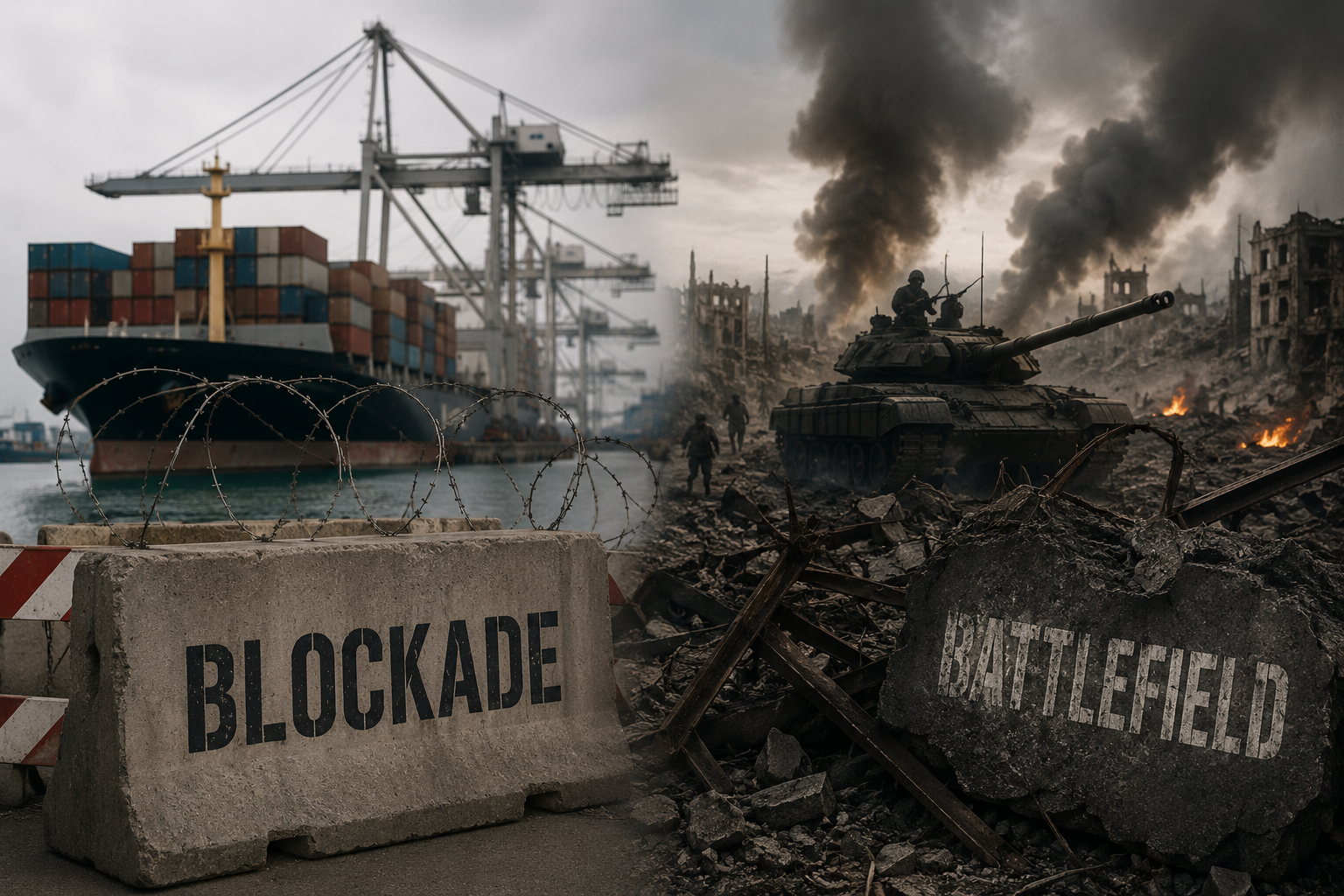
Over the course of forty days of war, followed by a fortnight of uneasy ceasefire, the United States experimented with two principal instruments: direct military confrontation and maritime blockade.
Both, it must be said, yielded diminishing returns. More critically, these approaches are not mutually sustainable.
Should Washington once again embrace the path of open conflict, the enforcement of a naval blockade would become increasingly untenable. With Iran regaining operational latitude to deploy its arsenal, American naval assets would be compelled to withdraw to safer distances from Iranian shores—thereby diluting, if not altogether nullifying, the efficacy of the blockade itself.
Nor does a reprise of the forty-day war promise any decisive breakthrough, unless the United States seeks once more to test the efficacy of shock and coercive pressure upon Tehran.
Tehran, for its part, is not without recourse. Indeed, it possesses a repertoire of strategic options that, as in previous phases of both war and ceasefire, could confound expectations, disorient adversaries, and potentially tilt the balance in its favour.
Iran’s Strategic Cards
1. The Bab el-Mandeb Strait: A Second Hormuz
The Bab el-Mandeb Strait may well be regarded as the “second Hormuz” of the resistance axis—a chokepoint whose disruption would reverberate across the global economic system.
First, the severance of commercial arteries:
approximately 10 to 12 percent of global trade transits this narrow maritime corridor, rendering it indispensable to the economic lifelines of Europe and the Mediterranean basin.
Second, the institutionalization of transit tolls:
an estimated seven million barrels of oil traverse this route daily. At an average price of $100 per barrel, this amounts to a staggering $700 million in daily value—exclusive of ancillary costs such as insurance premiums, which would inevitably surge under conditions of insecurity.
With roughly 25,000 vessels passing annually—some 68 per day—even a modest levy of $100,000 per ship would yield approximately $7 million in daily revenue, culminating in an annual sum of $2.5 billion. For Yemen, given its demographic realities and the scale of governance in Sana’a, such figures are far from trivial.
Third, the elongation of logistical routes:
The closure of Bab el-Mandeb would compel commercial vessels to reroute via the southern extremities of Africa, adding between 10 and 15 days to transit times. Yet time is but one variable; the alternative passage via the Cape of Good Hope entails formidable maritime challenges, limited port services, and treacherous oceanic conditions—conditions ill-suited to lighter vessels.
Finally, the expansion of the battlespace:
Yemeni forces have already demonstrated the capability to target vessels in the northern Indian Ocean and along the eastern littorals of Africa. In such a scenario, operational reach would extend well beyond the immediate confines of the strait itself.
2. Ground Operations: The Unpredictable Decisive Factor
Ground warfare remains, paradoxically, both the most overt and the most potentially surprising instrument in the resistancearsenal. Its visibility does not negate its capacity for strategic surprise; rather, the variables of geography, timing, scale, and execution render it inherently unpredictable.
Among the potential theatres:
Kuwait emerges as the most accessible objective. Iraqi resistance groups possess the requisite firepower, logistical depth, and operational capability. Historically, claims over Kuwait further underscore its symbolic and strategic significance. Its capture would disrupt American supply chainand establish a forward staging ground for operations across the Persian Gulf.
Saudi Arabia presents a more ambitious but consequential theatre. A northeastern advance could target the oil-rich fields of Al-Ahsa and potentially extend toward Riyadh, while Yemeni forces simultaneously consolidate control over the Tihama coast from the south. The fall of the Eastern Province would have cascading effects across Najd and Hijaz, potentially placing the entirety of Saudi territory within the orbit of the resistance axis.
The United Arab Emirates, already subjected to sustained infrastructural damage during the forty-day conflict, may harbour latent vulnerabilities ripe for exploitation. A strategy of fragmentation—encouraging the differentiation or separation of individual emirates—could render the federation more fragile and susceptible.
Bahrain, though geographically constrained, is not beyond reach. A manoeuvre involving entry through Saudi territory and a southern flanking movement, combined with maritime pressure from the north, could culminate in a comprehensive, multi-directional assault. The fall of Bahrain would represent a symbolic and strategic defeat for allied regimes in the region.
Syria could witness decisive shifts through a confluence of pressures: Iraqi advances from the east, Lebanese engagement from the west, activation of domestic resistance networks, and sustained Iranian missile and drone operations. The resultant outcome could be the collapse of the Al Julani government and the establishment of a contiguous land corridor linking Iran to the Mediterranean—thereby tightening the strategic noose around Israel.
Iraq and the Levant could also become the stage for coordinated assaults on American diplomatic and military installations in Baghdad, Beirut, and Damascus—delivering both a strategic and symbolic blow to Washington.
Jordan occupies a uniquely pivotal position. A sudden incursion would connect the resistance axis to the West Bank, the Golan Heights, and indirectly to northern occupied Palestine. Given that approximately two-thirds of Jordan’s population is of Palestinian origin, the potential for a widespread uprising cannot be discounted. Such a development would not merely constitute another front—it would pose a direct existential threat to Israel. Moreover, the collapse of American defensive layers in this theatre could enable simultaneous multi-front offensives toward Tel Aviv from Lebanon, Syria, Gaza, and Yemen.
3. The Geographical Expansion of War
Iran retains the capacity to extend the theatre of conflict beyond West Asia. Such expansion need not replicate the scale or intensity of regional engagements; the mere broadening of the battlefield carries strategic weight.
Attacks on U.S. bases out of the region—in Africa, Central Asia, and the Caucasus—represent plausible scenarios, alongside the use of unconventional or previously unseen capabilities against American targets globally.
Non-kinetic operations, particularly cyber-attacks, could target critical infrastructure with the aim of disrupting economic production, fomenting domestic pressure, and compelling a reconsideration of war policy—while simultaneously undermining the political standing of Donald Trump.
Naval escalation represents perhaps the most consequential inflection point. Until now, Iran has pursued a strategy of attrition—targeting adversarial naval assets to compel withdrawal. Yet, should Tehran elect to escalate toward decisive stikes—such as the sinking of major naval vessels—it would impose severe political and military pressure upon the United States.
Conclusion: Washington’s Dilemma
At such a juncture, Washington would find itself confronted with a stark binary.
It may choose to escalate—risking deeper entanglement and inviting domestic scrutiny over the rationale that led it into such peril.
Or it may opt for disengagement—accepting the strategic and symbolic implications of retreat.
Either way, the coming phase of this confrontation will not merely reshape the region; it may well redefine the contours of global power itself.
Article Authors
Related

Latest



Comments
Leave a comment
No comments yet.
