



AI Analysis
Analyzing...
Loading more details...
Analysis error. Please try again.
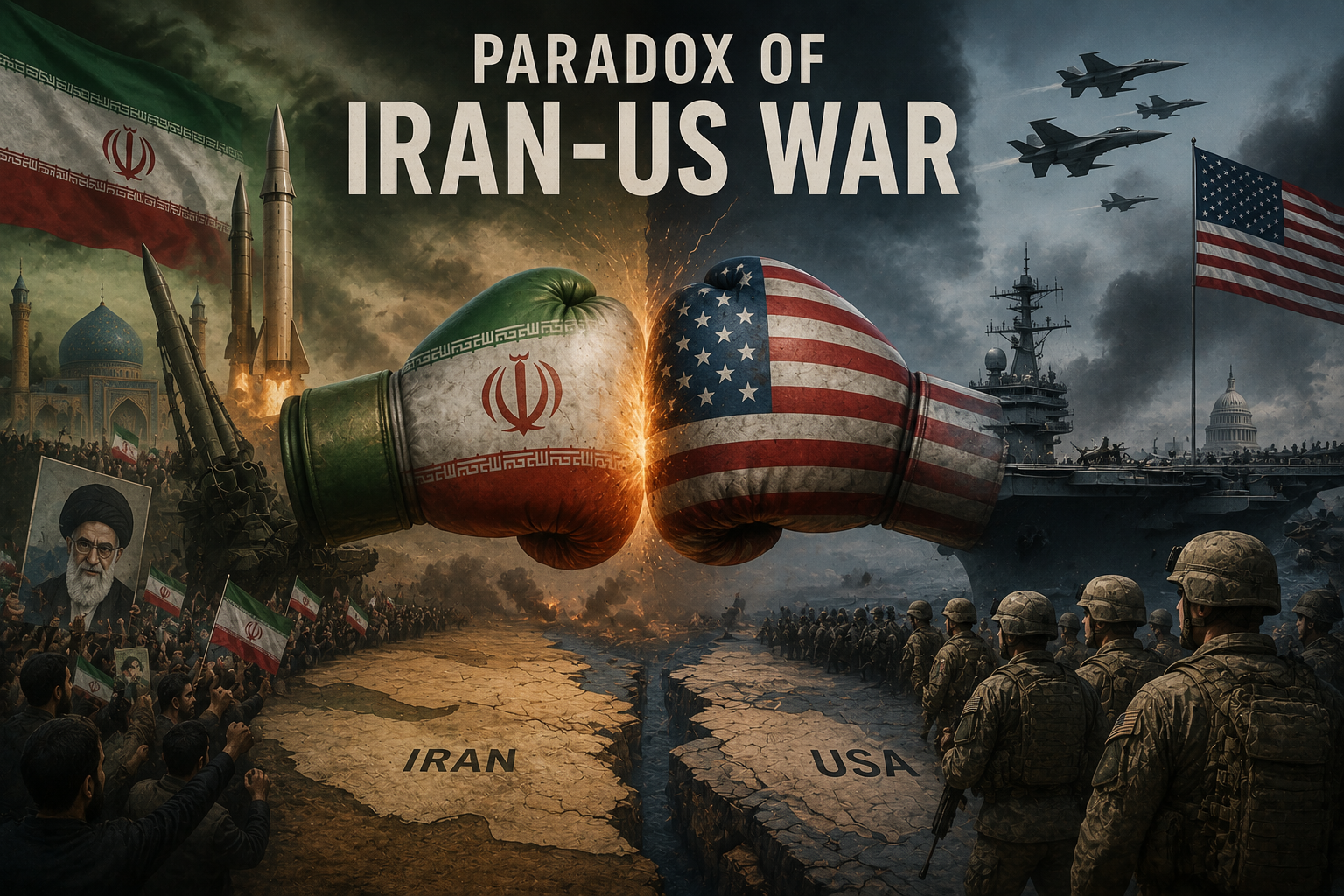
THE war between Iran Israel and the US is now over two months old with a fragile ceasefire now in force.
Historians and defense analysts now trying to assess the situation and to judge prospects of Donald Trump’s reckless onslaught on Iran and now becoming more and more clear that the Trump regime has entangled the US in a unwinnable war that will leave the new regime in Iran and Iran’s revolutionary institutions even more powerful than they were before the start of the war. It is now pretty obvious that the Iranian Revolutionary Guard Corps or IRGC is more powerful and influential than was previously thought. Iranian institutions have remained united and cohesive far more than what was seen in Libya that broke apart during the Arab spring in 2011. Trump aim that Iran will implode and people will rise up against the regime has not materialized and it is not likely to happen. The brutal killing of the Iranian supreme leader and other military leaders by Israeli and American air power has not been able to bring about the required results of a complete regime toppling.
The campaign to topple Qaddafi in Libya was a different story altogether. Street protests were put down mercilessly in Benghazi in the beginning of 2011 but after that almost all state institutions just collapsed one after another plunging the country into a bloody civil war. Just two weeks after the uprising interior minister Abdul Fatah Younis took control of small arms and heavy weapons while protesters continued to assault army units and formed the National Transition Council or NTC. By July both the UK and the US recognized NTC as real authority in the country and so did 28 other countries of the world including the Arab League and NATO.The State of Libya has still not recovered from the 2011and uprising it is still a fractured society. The Government of National or unity or GNU in Tripoli cannot exert its authority over its own legislative body, the house of Representatives that refuses to acknowledge the legitimacy of the GNU. The House of representatives derives its authority from Khalifa Haftar a former Qadafi insider who rose up in ranks to become Qaddafi’s chief of staff before turning on him and seeking asylum abroad. Having returned to Libya after the revolution he is now the head of the Libyan National Army and lords over the Eastern Provinces where son of Qaddafi was gunned down in his house.
By some estimates the IRGC controls over 50% of the national economy and is instrumental in controlling critical domestic industries affected by the US sanctions such as oil and gas, construction, telecommunications and mining.In this respect, Iran has already spent years moving day-to-day power away from its revolutionary ideological vanguard, embodied by the Ayatollahs, towards the praetorian elements of the state led by the Revolutionary Guards. Signs of that shift became apparent following a statement by President Masoud Pezeshkian, when he apologized to the Arab Gulf states for targeting them. He offered to halt such attacks if they ensured that US bases located there were not used to launch further attacks against Iranian targets. Most analysts considered Ali Larijani, the Secretary of the Supreme National Security Council, who was assassinated on 17 March, and Mohammad Bagher Ghalibaf, Speaker of the Parliament, to be two of the most important individuals supporting the new Supreme Leader, Mojtaba Khamenei. Both have backgrounds in the IRGC.A fracturing of the state’s power base is made even more unlikely by overtures from one of the world’s most powerful Shia clerics, Ayatollah Ali al-Sistani. Originally born in Iran, he has lived in Iraq’s holy city of Najaf for more than 70 years and has maintained his distance from Iran’s political people, including its goal of expanding Tehran’s sphere of influence into Iraq. The assassination of Ali Khamenei, however, stirred him into action. ‘The great nation of this land is expected, under these difficult and sensitive circumstances, to preserve unity and national cohesion,” he said.
Both the United States and Israel should welcome the fact that Iran is unlikely to implode. When the same happened in Iraq after the Coalition invasion of 2003, displaced Sunnis from Saddam Hussein’s former administration reconstituted themselves in different ways. First, they supported the insurgency against the occupying Coalition forces by supplying the insurgents with arms, which, in part, sucked the United States into a bloody quagmire for years.
Article Authors
Related
Latest



Comments
Leave a comment
No comments yet.
