



1000s - 11th Century
Al-Biruni documented India in his famous work, Kitab al-Hind, providing one of the earliest geographical and cultural accounts that helped define the region's physical and human characteristics.
Book Podcast
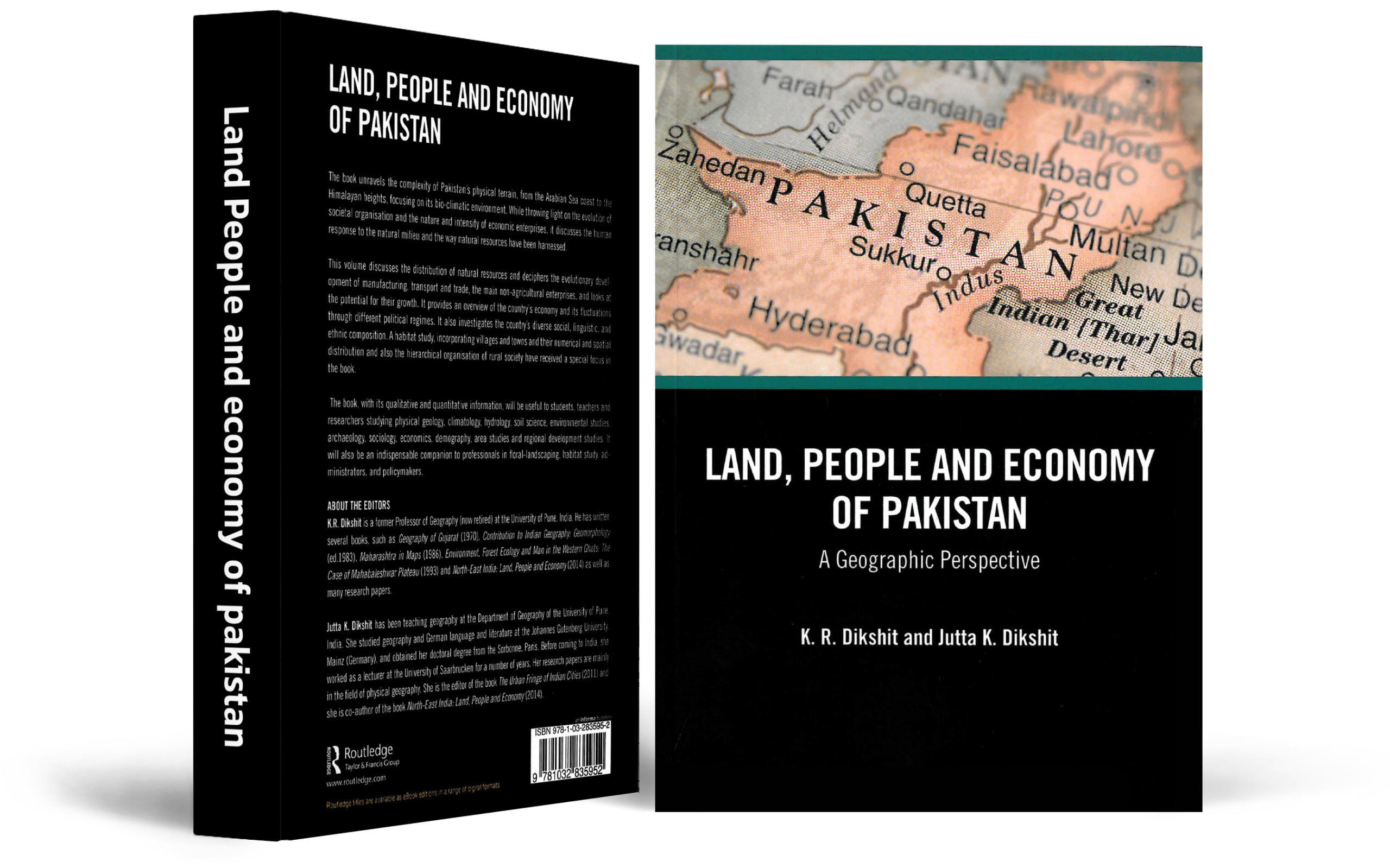
Book Profile
سرزمین، مردم و اقتصاد پاکستان
Compiler & Author: K.R. Dikshit and jutta K. Dikshit
Al-Biruni documented India in his famous work, Kitab al-Hind, providing one of the earliest geographical and cultural accounts that helped define the region's physical and human characteristics.
Abu'l-Fazl provided administrative descriptions in the Ain-i-Akbari. This work served as a comprehensive gazetteer, offering valuable insights into the historical geography of the region that later became Pakistan.
Sir Dudley Stamp published 'Asia: A Regional and Economic Geography'. Covering Punjab, the North-West Frontier, and Balochistan, it reflected colonial perspectives and stood as one of the first modern geographical texts.
The city of Quetta was completely destroyed by a massive earthquake. This natural disaster highlighted the seismic vulnerability of the Balochistan region and profoundly influenced urban reconstruction and development in subsequent decades.
Following the end of British rule and the partition of India, Pakistan was officially established as an independent nation, with Muhammad Ali Jinnah sworn in as the first Governor-General. This pivotal event marked a new chapter in South Asian history.
Urdu-speaking refugees (Muhajirs) migrated extensively from India to Pakistan, particularly to Sindh. This massive demographic shift transformed the social and ethnic fabric of cities like Karachi, creating new challenges for social integration.
Karachi served as Pakistan's first federal capital. Its status as a commercial and political hub made it a magnet for migrants and early investment, playing a vital role in the country's formative years.
The first census after independence was conducted. This was crucial for future planning and understanding the demographic shifts resulting from the partition.
Orient Airways was merged into the newly established, state-controlled Pakistan International Airlines (PIA). This was a significant step toward building national transport infrastructure and strengthening state control over strategic sectors.
General Ayub Khan seized power in a military coup and initiated the decision to move the capital from Karachi to a new, planned city called Islamabad. This strategic move aimed to create a more secure, centralized administrative hub.
Land reforms were implemented to limit large landholdings, aiming to reduce feudal power and redistribute land, though outcomes varied by region.
Construction of the strategic Karakoram Highway began with Chinese participation, serving as both an engineering marvel and the foundation for long-term Pakistan-China relations.
A national census was conducted to record demographic changes, providing vital data for government development planning during the 1960s.
Organized labor migration to the Middle East began, quickly becoming a vital source of foreign exchange and significantly impacting Pakistan's economy and society.
Following civil war and Indian military intervention, East Pakistan separated to form Bangladesh, profoundly altering Pakistan's geopolitical and political landscape.
The Bhutto government devalued the Pakistani rupee to boost exports and address trade imbalances, though it also triggered inflationary pressures.
Lal Suhanra National Park was established in the Bahawalpur region as part of efforts to conserve the environment and wildlife in arid zones.
The iconic Three Swords monument was built in Karachi to commemorate the principles of 'Unity, Faith, and Discipline,' aiming to strengthen national identity after the Bangladesh crisis.
The second wave of land reforms was implemented under Bhutto's premiership to curb the power of large landowners and redistribute land to landless farmers, despite facing resistance.
Rail links with India, including the Thar Express and Samjhauta Express, were restored after suspension, marking an effort to normalize relations following the 1971 war.
The construction of the Karakoram Highway was completed after 20 years, establishing a strategic land link between Pakistan and China and creating new economic and military opportunities.
A national census revealed that the number of Pakistani migrants in the Middle East reached 1.6 million, highlighting the growing importance of overseas labor for the national economy.
Remittances from overseas workers accounted for about 10 percent of the country's GDP, becoming a pillar of Pakistan's economy and significantly aiding balance of payments stability.
The Modern Protected Areas Act was passed, leading to the establishment of new national parks and marking a significant step toward institutionalizing environmental and biodiversity conservation in Pakistan.
The Muttahida Qaumi Movement (MQM) was founded, quickly becoming a powerful political force among the Urdu-speaking community in Sindh and altering the country's ethno-political dynamics.
The Karakoram Highway was officially opened to the public, creating new opportunities for trade, tourism, and cultural exchange in northern Pakistan.
The National Conservation Strategy was implemented, accelerating the development of national parks and strengthening the government's commitment to environmental issues.
A national census was conducted, providing a snapshot of demographic and social changes following a decade of political instability and slow economic growth.
General Pervez Musharraf's military regime oversaw a period of 50% economic growth. Driven by liberalization policies, this growth occurred in a non-democratic political climate, sparking debates about its sustainability.
Terrorist attacks in the US led to the invasion of Afghanistan. This fundamentally altered Pakistan's geopolitical role, positioning it as a key ally in the 'War on Terror' with profound domestic security and political consequences.
The country experienced a year of extreme drought, negatively impacting the economy and water resources, highlighting the vulnerability of Pakistan's agricultural sector to climate change.
The Makran Coastal Highway (NH-10) was completed, connecting Karachi to Gwadar. This major infrastructure project paved the way for the future development of Gwadar Port and improved access to Balochistan's coastal regions.
The Pakistan Hindu Council was established to represent the interests of the Hindu community, marking a step toward organizing and protecting the rights of one of the country's largest religious minorities.
A democratically elected government led by the Pakistan People's Party (PPP) took power during a period of economic recession, facing mounting security challenges and global economic crises.
Construction began on the Neelum-Jhelum Hydropower Project, a major initiative designed to increase electricity generation capacity and reduce reliance on fossil fuels.
A massive 7.7 magnitude earthquake struck the Awaran district in Balochistan, killing 825 people and highlighting the region's extreme seismic vulnerability.
Catastrophic floods submerged one-fifth of the country, affecting 20 million people and causing $9.7 billion in damages, marking the worst natural disaster in Pakistan's history.
The Sindh government announced the first successful generation of 1 MW of electricity from the Thar coal field using underground coal gasification, marking a milestone in energy production.
The latest national census was conducted, providing the government with vital, updated data for economic, social, and political planning.
The government approved a comprehensive National Water Policy aimed at sustainably managing the country's dwindling water resources and addressing climate change challenges.
The Neelum-Jhelum Hydropower Project was officially commissioned, significantly increasing the country's power generation capacity and contributing to national energy security.

AI Assistant
Fast and reliable answers