



AI Analysis
Analyzing...
Loading more details...
Analysis error. Please try again.
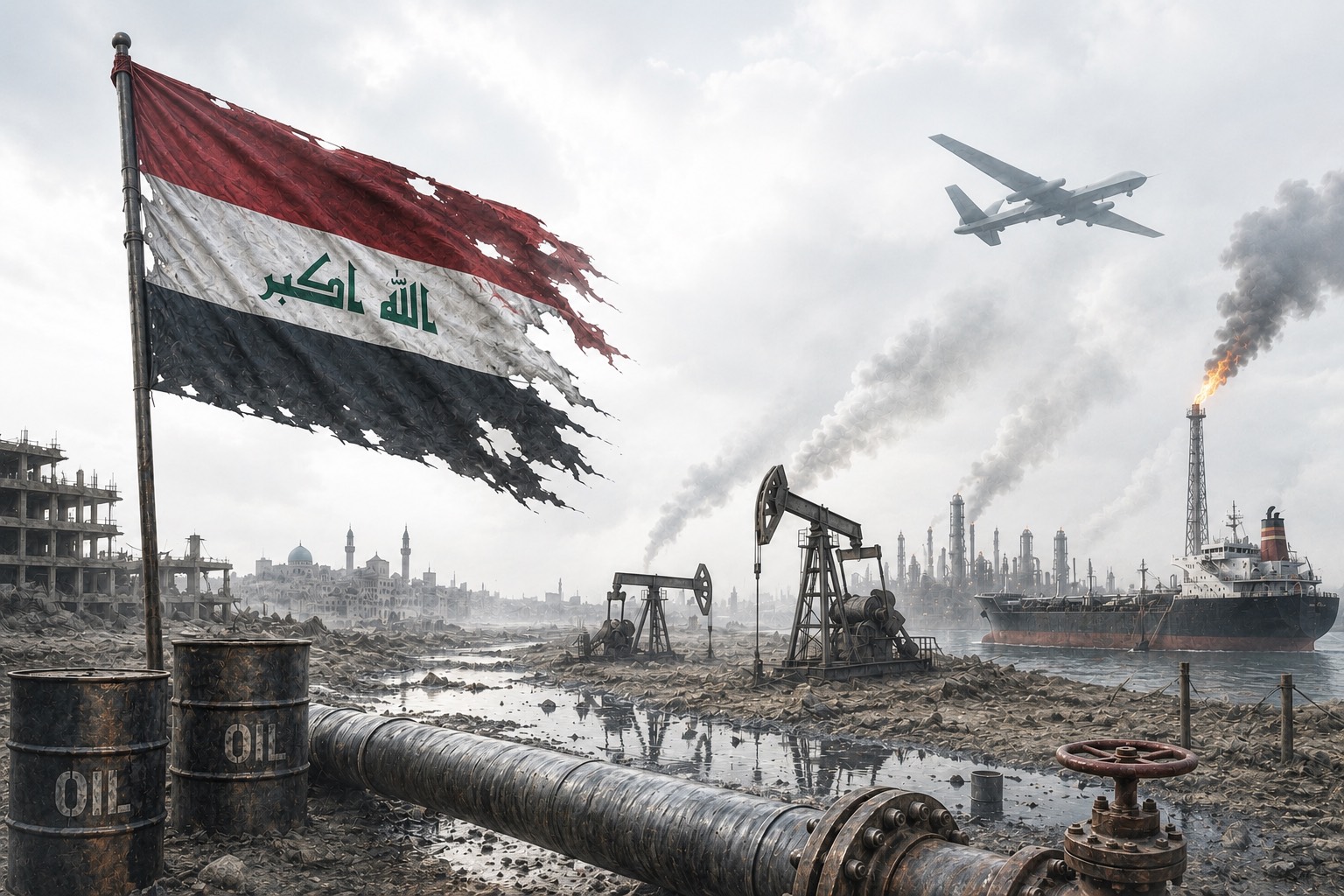
Managing Iraq has never been easy. It is one of the world’s oldest civilizations and, at the same time, one of the region’s most important religious and political centers. Governing such a country requires experienced institutions, capable teams, and seasoned leadership. Yet at a time when Iraq faces unprecedented challenges, U.S. pressure has helped bring Ali Al-Zaidi—a relatively young figure with little formal political experience—to the office of Prime Minister, and each of his decisions is increasingly becoming a source of major risk.
During his visit to Washington, Al-Zaidi was widely perceived as taking a highly accommodating approach. In front of television cameras, President Donald Trump reminded him that it was the United States that had killed General Qassem Soleimani, commander of the IRGC Quds Force, and Abu Mahdi al-Muhandis, deputy commander of Iraq’s Popular Mobilization Forces.
Trump did not stop there. He then asked Al-Zaidi whether he considered those assassinations to have been a favor to him personally. The Prime Minister responded that he had not been involved in politics at that time and that his focus was on building Iraq’s future. Critics argue that he could have postponed the visit or handled the encounter differently, rather than allowing himself to be placed in such a difficult position. Even Ukrainian President Volodymyr Zelensky, who was publicly criticized by Trump and Vice President J.D. Vance, chose to respond rather than remain silent.
Many observers view the timing of the visit, the conciliatory posture before the trip, and the response during the meeting as among Al-Zaidi’s most significant political missteps.
Several broader trends are also shaping Iraq’s current trajectory.
First, Iraq’s parliamentary system—often compared to France’s Third Republic—is structurally weak in terms of executive authority. Placing a young and inexperienced prime minister at the head of such a system may further weaken state authority. Some analysts argue that if Iraqi political elites selected someone like Al-Zaidi to deal with the Trump administration, they should expect him to become increasingly dependent on Washington—not only to manage bilateral relations but also to strengthen his own domestic position.
Second, reports suggest that Iraq’s government is considering increasing oil production and possibly reducing its commitment to OPEC policies under U.S. encouragement. The argument is that Washington seeks to establish a new international framework for oil pricing outside OPEC. Critics argue that increasing production while oil prices fall may leave Iraq with little economic benefit despite higher export volumes.
Third, critics argue that Al-Zaidi may lack the domestic political strength to implement all the commitments made in Washington. If faced with mounting pressure from the United States, he could increasingly bypass established political institutions or seek external support to strengthen his position against rival domestic factions.
Fourth, recent events—including attacks by Iraqi resistance groups on U.S. military facilities, humanitarian support during the conflict, and the large public participation in funeral ceremonies honoring Iranian leaders—are cited as evidence of deep military, social, religious, and cultural ties between Iran and Iraq. In contrast, Iraq’s relationship with Washington is often described as being shaped primarily by financial leverage. Since 2003, under the relevant U.N. framework, Iraq’s oil revenues have been processed through financial mechanisms under U.S. oversight, giving Washington significant influence over Baghdad’s access to its own funds.
Many analysts argue that America’s leverage in Iraq relies primarily on financial instruments, whereas Iran’s influence rests on broader historical, religious, and societal connections.
Fifth, after the killing of Soleimani and Abu Mahdi al-Muhandis, the United States significantly reduced its military footprint in southern Iraq and concentrated forces in central, northern, and eastern parts of the country. Some analysts believe Washington may further consolidate its regional military presence by shifting forces toward Jordan and Israel, while seeking concessions in exchange for reducing its presence inside Iraq.
Under the 2024 U.S.-Iraq agreement, American combat forces are scheduled to end their mission in Iraq by September 30, 2026. During his joint appearance with President Trump, Prime Minister Al-Zaidi stated that after that date there would no longer be any justification for the continued existence of non-state armed groups.
However, critics argue that even if U.S. combat troops leave Iraqi territory, Washington would likely retain significant influence through intelligence cooperation, military advisers, Kurdish Peshmerga partnerships, air operations, and other security mechanisms. From that perspective, they contend that the physical withdrawal of troops would not necessarily mean the end of American military influence in Iraq.
Sixth, Iraq is accelerating construction and rehabilitation of several strategic oil pipelines—including the Ceyhan pipeline to Türkiye, the Baniyas route toward Syria, and the Aqaba pipeline to Jordan—in order to diversify export routes and reduce dependence on the Strait of Hormuz.
Seventh, following Al-Zaidi’s visit to Washington, his government announced that it would comply with U.S. sanctions related to Lebanon’s resistance groups. Critics point out that the previous Iraqi government approached similar issues more cautiously and eventually withdrew comparable directives following domestic criticism.
Eighth, Iraq increasingly occupies an important position in Iran’s broader security calculations. Concerns have been raised about the possible use of Iraqi territory or airspace for military operations against Iran, including overflight by foreign aircraft, missile launches, or the activities of armed groups operating near the Iranian border.
Ninth, following Trump’s remarks regarding Soleimani and Abu Mahdi al-Muhandis during Al-Zaidi’s visit, some Iraqi resistance groups reportedly announced a $10 million reward for information leading to Trump’s killing.
Finally, Iraq is reportedly considering establishing a sovereign development fund at a U.S. financial institution, financed by revenues from the export of approximately 500,000 barrels of oil per day, with a projected long-term value of up to one trillion dollars. Supporters argue that the fund could finance development projects, while critics contend that most of its financial benefits would ultimately flow to the United States through investment structures and contracts awarded to American companies
Article Authors
Related
Latest



Comments
Leave a comment
No comments yet.
