



Rakhshanda Mehtab
The writer is MS Research Scholar at IIUI, a freelance content writer and a columnist.
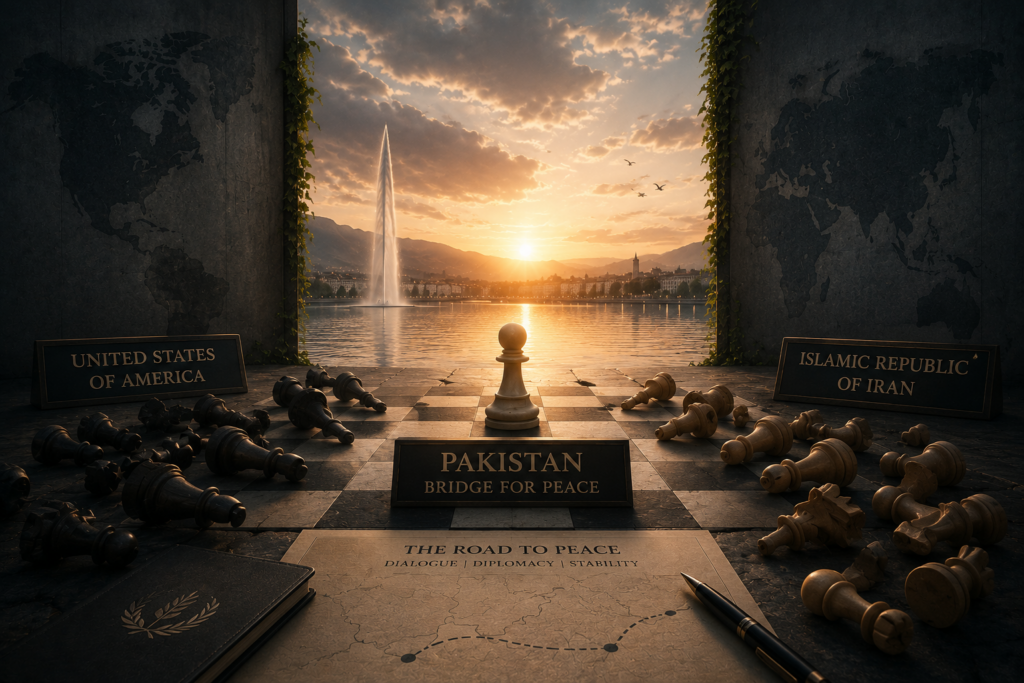
View ProfileAt Senator Lindsey Graham’s funeral, President Trump said Graham “never saw a war that he didn’t like.” It was a fitting epitaph for a man who, before his death, had already dismissed Pakistan’s peacemaking efforts between the United States and Iran as “problematic.” Now that the ceasefire has crumbled, critics are circling the same question: Did Pakistan fail? But that is the wrong question. The right one is far more uncomfortable. Why do we expect a mediator to guarantee a peace that the warring parties themselves are not ready to keep?
To appreciate how unfair that expectation is, consider how rarely peace has been guaranteed even by the most powerful actors on the world stage. After the devastation of World War I, the League of Nations was created to mediate tensions, but it lacked both “carrots and sticks,” meaning incentives and punishments, to actually enforce peace. Later, during the Cold War, a superpower like the United States could use genuine carrots and sticks. A classic example is the Camp David Accords of 1979, where Washington offered massive financial incentives to Egypt and Israel, payments that continue to this day. As Asfandyar Mir of the Stimson Centre has noted, the attributes that made a country geopolitically influential in that era were settled: major-power status, economic weight, liberal normative credentials, and the authority to convene other major states. Even with all those advantages, no mediator has ever been able to permanently lock in a peace that the parties themselves could not sustain.
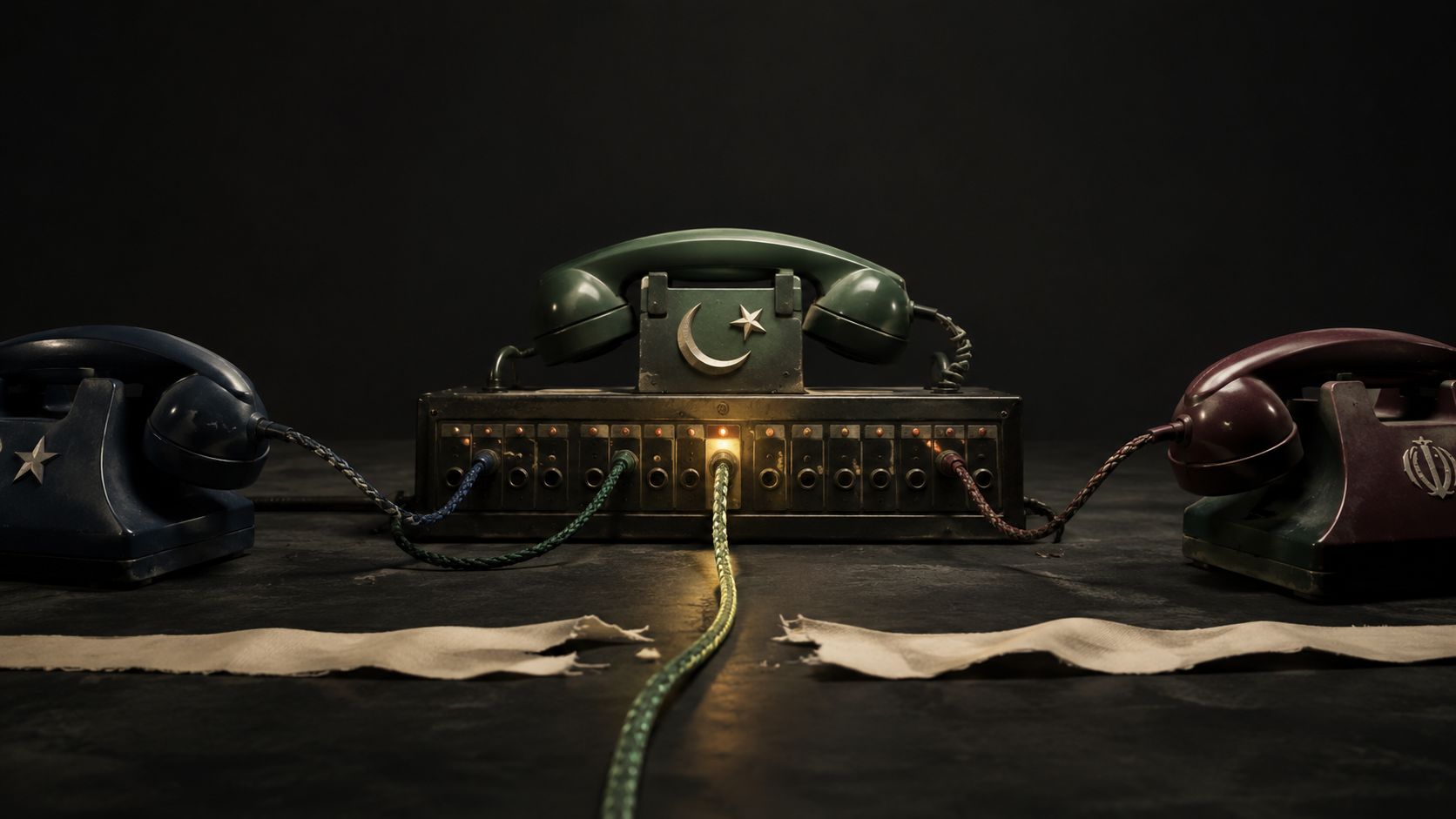
The next time a phone rings in Islamabad with the world holding its breath, it will do so because Pakistan kept the line open when others had no access.
Even in the American unipolar moment after the Soviet Union collapsed, Washington remained the lead mediator, including in South Asian conflicts and, reportedly, during the May 2025 crisis. What made the spring of 2026 so remarkable, then, was not the existence of a mediator, but the identity of the mediator. A middle power, Pakistan, stepped forward to return the favour, intervening between the United States, a superpower, and Iran, a middle power itself. It brought a different toolkit to the task, one built on access, credibility, and trust earned across rival camps.
Pakistan sits at the crossroads of rival powers, a diplomatic asset built over decades. It is the only Muslim-majority nuclear power that shares a 900-kilometre border with Iran and has a working relationship with the White House.
When Field Marshal Munir made that phone call in April 2026, pulling the world back from an ultimatum that threatened to destroy “a whole civilization,” he was converting that unique position into a pause button at the right moment. That pause led to something concrete. A sitting U.S. Vice President sat across from Iranian negotiators in Islamabad for over 20 hours. That was the highest-level direct contact between the two countries since the 1979 revolution. As Asfandyar Mir put it, “During the most dangerous Middle East crisis in a generation, Pakistan did what China, France, Germany, India, the United Kingdom, and other geopolitical heavyweights could not.” So why does the conversation so quickly turn to Pakistan’s supposed shortcomings?
The answer lies in a misunderstanding of what mediation is. A mediator is not a guarantor. Think of it as two exhausted prize fighters who agree to leave the ring at the referee’s urging. If one throws a punch the moment the referee steps back, is the referee to blame? Or was the conflict simply paused, not resolved? The old proverb says you can lead a horse to water but cannot make it drink. The referee can separate the fighters, but he cannot fight for them. Pakistan led both sides to the water. The fact that they are now walking away thirsty tells us more about their own calculations than about the person who showed them the way.
Here we need to ask the next critical question: Why did the ceasefire unravel? Conflict resolution scholars have a phrase for the moment when war becomes too painful for both sides to continue. The idea is simple: both parties feel they cannot win without suffering losses they can no longer bear. In April, that moment was real. The U.S. and Israel had destroyed much of Iran’s military and energy infrastructure. Iran had retaliated, hit Gulf state targets, and choked the Strait of Hormuz, sending oil prices into chaos. Both were bleeding, both blinked. But here is the uncomfortable truth that the blame-Pakistan narrative misses: the perception of hurt is never permanent. It shifts with politics and weather. As American midterm elections approach, the White House may feel the economic sting more acutely. As summer temperatures turn the Gulf into a furnace, Tehran’s Revolutionary Guard may calculate that the U.S. has little appetite for a ground war. When the calculus changes, the incentive to talk shrinks. That is not a mediation failure. It is a strategic decision by the belligerents themselves, rational in their own calculations but tragic in its consequences.
Pakistan’s intervention followed a pattern familiar to small-state mediators like Qatar, which has mediated between Israel and Hamas. The pattern is unforgiving: when the process stalls, one or both parties blame the mediator. In this case, blame has come not only from the late Senator Graham but also from India and Israel. Yet the problem is not the mediator. It is the process itself. The Stimson Centre’s South Asian Voices was right to argue that the persistence of U.S.-Iran tensions has far more to do with their own objectives in the Strait of Hormuz than with any flaw in Pakistan’s efforts. Georgetown professor Mehran Kamrava has described the conflict as “intractable,” a word that points to deep, structural mistrust, not to a broken negotiating process. If you have spent four decades not trusting your adversary, one ceasefire in Islamabad is not going to rewire that history. That would be asking too much of a single moment, and history does not work that quickly.
The mediation was far from pointless. The channel Pakistan opened is not dead; it is dormant. The real test of diplomatic maturity is whether Islamabad can keep that channel intact, not whether it can force two proud nations to behave. The moment of pain will return. The question is whether, when it does, the table in Islamabad will still be a real, practical option. Pakistan’s value lies in that readiness. The reality is that middle powers like Pakistan bring a different toolkit, one built on access, credibility, and the trust they have earned across rival camps. What Pakistan can do, and has now done twice, is serve as a trusted bridge between countries that refuse to speak directly. Remember how it quietly arranged Kissinger’s secret flight to Beijing in 1971, setting the stage for Nixon’s historic visit. Pakistan is not a bloc actor picking sides. It is a channel. And in a world fractured by mistrust, channels are worth more than rhetoric.
So the next time a ceasefire breaks down, and fingers point at the mediator, we should pause and ask a harder question. Is the breakdown evidence of the mediator’s failure, or is it proof that the parties were never truly ready for peace? Pakistan did something few nations could. It brought enemies to the same room and gave them a choice. What they did with that choice is their own responsibility. The next time a phone rings in Islamabad with the world holding its breath, it will do so because Pakistan kept the line open when others had no access. Blaming the messenger has always been easy. Keeping the channel alive is what actually matters. The measure of a mediator is not the silence that follows a handshake, but the fact that the door remains open when the shouting resumes.
The writer is MS Research Scholar at IIUI, a freelance content writer and a columnist.
View Profile
AI Assistant
Fast and reliable answers