


1913 - Start of Muhammad Ali Jinnah's Political Struggles
Muhammad Ali Jinnah's political struggles for the rights of Muslims in the subcontinent began. This marked the start of a long campaign for autonomy and self-determination.
Book Podcast
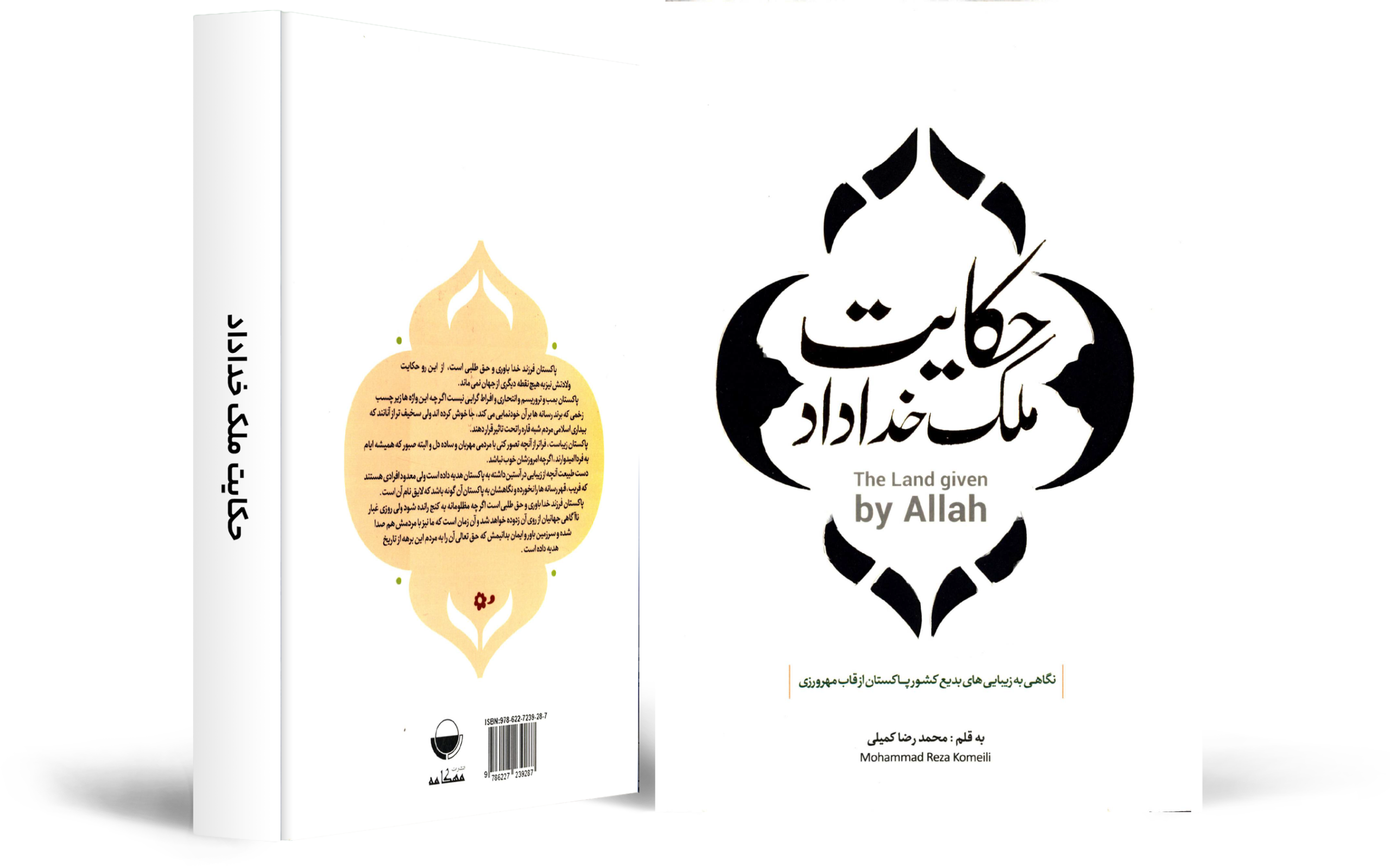
Book Profile
حکایت ملک خداداد
Compiler & Author: Mohammad Reza Komeili
This book presents a cultural and descriptive overview of Pakistan’s natural beauty and tourism potential. The author highlights landscapes, climatic diversity, and historical attractions to portray a positive image of the country. It emphasizes Pakistan as a land blessed with divine gifts. The work is mainly introductory and aimed at general readers.
Muhammad Ali Jinnah's political struggles for the rights of Muslims in the subcontinent began. This marked the start of a long campaign for autonomy and self-determination.
Allama Muhammad Iqbal envisioned an independent state for Muslims in the subcontinent, serving as the ideological foundation for Pakistan.
Widespread massacres and immense suffering made the partition of the subcontinent an inevitable tragedy, paving the way for the eventual acceptance of Pakistan's independence.
Pakistan officially declared its independence. This event was accompanied by the 'largest migration in history,' during which millions were displaced and widespread violence occurred.
Decisions by Lord Mountbatten and the 'Radcliffe Line,' drawn by a British lawyer in just five weeks, created enduring disputes over Kashmir, Punjab, and Bengal regions.
Muhammad Ali Jinnah, the founder of Pakistan and known as 'Quaid-e-Azam', passed away just over a year after independence. His loss was a major political and emotional blow to the young nation, depriving it of its charismatic leadership.
Liaquat Ali Khan, the first Prime Minister of Pakistan, was assassinated under mysterious circumstances in Rawalpindi. His death was a heavy political blow, plunging the country into a period of deep political instability.
Widespread public and religious protests led to the dismissal of Zafarullah Khan, the Foreign Minister. This event was recorded as the first instance of direct influence of political-religious movements on government decisions in Pakistan's history.
The first constitution of Pakistan was adopted, and Iskander Mirza was appointed as the country's first President. This was a fundamental step in establishing a formal governmental structure.
General Ayub Khan overthrew the government of Iskander Mirza in a military coup. This event ended Pakistan's first democratic experience and marked the beginning of a long period of military influence in the country's politics.
The second constitution of Pakistan was enacted under the military regime of Ayub Khan.
A war with India broke out. According to the source, Pakistani forces not only repelled the Indian attack but also captured parts of Indian territory. This military success greatly increased Ayub Khan's popularity domestically.
A controversial election was held in which Ayub Khan defeated Fatima Jinnah, the sister of Pakistan's founder. This victory was accompanied by widespread allegations of fraud and led to a significant decline in public support for him.
Following intense and widespread public protests, Ayub Khan transferred power to General Yahya Khan, the army commander.
The 'Fall of Dhaka' and the independence of Bangladesh occurred. Key factors mentioned in the source include: the vast geographical distance between East and West Pakistan, cultural and linguistic differences, political neglect of the eastern part, and the hijacking of an Indian plane which led to the cessation of air support for forces.
The fall of Dhaka officially occurred. This event is described as a profound national trauma and the greatest political defeat in the country's history, leading to the loss of half of Pakistan's territory.
Zulfikar Ali Bhutto came to power. His government significantly advanced Pakistan's nuclear program with the help of Dr. Abdul Qadeer Khan.
General Zia-ul-Haq overthrew Zulfikar Ali Bhutto's government in a military coup.
Zulfikar Ali Bhutto was executed during General Zia-ul-Haq's regime.
General Zia-ul-Haq was the first world leader to recognize the Iranian Islamic Revolution.
General Zia-ul-Haq was killed in a plane crash.
Benazir Bhutto was elected as the first female Prime Minister in the Islamic world. Her government was dismissed after only 20 months on charges of corruption.
In response to India's nuclear tests, Pakistan successfully conducted its own nuclear tests. This was a pivotal moment that established Pakistan as the first and only Islamic country with nuclear weapons.
General Pervez Musharraf overthrew Nawaz Sharif's government in a military coup.
With Pervez Musharraf's decision to cooperate with the United States in the war against terrorism, the 'dark years' began for Pakistan. This cooperation led to a significant increase in violence and domestic terrorism across the country.
Musharraf's regime ended and a civilian government led by the Pakistan People's Party (PPP) took over. This period witnessed a peak in terrorist attacks, imposing significant human and economic costs on the country.
The Pakistan Army launched a large-scale military operation named 'Zarb-e-Azb' against terrorists. This operation was a turning point in the strategy to combat militancy in the country.
In a brutal terrorist attack on the Army Public School in Peshawar, 144 children and teachers were martyred. This national tragedy further strengthened public and military resolve to decisively combat extremism.
Another nationwide operation named 'Radd-ul-Fasaad' was launched to eliminate remaining terrorist threats across the country.
By 2019, as a result of these military operations, the damages caused by terrorism were significantly reduced, and relative security in the country returned to levels before the US invasion of the region.

AI Assistant
Fast and reliable answers