



1973-1979 - Fall of Kabul
Massoud and Dostum's forces entered Kabul, and Najibullah sought refuge.
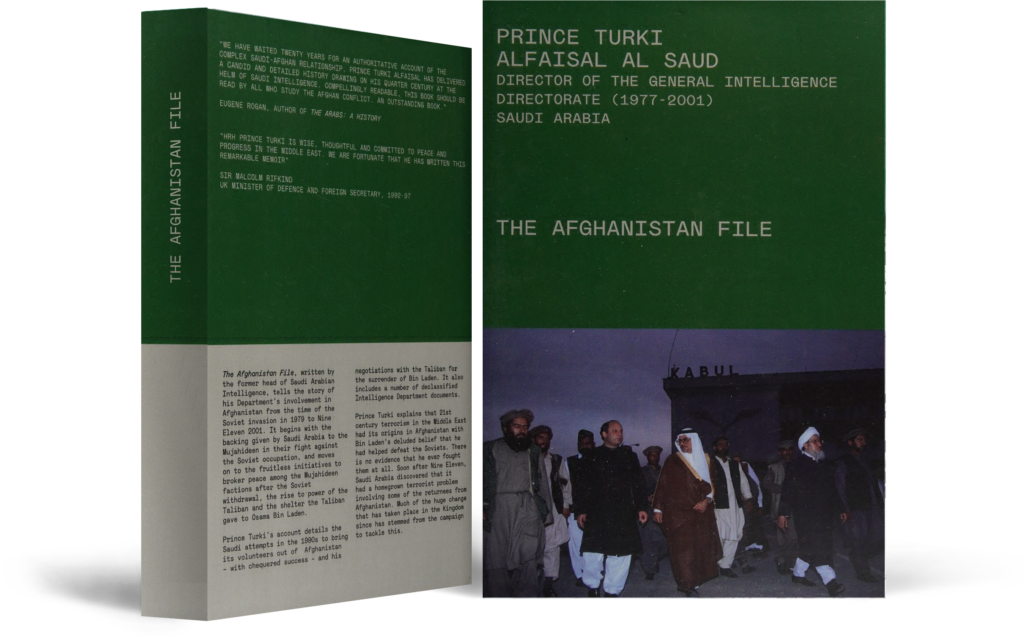
Book Profile
پرونده افغانستان
Compiler & Author: Prince Turki Al-Faisal Al-Saud
This book is the memoir and account of Prince Turki Al-Faisal, the former head of Saudi Arabia’s intelligence service, about Saudi Arabia’s role in Afghanistan from the Soviet invasion in 1979 to the September 11, 2001 attacks.
The book discusses Saudi Arabia’s support for the Mujahideen, the Afghan civil war, the rise of the Taliban, and the Taliban’s relationship with Osama bin Laden.
It also describes Saudi efforts to promote peace among Afghan factions and negotiations with the Taliban over the surrender of Osama bin Laden.
Massoud and Dostum's forces entered Kabul, and Najibullah sought refuge.
The central state structure collapsed completely, and a devastating civil war began among former allies, especially Massoud and Hekmatyar.
The Islamabad peace agreement was signed in Mecca.
The leaders swore an oath before the Kaaba, but the pact did not last even a day, revealing the depth of personal and political animosity.
The abduction of girls in Kandahar became linked to the Taliban’s forceful emergence.
The Saur Revolution took place, and the People's Democratic Party came to power.
The Taraki regime’s harsh implementation of social reforms and religious repression pushed resistance from political circles into the depths of religious masses and tribes.
The bloody Herat uprising took place under the leadership of Ismail Khan.
The brutal suppression of the uprising, with 5,000 killed, proved that the Kabul government lacked the ability to maintain internal control. This event pushed the Kremlin’s initial doubts toward the perceived necessity of intervention.
Jimmy Carter signed the authorization for non-lethal assistance.
Ahmad Shah Massoud was assassinated.
The removal of the last serious internal obstacle shortly before global events paved the way for the Taliban’s final collapse.
Terrorist attacks struck the United States.
A case that began with a covert intervention for liberation turned into a global crisis that brought renewed foreign invasion.
انتقال اولین چمدان پول نقد (۲ میلیون دلار) از ریاض به اسلامآباد.
این محموله شامل اسکناسهای ۱۰۰ دلاری (و نه ۲۰ دلاری) بود تا حجم فیزیکی برای انتقال محرمانه کاهش یابد. این نماد تعهد سریع و قاطع سعودی به شروع بزرگترین عملیات مخفی جنگ سرد بود.
توافق سهجانبه در اسلامآباد.
توافق شد که آمریکا و عربستان سهم مالی برابری داشته باشند، اما مدیریت کامل میدان و «حق انحصاری» تماس با مجاهدین به پاکستان واگذار شود. این «فاصلهگذاری استراتژیک» (Buffer) مانع تماس مستقیم CIA با افغانها میشد و کنترل سیاسی را در دست ISI نگ
تشکیل اتحاد هفتگانه مجاهدین در پیشاور.
تلاش برای ایجاد مشروعیت سیاسی بینالمللی، هرچند فقدان وحدت واقعی و مشاجرات رهبران حتی در مسیر مکه و مدینه، ناکارآمدی این اتحاد را از همان ابتدا آشکار کرد.
The ISI established the Ojhri logistics center.
This 30-hectare center in Rawalpindi became the logistical hub, allowing Pakistan to shape arms distribution according to groups’ loyalty to Islamabad’s interests.
Abdullah Azzam founded Maktab al-Khidamat in Peshawar.
This center marked the start of a more structured Arab presence. Contrary to common assumptions, among the 15,000 Saudis who came to the region, the overwhelming majority were aid workers, and only a few dozen actually took part in military fighting. Its strategic importance lay in creating transnational networks that after p
Joint U.S. and Saudi funding rose to 500 million dollars.
A strategic shift from making the occupation costly to forcing a withdrawal. This financial leap showed the coalition’s resolve to achieve final victory.
A leadership change in the Kremlin and the arrival of superior technology on the battlefield shattered the war’s psychological balance. Yet the absence of a unified political structure for the post-victory period put military gains at risk.
The first use of Stinger missiles in Jalalabad.
The collapse of Soviet air superiority. Notably, after Iranian border guards seized some of these missiles on the Herat route, the ISI cut the quota for Yunus Khalis’s party as punishment, showing the complexity of regional rivalries and the sensitivity surrounding this technology.
Gorbachev delivered a speech describing Afghanistan as a “bleeding wound.”
An admission of strategic defeat and the start of the countdown to withdrawal. The Kremlin realized that the cost of staying exceeded the cost of leaving.
The Geneva Accords were signed, and a major explosion struck the Ojhri ammunition depot.
As withdrawal diplomacy advanced, the explosion of thousands of tons of ammunition at Ojhri crippled the mujahideen’s logistics on the brink of victory and exposed deep rifts in the coalition.
The last Soviet soldier crossed the Hairatan Bridge.
The formal end of military occupation, but the beginning of a legitimacy crisis for Najibullah’s government and intensified internal power struggles.
شکست سنگین مجاهدین در نبرد جلالآباد.
این شکست ثابت کرد که مجاهدین در جنگهای کلاسیک ناتوان هستند. دلیل اصلی این فاجعه نه قدرت نجیبالله، بلکه فقدان «فرماندهی واحد» و رقابت میان ۸ فرمانده مستقل بود که هماهنگی عملیاتی را غیرممکن کرد.
با پایان جنگ سرد، افغانستان از اولویت استراتژیک خارج شد. مبارزان سابق به باندهای قدرت تبدیل شدند و کابل به میدان نبرد قومی-قبیلهای بدل گشت.
قطع رسمی کمکهای نظامی آمریکا و عربستان.
خروج ناگهانی حامیان بینالمللی پس از فروپاشی شوروی، افغانستان را در میانه بحران رها کرد و زمینه را برای رادیکالیسم فراهم ساخت.
Massoud and Dostum’s forces entered Kabul, and Najibullah sought asylum.
The central state structure fully collapsed, and a devastating civil war began among former allies, especially Massoud and Hekmatyar.
The Islamabad peace agreement was signed in Mecca.
The leaders swore before the Kaaba, but the pact did not last even a day, revealing the depth of personal and political enmities.
The abduction of girls in Kandahar became linked to the Taliban’s forceful emergence.
The Taliban offered “security” instead of “freedom.” A society exhausted by war and banditry preferred their strict order to the Mujahideen’s chaos.
The Taliban captured Kabul and brutally executed Najibullah.
It marked the start of extremist rule. Riyadh and Islamabad’s early recognition of the regime was later viewed as a strategic diplomatic mistake.
Turki al-Faisal held a tense and fruitless meeting with Mullah Omar about bin Laden.
Bin Laden turned from a “guest” into the Taliban’s “inevitability.” Mullah Omar’s refusal to hand him over led Riyadh to sever relations with the Taliban.
Ahmad Shah Massoud was assassinated.
The removal of the last serious internal obstacle shortly before the global events paved the way for the Taliban’s eventual fall.
Terrorist attacks struck the United States.
A case that began with a covert intervention for liberation turned into a global crisis that brought renewed foreign invasion.
With the fall of Kabul, a cycle that had begun with foreign intervention once again returned to a destructive point.
The legacy of a victorious yet failed war: Afghanistan’s experience is a strategic warning that military victory without a stable political order is only temporary. The intelligence coalition succeeded in expelling the enemy but failed completely in managing the victory and its aftermath.

AI Assistant
Fast and reliable answers