


1867 - Establishment of Deoband School
The Deoband School was established near Delhi.
Book Podcast
Book Profile
پاکستان؛ کالیدوسکوپی از اسلام
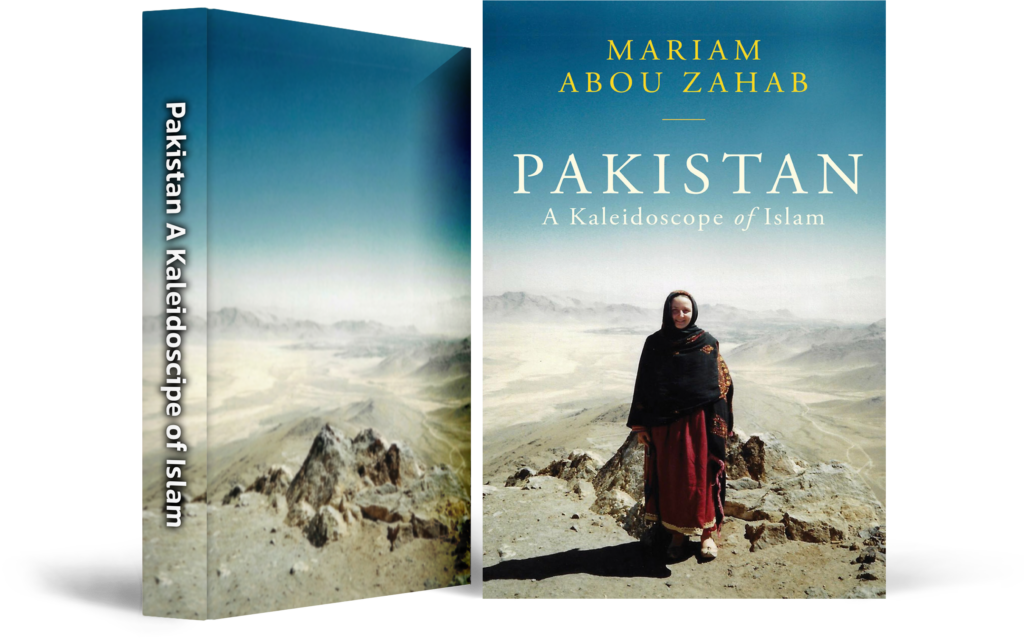
Compiler & Author: Mariam Abou Zahab
Pakistan: A Kaleidoscope of Islam provides a comprehensive examination of the diversity of Islamic movements in Pakistan. Mariam Abou Zahab argues that Islam in Pakistan is not monolithic but a complex mosaic of sectarian, ideological, ethnic, and political strands. She explores the roles of Deobandi, Barelvi, Shia, Salafi, and jihadist movements, and analyzes the intersections between religion, politics, ethnic identity, and regional dynamics. The book also discusses the influence of Afghanistan, the Middle East, and geopolitical rivalries on the evolution of political Islam in Pakistan. It presents a nuanced and multi-layered understanding of religion in Pakistani society.
The Deoband School was established near Delhi.
The Ahl-i Hadith movement, an elitist religious-political movement aimed at 'reform', began.
The Second Anglo-Afghan War led to the Treaty of Gandamak and the cession of Kurram territory to British control.
The Kurram Agency was established by the British.
The Durand Line was established, placing the Turi people on the British side.
The colonial government drafted the Frontier Crimes Regulation (FCR).
The All-India Ahl-i-Hadith Conference was held in Arrah (Bihar), which traces the roots of the central organization of Ahl-i-Hadith (MJAH).
The Ahrar Movement was established.
Sectarian clashes between Sunnis and Shias in Lucknow involved members of the Ahrar.
Jamaat-e-Islami was founded by Maulana Maududi.
Establishment of Jamiat Ulema-e-Islam (JUI), a Sunni Deobandi party.
Partition of India and Pakistan; large migration of Indian refugees to Jhang. Establishment of Ahmadiyya headquarters in Rabwah, near Chiniot, in the same region.
The government of Pakistan recognized the autonomous nature of the Federally Administered Tribal Areas (FATA).
Establishment of the Organization for the Protection of Shia Rights in Pakistan (Idara-e Tahaffuz-e Hoquq-e Shia).
Establishment of Imamia Students Organization (ISO) at King Edward Medical College in Lahore.
Official establishment of Jamiat Ulema-e-Islam (JUI) as a political party in Lahore.
Violent Sunni-Shia clashes in Jhang resulted in the death of five Sunnis.
Emergence of Shia leader Syed Mehdi Al-Hakim in exile to Pakistan.
Establishment of Imamia Students Organization (ISO) to mobilize Shia students on a religious basis.
Maulvi Noor Muhammad initiated a movement among the Wazir tribes.
The Ahmadiyya community was declared a non-Muslim minority by a constitutional amendment.
The Pakistan Army entered South Waziristan and dismantled the parallel government of Maulvi Noor Muhammad.
Zulfikar Ali Bhutto banned alcohol and declared Friday a public holiday.
General Zia-ul-Haq took power in Pakistan and initiated Islamization policies.
Allama Arif Hussain Al-Hussaini organized protests against the Shah of Iran in Peshawar.
Start of the Iranian Revolution.
A Shia convention was held in Bhakkar where Mufti Jafar Hussain was elected as the leader of the Shia community, and the formation of Tehreek-e-Nafaz-e-Fiqh-e-Jafaria (TNFJ) was announced.
The mandatory Zakat (Ushr) ordinance was issued.
Shias besieged Islamabad for three days, leading to an agreement exempting Shias from Zakat deduction.
The establishment of Harakat-ul-Jihad al-Islami (HJI) by three students from Karachi.
Sectarian violence occurred in the Bazaar of Sedeh, Karam administration.
Maryam Abuzahid joined Afran as a volunteer.
Issam Sartawi was assassinated by the Abu Nidal Organization.
In spring 1983, Maryam Abuzahid briefly took up arms with the Arafat faction of the PLO.
In summer 1983, Maryam Abuzahid traveled with Jean-Pierre Perrin to the desert regions of Afghanistan.
Allama Arif Hussain Al-Hussaini called for a referendum boycott.
Establishment of Sipah-e-Sahaba Pakistan (SSP) in Jhang.
Quetta incidents led to violence and widespread arrests.
Sipah-e-Sahaba Pakistan (SSP) founded in Jhang by Maulana Haq Nawaz Jhangvi.
Establishment of Markaz-ud-Dawa-wal-Irshad (MDI) by Hafiz Muhammad Saeed, Dr. Zafar Iqbal, and Sheikh Abdullah Azzam.
Anti-Shia riots in Kurram Agency and Gilgit.
Assassination of Ehsan Elahi Zaheer and Habib ur Rehman Yazdani, leaders of Ahl-e-Hadith.
Allama Arif Hussain Al-Hussaini announced the transformation of TNFJ into a political party.
The organization Harakat-ul-Jihad al-Islami (HJI) was renamed to Harakat-ul-Mujahideen (HUM).
Assassination of Allama Arif Hussain Al-Hussaini in Peshawar.
Allama Sajid Naqvi was appointed as the successor to Allama Hussaini.
Formation of Tehreek-ul-Mujahideen, a jihadist group in Indian-occupied Kashmir.
Assassination of Haq Nawaz Jhangvi, founder of Sipah-e-Sahaba Pakistan (SSP).
Assassination of Sadeq Ganji, Iranian Consul General in Lahore.
A split in HJI led to the formation of Harkat-ul-Ansar (HUA).
Assassination of Maulana Isar-ul-Qasmi, successor to Haq Nawaz Jhangvi.
Sheikh Omar Saeed imprisoned in India for kidnapping three Western tourists in Kashmir.
Demolition of Babri Mosque in Ayodhya, India.
Attack on a group of Western tourists in Srinagar, Kashmir.
Tehrik-e-Jafaria Pakistan (TJP) renamed from Tehrik-e-Nifaz-e-Fiqh-e-Jafaria (TNFJ).
Aimal Kasi's attack on CIA employees in Langley, Virginia.
Ramzi Yousef's attack on the World Trade Center.
Separation of Lashkar-e-Jhangvi (LeJ) from Sipah-e-Sahaba Pakistan (SSP).
Establishment of Tehreek-e-Nafaz-e-Shariat-e-Mohammadi (TNSM) by Sufi Muhammad in Malakand.
Sheikh Iqbal was assassinated by militants of Sipah-e-Sahaba Pakistan (SSP).
Interim government of Malik Meraj Khalid introduced universal adult suffrage in tribal areas.
Massacre of Hazara Shias and Iranian diplomats in Mazar-i-Sharif, Afghanistan.
General Musharraf seized power in Pakistan.
Hijacking of Indian Airlines plane at Kandahar airport led to the release of Masood Azhar.
Formation of Jaish-e-Mohammed (JeM) in Karachi.
Jaish-e-Mohammed (JeM) attacks on Indian forces in Srinagar.
Assassination of a Shia doctor by Masood Azhar's guards.
Suicide attack by Mohammad Bilal (alias Asif) on Indian Army base in Kashmir.
Establishment of the Pak-Afghan Defense Council by Maulana Sami-ul-Haq.
Post 9/11, the UK banned Lashkar-e-Taiba (LeT) as a terrorist organization.
Deadly attack by Lashkar-e-Taiba (LeT) in Kashmir.
Pakistan dispatched several aircraft to rescue its officers surrounded in Kunduz by the Taliban and Al-Qaeda militants.
Attack on the Indian Parliament.
Lashkar-e-Taiba (LeT) renamed to Jamaat-ud-Dawa (JuD) in Pakistan.
Clash on Kohat route resulted in the death of ten Arabs.
General Musharraf banned Sipah-e-Sahaba Pakistan (SSP), Jaish-e-Mohammed (JeM), and Tehreek-e-Nafaz-e-Shariat-e-Mohammadi (TNSM).
Kidnapping of Daniel Pearl.
Attack on a Christian church in Islamabad.
US missile attack on a Taliban training camp in Kurram Agency.
Attack in Karachi kills eleven French naval construction workers.
Assassination of Riaz Basra.
Pakistan parliamentary elections.
Release of Hafiz Saeed.
Killing of Asif Ramzi.
Release of Masood Azhar.
Assassination of Abdul Majid Dar.
Sipah-e-Sahaba Pakistan (SSP) was listed as a terrorist organization by the United States.
Arrest of Abdul Jabbar.
Assassination of Maulana Azam Tariq.
Re-ban of Sipah-e-Sahaba Pakistan (SSP).
Shakai agreement between the army and Nek Muhammad.
Assassination of Nek Muhammad in a drone strike.
Tsunami, Jamaat-ud-Dawa Pakistan (JUD) provided aid.
Peace agreement between the army and Baitullah Mehsud.
Earthquake in Kashmir and northern Pakistan, Jamaat-ud-Dawa Pakistan (JUD) provided aid.
Sipah-e-Sahaba Pakistan (SSP) organized a protest in Islamabad.
Pakistani military forces in South Waziristan joined Mullah Nazir against Uzbeks.
Sectarian riots began in Kurram Agency.
Attack on Lal Masjid (Red Mosque) in Islamabad.
Formation of Tehrik-i-Taliban Pakistan (TTP).
A new group called Taliban Maqami was formed by Waziri tribes Usmanzai and Ahmadzai.
Operation Zalzala in Waziristan.
Suicide attack outside the Pakistan People's Party election office in Parachinar.
Bombing at the Marriott Hotel in Islamabad.
Bomb explosion at Sarai Alamdar Karbala in Peshawar.
Attacks on the Sri Lankan cricket team and police academy in Lahore.
NATO forces and the Afghan government invited tribal elders for peace talks.
Militant attacks in Lower Kurram resulted in about 150 deaths.
A bomb attack on a village near Kohat killed thirty-five Shia.
Attack on the army headquarters in Rawalpindi.
General Kayani inaugurated the Wana-Tank road.
Suicide attack at a refugee camp in Kacha Paka, Kohat.
Rana Sanaullah, Punjab's Law Minister, met with Maulana Muhammad Ahmed Ludhianvi, leader of Sipah-e-Sahaba Pakistan (SSP), in Jhang.
A suicide attack on a Shia hospital in the Hangu area.
A suicide attack in Kohat resulted in the death of fifteen Shias.
President Zardari signed two orders to amend the FCR and extend the Political Parties Order (2002) to FATA.

AI Assistant
Fast and reliable answers