



Birth of Prophet Muhammad
Born in Mecca; initiated a message that centuries later became the ontological foundation and national identity of Pakistan.
Book Podcast
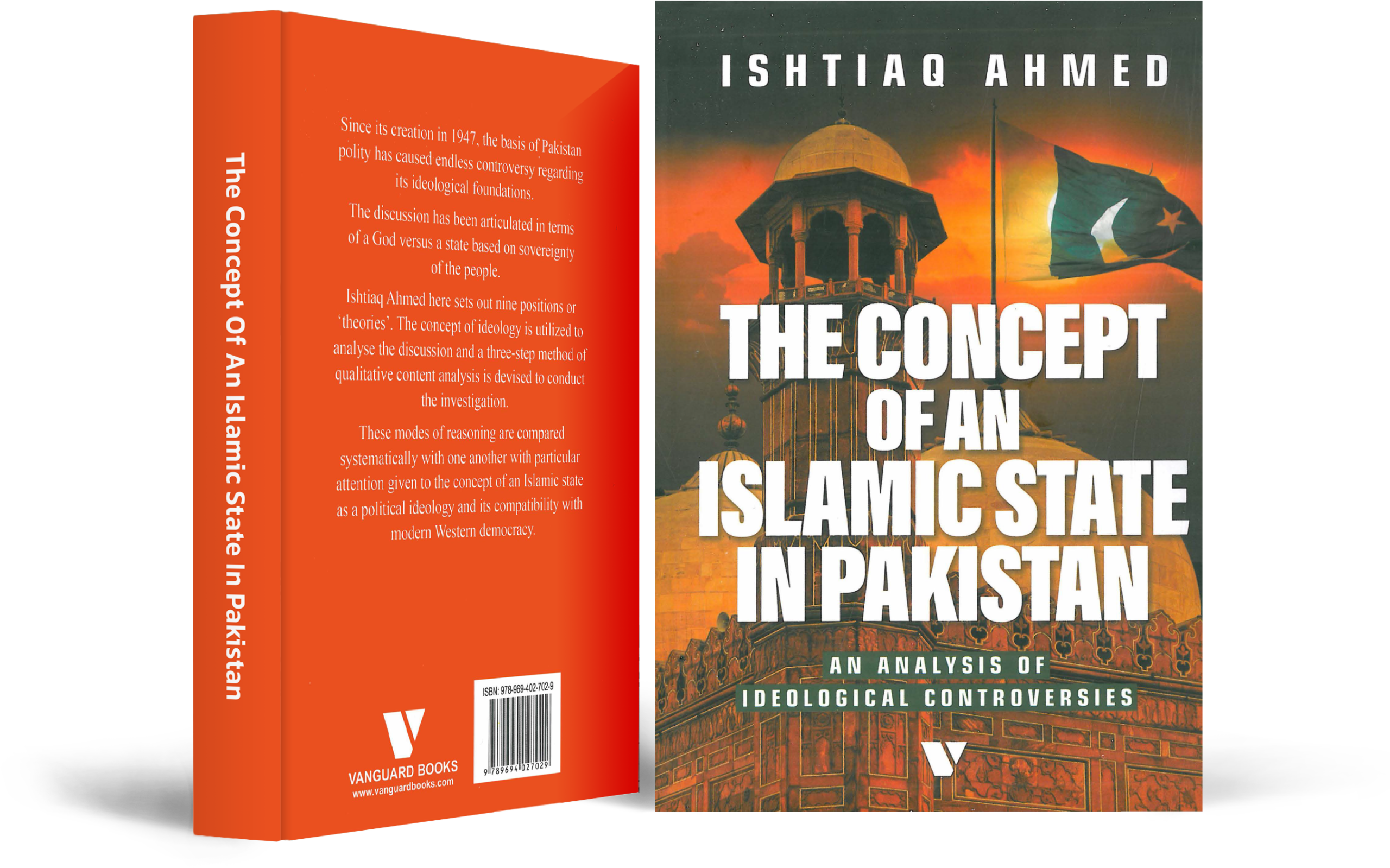
Book Profile
مفهوم دولت اسلامی در پاکستان: تحلیلی از مناقشات ایدئولوژیک
Compiler & Author: Ishtiaq Ahmed
This book examines the idea of an “Islamic state” within Pakistan’s political and intellectual history. Ishtiaq Ahmed analyzes the ideological debates among Islamic scholars, politicians, and lawmakers. He explores how differing interpretations of Islam have influenced Pakistan’s constitution and governance. The book offers a critical perspective on the ideological challenges shaping the state.
Born in Mecca; initiated a message that centuries later became the ontological foundation and national identity of Pakistan.
Migration and establishment of the first 'Islamic State'; an event that became the theoretical basis for all governance models in Pakistan, from caliphate to Islamic republicanism.
The passing of the Prophet; the first succession crisis and the formation of the caliphate, recognized in Muslim political history as a symbol of the continuity of political and spiritual authority.
The caliphate of Abu Bakr; consolidation of the Rashidun Caliphate in Sunni tradition, respected as the first political organization experience after prophethood.
The caliphate of Umar; institutionalization of administrative structures and territorial expansion, which in contemporary Pakistani discourse symbolizes 'social justice' and efficient Islamic governance.
Continuation of the Caliphs' tradition and final compilation of the Quran; an event that formalized the main source of legislation (Sharia) in all Islamic state models.
End of the Rashidun Caliphs and the serious emergence of sectarian divisions (Shia and Sunni); this historical split is now reproduced in Pakistan's social structure as religious tensions and security crises.
Conflicts between rationalists (Mu'tazila) and religious orthodox (Ash'ari); this historical confrontation shapes the early roots of intellectual and fundamentalist conflicts in modern Pakistan.
The emergence of the Ahmadiyya movement, which became the center of controversy over the 'legal definition of a Muslim' and religious boundaries in Pakistan in 1974.
The influence of Islamic modernism, which consciously attempted to bridge parliamentary democracy and Sharia principles.
Founder of Jamaat-e-Islami and theorist of 'Sovereignty of Allah'. He rejected human will in legislation, proposing a model of 'sacred state' that significantly influenced anti-democratic movements in Pakistan.
This event dismantled the symbol of political unity of the Ummah and, according to Hamid Enayat, led Muslims of the subcontinent to seek an alternative model of 'Islamic national state'.
Transforming religious identity into a nationalist tool for creating an independent homeland.
The birth of the first modern state with a religious identity and the beginning of an endless quest to legally define 'Islamic' in the political structure.
Period of Ishtiaq Ahmed's studies at the University of Punjab; a time when the clash between secular leftist and religious rightist tendencies peaked in academic settings.
An event that revitalized discussions on 'Islamic governance' and 'Islamic economics' in Pakistan, influencing the prevailing paradigms in domestic politics.
A pivotal research trip where Ishtiaq Ahmed met influential figures like Maulana Zafar Ahmad Ansari and Mumtaz Daultana, documenting the diversity of opinions and the lack of consensus on the Islamic state model.
Writing of the revised book preface in Stockholm; highlighting the fact that after decades, there is still no consensus on the nature of the Islamic state in Pakistan.

AI Assistant
Fast and reliable answers