



Hatred is not trending
Following the Twin Towers attacks, George W. Bush and media outlets like CNN manufactured Islamophobia to justify immoral, economically ruinous wars in Afghanistan and Iraq—a legacy Barack Obama struggled to undo before…
AI Analysis
Hatred is not trending among younger Americans
In the aftermath of the Twin Towers attacks, George W Bush devised the recipe for Islamophobia to justify America’s military campaigns in Afghanistan and Iraq, ostensibly in pursuit of terrorists.
Media outlets such as CNN became cheerleaders for the US Marines, propagating the narrative that Muslims were terrorists. Riding the wave of Islamophobia, Bush secured a second term as president. Yet he could never establish a convincing justification for the invasions of Afghanistan and Iraq. The cost of these immoral wars eventually pushed the US into an economic recession.
Democratic President Barack Obama then had to confront the recession while simultaneously shouldering the burden of the wars Bush had set in motion in Afghanistan and Iraq. America suffered enormous economic losses. Obama made efforts to cure the disease of Islamophobia. But hatred is an addiction that is almost impossible to overcome.
Then, to almost everyone’s astonishment, Republican leader Donald Trump emerged, quite literally, from the world of professional wrestling. He won voters over with Islamophobic rhetoric and hate speech against immigrants. Drawn by the magnetic appeal of the Republican Party’s hatred of Muslims, Zionists and Hindutva ideologues gathered in anticipation of their long-awaited holy war. An alliance of hatred paved the way for a triangular romance between Trump, Israel’s Benjamin Netanyahu and India’s Narendra Modi. In Netanyahu’s eyes lay the dream of a Greater Israel; in Modi’s, the fantasy of an undivided India.
But the kind of social engineering possible in Israeli society through the politics of Holocaust memory, or the business of manufacturing hatred in India through films demonising the Mughals and Pakistan, does not seem equally possible in American society. In India, there are people willing to imagine temples buried beneath ancient mosques. There is the politics of the cow, and the spectacle of saffron flags being raised across the country. Such politics may have its limits in the US. Moreover, the American electoral system does not have the likes of India’s Chief Election Commissioner Gyanesh Kumar. As a result, when the cost of living becomes unaffordable and employment opportunities disappear, American citizens can turn the tables through the ballot box. And so Trump had to leave office after four years.
Then came the Biden years, when the Democratic leader’s presidency, weighed down by the frailties of old age, saw the American economy repeatedly stumble, for reasons both real and perceived. To everyone’s surprise, Trump was elected president once again. This time, he abandoned his romantic dalliance with Modi and settled into a more committed relationship with Netanyahu. Facing corruption allegations, Netanyahu finds it difficult to hold on to power without constantly fuelling war hysteria and invoking the politics of historical memory. So, with Trump providing the cover, Netanyahu pulled the trigger on Iran.
Trump, however, had no idea that Iran had advanced so far in military technology and warfare. Having listened for years to Islamophobic media narratives, he had bought into the myth that Muslims were uneducated, technologically backward cave-dwellers. He himself has acknowledged that imposing a war on Iran was an act of hubris.
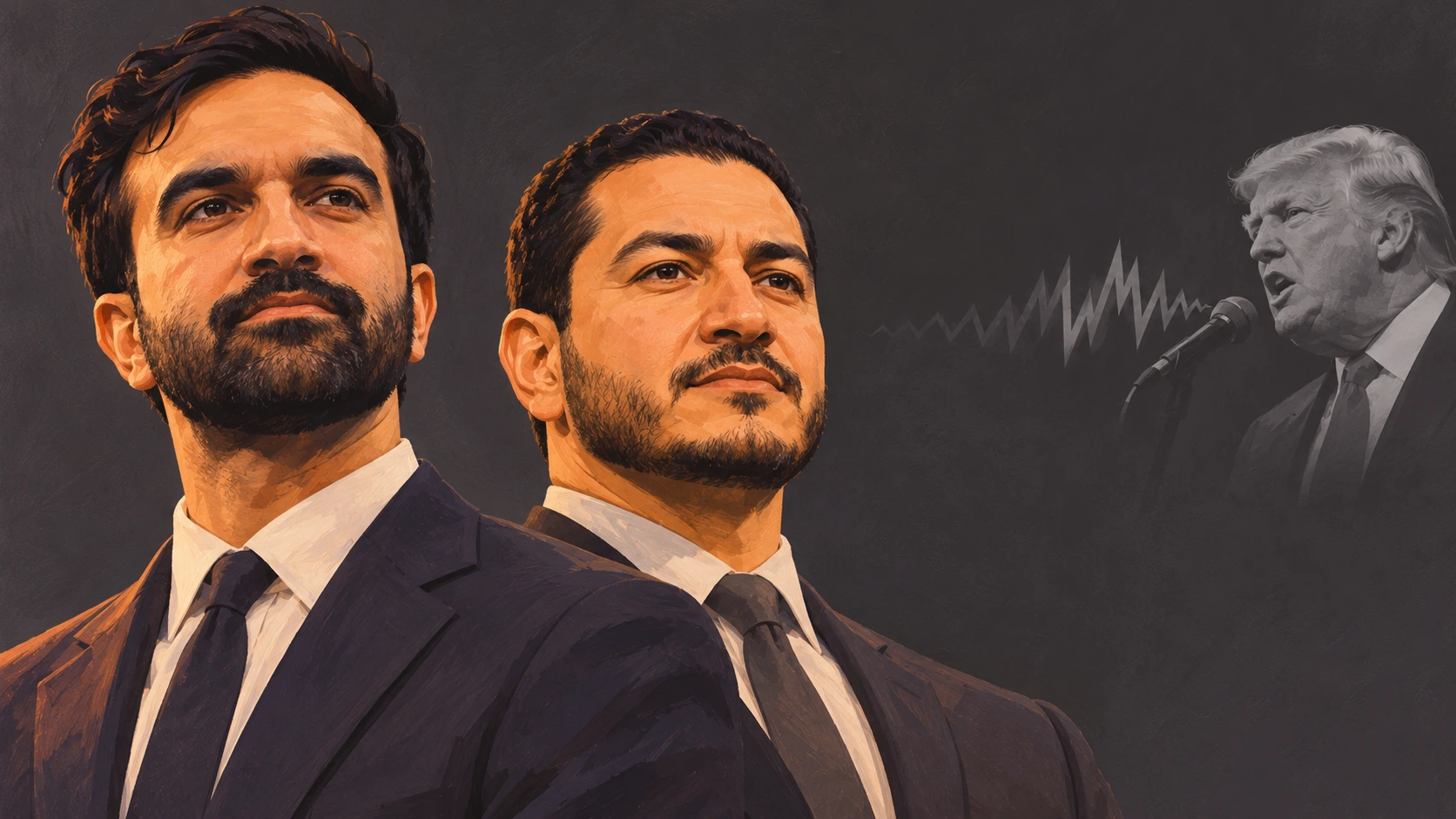
Meanwhile, Zohran Mamdani emerged as the mayor of New York. Through the principles of social democracy, he managed to address the city’s budget deficit within just a few months, delivering a standard of governance rarely seen in recent memory. He sought to find unity amid the diversity of people belonging to different faiths, ethnicities and ways of life. This diversity has also become increasingly visible among Democratic candidates in the recent US midterm elections.
When Egyptian-American Abdul El-Sayed entered the race for a Michigan Senate seat, Trump reached for the dog-eared pages of his Islamophobia playbook and declared that Americans should be afraid of a candidate simply because of his name. Citizens immediately pushed back, saying: “We have known Abdul since his school days. We know him to be honest, disciplined and exceptionally talented”. The stale vocabulary of Islamophobia came crashing down.
After Abdul El-Sayed won the election, a British Sky News journalist attempted to question him using the same outdated language of Islamophobia. Abdul responded by asking why American citizens should care what British Sky News thought about the matter. India’s Republic Bangla, meanwhile, seems to believe Trump’s party suffered such a humiliating defeat because he fell out of love with Modi.
The truth is that the stale rhetoric of hatred cultivated for a century by Zionists and Hindutva ideologues no longer commands the readership, viewership or following it once did.
Gen Alpha, Gen Z and younger Millennials despise the word ‘hatred’ more than anything else. They believe that it is outdated to practise hatred. This generational shift is steadily exposing the hollowness of the grandiose theory of the so-called Clash of Civilisations.
The Democrats’ comeback in the US is, in essence, a sign of people coming together in friendship against hatred. Those who have yet to sense the winds of this new age may not even begin to comprehend just how irrelevant they have become.
Editor’s Note: This article was originally published in "The News", Pakistan, and has been republished on the Iqbal Forum website with attribution to the original author and publication. The views expressed are solely those of the author and do not necessarily reflect the position of Iqbal Forum.
About the Author

How to Cite This Article
Ahsan, Maskwaith. “Hatred is not trending.” Iqbal Forum, November 13, 2026. https://iqbalforum.org/en/?p=55274.





Comments