



The ECO dream
Convened in Islamabad on November 15-16 under Pakistan’s chairmanship, the 30th Economic Cooperation Organisation (ECO) Council of Ministers meeting sought to transform the 10-nation bloc’s vast potential into tangible economic interdependence toward…
AI Analysis
The ECO dream: Trade corridors and regional integration
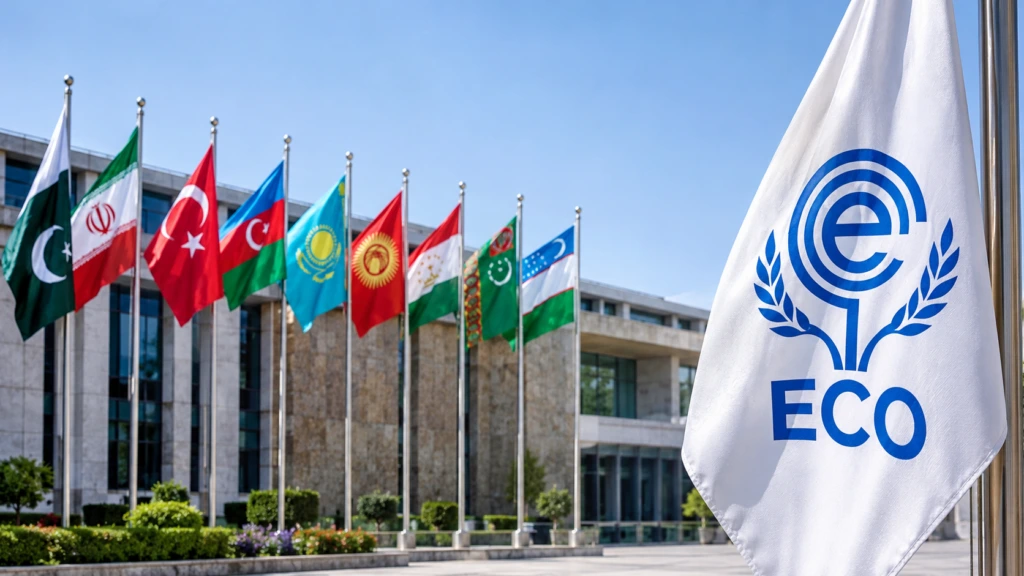
THE 30th meeting of the Economic Cooperation Organisation (ECO) Council of Ministers was held in Islamabad on November 15-16. The event offered a timely reminder of a regional bloc that remains rich in potential, yet under-realised. Convened under Pakistan’s 2026-27 chairmanship with the theme “Reviving Regionalism for a Resilient ECO,” the gathering brought together foreign ministers and senior diplomats from across the 10-nation bloc to adopt the Islamabad Communiqué and chart the road toward ECO Vision 2035.
While the diplomatic optics in the capital projected a renewed commitment to trade facilitation, transport connectivity, and energy security, the real test lies in whether member states can finally translate decades-old aspirations into tangible economic interdependence.
To understand the promise and pitfalls of this forum, one must look at its origins as the Regional Cooperation for Development (RCD), founded in July 1964 by Pakistan, Iran and Turkiye. The RCD sought to leverage historical and cultural affinities for socioeconomic and infrastructural collaboration. However, hampered by limited economic complementarities and geopolitical shifts, most notably the 1979 Iranian Revolution, the RCD eventually became dormant.
It was revived as the ECO in 1985 and underwent a transformative expansion in 1992 with the inclusion of Afghanistan, Azerbaijan, and the five newly independent Central Asian Republics. In contemporary international relations, this bloc spanning over eight million square kilometres and home to nearly 500m people matters immensely as a Eurasian bridge. At a time when global supply chains are fragmenting and great-power rivalries are hardening, the ECO represents a vital non-Western platform capable of linking resource-rich Central Asia with the warm waters of the Arabian Sea and European markets via Turkiye.
The real test lies in whether members can translate aspirations into economic interdependence.
Despite operating in one of the world’s most conflict-prone neighbourhoods, the ECO possesses compelling structural drivers for regional integration. First, the economic complementarity between its members creates a natural logic for cooperation. The hydrocarbon and mineral wealth of Central Asia and Iran pairs seamlessly with the industrial bases, agricultural output, and massive consumer markets of Pakistan and Turkiye. Furthermore, the landlocked geography of six of its 10 members makes regional connectivity not merely an economic preference, but an existential necessity for diversifying trade routes.
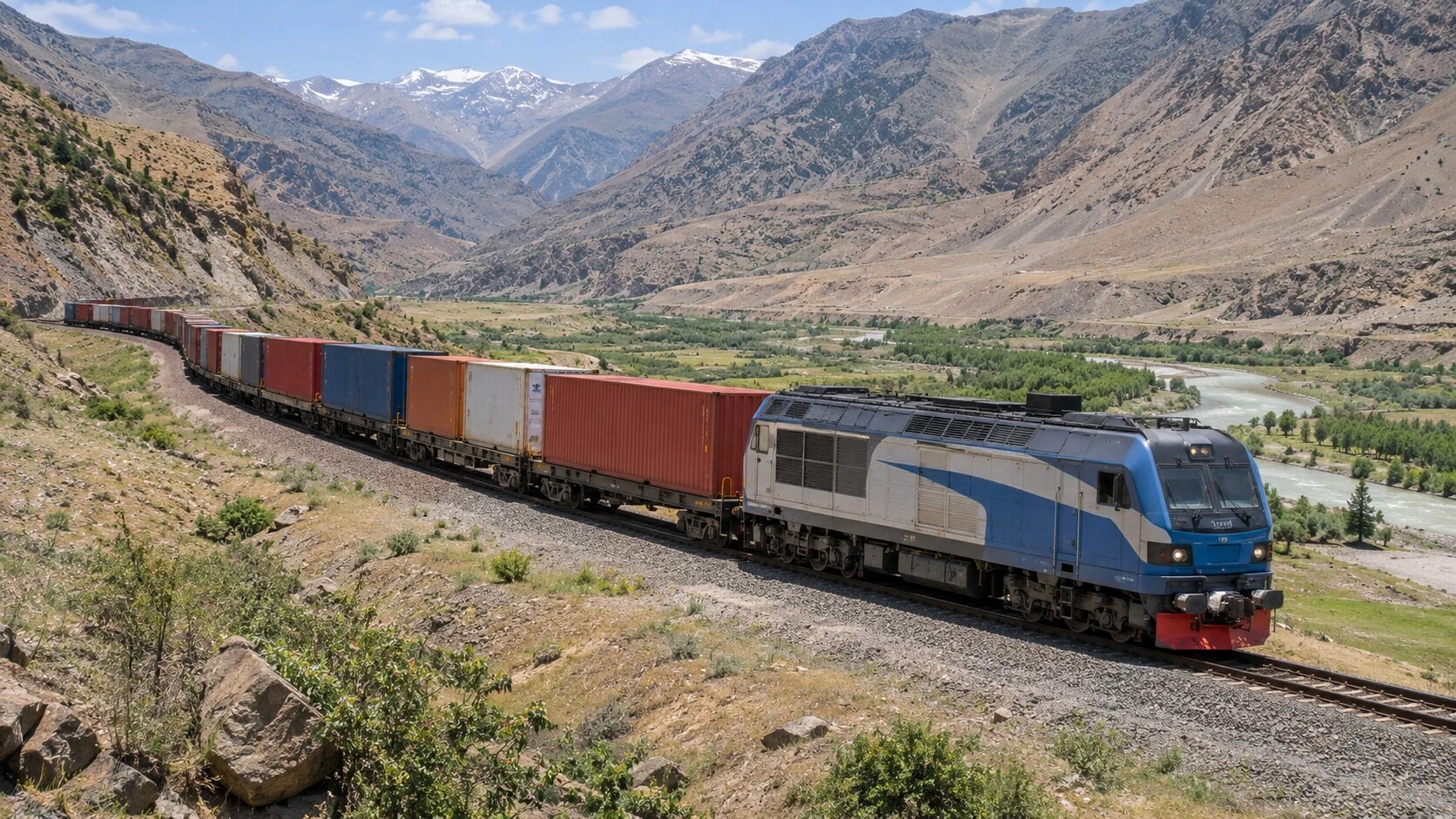
Second, regional integration within the ECO framework can serve as a stabilising buffer against geopolitical volatility. In a region marred by lingering sanctions on Iran, prolonged instability in Afghanistan, and shifting security dynamics in the South Caucasus, economic interdependence raises the cost of conflict and institutionalises dialogue. Projects such as the Istanbul-Tehran-Islamabad (ITI) cargo corridor, the Ashgabat Agreement, and emerging joint border trade zones demonstrate that technical and commercial frameworks can survive political friction. By focusing on low-politics areas such as customs harmonisation under the ECO Trade Agreement, climate resilience, and tourism, the bloc allows neighbours, despite having strained ties, to compartmentalise security disputes while gradually building the physical and institutional infrastructure of peace.
For Pakistan, the ECO occupies an increasingly central place in its geo-economic and strategic calculations. With the South Asian Association for Regional Cooperation effectively paralysed by New Delhi’s political intransigence, Islamabad has deliberately pivoted westward and northward to avoid regional isolation. The ECO provides Pakistan with a natural diplomatic forum where it enjoys deep historical, cultural, and religious ties without the hegemonic friction that characterises South Asian politics. Being an active member of ECO, Islamabad is eager to position itself as the indispensable transit hub connecting landlocked Central Asia to global maritime trade through the ports of Karachi and Gwadar.
Beyond diplomatic utility, the ECO directly aligns with Pakistan’s domestic economic imperatives, particularly energy security and trade diversification. Islamabad views regional energy initiatives such as the TAPI gas pipeline and the CASA-1000 power project as critical lifelines that can only succeed within a cooperative ECO ecosystem. Also, Islamabad believes that expanding preferential trade agreements with Central Asian states and Turkiye offers Pakistani exporters access to untapped markets, reducing Islamabad’s over-reliance on traditional Western destinations.
Yet, any realistic assessment of the ECO’s future must confront its most critical geographical and political bottleneck: Afghanistan. Positioned squarely at the crossroads of South and Central Asia, Afghanistan is the indispensable land bridge required to turn ECO’s connectivity blueprints into reality. However, due to the presence of transnational terrorist groups like IS-K and TTP, chronic insecurity continues to deter international investors, inflates transit insurance costs, and stalls flagship projects such as the Trans-Afghan Railway and TAPI. Without verifiable counterterrorism guarantees and secure transit corridors across Afghan territory, the physical integration of Central Asia with Pakistani ports remains an aspiration rather than an actionable trade route.
Further, the absence of an inclusive governance structure that prevents Kabul from gaining formal international recognition creates operational, legal and technical impediments. Without recognising the Taliban’s legitimacy in Kabul, it is difficult to standardise customs, enforce binding trade treaties, or unlock international financing needed for cross-border megaprojects.
The ECO dream cannot be realised if member states do not confront several difficult questions in the 19th ECO summit, to be held in Islamabad in 2027. How will ECO devise resilient financial and trade mechanisms to bypass or overcome the crippling impact of US sanctions on Iran, which routinely paralyses banking channels and stalls joint energy ventures? What viable security framework can be established with Kabul to neutralise terror threats when the interim administration remains diplomatically unrecognised and politically exclusive?
More critically, can ECO members muster the collective political will to forge a unified regional security architecture specifically tasked with protecting transnational pipelines, railways, and power grids traversing insecure Afghan territory?
Editor’s Note: This article was originally published in "Dawn", Pakistan, and has been republished on the Iqbal Forum website with attribution to the original author and publication. The views expressed are solely those of the author and do not necessarily reflect the position of Iqbal Forum.
About the Author
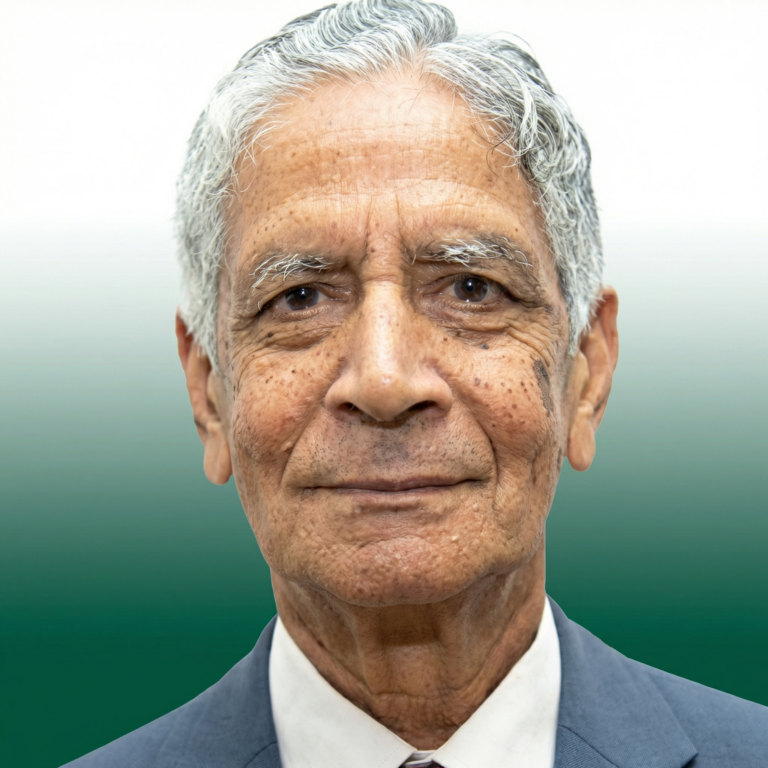
Touqir Hussain
A distinguished Pakistani diplomat who has served as the country's ambassador to Brazil, Japan, and Spain
- Politics
How to Cite This Article
Hussain, Touqir. “The ECO dream.” Iqbal Forum, November 23, 2026. https://iqbalforum.org/en/?p=56558.


Comments