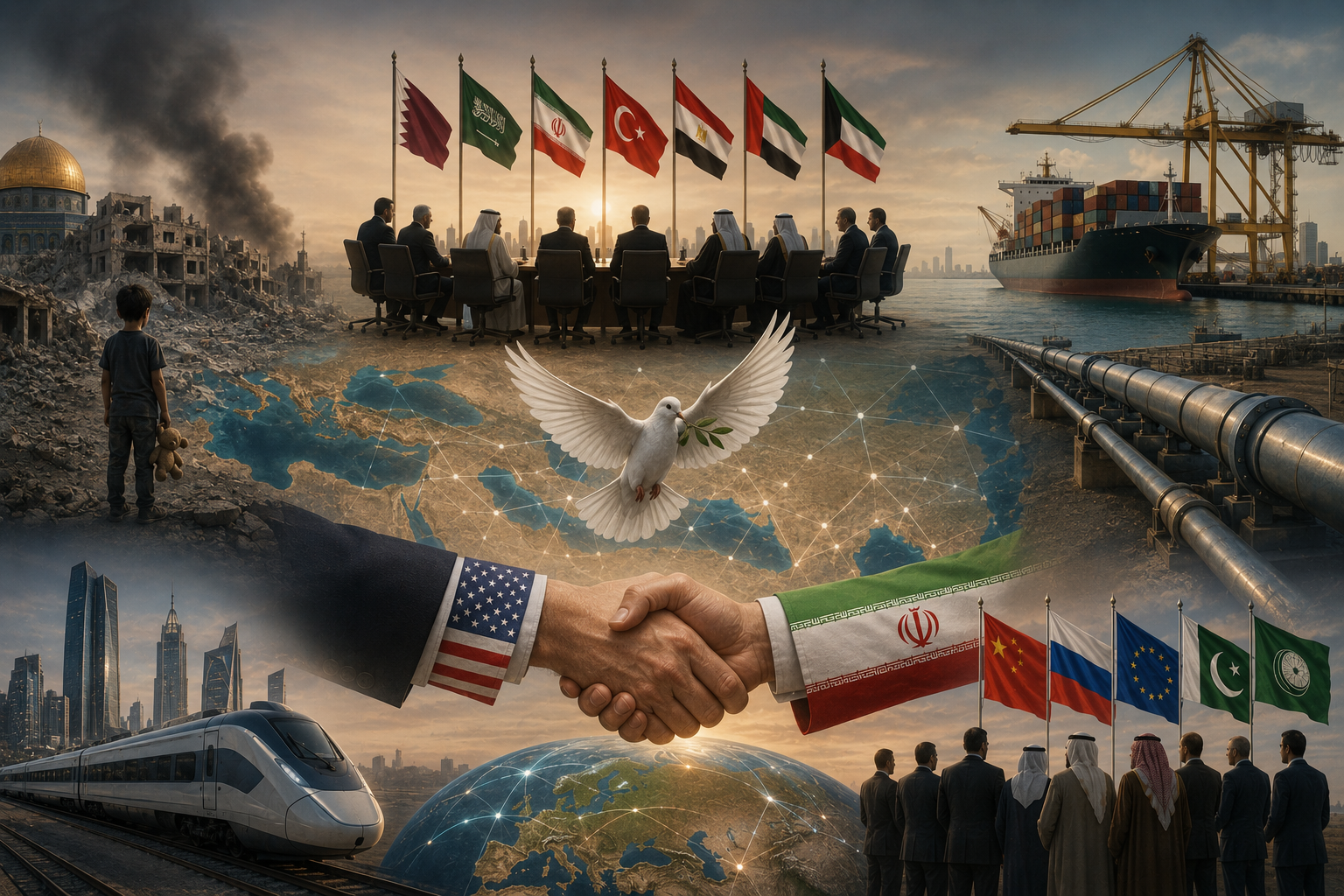
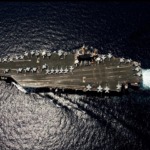
IN recent times, the Israel–Hamas conflict in Gaza, coupled with military confrontations between the US and Iran over the Strait of Hormuz control is, indeed, profoundly catalyzing a strategic shift in the Middle East’s geopolitical landscape, thereby weaving the fabric of a new Middle East under transition. Traditional power centers like regional monarchies and long-standing US alliances are being reevaluated as new dynamics emerge—driven by direct military confrontations, shifting alliances and evolving US foreign policy. As US influence recalibrates in the region, a new geopolitical tapestry is reshaping the future destiny of the region.
The shifting of the old guard: The 2026 war has fundamentally weakened the long-standing pillars of regional balance. Non-state actors such as Hezbollah and Hamas have seen their military and political leverage significantly diminished, while Iran has absorbed major infrastructural blows yet remains a persistent regional power. Meanwhile, the Gulf States—including Qatar, Bahrain, Oman, Saudi Arabia, the UAE and Kuwait—are diversifying their defence and trade partnerships. Rather than relying solely on Washington, they are pursuing independent security doctrines, greater connectivity and economic corridors, gradually shifting away from strictly ideological, conflict-driven regional blocs.
From maximum pressure to strained agreements: US-Iran relations continue to experience severe turbulence, with ceasefires and memorandums of understanding frequently threatened by returning rounds of kinetic strikes and disagreements over the Strait of Hormuz. Ostensibly, in the second phase of the escalating conflict, Tehran has demonstrated resilience by sustaining persistent missile and drone attacks aimed at disrupting Israel’s economy and regional influence. Despite power imbalances, Iran leverages asymmetric warfare to challenge adversaries, projecting deterrence.
Transitional governance shift: The post-war landscape reached a critical juncture in July 2026 when Hamas officially dissolved its de facto civilian government. The militant group expressed a willingness to hand administrative authority to the National Committee for the Administration of Gaza (NCAG), a US-backed technocratic council. On the other hand, despite transitioning civilian administration to technocrats, Hamas has resisted unilateral disarmament. Conversely, Israel maintains that full military withdrawal and major reconstruction cannot proceed until all Palestinian factions are disarmed, leaving the peace roadmap in a state of fragile, heavily conditioned progress.
The Gaza peace process: Current efforts are being managed under a US-brokered framework overseen by a specialized Board of Peace. The body, which includes figures such as Tony Blair and Jared Kushner, is implementing a “Phase 2” plan featuring localized humanitarian zones, though it continues to face significant political friction. The next US administration will likely determine whether to maintain the centralized US-led framework or return to a multilateral UN- and European-assisted mechanism. The Gaza peace process and its long-term reconstruction are, therefore, set to remain the defining Middle Eastern foreign policy challenge for the United States.
Alternative institutional models: China is using platforms such as the Shanghai Cooperation Organization (SCO) to deepen engagement with Middle Eastern states, including Saudi Arabia and Iran. By treating Gulf States as strategic economic partners rather than junior defence allies, Beijing promotes a model of “non-interference” that appeals to regional governments. Through BRI-sponsored projects and its mediation between Iran and Saudi Arabia, China positions itself as an alternative power broker to the Washington-centric security paradigm. Meanwhile, the EU, alongside China, Russia and the Organization of Islamic Cooperation (OIC), continues to uphold international law by opposing territorial expansion and demographic changes in occupied territories.
The Hormuz Strait factor: The Strait of Hormuz is a critical geopolitical and economic chokepoint, with control or disruption directly influencing regional power dynamics. As seen in 2025, Saudi and Emirati pipelines offer alternative routes, reducing dependency on Hormuz during crises. However, even minor disruptions—such as those triggered by US-Iran tensions—can destabilize global energy markets, reshape alliances and empower states that secure alternate transport routes. Thus, dominance over or access to the strait remains a cornerstone of regional influence, shaping military strategy, economic resilience and diplomatic leverage across the Middle East.
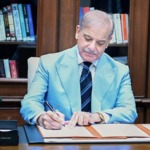
Pakistan’s emerging role: Though Pakistan, a middle power, but the role it has played in the Middle East is strategically even stronger and leveraging than global powers. By formulating the Islamabad Memorandum of Understanding, Pakistan has emerged as the most credible peace architect and security partner in the Middle East. Further, having developed its balancing relations with Saudi Arabia, Iran and Turkey and while moving beyond its traditional South Asian identity, Pakistan has also solidified its relations with the MENA. Simultaneously, Pakistan, Turkey, Qatar, Saudi Arabia, Egypt and Kuwait are forging new equation in the region. Through trade, defense and diplomacy this block aims to rebalance global rivalries and shape the Middle East’s emerging order. In conclusion, the Gaza war and the US+Israel-Iran conflict have permanently altered the traditional Middle Eastern balance of power. The geopolitical landscape is transitioning away from US-centric security arrangements as regional states diversify their defense strategies. And yet, in a growing power rivalry, the US is seeking new energy corridors; while China offers unconditional investment. As a new Middle East undergoes transition, the regional states seem to be aligning with multiple patrons and stakeholders.
As for the US-sponsored trajectory—the compliance of the Gaza peace process, the idea of a non-nuclear Iran, the US civil nuclear deals with the KSA and Turkey and the expansion of the Abraham accords– all remain great challenges. Needless to say, US-Israel waged war against Iran has levied a heavy economic and peace cost, therefore, the bottom line is: engagement through dialogue, not intervention through war, should ever be the wise policy options for Washington. Nevertheless, International law, infrastructures, stable emery corridors and security will remain the pivots in a new Middle east through which the regional and global powers must reshape the region’s balance.