




AI Analysis
Analyzing...
Loading more details...
Analysis error. Please try again.
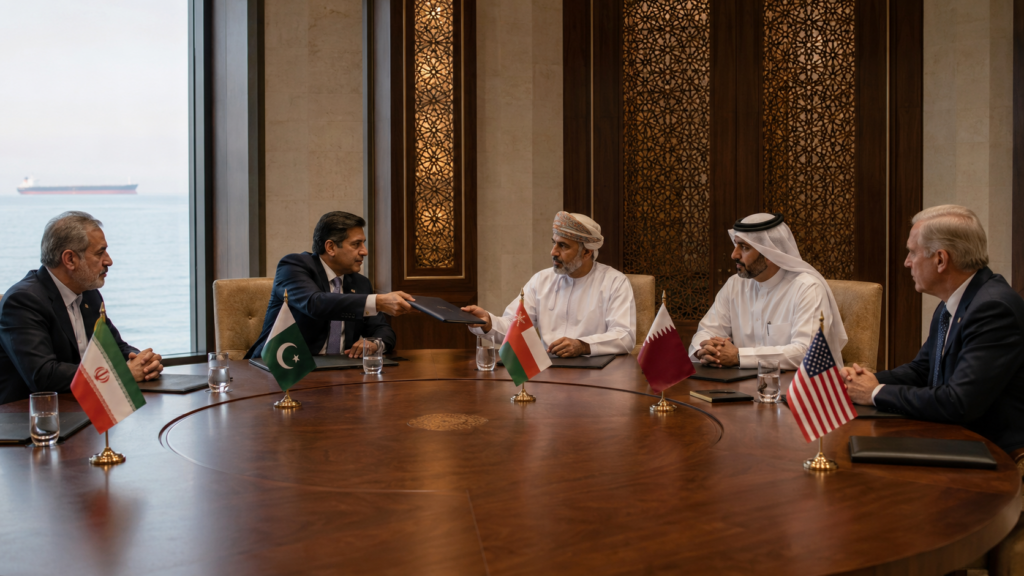
Pakistan’s credibility in international mediation rests on its unique ability to maintain simultaneous diplomatic access to adversarial global and regional powers. Rather than relying on overwhelming economic or military coercion, Islamabad derives its strength as a middle-power mediator from geographic proximity, long institutional memory, and synchronized civilian-military backchannels. In a region forced into taking sides, Islamabad acts as an independent diplomatic bridge rather than a proxy for Washington or Tehran. Driven by regional stability, Pakistan’s unique neutrality makes it a natural mediator, filling a crucial diplomatic vacuum left by exposed Gulf states and distrusted European nations. Months have passed since the beginning of hostilities, and no other framework has produced a durable settlement. Proposals have been floated, statements issued, but the fighting continued and the risk of regional spillover grew. In that vacuum, the Islamabad process emerged as the only channel that could actually connect the principal stakeholders. It did not promise miracles. It promised conversation. It offered a place where messages could be delivered, red lines clarified, and off-ramps explored without the glare of public posturing. That is what mediation looks like in practice.
Rather than relying on overwhelming economic or military coercion, Islamabad derives its strength as a middle-power mediator from geographic proximity, long institutional memory, and synchronized civilian-military backchannels.
Pakistan can play this role because it has kept a careful balance. It continues engagement with Iran while also maintaining deep strategic and economic ties with Saudi Arabia, the wider GCC, and the United States. That balance is not accidental. It is rooted in Pakistan’s own national interests. Islamabad shares a long, porous border with Iran and cannot afford a breakdown of border control or a surge of instability on the other side. At the same time, Pakistan’s economy is heavily invested in the stability of the Gulf. Remittances from millions of Pakistani workers, energy imports, trade, investment and defense partnerships all depend on a secure and functioning GCC. Any prolonged disruption of the Strait of Hormuz or Bab al-Mandab would hit freight costs, energy supplies and Pakistan’s growth directly. There is also the security dimension. Pakistan has a direct interest in preventing sectarian narratives from taking root at home. Balanced engagement with both Arab states and Iran helps contain those currents and protects Pakistan’s own social cohesion. Beyond immediate crisis management, Pakistan’s mediation is aimed at a larger peaceful, lasting and comprehensive resolution instead of momentary pause. The objective is to bring Iran, Saudi Arabia, the United States and other key players into sustained dialogue around the issues that are driving the conflict, from maritime security to regional arms dynamics to proxy competition. By creating that space, Islamabad is also building wider cooperation on problems that affect Pakistan directly such as terrorism, connectivity, energy and support for Pakistan’s core positions in multilateral forums, including unresolved Kashmir issue. What makes this possible is credibility built over time. Pakistan has not lectured. It has listened. It has not demanded alignment. It has offered communication. In diplomacy, that is a strategic asset. When direct relations between capitals are frozen, someone has to keep the line open. Islamabad has done that, using its access and reputation for crisis management to convert engagement into concrete understandings. The Islamabad MoU is the clearest example. It did not solve everything, but it led to framework comprising commitments to dialogue, mechanisms to avoid miscalculation, and a pathway toward de-escalation. Critics will ask why Pakistan? The answer is in the map and in the relationships. No other country combines proximity, stakes and access in the same way. Pakistan is not choosing any of the contesting players over each other. It is choosing peace, stability and its own national interests, which in this moment are aligned with the region’s need for a diplomatic bridge. The world has watched other mediation efforts come and go. What has lasted is Pakistan’s consistent presence in the room is its willingness to carry difficult messages, and its ability to keep talking when others walked away. That is not glamorous work. It is slow, frustrating, and often invisible. But it is the work that prevents wars from spreading . In a time of widening divides, Pakistan has offered a credible channel that all sides can still use. That is why Islamabad, not any other capital, has become the most practical and irreplaceable mediator for peace.
Article Authors
Related
Latest


Comments
Leave a comment
No comments yet.
