Video could not load. Press play to retry.
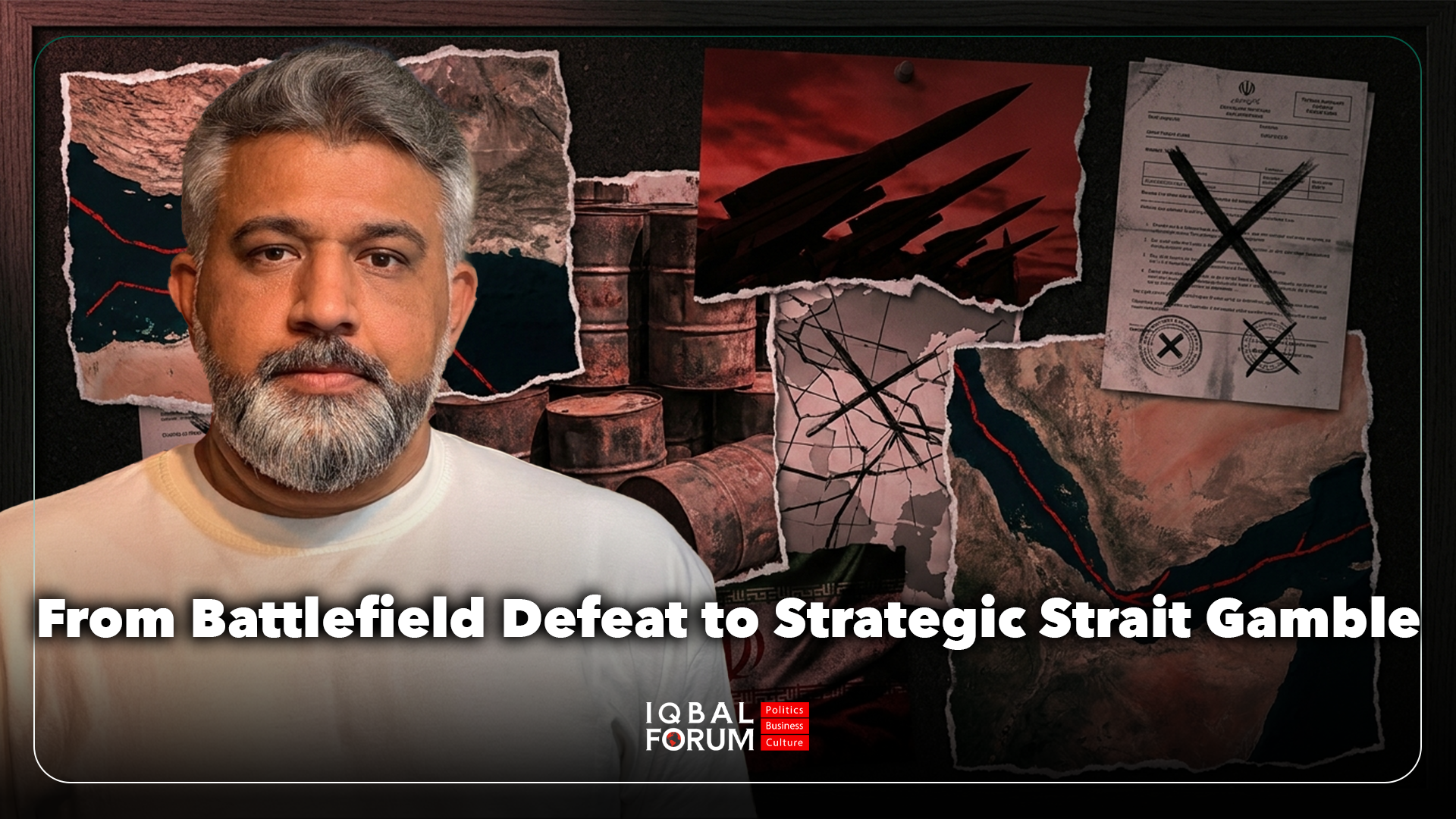
From battlefield defeat to risky gambling in strategic chokepoints; the world on the brink of a full-scale crisis
The lifelines of the world in the hands of “straits” — a map shaking the global order As you are likely aware, Donald Trump—despite all his claims in the “Ramadan war”—failed to defeat Iran. The Islamabad negotiations also reached a...

The lifelines of the world in the hands of “straits” — a map shaking the global order
As you are likely aware, Donald Trump—despite all his claims in the “Ramadan war”—failed to defeat Iran. The Islamabad negotiations also reached a deadlock. Now he is seeking to block the very routes he once tried to open through diplomacy—routes that, before the illegal attacks on Iran, were hosting 140 safe vessels per day.
📍 Geography: the Achilles’ heel of the free economy
Today, the global economy is built on a fragile structure. Let’s look at the world’s critical chokepoints:
1️⃣ Strait of Hormuz (Iran–Oman):
The beating heart of global energy. 20–25% of the world’s oil passes through it. The most sensitive geopolitical point on Earth.
2️⃣ Strait of Malacca (Malaysia–Indonesia–Singapore):
The artery of Asian trade (China, Japan, South Korea). 30% of global maritime trade passes through this narrow route. Alternatives exist, but they are extremely costly.
3️⃣ Bab el-Mandeb Strait (Yemen–Djibouti):
The bridge between the Red Sea and the Indian Ocean. The main route to Europe via the Suez Canal. Around 10% of global oil trade depends on this region.
4️⃣ Suez Canal (Egypt):
The shortest route between East and West. 12% of global trade depends on this waterway.
5️⃣ Bosporus Strait (Turkey):
Connects the Black Sea to the Mediterranean. A vital route for Russian and Caucasus oil; narrow and extremely congested.
6️⃣ Strait of Gibraltar (Spain–Morocco):
The gateway to the Mediterranean and a key NATO route.
📌 Strategic summary: a balance on a knife’s edge
Major powers have long spoken of “global stability,” but the entire system rests on a few chokepoints that can at any moment trigger a full-scale crisis. This means:
- There is no true stability, no lasting security.
- Only a fragile balance exists.
The world does not stand on law, but on a few narrow straits; whoever shakes these straits, shakes the world.
⚠️ Scenario of fear: Trump’s nightmare in a swamp
Imagine if not only Hormuz, but both Hormuz and Bab el-Mandeb were simultaneously disrupted:
- 30–40% of global oil supply disappears.
- Ships must take thousands of extra kilometers in detours.
- Transport costs surge and global inflation spikes.
- And most importantly: countries that always judged wars from afar would now pay the price at home.
⚔️ Ansarallah’s power in Bab el-Mandeb
A strike on Bab el-Mandeb would shake the economies of Europe and Asia. This 18-mile corridor is now also vital for Saudi energy exports. Trump is truly trapped in a swamp; the more he struggles, the deeper he sinks.
Stay tuned for major developments in the coming days…
