



Avoiding the Yemen Labyrinth
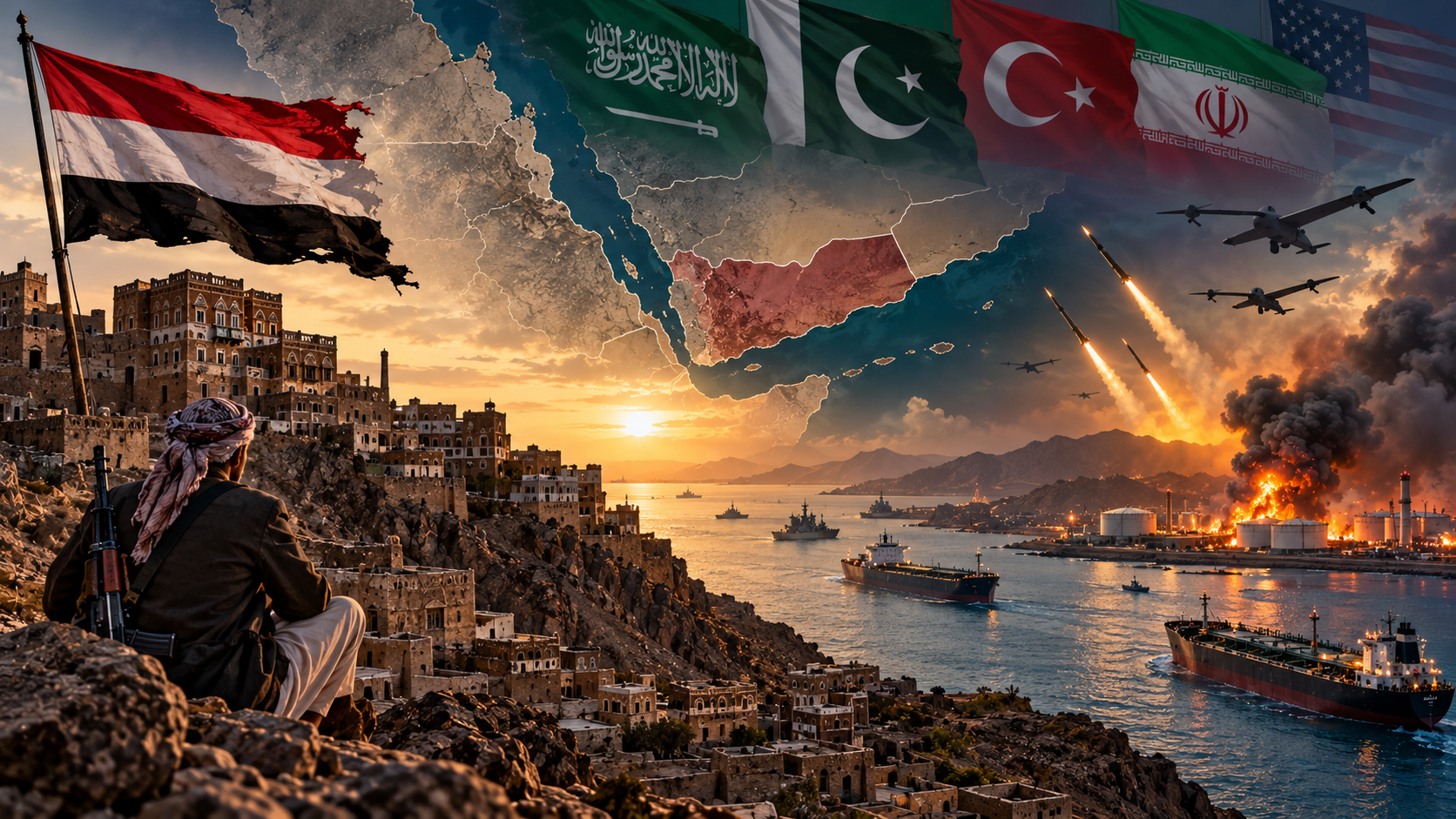
Facing internal instability and external subversions, Pakistan must avoid opening a new foreign front by becoming entangled in Yemen, a historically difficult terrain for foreign powers. The complex history of Yemen, marked…
AI Analysis
Pakistan, through the force of external subversions and lack of broad-based consultations, faces multiple fronts internally and abroad. Since 1947, avoiding a two-hostile-fronts situation has been one of our primary foreign policy objectives, but that is no longer the case. In Balochistan, the small BLA insurgency has become more active. In FATA, the TTP has adopted the Taliban strategy against the American-backed regimes, attacking military and police personnel with the objective of demoralising. In AJK, the situation could have been better handled. The imposition of Governor’s Rule in KPK is another front, which may remain dormant, as policymakers hope, or may smoulder and ignite. Both Afghanistan and India are watching closely.
Pakistan does not need to open another front – being caught up in the Yemen Labyrinth – from which, over the years, foreign forces were forced to retreat, regretting their losses and involvement.
Yemenis are proud and tenacious fighters, with mountainous terrain. In the West, a maxim of military history is ‘never march on Moscow’. In the Middle East, the advice is: ‘never get involved in Yemen’. Like all sayings, it is not totally true. Yes, the Turks, the British, the Ottoman Turks, and the Egyptians all marched into Yemen and were forced to leave. However, the Saudis won a border war and were ceded Yemeni-claimed territory by the Treaty of Taif in 1934, which rankles still. Rivalry between major regional powers over Yemen has also been a factor. In the 6th century AD, the Ethiopian kingdom of Aksum controlled Yemen. However, the Persian Sasanians displaced the Aksumites in Yemen, and they, in turn, left when the Sasanian Empire collapsed in the 7th century.
The differences between North and South, and the role of influential tribes, enhance the difficulty of achieving cohesion and of maintaining control by any side or external actor.
North Yemen had its tradition of Zaydi Imams. In 1962, a military coup overthrew the northern monarchy, thus starting a civil war in which Saudi Arabia backed the northern royalists whilst Egypt supported the republican south. After a forced British withdrawal in 1967, two states emerged, with the communist People’s Democratic Republic of Yemen in the South, allied to the Soviet Union. North and South Yemen fought major border wars in 1972 and 1979. It was then that the Soviet Union threatened Pakistan, which had asked Soviet overflying ammunition resupply flights to South Yemen to land for inspection.
Both Yemens unified in 1990, though the failed 1994 war for southern secession highlighted the fragility of the state. The Houthi movement emerged in the North, based on Zaydi religious and political revivalism, and developed an impressive military movement backed by Iran. In the South, too, there was dissatisfaction. The 2011 Arab Spring forced President Ali Abdullah Saleh, a Zaydi non-sayyid, the Tito-type figure who had kept an uneasy Yemen together for 32 years, to hand over power to Vice President Hadi in 2012. A coalition of Houthi and Saleh forces seized Sanaa in 2014, and Hadi fled to Saudi Arabia. The next year, Saudi Arabia led a military intervention to support Hadi’s government, and the UAE joined in, though its objectives diverged from Saudi Arabia’s.
The anti-Houthi campaign splintered between 2015 and 2022. KSA wanted a friendly government, border security, and limits on Iranian influence. The UAE backed the Southern Transitional Council (STC), which wanted an independent South Yemen. In 2022, the UN mediated a truce, and there were hopes of a wider settlement.
However, the Israeli attacks on Gaza in October 2023 led to Houthi attacks in the Red Sea and against Israel. While the US-Israel campaign against Iran did not immediately bring the Houthis back into the wider regional conflict, this changed in the past few months. Partly to draw off pressure from a US-blockaded Iran, and partly to pressure Saudi Arabia back to the negotiating table, the Houthis, using their much-improved ballistic missiles and drones, have been hitting high-profile and vulnerable Saudi targets: oil facilities, the major oil pipeline being used to circumvent the Hormuz blockade, and then the major Saudi airport.
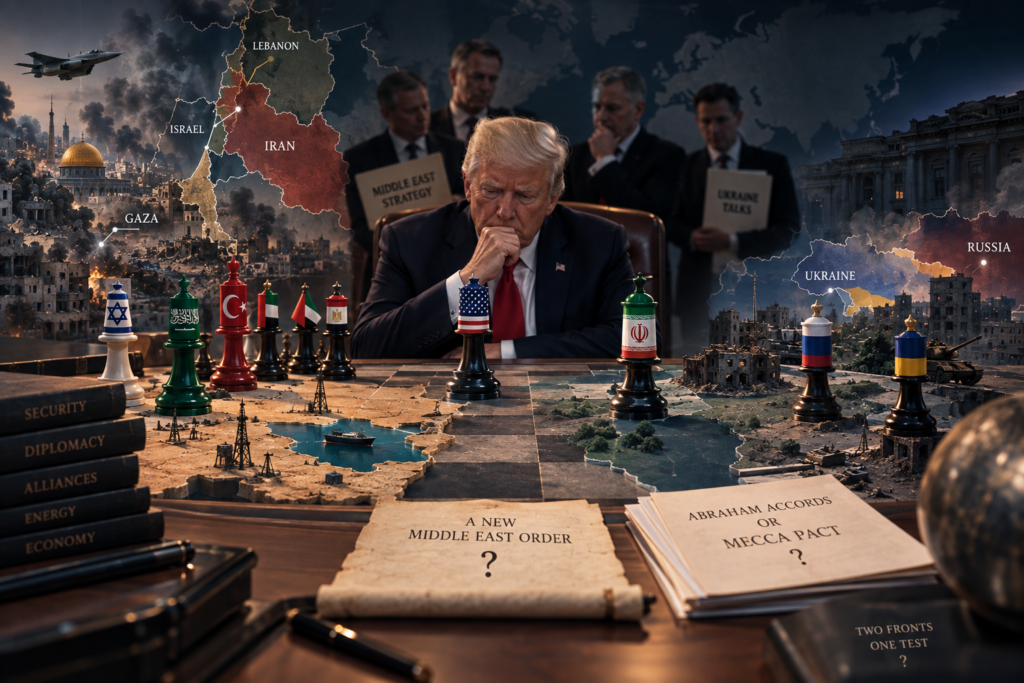
In 2015, Pakistan had, through Parliament, upheld its long-principled position of not intervening militarily on behalf of one Muslim country against another, though it joined the Saudi defensive coalition and sent its former COAS to head its military wing. Pakistani trainers and troops have long been stationed in Saudi Arabia. It could be argued that there was no need to go further. However, we are where we are, and the Mecca Pact has been signed between Saudi Arabia, Turkey, and Pakistan. Unlike in Turkey, its provisions have yet to be laid before Parliament and the public.
It is vital that Pakistan defines and confines its role and support for Saudi Arabia under this pact, and in continuation of its long-standing security support and cooperation, to the defence mode: ruling out, as Turkey has done, any ground, air, or naval action against any faction in Yemen beyond the Saudi borders. While, for Pakistan, Saudi Arabia, due to the Holy Places, will always remain a priority, we must work to reduce this military and economic threat to this ally not just through military support and deterrence, but likewise by political means.
What Pakistan should also do is to encourage and work towards mediation between all the parties. Pakistan is still on the Security Council and should call for a renewed UN push for a ceasefire, which would ease conditions for the people of Yemen. The UN Envoy for Yemen, who briefed the Security Council on 9th October on the regional danger and that the IMF had rated Yemen as the poorest nation, must restart consultations between all the parties and regionally. The present situation affects the ambitious developmental plans of the Kingdom, which, despite justified anger at the attacks, should consider a truce with the Houthis.
Pakistan can play a role, being well regarded by all sides in Yemen. The relief plane and military medical contingent we sent right after the 1982 Dhamar earthquake, which left hundreds of thousands homeless, is still remembered. Pakistan invested a number of its brightest diplomats in Yemen, including Jalil Abbas Jilani, Abdul Basit, Zafar Hilaly, and Irfan Yusuf Shami, who ably organised the safe evacuation of over one thousand Pakistanis in 2015. The Pakistan Embassy School in Sanaa was the major elite schooling establishment. The 1,000-strong Yemeni Pakistani Brotherhood Association of well-placed professional Yemenis who studied in Pakistan still accords high respect on all sides, in both North and South.
Certainly, Pakistan has the credentials to play a meaningful role in the UN, in the region, and bilaterally with Saudi Arabia and the Yemeni parties to defuse the present crisis. It was interesting to see that a day after the Iranian media was criticising Pakistan, following the Mecca Pact, for continuing efforts to facilitate peace between Iran and the USA, Iran, which has armed the Houthis to the teeth for the past decade, itself offered its good offices to Saudi Arabia to reach out to the Houthis.
Ambassador Tariq Osman Hyder, as Director Gulf, helped organise the disaster relief flight to Yemen in 1982.
About the Author

Ambassador (R) Tariq Osman Hyder
The available information identifies the person as Ambassador (R) Tariq Osman Hyder. No further biographical details are provided.
Profile and all publicationsHow to Cite This Article
Ambassador (R) Tariq Osman Hyder. “Avoiding the Yemen Labyrinth.” Iqbal Forum, October 14, 2026. https://iqbalforum.org/en/?p=51786.








Comments