



ME’s Geopolitical Conundrum
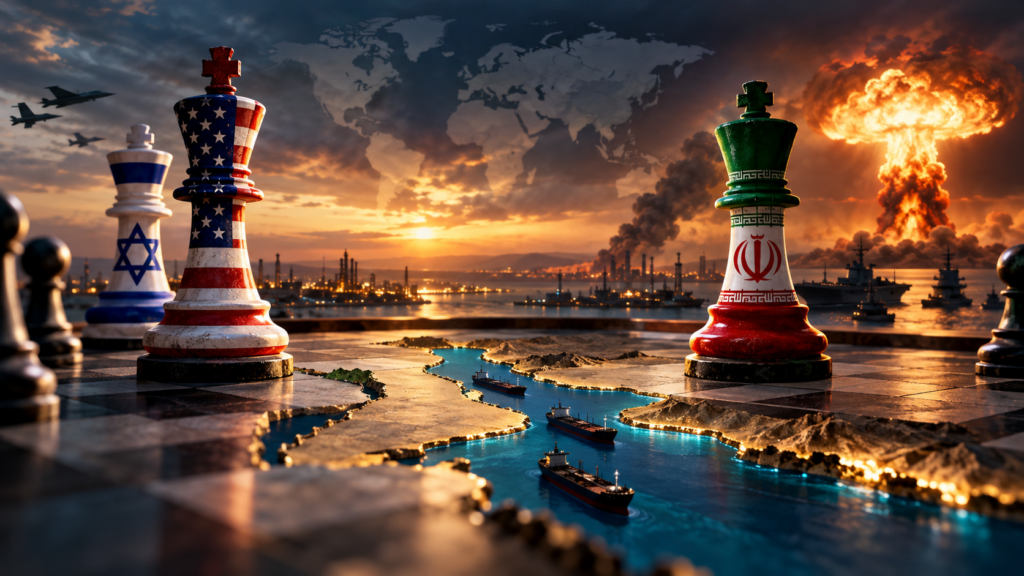
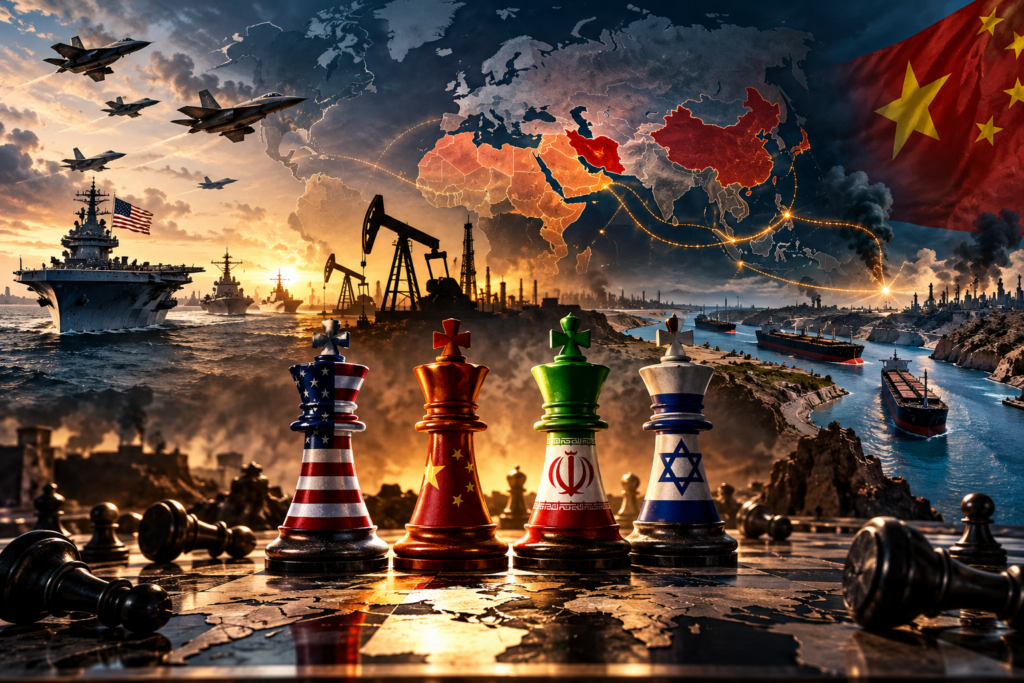
The Middle Eastern geopolitical landscape is in severe chaos as the US-Israel Combine’s war against Iran has transformed into an unwinnable, multi-front regional conflagration stretching from the Persian Gulf to the Red…

AI Analysis
The kaleidoscope of Middle Eastern (ME) geopolitics
continues to throw up fascinating, intriguing patterns, colours and
combinations. The geopolitical spectrum is getting increasingly off-kilter and
chaotic. All efforts to somehow stabilise and bring it to an even keel are
failing. Crucially, what started off as the US-Israel Combine’s ostensibly
short, decisive war against Iran has instead morphed into a prolonged,
unwinnable one. The theatre of war has expanded uncontrollably from the Persian
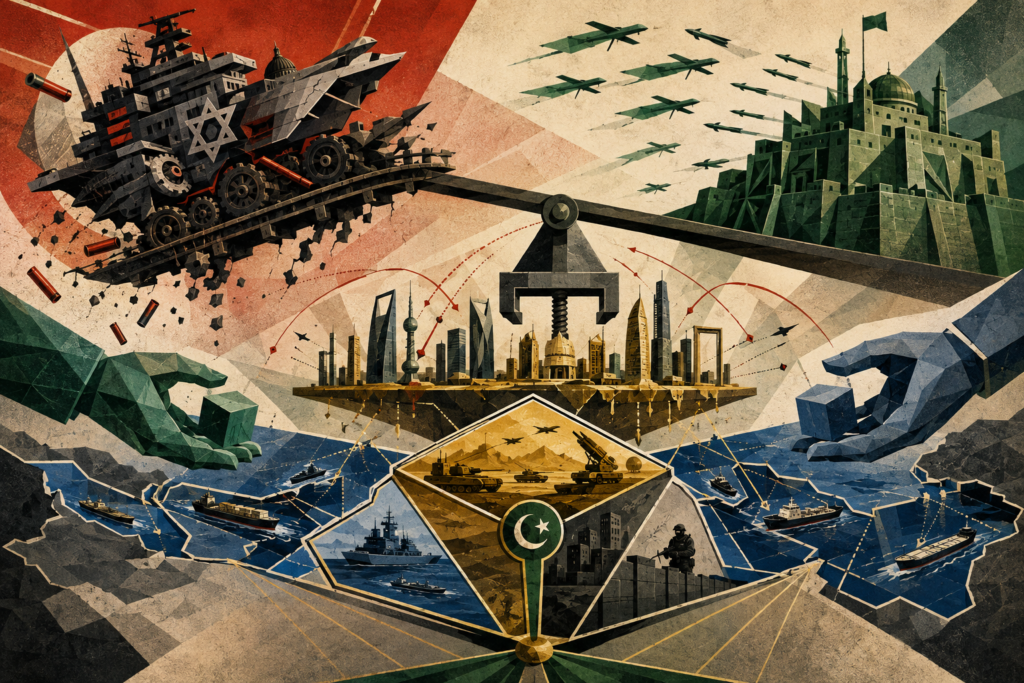
Gulf to the Red Sea. It is a virtual double envelopment of the Arabian
Peninsula and all Arab states therein. The Gulf War has now degenerated into a
multi-front, regional conflagration with no plausible closure, mutually
acceptable or otherwise, in sight. All focus and attention have now shifted to
the Yemen Front, as the US apparently takes an operational and logistics pause,
pending its own midterm and Israel’s elections. These elections have further
complicated an already very complex regional geopolitical environment. If PM
Netanyahu loses, his legal woes may even send him to jail. US midterm elections
will define President Trump’s legacy in US history, too. The further conduct of
the Gulf War will thus be determined by how both incumbents fare in the
elections. Period. Could sanity yet prevail? The US-Israel Combine set out to
precipitate a regime change in Iran. Could these elections ominously turn
the
tables and reverse fortunes?
However, the hostilities of the Gulf War and the myriad
existential threats to regional regimes/governments are causing a massive flux
in the ME’s geopolitical environment. The US-led West’s credibility stands
brutally exposed and irrevocably scarred due to its duplicitous, self-serving,
stridently pro-Israel policies during this Gulf War. A crucial wake-up call may
have been registered by the regional states. A subtle but very meaningful
struggle has since ensued. The US-led West is scrambling to retain its control
over the destinies and wealth of the Gulf Arab states, which, in turn, have
started looking for ways and means to wriggle out of its domineering,
suffocating, exploitative chokehold. They now seek alternative security and
defence arrangements, independent of their erstwhile benefactors. The ME’s
geopolitical architecture is thus in the throes of a basic paradigm shift, a
realignment, though chaotic and haphazard at present.
However, simultaneously, a number of other geopolitical and
geostrategic developments are afoot in the ME. Its reaction, as a whole, to the
emerging geopolitical environment is perplexing. It does not seem to have a
very well-crafted, well-considered collective policy/approach to deal with this
overwhelming, steadily evolving regional geopolitical conundrum. There appears
to be no method to its reaction to this war and its evolving consequences. The
region, the GCC and even the individual states do not seem to have configured a
well-defined end state to pursue or the compatible ways and means to get there.
They have not thus far demonstrated any unambiguous strategic vision,
foresight, clarity or direction either that meets their national and security
interests decisively. They seem to be moving haphazardly to create reliable,
trustworthy, largely self-reliant security and defence configurations that not
only secure them and their regimes but also their national interests,
independent of their
ostensible benefactors of yore!
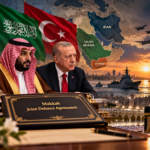
The KSA appears to be the focus of many countries. The
Makkah Defence Alliance (MDA), created during this Gulf War, was perhaps
designed to act as a potential net stabiliser and security provider in the
region. It seeks to usher in collective security, defence and deterrence,
deterring war and preserving peace in the region! However, it needs to move
fast to not only lay down its policy and decision-making protocols, terms and
conditions, create the required strategic organisation, infrastructure, articulation
of command, marshal forces and formulate strategies, operational strategies,
etc., but above all, give the MDA the strategic reach, clout and deterrence
power it is planned to exude/exercise. Egypt is also considering sending forces
to help defend the KSA, while the UK is sending a squadron of fighter jets,
perhaps the Eurofighter Typhoon, to only help defend the airspace of the KSA
against a foe that has no Air Force! It is most likely to perform the same
(non)role that the many US bases have performed in the Gulf War! Furthermore,
President Macron of France is on a visit to the region and has visited Qatar,
Bahrain, the UAE and KSA, ostensibly to show French support for the
region/Kingdoms. Is Europe, in connivance with the US, already hedging against
a probable egress of the latter from the region, post this gross military
failure in Iran? Do they fear China making a strong ingress into such a
potential strategic vacuum? The KSA, however, must show absolute strategic
clarity in how it intends to secure and defend itself now and in the future. A
plethora of players will only breed chaos and confusion at the strategic level
and do more harm than good! To add to this influx of “supporters”, Qatar has
announced a Global Security Forum, essentially with regional states but without
losing contact with the US, UK and France! Furthermore, a Badr Memorandum of
Understanding has also been signed between Qatar, Pakistan, Turkiye and
Indonesia that is primarily intended to improve their mutual defence capabilities,
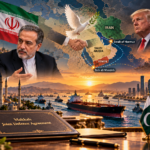
capacities and competencies. Mediation efforts continue unabated. Pakistan and
Qatar continue to seek ways to end the Gulf War. Iran has offered to mediate
between the KSA and the Houthis to bring this conflict to a mutually acceptable
closure. To top it all, President Trump has come out with an incredulous and
outrageous “piece of advice” for the KSA. He wants it to take Israel’s help in
fighting off the Houthis!
All these efforts combine together to make for a very
chaotic, confused and uncertain geopolitical environment in the ME with untold,
ominous ramifications!
About the Author

Imran Malik
Retired BrigadierThe writer is a retired brigadier of the Pakistan Army.
- Politics
How to Cite This Article
Malik, Imran. “ME’s Geopolitical Conundrum.” Iqbal Forum, October 23, 2026. https://iqbalforum.org/en/?p=52723.


Comments