



The long shadow of empire
A wave of dynamic internal, intra-regional, and major-power factors is currently transforming the Middle Eastern political landscape, deeply impacting Pakistan's security and economic interests. Internally, regional states grapple with modernization, political freedom,…
AI Analysis
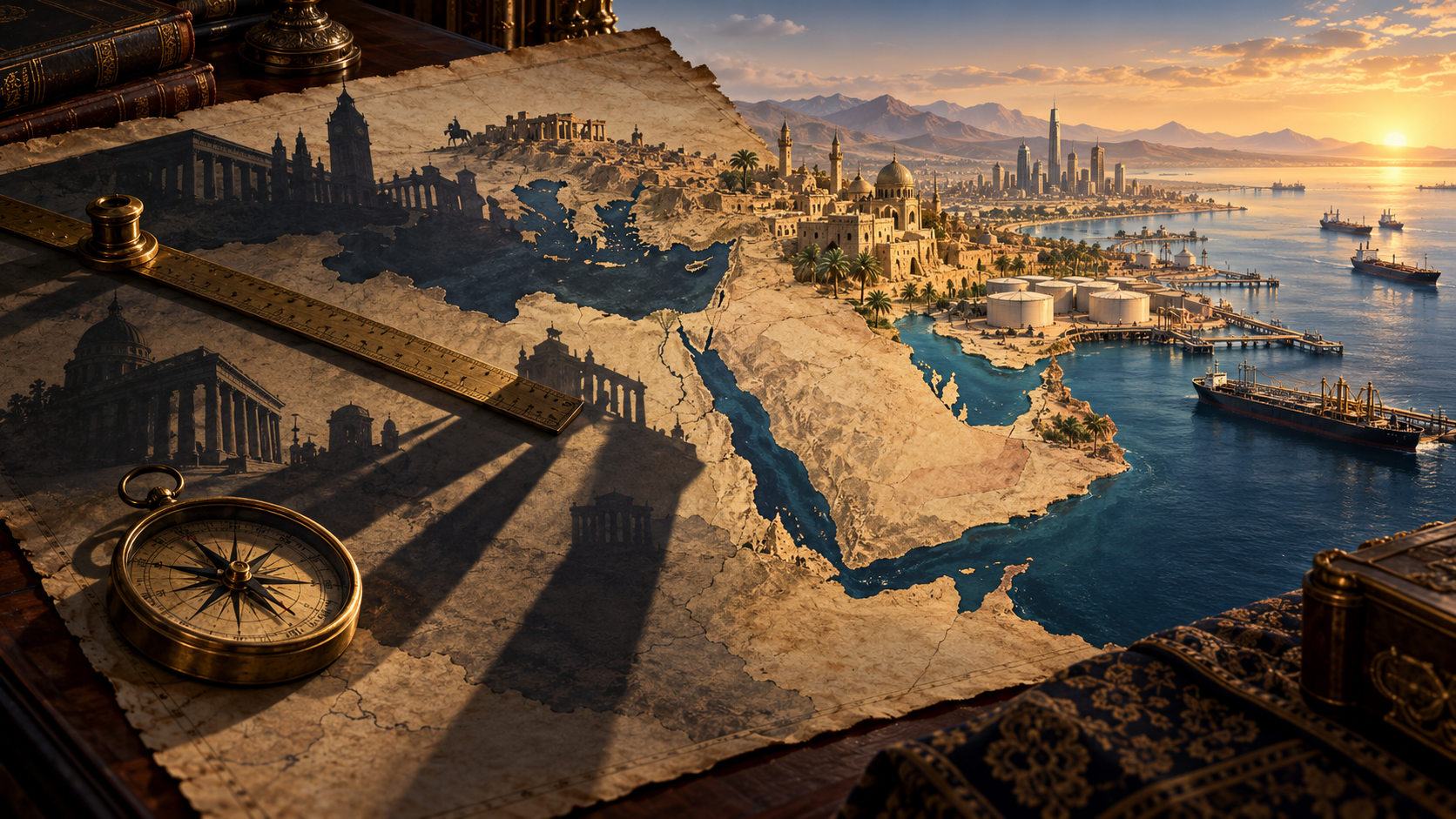
A tidal wave of developments with far-reaching consequences is currently sweeping across the Middle East. Rooted in the internal dynamics of Middle Eastern countries, intra-regional conflicts, the Palestine issue, Israel’s expansionist aims in the region and interference by major non-regional powers, these developments could fundamentally change the region’s political landscape in hard-to-predict ways.
Each of the factors driving the changes in the Middle East is itself a complex phenomenon which demands rigorous analysis and defies easy conclusions. The complexity and volatility of the regional situation are aggravated by the interaction of the forces driving these changes. Nevertheless, Pakistan’s vital security, political, economic and cultural interests demand that an attempt should be made to understand the regional scenario, its likely future directions, and their implications for Pakistan.
Internally, every Middle Eastern country is undergoing transformation driven by domestic political, economic and social forces as its people face the challenges of modernity. The desire for political freedoms and the quest for economic prosperity are perhaps the most prominent forces driving events in the region. They also need to broaden their intellectual horizons to respond adequately to modern challenges while remaining faithful to the basic principles of Islam. In particular, regional countries must prioritise scientific and technological advancement to prosper in the modern world.
Unsurprisingly, each country has responded to these challenges in its own way, given its history, political evolution, religious predilections, economic conditions and social customs. That is why we see both democratic governments and monarchies in the region. That is why some countries have done well economically and technologically while others have lagged. Only time will tell how these forces play out in the long run. But one thing is certain: these internal forces will keep the pot boiling in the region, heralding far-reaching political, economic and social changes in the years to come.
As if that were not enough, different political, security, economic, historical, sectarian and social orientations among regional countries also fuel tensions and disputes. Just to quote a few examples, Iran’s relations with its Arab neighbours on the other side of the Persian Gulf are marred by territorial disputes, sectarian differences, foreign policy contradictions and varying political systems. Even among Arab countries in the Middle East, strains and disputes persist because of different foreign policy and security outlooks, historical factors and clashes of regional policies. The ongoing conflict between Saudi Arabia and the Houthis in Yemen is a prime example.
The combustible mix of internal and intra-regional factors in the Middle East is aggravated by the blatant interference of external major powers in regional affairs, especially after World War I and the fall of the Ottoman Empire, as they pursued imperial designs in the region. The Balfour Declaration of 1917 by the British government led to the mass migration of Jews to Palestine and ultimately to the Palestine issue, which still awaits a peaceful settlement. It is the single most important source of instability and conflict in the region and the root cause of resistance movements struggling against Israeli occupation of Palestinian lands and its expansionist designs.
The 1916 Sykes-Picot Agreement between the UK and France effectively partitioned the Ottoman territories in the Middle East outside the Arabian Peninsula into British and French spheres of influence, enabling these two major powers to manage regional affairs in service of their imperial designs. The Suez Crisis of 1956 was an example of the unjust interference of the two powers in the affairs of the region.
Following World War II, which weakened the two imperial powers’ influence in the region, the US gradually assumed the role of the overlord of the Middle East, motivated by the goals of controlling and exploiting its oil and gas resources, safeguarding the international trade routes traversing it and ensuring the security of Israel as the US military outpost in the region. It was in pursuance of these goals that the US launched a clandestine operation in 1953 to engineer the overthrow of the Mosaddegh government in Iran, besides subjecting the country to ruthless economic exploitation and extraterritorial laws.
This blatant interference in Iran was one of the major factors leading to the Islamic Revolution in 1979, the subsequent tense relations between the two countries and American sanctions against Tehran. Besides the issue of the enrichment of uranium, the foregoing factors are responsible for the ongoing tensions and conflict between Iran and the US. The US invasion of Iraq in 2003 was another example of the US hegemonic policies in the region.
Durable peace and stability in the Middle East would be better served if the US and other Western powers desist from overt and covert interference in regional affairs, allowing regional countries to manage their own security in accordance with recognised principles of interstate conduct. Another essential requirement of durable peace and stability in the region is a peaceful and just settlement of the Palestine dispute. As long as these two essential conditions are not met, the region will remain mired in strife and conflicts.
Pakistan faces the formidable task of navigating the treacherous waters of a deteriorating security environment in the Middle East, where its vital political, security, economic and cultural interests are deeply engaged. In so doing, Islamabad must be guided by the objectives of strengthening regional peace and stability, and promoting its political, security and economic interests, while remaining on the right side of history and avoiding interference in the internal affairs of the regional countries.
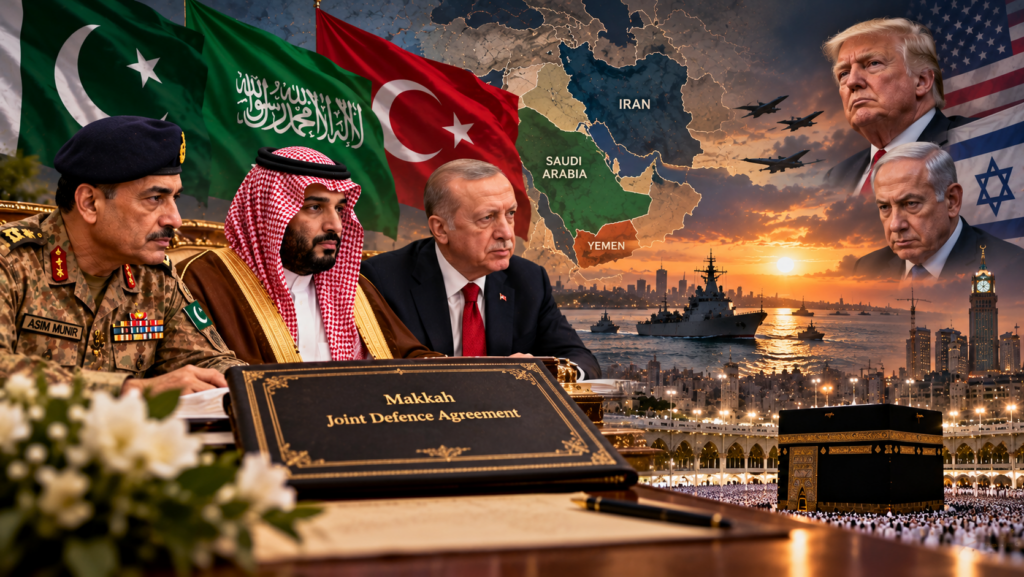
Pakistan, therefore, must continue its efforts to build upon the Islamabad MOU to encourage a peace settlement between Iran and the US. Similarly, it should join hands with Saudi Arabia and Turkiye so that the Makkah Defence Alliance, through the inclusion of other regional countries like Iran, Egypt and Iraq, becomes the harbinger of a broader security structure allowing the regional countries to deal collectively with regional security issues based on the recognised principles of non-interference in the internal affairs of states, peaceful settlement of disputes, and mutual cooperation in security and other fields.
In this regard, the Iranian president’s recent statement on the Makkah Defence Alliance should be welcomed. Last but not least, Pakistan must continue to collaborate with other Muslim countries for a peaceful and just settlement of the Palestine issue.
About the Author

Javid Husain
The writer is a retired ambassador and author of ‘Pakistan and a World in Disorder – A Grand Strategy for the Twenty-First
Profile and all publicationsHow to Cite This Article
Husain, Javid. “The long shadow of empire.” Iqbal Forum, October 22, 2026. https://iqbalforum.org/en/?p=52626.



Comments