



Reviving regionalism via ECO?
The 30th Meeting of the Economic Cooperation Organisation (ECO) Council of Ministers concluded in Islamabad on November 16 with the adoption of the Islamabad Communique and ECO Vision 2035 to boost intra-regional…
AI Analysis
Regional Economic Cooperation Through ECO: Opportunities and Challenges of Vision 2035
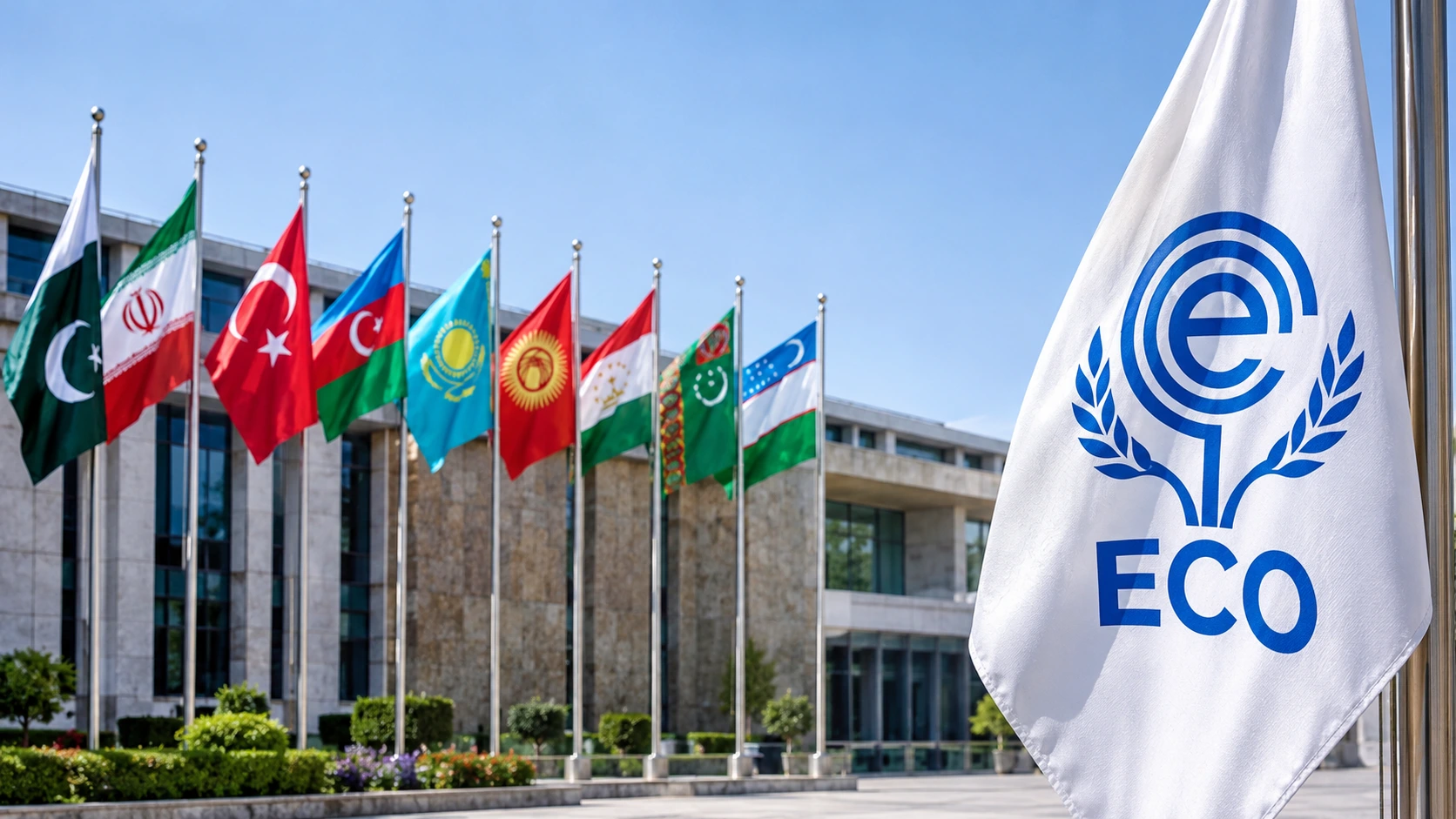
The 30th Meeting of the ECO Council of Ministers, held under the theme ‘Reviving Regionalism for a Resilient ECO’, concluded on November 16 at Islamabad with the adoption of the Islamabad Communique and the ECO Vision 2035 containing the organisation’s strategic objectives to be realised by 2035.
The Economic Cooperation Organisation (ECO) has enormous potential to promote regional economic cooperation among the ten member states. However, it is regrettable that due to a variety of factors, the ECO in the past has failed to make satisfactory progress towards the realisation of its laudable goals, including the promotion of intra-regional trade through the dismantling of tariff and non-tariff trade barriers, the strengthening of regional connectivity and the acceleration of the process of regional economic integration.
The ECO was established in 1985 by Iran, Pakistan and Turkiye as a successor organisation of the RCD. Following the disintegration of the Soviet Union, it was expanded in 1992 to include seven additional states, including Afghanistan, Azerbaijan, Kazakhstan, the Kyrgyz Republic, Tajikistan, Turkmenistan and Uzbekistan. It now comprises a combined population of about 500 million people, covers eight million square kilometres of total area, and has a total GDP of about $2.4 trillion.
The organisation enjoys several advantages that make it ideally suited to promoting regional economic cooperation, leading to the establishment of a free trade area and economic integration to the mutual benefit of all member states. These advantages include geographical proximity, cultural affinities, a community of interests based on shared goals and aspirations for the future, economic complementarities, the absence of serious disputes among the member states and the non-existence of hegemonic ambitions on the part of any member state.
Unfortunately, as noted earlier, the ECO has so far failed to make significant progress towards realising its goals. Intra-ECO trade accounts for only eight per cent of the total external trade of ECO member states. Comparable figures for the EU and ASEAN are 60 per cent and 25 per cent, respectively. The ECO Trade Agreement (ECOTA), a preferential trade agreement signed in Islamabad in July 2003 and enforced in 2008, has so far failed to pave the way for a Free Trade Area across the ECO region due to tariff and non-tariff trade barriers, incomplete ratification, instability and conflicts in Afghanistan, and US sanctions on Iran.
There are also other bottlenecks such as lack of developed infrastructure connecting the member states and inadequate implementation of the Transit Transport Framework Agreement (TTFA), which was supposed to facilitate the movement of goods among the member states. The ECO’s progress has been further slowed down by weak institutional implementation mechanisms in the member states.
Despite the shortcomings of the member states in fully exploiting the potential of the ECO for the promotion of regional economic cooperation and integration, it enjoys several advantages over Saarc, which suffers from serious drawbacks in the promotion of regional economic cooperation.
India’s hegemonic designs in South Asia and its outstanding disputes with Pakistan, especially the Kashmir dispute, which have led to several wars between Pakistan and India, are obvious examples of the factors which have prevented Saarc from promoting regional economic cooperation within the Saarc region.
The situation becomes even more hopeless if one considers other negative factors afflicting Saarc such as lack of cultural affinities, weak economic complementarities, and the absence of a community of interests based on shared goals and aspirations for the future among the Saarc member states. Saarc was, therefore, a stillborn child on which Pakistan need not place reliance for the purposes of promoting regional cooperation.
As mentioned earlier, these are precisely the areas in which the ECO enjoys a clear advantage over Saarc. The task facing the ECO member states is to realise the organisation’s full potential for regional economic cooperation and integration. The Islamabad Communique and the ECO Vision 2035 adopted by the ECO Council of Ministers on November 16 provide guidelines for achieving these goals over the next ten years.
The ECO Vision 2035 seeks to expand intra-regional trade and investment by removing tariff and non-tariff trade barriers and encouraging cross-border partnerships, develop transport and regional connectivity within the ECO region, advance the implementation of ECOTA, promote energy cooperation, facilitate technological transformation, accelerate industrial and agricultural development and raise the quality of human capital in the ECO member states.
The Islamabad Communique, besides the adoption of the ECO Vision 2035, expresses concern over regional geopolitical tensions and calls for restraint, diplomacy, and respect for international law. It commends Pakistan and Qatar for their mediation efforts regarding the Iran-US conflict.
It is noteworthy that Afghanistan, which is accused by Pakistan of allowing its territory to be used for terrorism in Pakistan, was not invited to the ECO Council of Ministers’ meeting as its membership remained suspended by the ECO Secretariat. Member states agreed to continue consultations to address regional security concerns so that Afghanistan may eventually resume full participation in ECO activities once conditions so permit.
The Communique also called for the accelerated implementation of the ECO Trade Agreement and the rapid finalisation of the draft ECO Trade Facilitation Agreement. Further, the Council prioritised operationalising the ECO Sustainable and Resilient Transport Strategy (2026-2035) and the ECO Regional ICT Strategy (2026-2030).
However, keeping in view the Iran-US conflict, US sanctions on Iran, instability in Afghanistan and its sponsorship of acts of terrorism in Pakistan with the active support of India, the regional security environment is not conducive to the strengthening of regional economic cooperation within the ECO region. The ECO’s own history of implementing its decisions taken at summit and ministerial levels is also not very encouraging.
The history of ECOTA, the ECO’s flagship preferential trade agreement aimed at establishing a free trade area in the region in the long run, is a case in point. The agreement came into effect in 2008 but is still awaiting full operationalisation because Azerbaijan and major Central Asian countries, including Kazakhstan, Uzbekistan, Turkmenistan and the Kyrgyz Republic, have not ratified it, leaving a large part of the bloc outside its purview. Even the signatory states have shown little enthusiasm in implementing it fully.
The governmental leaders of the member states make high-sounding statements at ECO conferences but show little enthusiasm for implementing ECO decisions once they return to their capitals. It appears that the ECO is low on their national priorities. The problem is compounded by the lethargy of bureaucrats in the member states, most of whom are unaware of, or insufficiently informed about, the potential benefits of promoting regional cooperation for their own countries and for the ECO region.
If the ECO member states continue to demonstrate a lack of seriousness of purpose in building up the organisation, and the security concerns as a result of the US-Iran conflict and instability and terrorist outfits in Afghanistan continue to vitiate the regional environment, the promise of enhanced regional cooperation within the ECO region will remain elusive and the goal of regional economic integration will just remain a dream.
Editor’s Note: This article was originally published in The News", Pakistan, and has been republished on the Iqbal Forum website with attribution to the original author and publication. The views expressed are solely those of the author and do not necessarily reflect the position of Iqbal Forum.
About the Author

Javid Husain
The writer is a retired ambassador and author of ‘Pakistan and a World in Disorder – A Grand Strategy for the Twenty-First
Profile and all publicationsHow to Cite This Article
Husain, Javid. “Reviving regionalism via ECO?.” Iqbal Forum, November 20, 2026. https://iqbalforum.org/en/?p=56205.



Comments