



A New Mission at a Pivotal Moment
An Exclusive Interview by Muhammad Hussain Baqeri with H.E. Imran Ahmed Siddiqui, Ambassador of the Islamic Republic of Pakistan to Iran Introduction Iran–Pakistan relations have long been marked by a striking paradox:…
AI Analysis
An Exclusive Interview by Muhammad Hussain Baqeri with H.E. Imran Ahmed Siddiqui, Ambassador of the Islamic Republic of Pakistan to Iran
Introduction
Iran–Pakistan relations have long been marked by a striking paradox: while the historical and cultural foundations of the relationship run deep, the gap between its potential and its actual achievements remains considerable. The crisis of January 2024 brought this gap into unusually sharp focus. Yet the speed with which the crisis was contained also demonstrated that Tehran and Islamabad retain a significant capacity to manage their differences.
Today, however, Afghanistan has emerged as one of the most consequential tests of the relationship.
In one of the most candid parts of this interview, Pakistan’s Ambassador points to Islamabad’s concerns over the activities of Tehreek-e-Taliban Pakistan (TTP) and the Balochistan Liberation Army (BLA), calling on Iran to use its influence with Afghanistan’s current rulers to help bring an end to what he describes as a “proxy war against Pakistan.”
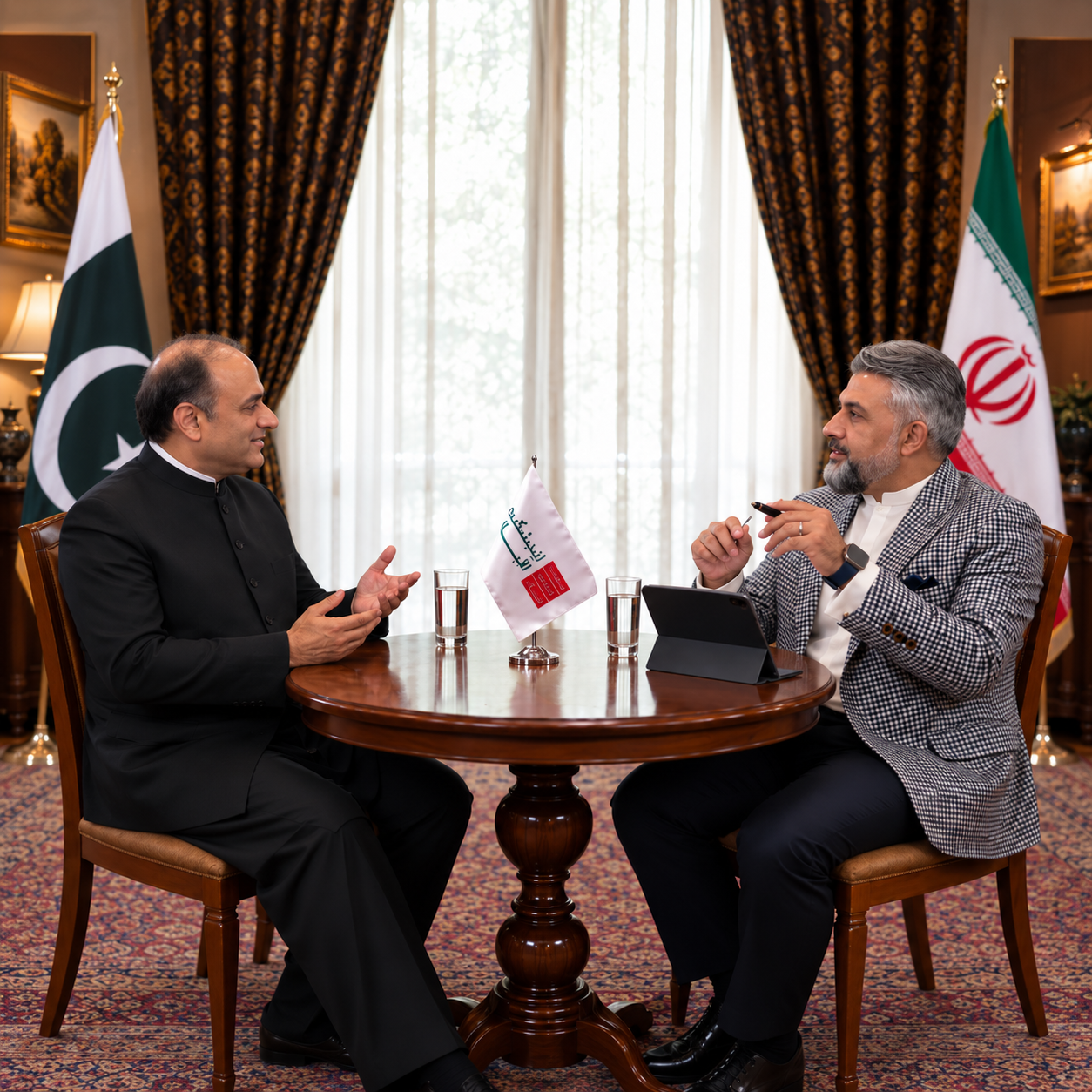
In this exclusive interview, Muhammad Hussain Baqeri, Director of Iqbal Forum, speaks with H.E. Imran Ahmed Siddiqui, Ambassador of the Islamic Republic of Pakistan to Iran, about the lessons of the 2024 crisis, the future of Afghanistan, obstacles to bilateral trade, regional connectivity, mutual perceptions between the two societies, and the outlook for Iran–Pakistan relations toward 2035.
At the heart of the conversation lies a fundamental question: Can Iran and Pakistan transform their considerable historical capital into a strategic partnership for the future?
Muhammad Hussain Baqeri: Your Excellency, your mission in Tehran has begun at a time when both Iran–Pakistan relations and the wider regional environment are undergoing significant change. Against this backdrop, what are your principal priorities during your tenure in Tehran, and what changes would you like to see in bilateral relations by the end of your mission?
Ambassador Imran Ahmed Siddiqui: Pakistan–Iran relations are founded on deep civilizational affinities, shared cultural values, and a common aspiration for the peaceful resolution of regional disputes. Over the decades, the two countries have consistently sought to strengthen their bilateral relations across a wide range of areas.
Today, the region stands at a turning point—one that can create new opportunities for cooperation while also presenting challenges of its own. Our two countries need to work together to deepen mutual understanding on relevant issues and to strengthen cooperation among the brotherly countries of the region.
We must also examine how existing policy and physical infrastructure can be strengthened to facilitate trade between our two countries. Our shared objective should be to increase trade, expand people-to-people contacts, and strengthen cultural exchanges.
We should work toward building a relationship characterized by closer economic cooperation, greater connectivity and communication, and the emergence of a peaceful regional order.
Muhammad Hussain Baqeri: Iran and Pakistan share deep historical, cultural, religious and geographical ties. Yet the level of bilateral relations, particularly in the economic sphere, continues to fall short of the two countries’ actual potential. In your view, what factors have prevented this historical proximity from developing into a deeper and more sustainable partnership?
Ambassador Imran Ahmed Siddiqui: Our bilateral relationship offers numerous opportunities to both countries, although there are also challenges along the way. To some extent, these challenges are the product of the complexities of regional and global politics.
Both countries have to conduct their relationship in an environment shaped by security concerns, economic constraints, challenges arising from sanctions, and changing regional dynamics.
Nevertheless, we have maintained close contacts and consultations with the aim of addressing these challenges. Both countries have made a concerted effort to insulate their bilateral relationship, as far as possible, from the effects of regional developments and rivalries, while simultaneously working to deepen mutual trust.
Mutual confidence, sustained consultations, and strong political will can provide the necessary framework for building a partnership aimed at advancing the shared interests and objectives of both countries.
Muhammad Hussain Baqeri: In January 2024, Iran and Pakistan experienced one of the most serious crises in their bilateral relations, with the two countries striking targets inside each other’s territory within a short period of time. Yet the crisis was contained with remarkable speed. What was the most important lesson of that experience for Tehran and Islamabad, and what should be done to prevent a recurrence?
Ambassador Imran Ahmed Siddiqui: That was certainly not an easy moment in our bilateral relationship. However, both sides quickly recognized the importance and sensitivity of the situation and, through responsible conduct at the governmental level, took steps to manage it.
Both countries understand that this episode cannot be allowed to define our bilateral relationship, and that security in the border regions can be strengthened through cooperation.
For this reason, efforts are continuing to reinforce the existing mechanisms of cooperation—mechanisms that are essential to preventing similar crises from emerging in the future.
Both sides recognize that what we need now are stronger safeguards and more robust mechanisms to prevent future crises.
Muhammad Hussain Baqeri: Pakistan simultaneously maintains important relationships with China, Saudi Arabia, the Gulf states and other regional and international actors. Within the emerging regional architecture, what place does Iran occupy in Pakistan’s strategic outlook? Could Pakistan’s expanding partnerships with other countries affect Islamabad’s relationship with Tehran?
Ambassador Imran Ahmed Siddiqui: Pakistan enjoys very good relations with its regional partners, and Iran is also an important partner in Pakistan’s vision of building a more interconnected region.
Pakistan’s expanding partnerships with different countries should not be viewed as being in competition with one another. Rather, these relationships can complement each other.
Greater regional connectivity, closer economic cooperation, and sustained dialogue can create the conditions for broader cooperation across the region.
Muhammad Hussain Baqeri: Despite a shared border, large domestic markets, and significant potential in energy and trade, Iran–Pakistan economic relations remain far below their potential. What are the principal obstacles, and what concrete measures could change this situation?
Ambassador Imran Ahmed Siddiqui: One of the most important impediments to bilateral trade is the regulatory environment. This includes sudden changes in legal and regulatory frameworks, the imposition of non-tariff barriers, restrictions on import licensing, and sanitary and quarantine requirements for products.
Logistical difficulties at the border and limitations in banking and financial channels also negatively affect trade. There is demand and goodwill, but these opportunities need to be utilized more effectively.
Rather than discussing “trade barriers” only in general terms, the two sides should identify and resolve the specific obstacles affecting individual products.
The efficiency of cross-border movement should also be improved by reducing the time required for goods to cross the border, while border markets should be transformed into effective and genuine centres of trade.
Alongside these measures, regular business-to-business (B2B) meetings could be organized with the support of the chambers of commerce and trade organizations of both countries.
Muhammad Hussain Baqeri: The Iran–Pakistan border has often been viewed primarily through a security lens. Yet the same geography could become a platform for energy, transit, trade and regional connectivity. Which projects could, in the short term, help transform the shared border from a challenge into an economic advantage?
Ambassador Imran Ahmed Siddiqui: Pakistan–Iran cooperation in energy, border markets, transportation, ports and regional transit holds considerable potential for both countries, precisely because we are geographically connected.
In the short term, the two countries can focus on projects that enhance the value and efficiency of border markets, improve road and rail connectivity, and explore greater cooperation between Gwadar and other ports.
In this way, geography can be transformed into an economic asset that connects our two countries more closely.
Muhammad Hussain Baqeri: Developments in Afghanistan directly affect the security and interests of both Iran and Pakistan. At a time when Islamabad has serious concerns about the activities of armed groups operating from Afghan territory, what scope exists for developing a common Tehran–Islamabad agenda on Afghanistan, and what role could Iran play?
Ambassador Imran Ahmed Siddiqui: Pakistan’s principal concern is the continuation of terrorist attacks from across the border. The Taliban must not allow Afghan territory to be used by terrorist groups, particularly organizations such as Tehreek-e-Taliban Pakistan (TTP) and the Balochistan Liberation Army (BLA), which have been involved in the killing of innocent Pakistani citizens.
Regional connectivity and trade corridors can only grow and prosper in an environment free from terrorism.
Iran can also use its influence to persuade the current Taliban rulers in Afghanistan to immediately end their proxy war against Pakistan.
Muhammad Hussain Baqeri: Despite centuries of historical and cultural interaction, Iranian society’s understanding of contemporary Pakistan—and Pakistani society’s understanding of contemporary Iran—still appears relatively limited. How can cultural relations move beyond ceremonial exchanges and foster a more substantive understanding between the two peoples?
Ambassador Imran Ahmed Siddiqui: The answer lies in a joint effort to build a community based on shared interests that goes beyond purely ceremonial interaction, although such exchanges retain their own importance.
The two countries should encourage their people to engage directly with one another. Think tanks should connect with think tanks; associations of artists and writers should engage with their counterparts; and professional communities and skilled groups should establish stronger links with each other.
We are moving in precisely this direction, and strengthening contacts between the think tanks of our two countries is an important first step.
We are also planning a comprehensive exhibition on Pakistan’s ancient, medieval and modern history to be held in various cities across Iran. The purpose of this initiative is to introduce Pakistan to different segments of Iranian society.
Further steps could include partnerships between universities, joint research projects, and broader cooperation in tourism.
Muhammad Hussain Baqeri: Allama Muhammad Iqbal is perhaps one of the most important civilizational bridges between Iran and Pakistan—a figure who expressed a substantial part of his thought and poetry in Persian and who occupies a special place in both countries. How can Iqbal be transformed from a historical symbol into a living platform for bringing the younger generations of Iran and Pakistan closer together?
Ambassador Imran Ahmed Siddiqui: Iqbal is a source of inspiration for both Pakistan and Iran, and the level of awareness and appreciation of Iqbal’s works and thought in Iran is remarkable.
No single initiative by the Embassy could, on its own, adequately honour Iqbal’s contribution to our shared cultural landscape. Nevertheless, for the coming year, we are planning to publish a book featuring the works of the distinguished Pakistani artist Aslam Kamal on Iqbal.
Iranian institutions are also undertaking highly valuable activities relating to Iqbal, and we will work with them to help disseminate Iqbal’s message even more widely.
Muhammad Hussain Baqeri: If we look beyond the immediate issues in bilateral relations and toward the horizon of 2035, where do you see Iran and Pakistan? What strategic decision or vision is required today to transform the relationship, over the coming decade, from one of “potential” into a genuine and sustainable partnership?
Ambassador Imran Ahmed Siddiqui: The region is undergoing transformation, and with it, international political and security dynamics are also likely to change.
The two sides should intensify their bilateral consultations and take concrete and practical steps to strengthen the partnership in the areas on which they already agree.
Naturally, we will encounter a range of challenges at the beginning of this process. Both countries must take the necessary steps to anticipate these challenges and prepare themselves to address them.
Achieving the desired objective will not depend on a single decision. What is required is complete sincerity and a shared strategic vision.
About the Author
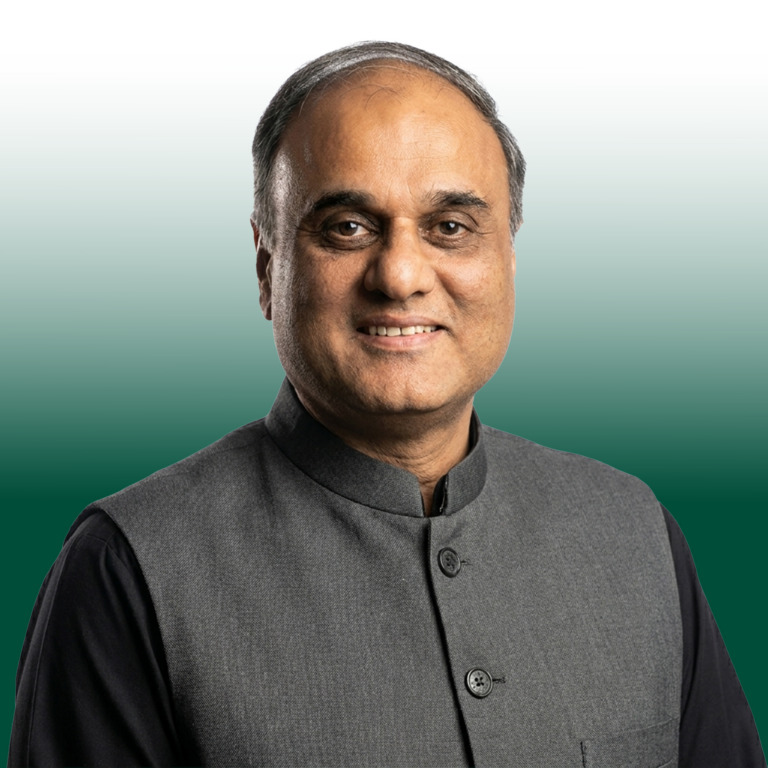
Imran Ahmed Siddiqui
Senior Pakistani diplomat with over three decades of experience in foreign affairs, national security, and public administration; holds a Master’s degree in Public Administration from Harvard University and currently serves as Pakistan’s Ambassador to the Islamic Republic of Iran. Former High Commissioner to Bangladesh and Consul General in Toronto, with senior assignments at the Ministry of Foreign Affairs and diplomatic postings to the United Nations and the Organization of Islamic…
- Politics
How to Cite This Article
Siddiqui, Imran Ahmed. “A New Mission at a Pivotal Moment.” Iqbal Forum, September 26, 2026. https://iqbalforum.org/en/?p=49695.

Comments