



A new regional reality
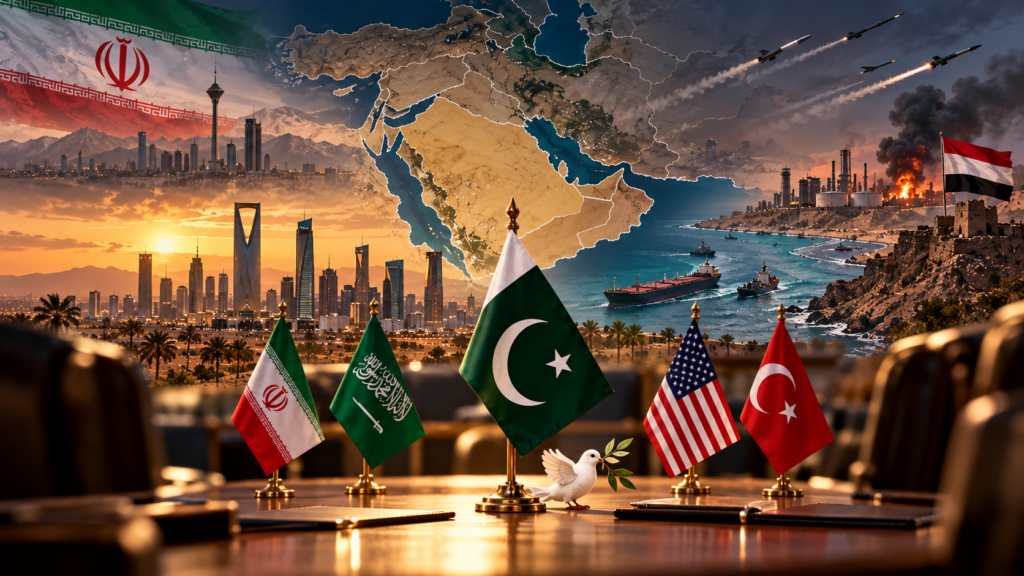
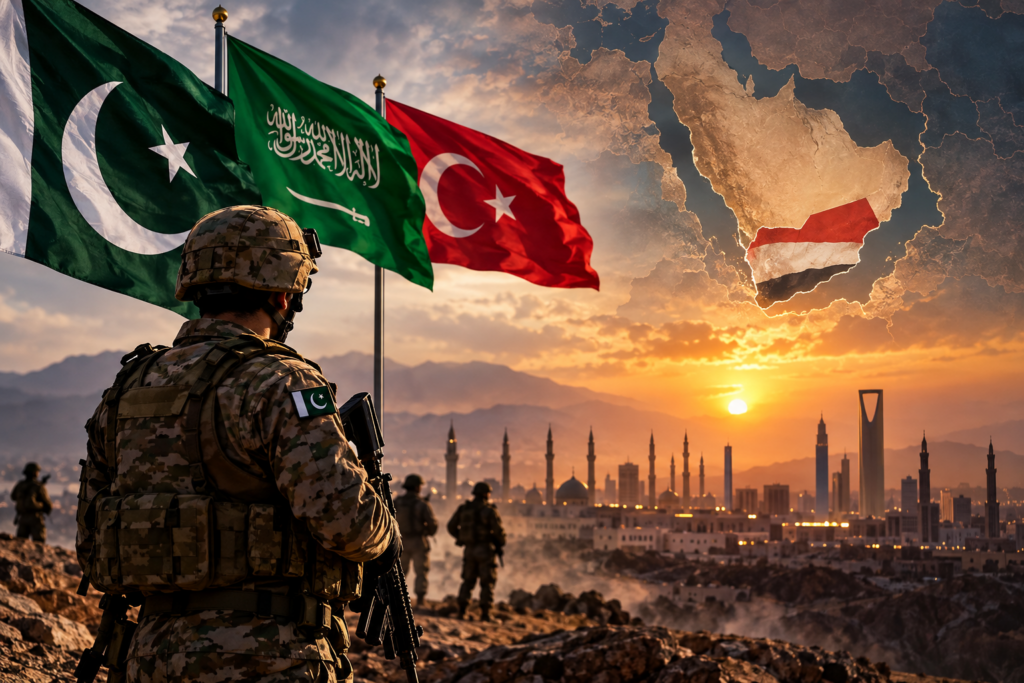
The Makkah Joint Defence Agreement, signed by Pakistan, Saudi Arabia, and Turkiye to establish mutual defense against armed aggression, faces a critical structural challenge regarding how to define and attribute threats without…
AI Analysis
The recent controversy surrounding Makkah has made one question particularly urgent: how can collective security operate when even the attribution of aggression is politically contested?
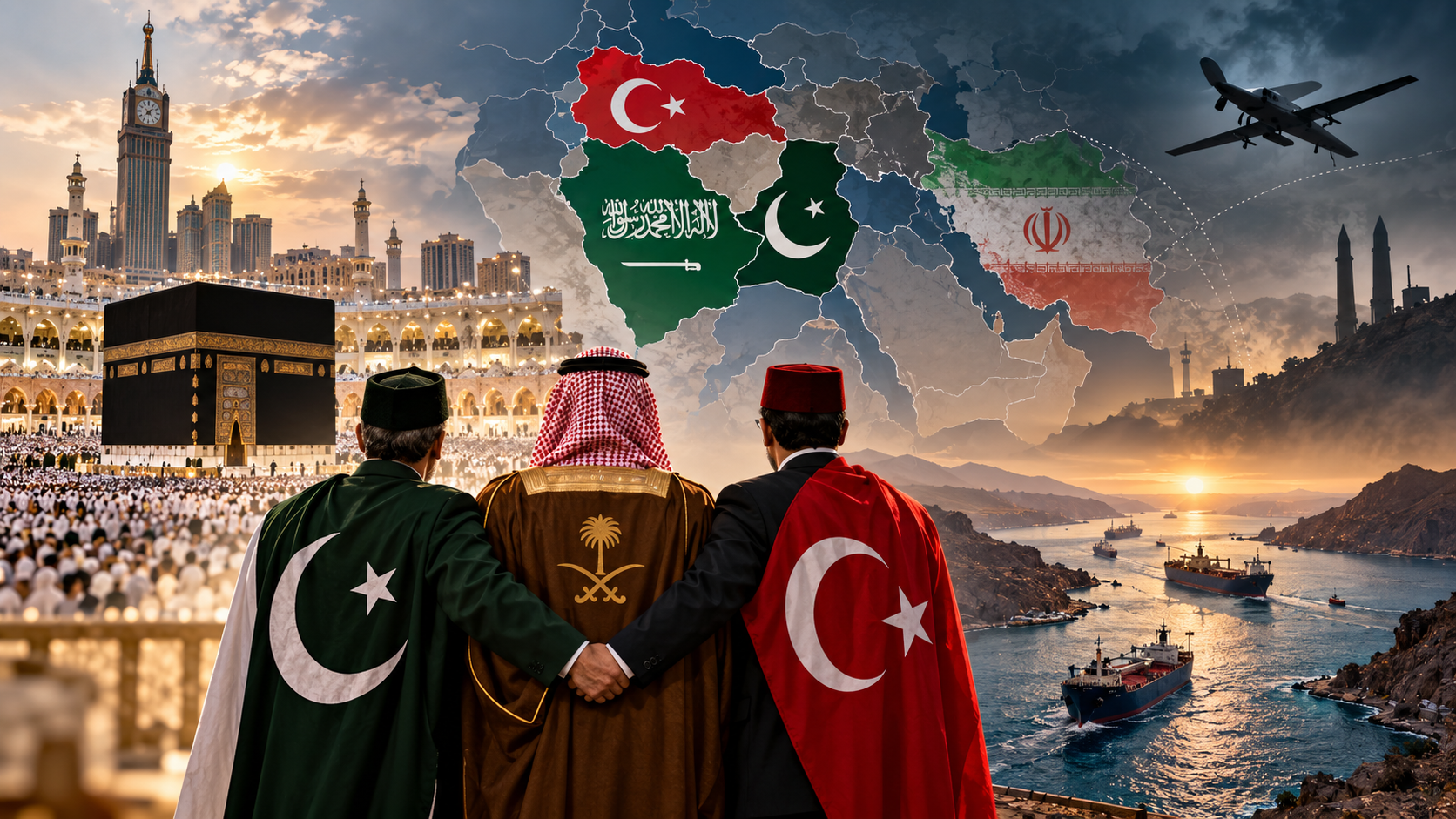
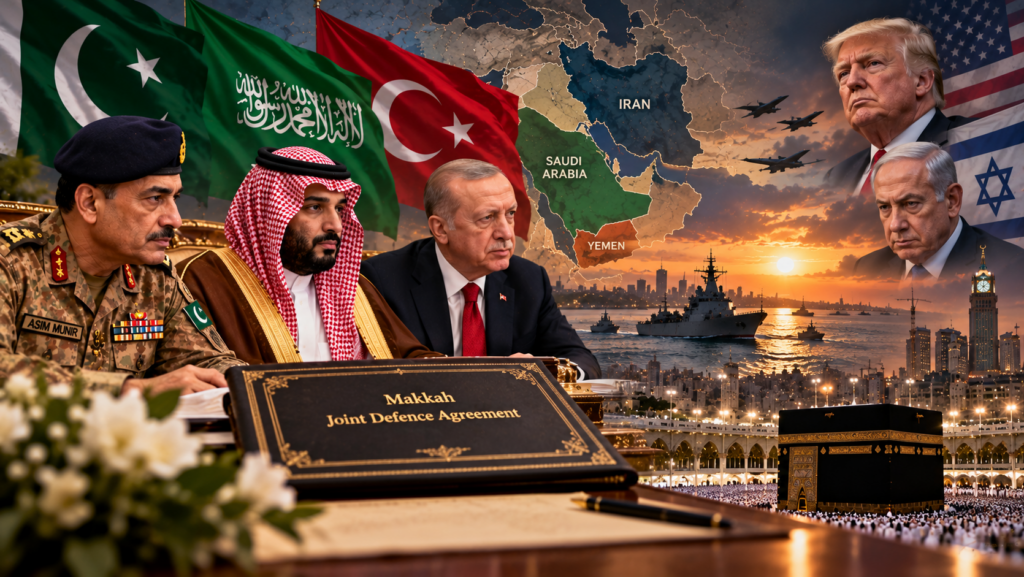
The Makkah Joint Defence Agreement, signed by Pakistan, Saudi Arabia and Turkiye establishes that an armed attack upon one member will be regarded as an attack upon all three, but Pakistan has repeatedly emphasised that the arrangement is defensive, directed against no particular country and intended to strengthen collective deterrence. DG ISPR Lieutenant General Ahmed Sharif Chaudhry subsequently expressed the position with welcome clarity: “It is defensive. There’s nothing aggressive. There are no regional aspirations. It is collective deterrence”.
That clarity, however, does not eliminate a structural question embedded in the agreement from its inception: deterrence against whom, and against what precisely? If the pact is not directed against Iran a specified state, what triggers its collective obligations – conventional invasion, missile or drone attacks, proxy operations, threats to maritime routes or attacks on holy sites? More importantly, what evidentiary threshold establishes responsibility before a disputed incident can acquire collective-defence implications?
The recent situation shows that these are no longer abstract questions. The pact remains young and its institutions are still developing. At their inaugural Strategic Political and Defence Committee meeting on August 31, the three states agreed to establish a permanent secretariat while explicitly emphasising restraint, de-escalation and the peaceful resolution of crises alongside collective deterrence. That language may ultimately prove as consequential as the mutual-defence clause itself.
In an earlier article, I argued that the Makkah agreement’s greater strategic value might lie not simply in its capacity to deter aggression but in its ability to create political space for de-escalation before crises become wars. The ultimate test would be whether Makkah became merely ‘an alliance against somebody’ or developed into a collective mechanism against aggression itself. The present confrontation has made that distinction immediate.
It has also exposed the importance of the conspicuously absent regional actor: Iran. Whatever one’s assessment of Iranian policy, geography alone makes its permanent exclusion from any durable Gulf security architecture unrealistic. Iran shares a long border with Pakistan, occupies one side of the Persian Gulf, possesses substantial missile and conventional capabilities and exercises political influence across several Middle Eastern theatres.
Without Iran, the Makkah framework remains vulnerable to being interpreted as a predominantly one-ended strategic alignment. Bringing Iran eventually into structured regional dialogue would fundamentally change that perception and could transform the agreement from an alliance among broadly aligned states into the beginnings of a more inclusive security architecture.
Any serious arrangement would require consultation mechanisms, agreed definitions of aggression, restraints upon proxies and procedures for resolving disputes before they escalate. As argued earlier, collective security must impose disciplines upon insiders as well as deter outsiders.
Pakistan is unusually placed within this equation. It maintains deep strategic relations with Saudi Arabia and Turkiye while sharing geography, security concerns and substantial interests with Iran. Islamabad has little interest in importing Middle Eastern sectarian rivalries into South Asia, and its potential value therefore lies not merely in contributing military weight to one camp but in preserving sufficient credibility across competing centres of power to facilitate communication between them.
This possibility was central to the original conception of the Makkah framework: Pakistan could function not as the appendage of a bloc, but as a bridge.
Turkiye contributes substantial military capacity, a rapidly developing defence industry and geopolitical reach from the Mediterranean through the Caucasus and into the Middle East. Saudi Arabia, for its part, remains indispensable. No meaningful regional architecture can simply replace Riyadh. Saudi financial power, energy resources, Arab political weight and custodianship of the holy cities make it central to any viable arrangement.
The more consequential possibility is therefore not the displacement of one power by another, but the emergence of an indigenous balance in which the principal regional actors gradually recognise that their security is interdependent.
That is why the Houthi challenge matters beyond Yemen. The Houthis have exposed the limitations of conventional superiority, demonstrated the strategic leverage of geography at Bab el-Mandeb and forced a reassessment of the costs of confrontation. The old assumption was that sufficiently powerful external patrons could ultimately restore the desired regional balance. The emerging reality is that regional actors — states and non-state actors alike – possess an increasing capacity to frustrate such designs.
None of this means that monarchies are about to collapse, nor that the borders associated with the post-Ottoman settlement are approaching wholesale disappearance. Such predictions would distract from the stronger case.
What is changing is the architecture beneath the map. Western protection can no longer automatically be equated with Western intervention; sophisticated military procurement does not necessarily produce strategic autonomy; non-state actors can acquire leverage once largely reserved for governments; and Palestine continues to shape popular legitimacy far beyond its own battlefield.
At the same time, Iran cannot simply be kept permanently outside every regional security calculation; Turkiye has re-emerged as an increasingly autonomous power; Pakistan’s strategic relevance is extending westward beyond its traditional South Asian theatre; and Saudi Arabia faces the difficult task of reconciling immediate security necessity, religious legitimacy, Arab public sentiment and the diminishing certainty of external protection.
The central question confronting the region is therefore no longer simply who threatens it, but upon whom it must depend for protection against that threat. For more than a century, Middle Eastern states repeatedly adjusted themselves to arrangements conceived, supported or guaranteed in substantial measure by outside powers. Those arrangements proved more resilient than many expected, and there is little basis for announcing the imminent disappearance of the states that emerged from them. But borders are only the visible architecture of political order. Beneath them lie assumptions about power, legitimacy, deterrence, protection and dependence – and those assumptions are now shifting.
Sykes–Picot may not be disappearing from the map; it may be disappearing from the mind. The struggle now taking shape may ultimately be less about who redraws the borders inherited from the Ottoman collapse than about who constructs the political and security architecture that supersedes the system built around them.
The telephone calls between capitals, discreet intelligence exchanges, the contested drone, the defence pact born in Makkah, negotiations in Muscat and the struggle over Bab el-Mandeb should not be read as disconnected episodes. Together, they may represent the first discernible outlines of a very different regional reality.
About the Author

Syed Khawar Mehdi
The writer is the author of ‘Honour-bound to Pakistan in Duty, Destiny and Death: Iskander Mirza, Pakistan’s First Elected President’s Memoirs from Exile’.
- Politics
How to Cite This Article
Mehdi, Syed Khawar. “A new regional reality.” Iqbal Forum, October 3, 2026. https://iqbalforum.org/en/?p=50416.




Comments