



Gadi Eizenkote Or Benjamin Netanyahu
Israel’s October 28 general elections resulted in a hung parliament where Benjamin Netanyahu’s coalition won 53 seats and Gadi Eizenkot’s coalition secured 48, leaving two Arab coalitions—with an unexpected 19 seats driven…
AI Analysis
Gadi Eizenkote Or Benjamin Netanyahu: The Role of Arab Parties
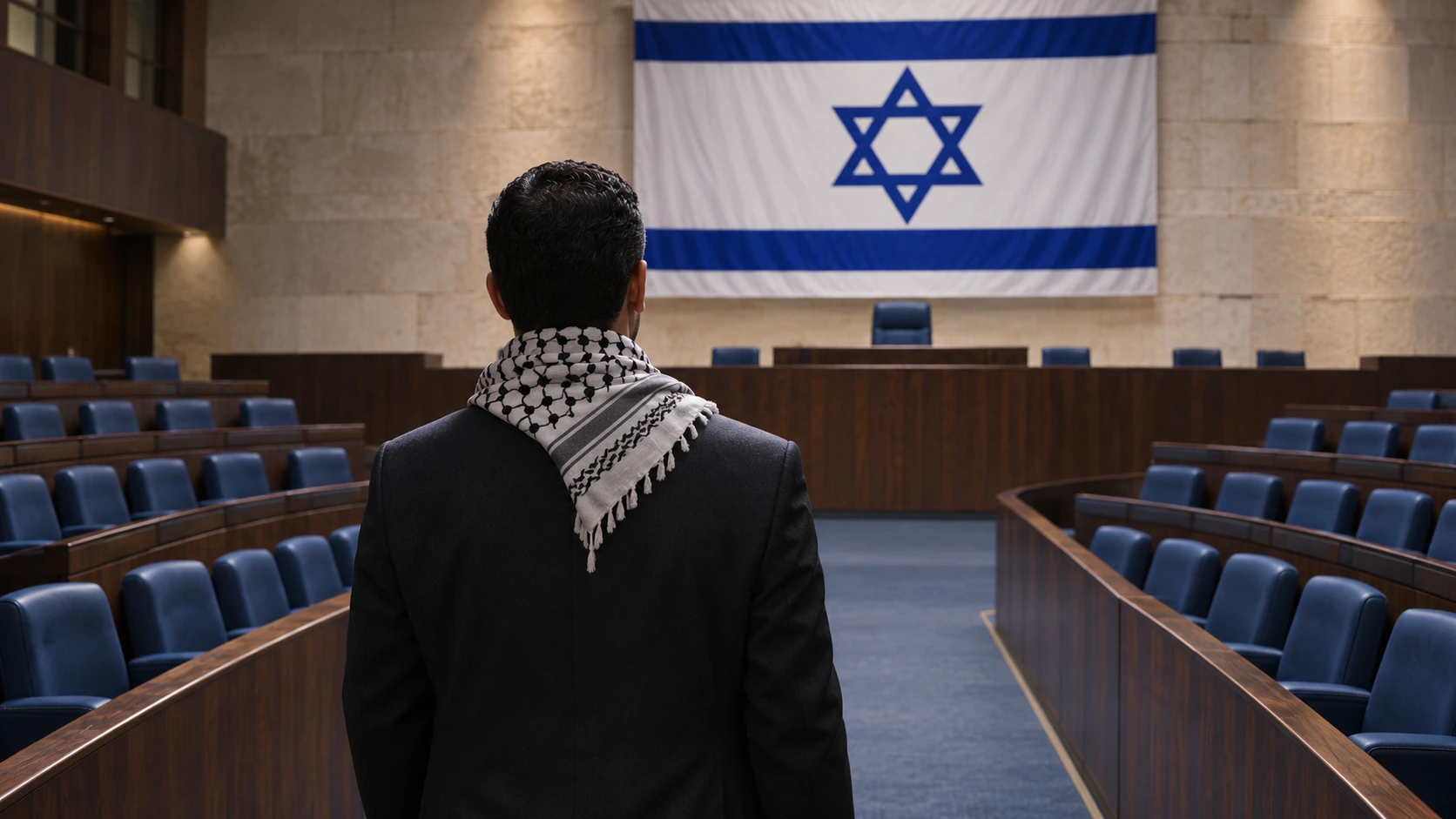
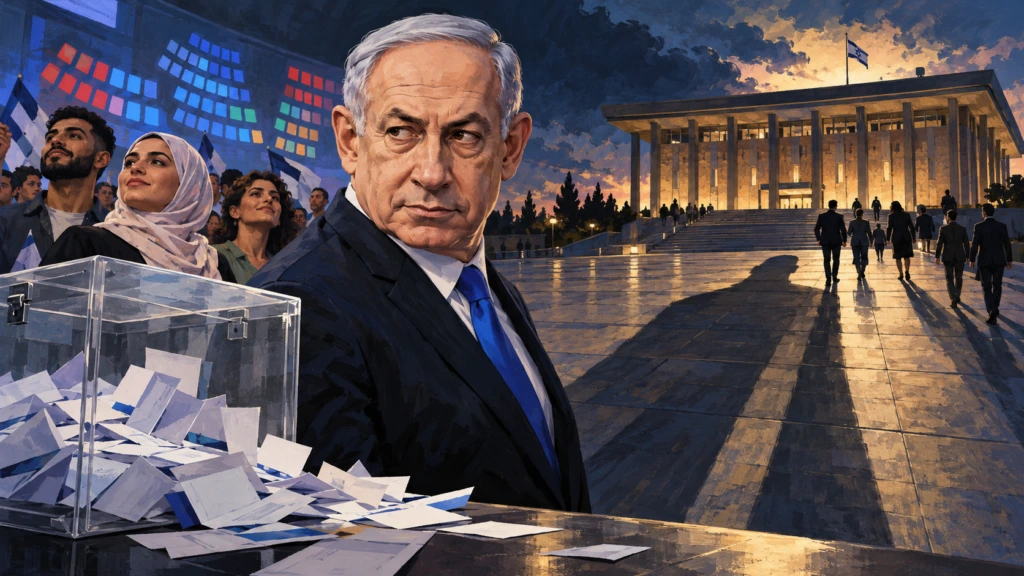
The Israeli nation is at a crossroads. The situation of the Arabs, either living in Israel or in the semi-autonomous territories under the PLO or in Gaza, is equally uncertain. The general elections of 28 October in Israel produced a hung parliament, with no coalition having enough seats in the 120-member Knesset to form a government. The coalition headed by Benjamin Netanyahu won 53 seats, while Gadi Eizenkot’s coalition won only 48, whereas the two Arab political coalitions unexpectedly gained 19 seats. This has given them the balance of power in the formation of the government.
The Israeli voters have not rebuffed Netanyahu for his extreme policies, invasion of Iran, and allegations of corruption against him. They have, however, failed to give him a simple majority. The participation of Arabs in the elections, and the massive turnout of voters in Arab neighbourhoods, dashed Netanyahu’s plans to secure another mandate in power. The Arabs would never have the support of the mainstream Jewish political coalitions or parties to form a government. However, by participating in the electoral contests, they could conveniently influence the political and legislative course to their benefit.
There has been too much intensive and malicious propaganda against Arab Muslims, making it difficult for mainstream Israeli coalitions to seek their political support in the formation of a government. There have been many examples in the recent political history of Israel in which coalitions in hung parliaments have sought a second round of elections instead of seeking the votes of Arabs. This time, too, the leaders of the coalitions were reluctant to openly seek Arab support to form a government. Netanyahu’s enmity towards Arabs is an open secret. He has been entirely willing to eradicate the last Arab soul from Israeli land.
Netanyahu, after committing mayhem in Gaza, had no face to seek Arab votes. Therefore, he launched an intensive campaign to deter his rival, Gadi Eizenkot, from joining hands with Arabs to form a government. Eizenkot was also reluctant. However, the Arabs publicly declared their support for him to form a government. They took the initiative to inform President Isaac Herzog of Israel about their decision to support Eizenkot in the formation of a government. President Herzog had no other option than to invite Eizenkot to prove his majority of 67 in the Knesset.
The purpose of the Arabs’ political move seems to be to deny Netanyahu any chance of forming a government, given his anti-peace, anti-Muslim, anti-Arab, and anti-Palestinian policies; his heinous crimes of genocide in Gaza; his brazen aggression against Lebanon, Syria, and Iran; and his plans to annex Gaza and the West Bank to further undermine the chances of a Palestinian state. The Arabs had no other option than to side with Eizenkot to oust this known enemy of Arabs from power and face possible investigations on account of corruption charges.
The choice of Gadi Eizenkot is not an ideal one. He would be better than his predecessor, though he is not an Arab sympathiser. He served as the 21st Chief of the Israeli Defence Forces from February 2016 to January 2019. He is credited with training the IDF in guerrilla warfare. He spent billions of dollars transforming the strategic approach of the IDF from a traditional army into one focused on guerrilla warfare, and also brought about far-reaching changes in the training of Israel’s intelligence agencies.
He was of the firm belief that there was no traditional army left in the Middle East to face the IDF in a conventional war. All strong Arab armies, except Egypt’s, had disintegrated in civil wars or regime changes. He used to refer sarcastically to the grand armies of Libya, Syria and Iraq.
Nevertheless, he had apprehensions that Israel could face potential threats from non-state actors employing guerrilla warfare. These could include Hezbollah in Lebanon and Syria, Hamas in Gaza, Ikhwans in Arab countries, Al-Houthis in Yemen, and loose religious militant organisations in Iraq. He successfully altered the strategic course and outlook of the IDF.
The core national interests of Israel are going to remain unchanged, no matter who is at the helm. Eizenkot would not make any changes to these core national interests to please Arabs. However, the ousting of Netanyahu from the corridors of power would likely make a substantial difference in Gaza and other Arab lands, where Palestinians have faced the harsh and coercive policies of Netanyahu. This may bring some relief to them. Eizenkot has not been directly involved in any anti-Arab or anti-Palestinian campaign.
The coalition of Gadi Eizenkot may have a political agenda: seeking Arab support to oust Netanyahu and paving the way for investigations against him on charges of corruption and abuse of power; causing damage to the Israeli nation through unnecessary wars; and then calling for midterm elections. It all depends on how Israeli voters look upon any coalition with perceived Arab enemies. There could possibly be a severe backlash from voters. The joint session of the Knesset showcased the level of animosity between Israelis and Arabs. When Arab leaders were being sworn in, the Israelis heckled them. Many are of the view that any minority government formed with the support of Arabs would not last long. Netanyahu and his sympathisers would exploit this political loophole.
Netanyahu is an evil genius. He exercised exemplary influence over President Donald Trump and the people around him, particularly Jared Kushner, Steve Witkoff, Marco Rubio and Pete Hegseth, as well as a few wealthy rulers of the Middle East. He forced Donald Trump to withdraw from the Obama-sponsored Joint Comprehensive Plan of Action in his first term and dragged him into war with Iran in June 2025 and February 2026 under the guise of talks being mediated by Oman. He wanted regime change in Iran. He himself lost the election and is also losing power. His boss would be a lame-duck leader during the last two years of his term.
The takeaway from Israel’s general election is that the political field should never be left open for one’s opponents. Politics is always a game of possibility. One should exercise all available options to resist political opponents. The plunge of Arabs into Israeli elections has enabled them to alter the political course in their land.
Editor’s Note: This article was originally published in The Nation", Pakistan, and has been republished on the Iqbal Forum website with attribution to the original author and publication. The views expressed are solely those of the author and do not necessarily reflect the position of Iqbal Forum.
About the Author
Ambassador M. Alam Brohi
The writer is a former member of the Foreign Service of Pakistan and has served as Ambassador for two terms. He is the author of five books.
Profile and all publicationsHow to Cite This Article
Brohi, Ambassador M. Alam. “Gadi Eizenkote Or Benjamin Netanyahu.” Iqbal Forum, November 14, 2026. https://iqbalforum.org/en/?p=55415.





Comments