



Negotiating with Iran
President Donald Trump’s claim that the current "status quo" suits the United States is unsustainable, as a tense pause marked by a contested Strait of Hormuz, an ongoing blockade, and Iran’s unverified…
AI Analysis
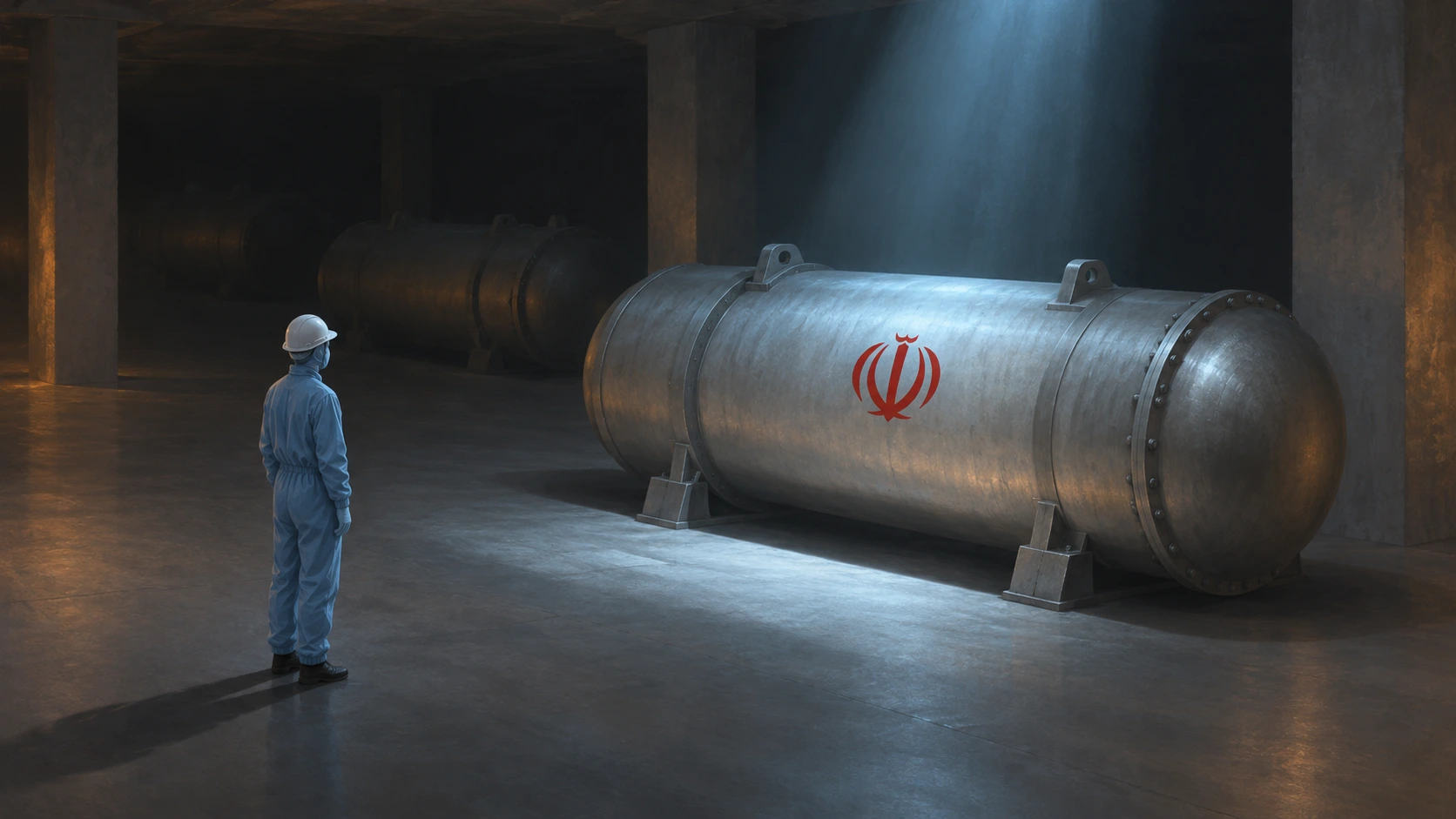
Iran’s nuclear stockpile and the need for verification
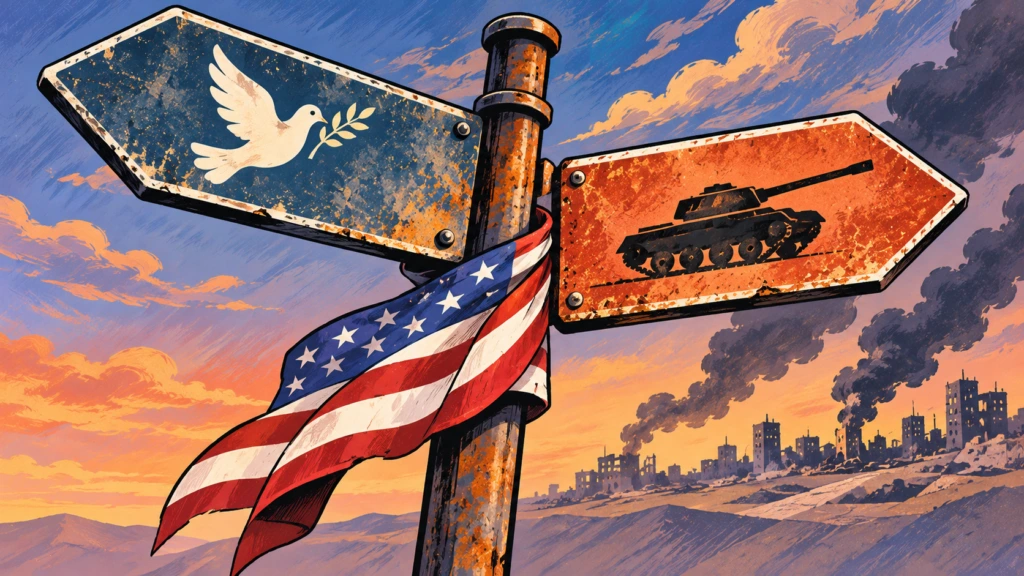
President Donald Trump’s claim that maintaining the “status quo” suits the United States is difficult to sustain. A tense pause—with the Strait of Hormuz contested, the blockade in place and Iran’s nuclear stockpile unverified—is not stability. It leaves hostilities vulnerable to miscalculation, keeps energy costs and uncertainty high for the world, and exposes Gulf Cooperation Council states to serious economic and security risks. Their economies depend on safe shipping, reliable energy flows and investor confidence; their critical infrastructure remains vulnerable to a wider confrontation. A status quo carrying these risks cannot serve as a durable settlement.
Iran may not possess a nuclear weapon, and there is no public proof that it has decided to build one. Yet its nuclear capabilities have brought it close enough to the threshold that negotiations can no longer proceed as though Tehran were an ordinary non-nuclear state.
This is a description of strategic reality, not a change in Iran’s legal status. A threshold state has accumulated the material and technical capacity to move towards a nuclear weapon without having crossed that line. Iran remains a non-nuclear-weapon state under the Nuclear Non-Proliferation Treaty. The urgent question is how to keep it from acquiring a weapon—and how to restore the verification needed to establish whether it is moving in that direction.
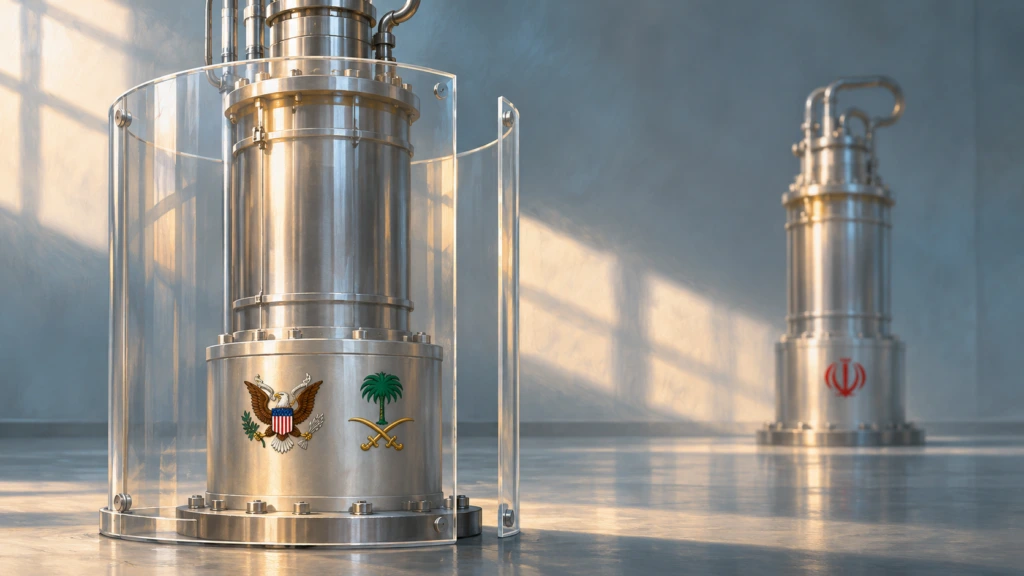
The last verified pre-war accounting by the International Atomic Energy Agency estimated that, as of 13 June 2025, Iran had 440.9 kilograms of uranium enriched up to 60 per cent. The figure is often rounded to 450 kilograms. Sixty per cent is below the roughly 90 per cent level commonly described as weapons-grade, but far above the enrichment level required for most civilian nuclear power. IAEA Director General Rafael Grossi has said that, if further enriched, the stockpile could provide enough material for up to ten nuclear weapons under the agency’s material yardstick. That is a statement about potential fissile material—not ten assembled bombs, and certainly not evidence that Iran has decided to build them.
The distinction should guide the debate. Enriched uranium is not a weapon. A state would still have to make further technical and political decisions before it could produce and deploy one. But a large stockpile enriched to 60 per cent gives Iran a much shorter path to weapons-grade material than a normal civilian programme would. When the IAEA cannot verify the material or inspect affected facilities, that possibility becomes harder to assess and more dangerous to ignore.
The 440.9-kilogram figure is a pre-war estimate, not a verified account of what Iran possesses today. Following attacks on Iranian nuclear facilities and the loss of access to affected sites, the IAEA has been unable to confirm the stockpile’s current quantity, composition or location. In March 2026, Grossi said the agency believed a little more than 200 kilograms of the 60 per cent material had been at the Isfahan tunnel complex and was probably still there; some material may also have been stored elsewhere. That was an assessment based on the information then available, not a fresh inspection. The stockpile’s location and condition remain uncertain.
This uncertainty is itself a proliferation problem. The issue is not only how much uranium Iran has or how far it might enrich it. It is also whether inspectors can account for the material, verify that enrichment has stopped or been limited, and confirm that no further activity is taking place at sites damaged in the war. Restoring that knowledge should be an immediate negotiating priority.
The present crisis also has a history. President Donald Trump’s withdrawal from the Joint Comprehensive Plan of Action in May 2018 was a strategic blunder. Concluded on 14 July 2015 by Iran and the P5+1 powers under President Barack Obama’s administration, the JCPOA imposed limits on Iran’s nuclear programme and provided for monitoring and inspections in return for nuclear-related sanctions relief. It did not resolve every dispute with Tehran, but it established verifiable constraints on the nuclear issue.
Trump’s withdrawal did not, by itself, cause the present war. But it dismantled the negotiated system for managing the nuclear dispute and helped set in motion a cycle of renewed sanctions, declining trust and escalating confrontation. Reportedly, Iran began exceeding nuclear limits after the US withdrawal from the JCPOA; that sequence does not excuse Tehran’s decisions, but it matters when assessing how the agreement unravelled. The current conflict has multiple causes. Yet the loss of the JCPOA’s verification framework made a peaceful resolution harder and
miscalculation more likely.
Editor’s Note: This article was originally published in "The Nation", Pakistan, and has been republished on the Iqbal Forum website with attribution to the original author and publication. The views expressed are solely those of the author and do not necessarily reflect the position of Iqbal Forum.
About the Author
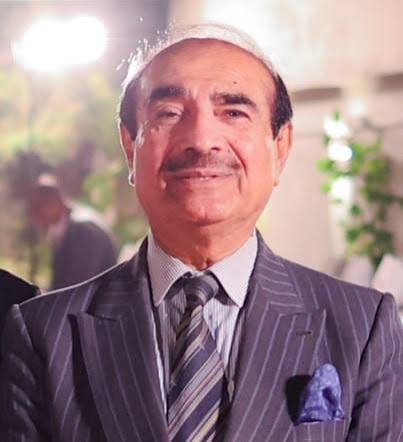
Ambassador G. R. Baluch
The writer is a former ambassador and Director Global and Regional Studies Center at IOBM University Karachi.
Profile and all publicationsHow to Cite This Article
Baluch, Ambassador G. R. “Negotiating with Iran.” Iqbal Forum, November 14, 2026. https://iqbalforum.org/en/?p=55414.



Comments