



Iran Sanctions and the New Global Equation
The latest round of US sanctions on Iran targets its airlines, banks, and foreign business partners to deepen Tehran's isolation, yet decades of living under economic pressure have driven Iran to build…
AI Analysis
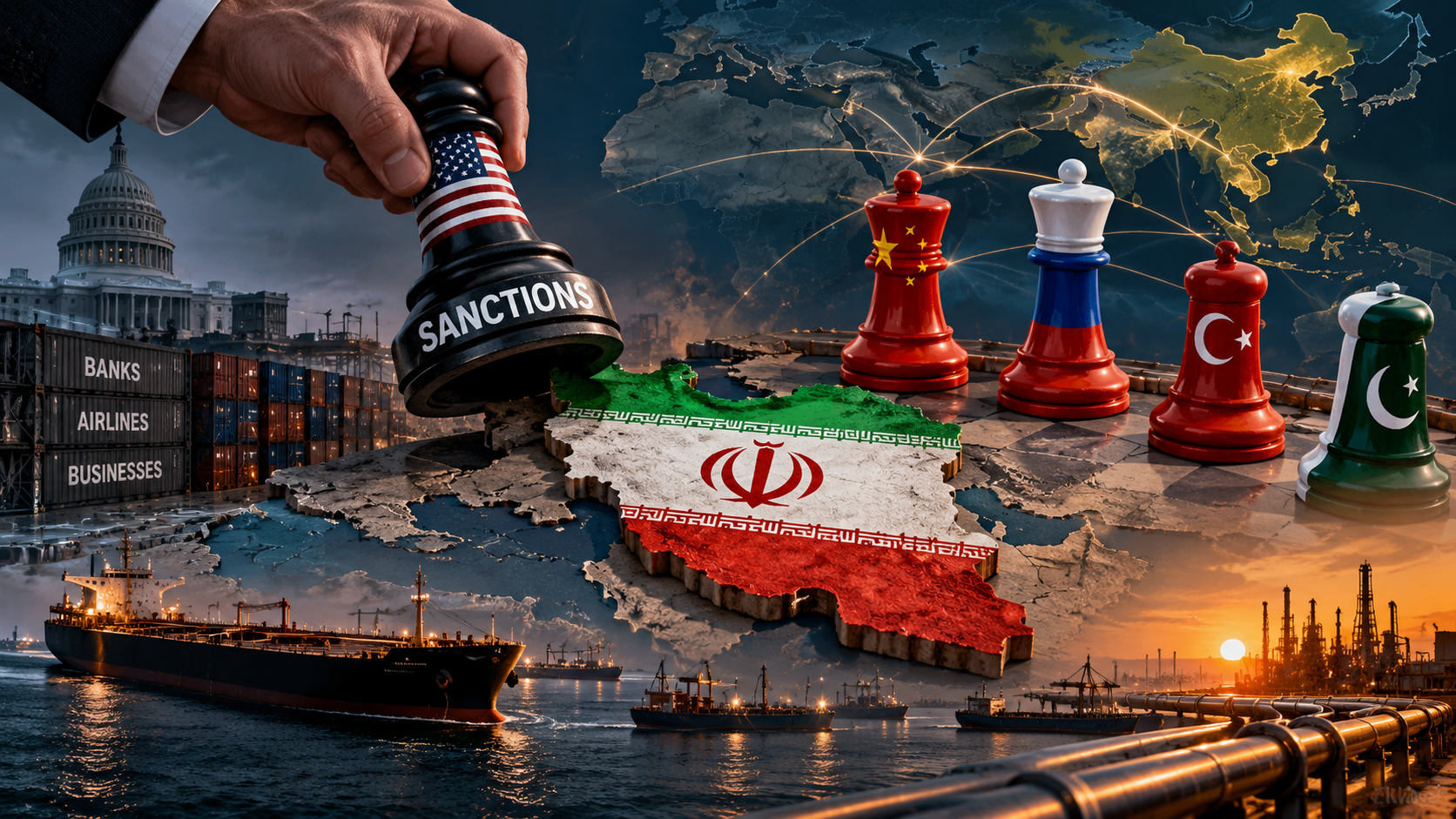
The latest round of US sanctions on Iran is not merely another chapter in the economic confrontation between Tehran and Washington. Its implications extend beyond Iran and the United States, reaching China, Russia, Turkey and the wider region. The American strategy of increasing pressure on Iranian airlines, banks and businesses is aimed at further isolating Tehran. Yet the changing nature of global politics suggests that sanctions no longer produce the same results they once did.
Iran has lived under sanctions for decades. During this period, it has developed alternative trade routes, regional economic relationships and informal channels of commerce. The latest pressure will certainly create difficulties for Tehran, but completely cutting Iran off from the international system is far more complicated than it may appear.
Iran has also made it clear to neighbouring countries that they should not become part of the US pressure campaign. Tehran has warned that restrictions on access to regional airports and commercial facilities could also affect the economic and aviation interests of those countries. This reflects Iran’s broader effort to respond to sanctions not only through domestic resources but also through its regional relationships.
The world appears to be moving gradually towards a more multipolar order.
An important element of the US strategy is to extend pressure beyond Iranian institutions and target foreign companies and financial entities that cooperate with them. Washington is therefore seeking to create a wider economic barrier around Iran, making trade, financial transactions and international connectivity more difficult.
Turkey’s position illustrates the complexity of this strategy. Iran and Turkey have long maintained significant economic and commercial relations, while Ankara itself has to balance its relations with Washington against its regional interests. Gulf and Central Asian countries face similar challenges.
Pakistan cannot remain detached from this situation either. Iran is Pakistan’s immediate neighbour, and major economic or security developments in the region inevitably have an impact on Pakistan. Islamabad has generally emphasised adherence to the United Nations framework rather than unilateral sanctions. China, too, has maintained a different position on unilateral sanctions. For both Pakistan and China, therefore, the Iranian issue is not simply a matter of foreign policy. It is also linked to regional stability and economic connectivity.
China’s role is particularly significant. Over the past several years, countries facing Western sanctions have increasingly looked towards China as an important economic partner. A similar pattern emerged following sanctions against Russia, as Moscow redirected much of its trade towards Asian markets, particularly China and India.
China and Russia are also important partners for Iran. China has a major demand for Iranian energy, while Iran sees China as an important market, source of investment and channel for trade. Iran’s relationship with Russia has also expanded in recent years.
This points towards a broader transformation in the international system.
There was a time when the United States and Western countries possessed such overwhelming influence over technology, finance and global trade that sanctions could bring a targeted economy close to paralysis. The situation today is different. China has developed substantial capabilities in industry, technology, communications, artificial intelligence and defence production. Russia has significant energy resources, while Iran has energy assets and established regional networks.
The world therefore appears to be moving gradually towards a more multipolar order.
For Iran, this means that it has more alternatives than it did in the past when confronted with Western economic pressure. That does not mean sanctions have become irrelevant. Iran can still face serious difficulties in accessing international finance, technology and global markets. Restrictions on aviation technology, aircraft components and other essential equipment can create particular problems for the country’s aviation sector. Yet sanctions also have a paradoxical effect: they push targeted countries to search for alternative routes and partnerships. Iran has spent decades developing such alternatives. Its growing economic and strategic relationships with China and Russia have now made some of those channels more viable.
The broader question is how this changing global environment will affect the effectiveness of economic pressure as a foreign-policy instrument. Iran may not be immune to sanctions, but isolating it completely will not be easy.
About the Author
T.M. Awan
The writer is a career journalist, Strategic Communication & narrative Specialist and IR Scholar based in Islamabad.
- Politics
How to Cite This Article
Awan, T.M. “Iran Sanctions and the New Global Equation.” Iqbal Forum, September 29, 2026. https://iqbalforum.org/en/?p=50059.




Comments