



Oman Sold Us Its Coastline. Now It Is Showing Us What It Was Worth
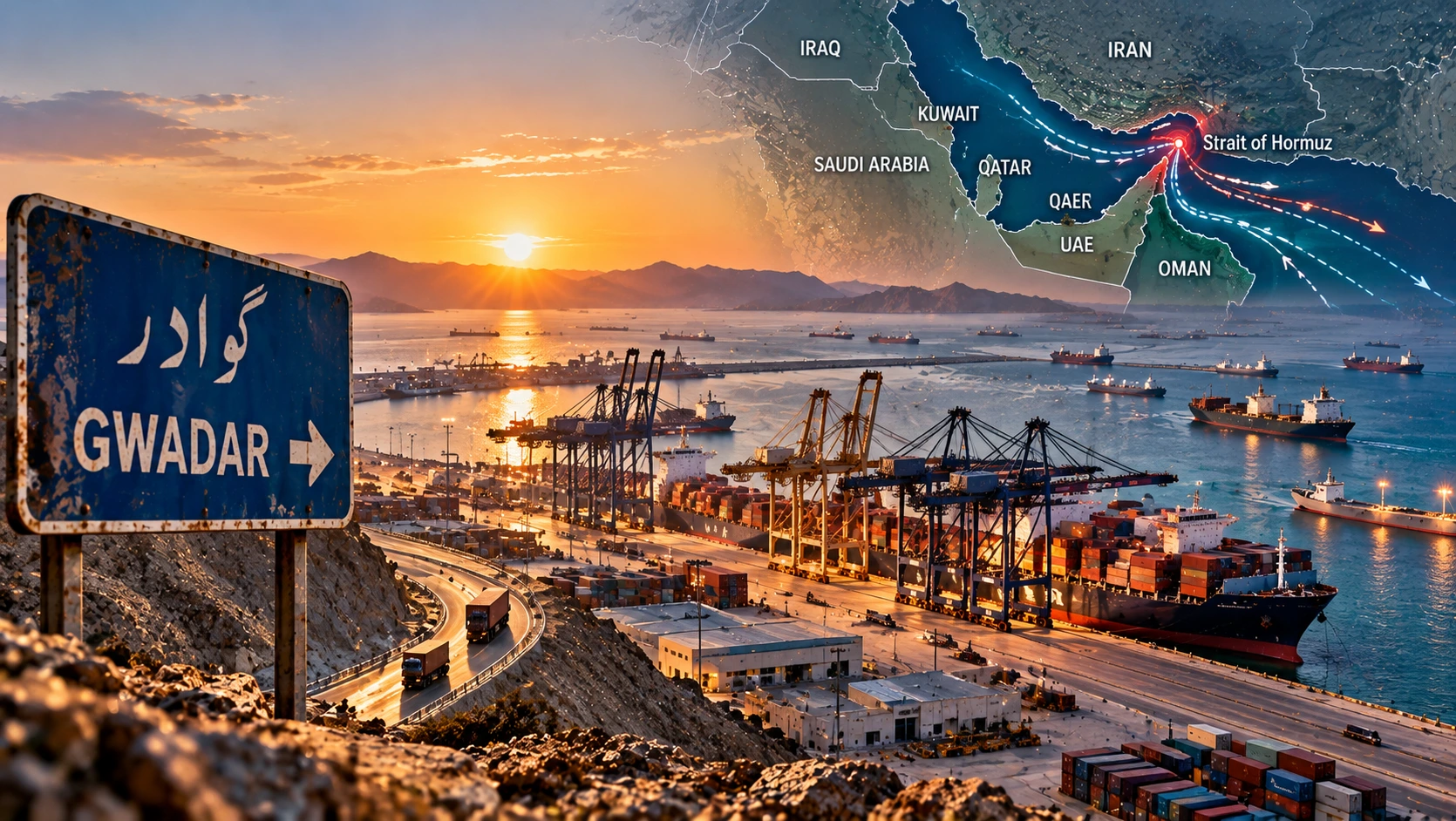
While Oman capitalized on its strategic coastline outside the Strait of Hormuz to achieve Gulf-leading economic growth during the regional war, Pakistan's port of Gwadar has primarily reaped a temporary windfall from…
AI Analysis
In 1958, Pakistan paid Oman three million pounds for a small fishing town called Gwadar. For two centuries it had been an Omani possession. Sixty-eight years later, both sides of that old transaction are being tested by the same war, and the results should trouble anyone in Islamabad who thinks seriously about the country’s economic future.
Last week the International Monetary Fund published its regional outlook for the Middle East. The numbers are brutal. The six Gulf Cooperation Council economies are expected to shrink by 4.8 per cent this year. Kuwait’s economy is forecast to contract by 16.7 per cent, Qatar’s by 15.6 per cent, and Bahrain’s by 11.3 per cent. These are not slowdowns. They are the kind of collapses normally associated with financial crises or civil wars.
Yet one Gulf economy is growing. Oman is expected to expand by 4.1 per cent, and the IMF has actually raised its forecast since April. Oman is a modest oil producer, so oil does not explain it. Geography and preparation do.
This war has taught every Gulf capital that concentrating its economy behind a single narrow strait is a strategic liability.
Oman’s three major ports, Sohar, Duqm and Salalah, sit on the Arabian Sea, outside the Strait of Hormuz and outside the Red Sea danger zone. When the strait was shut this spring, cargo meant for Dubai, Doha and Kuwait still had to land somewhere. Much of it landed in Oman. Sohar handled 52 million tonnes of cargo in the first half of this year, up 52 per cent, with almost half of it moving through ship-to-ship transfers. Qatar formally designated Omani ports as alternatives to its own Hamad Port. Iranian drones struck Duqm and Salalah in March. The ships kept coming anyway.
The lesson is uncomfortable. In this crisis, the most valuable asset in the Gulf has not been oil. It has been sitting on the right side of a chokepoint, and having built the berths, roads, customs systems and diplomatic credibility before the crisis arrived. Salalah expanded its container capacity from 4.5 million to 6.5 million units the year before the war. Muscat kept its neutrality intact and hosted talks between Washington and Tehran as late as February. When the emergency came, Oman did not need to improvise. It simply opened the gates.
Now consider Pakistan. Gwadar also sits outside the strait. Did we benefit? In a sense, yes, and more than most Pakistanis realise.
On 25 April, the Ministry of Commerce issued the Transit of Goods through Territory of Pakistan Order 2026. It opened six overland routes from Karachi, Port Qasim and Gwadar to the Iranian border crossings at Gabd and Taftan. More than 3,000 Iran-bound containers stranded at Karachi finally had a legal way out. The Gwadar-Gabd corridor is under ninety kilometres long and takes two to three hours, against sixteen to eighteen hours from Karachi. In April alone, Gwadar reportedly handled around 11,000 containers, more than in the whole of 2025. Over a separate three-month period, it moved some 200,000 tonnes of transit cargo.
But look closely at the customer. Oman’s windfall comes from its Gulf neighbours, from global shipping lines and from Qatar’s contingency planning. Gwadar’s windfall comes mostly from Iran-bound cargo moving through a legal grey zone that Washington has not yet addressed. Traders routing goods through Gwadar are betting that the United States will not sanction transit traffic. That is a bet, not a business model.
It also has an expiry date. The IMF assumes Hormuz shipping gradually resumes early next year. When it does, Iran will return to its own ports and much of this traffic will disappear.
There is a further problem. Under the forty-year concession, the Chinese operator keeps 91 per cent of the port’s terminal and marine-services revenue. The Gwadar Port Authority receives nine per cent. Even the windfall we have is largely someone else’s.
Honesty requires one caveat. Oman’s ports also win because trucks can drive from Sohar straight into the UAE and Saudi Arabia. Gwadar shares no land border with any Gulf Arab state. Pakistan cannot simply copy Sohar. That is precisely why the question matters. If we cannot be the Gulf’s back door by road, what can we be?
The answer lies in what the Gulf will do next. This war has taught every Gulf capital that concentrating its economy behind a single narrow strait is a strategic liability. Once the guns fall silent, they will spend heavily to protect themselves against a repeat. They will buy storage, refining capacity, food reserves, bunkering and transhipment capacity outside the strait. Part of the 9.1 per cent rebound the IMF expects for 2027 will be this insurance spending.
Oman will capture much of it. But no sensible planner replaces one single point of failure with another, and Omani ports have themselves been struck. The Gulf will want more than one insurance policy. That is Pakistan’s opening, and it calls for three decisions.
First, Pakistan should offer Gwadar as a site for Gulf-owned strategic reserves. This means crude and refined fuel storage, and food stockpiles, held under government-to-government agreements with clear commercial terms. The reserves would sit a short voyage from Gulf coasts but beyond Iran’s reach over Hormuz. The groundwork already exists. Gulf states have invested in Pakistani farmland for years, and in April Islamabad approved the export of forty food items to keep Gulf shelves stocked. A food reserve hub would turn goodwill into a long-term contract.
Second, Gwadar’s commercial mission cannot be left to the accidents of war. Iranian transit is useful, but it should be treated as temporary and managed with full legal clarity, so Pakistan stays on the right side of American sanctions. The permanent strategy must place Gulf and Central Asian trade at the centre. Officials met in Karachi on 8 October to tackle transit paperwork and procedural bottlenecks. That is welcome, but it is administration, not strategy.
Third, we must revisit the economics. A port whose owner keeps nine per cent of its terminal revenue cannot become the national asset its geography promises. Reopening terms with China is delicate and must be done respectfully. But those terms were set when Gwadar handled almost nothing. This year has changed what Gwadar is worth, and every serious commercial relationship eventually reflects that.
In 1958, Oman sold Gwadar because it appeared to be worth little. In 2026, Oman has the only growing economy in the Gulf because it understood exactly what a coastline outside the strait is worth. Pakistan now owns the coastline the Sultan once held.
When the strait reopens and Gulf governments begin writing their insurance cheques, will any of them be made out to Pakistan?
About the Author

Jawad Saleem
The available information identifies Jawad Saleem only by name. No further details about his life or work have been provided.
Profile and all publicationsHow to Cite This Article
Saleem, Jawad. “Oman Sold Us Its Coastline. Now It Is Showing Us What It Was Worth.” Iqbal Forum, October 31, 2026. https://iqbalforum.org/en/?p=53447.




Comments