



Qamar Bashir
The writer is a former press secretary to the president; former press minister to the Embassy of Pakistan to France and former MD (SRBC).
View ProfileNearly six months later, President Donald Trump is no longer speaking confidently about unconditional victory. He is talking about negotiations and the danger of an “economic catastrophe” for the USA and its people if the conflict continues.
This is more than a change in language. It is a strategic admission that the economic pressure intended to break Iran has recoiled upon the United States and the wider world. The war has damaged Iran enormously, but it has also depleted American munitions, disrupted energy supplies, raised fuel and consumer prices, unsettled financial markets and exposed the limits of Washington’s military power.
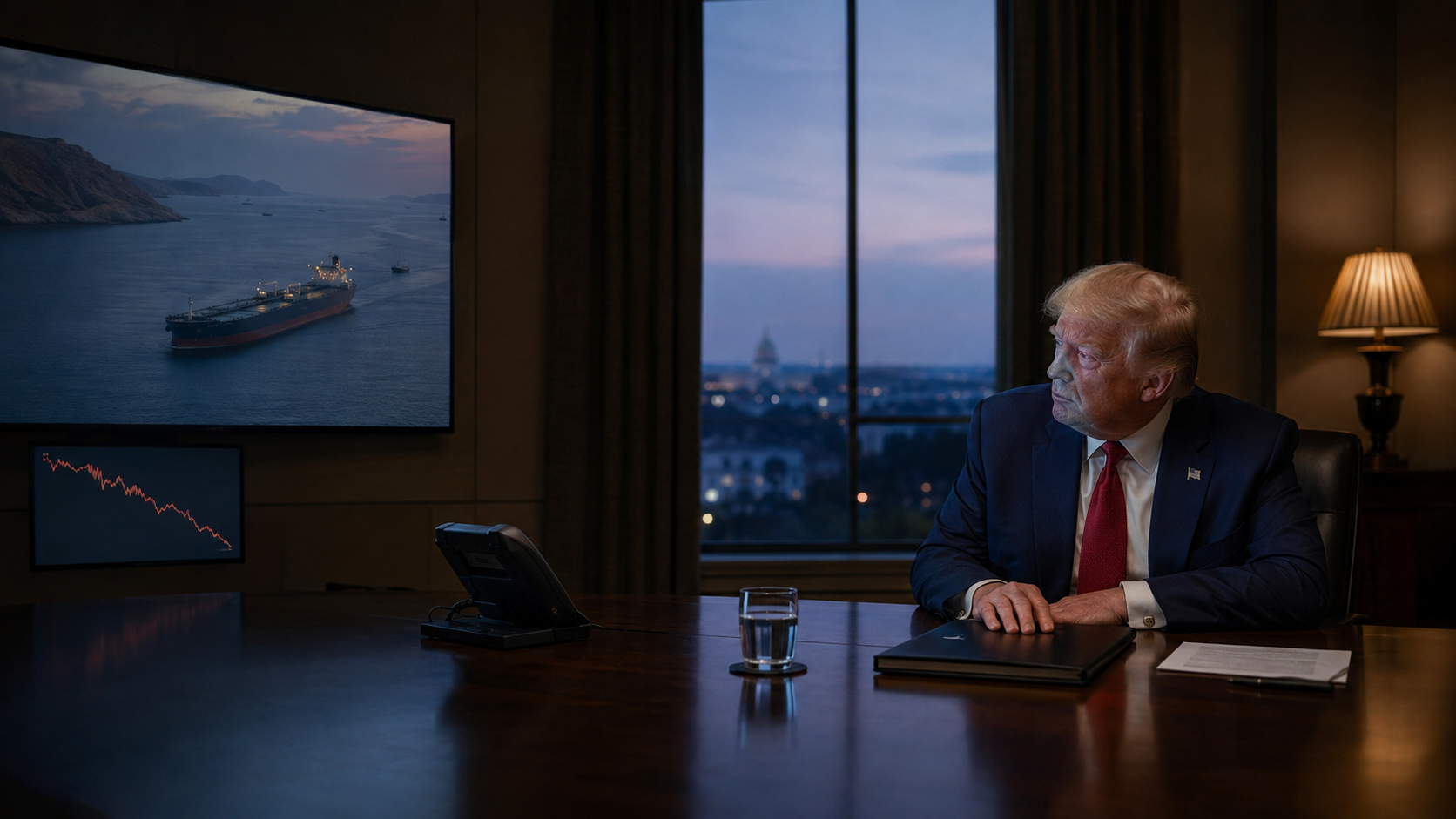
Trump acknowledged this danger while defending his diplomatic approach. He linked expectations of peace with gains in the stock market and warned that continuing the conflict could produce a severe economic downturn. Trump said he “didn’t want to see economic catastrophe” and suggested that prolonged warfare could have created something resembling an international depression.
That statement represents a remarkable reversal. At the beginning, the administration projected the war as a demonstration of irresistible American power. Iran would supposedly lose its leadership, missile forces, nuclear infrastructure, economy and ability to influence the region. Now Washington is seeking an exit partly because the economic consequences have become intolerable for Americans themselves.
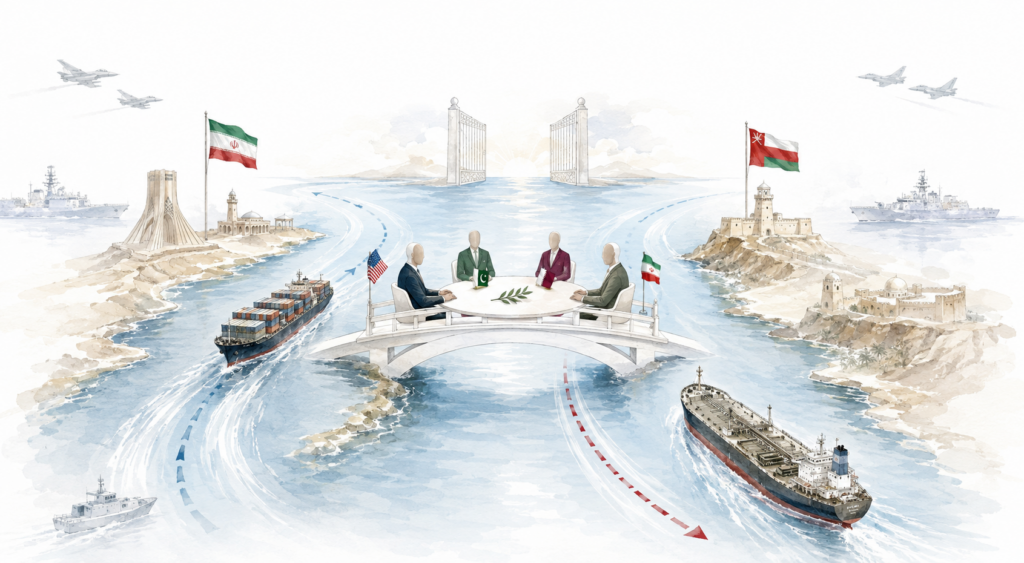
The Strait of Hormuz has transformed the entire strategic equation. Before the war, ships passed through the waterway without paying Iran for access. Today, Tehran’s ability to disrupt or regulate traffic has turned the strait into its greatest bargaining instrument. Every interruption raises oil prices, transportation costs and inflationary pressure throughout the world. Iran can therefore impose economic costs far beyond the damage inflicted on its own territory.
Trump says the United States is “semi-negotiating,” apparently relying upon economic pressure to force Tehran into an agreement. Iranian officials deny conducting direct negotiations and say messages are being exchanged through intermediaries, particularly Oman. Tehran is demanding an end to the American naval blockade, sanctions relief, access to frozen assets and compensation for wartime destruction. Whether all these demands survive negotiations is uncertain, but Iran is negotiating from a position few anticipated when the war began.
Some American lawmakers have suggested that even a bad agreement is now preferable to continuing a disastrous war. That assessment reflects the uncomfortable reality confronting Washington: the price of reopening the Strait of Hormuz increases with every passing day. The longer Iran demonstrates that it can endure military pressure while disrupting the global economy, the stronger its negotiating position becomes.
Trump has responded to Iran’s demand for war reparations by insisting that Tehran compensate Americans for alleged damage caused over several decades. The demand may have domestic political appeal, but it does little to resolve the immediate crisis. If both countries begin calculating every death, intervention, sanction, covert operation and destroyed asset over the past half-century, the resulting claims would be immeasurable. Such historical accounting would produce endless confrontation rather than peace.
The more serious obstacle may be the growing divergence between Trump and Israeli Prime Minister Benjamin Netanyahu. The United States increasingly needs de-escalation to protect its economy, military readiness and political stability. Netanyahu, however, continues taking steps that risk expanding regional conflict. Israel’s latest attack on Hezbollah targets in Beirut, which killed and wounded several people, complicated negotiations and reportedly angered Trump at a particularly sensitive moment.
Netanyahu has also publicly rejected Trump’s 15-point Gaza peace framework. The proposal envisages Hamas’s disarmament, a phased Israeli withdrawal, an international stabilization force and a Palestinian administrative structure. Netanyahu insists that Hamas must disarm completely before Israel withdraws and has declared that no Palestinian state will emerge in Gaza or the West Bank while he remains prime minister.
This is a revealing fracture. As long as Washington financed, armed and diplomatically protected Israel while confronting Israel’s regional enemies, the alliance appeared harmonious. But now that American economic and strategic interests require restraint, Netanyahu is demonstrating that Israeli priorities do not necessarily coincide with American ones.
Trump built his political identity around “America First,” yet his Middle East policy has repeatedly appeared to place Israel’s objectives above America’s long-term interests. Even while seeking an escape from a war that has burdened American families, depleted military inventories and weakened global readiness, he continues attacking domestic political figures on the basis of their criticism of Israel.
His reaction to the political rise of Michigan Democrat Abdul El-Sayed is illustrative. Instead of concentrating on why voters may be turning toward candidates who oppose foreign wars and challenge established power, Trump has portrayed criticism of Israel as hostility toward America. That framing ignores a fundamental distinction: Americans are entitled to question whether unconditional support for another government serves their own national interest.
The Iran war has made that question unavoidable. The United States has used enormous quantities of advanced missiles and defensive interceptors that cannot be replaced quickly. Its Strategic Petroleum Reserve has fallen to historically low levels. Energy shocks have affected household budgets, agricultural costs and business confidence. Financial markets now rise on expectations of peace and fall when diplomacy appears to collapse. Few American allies have shown enthusiasm for joining another open-ended Middle Eastern war.
Netanyahu’s defiance should therefore compel Washington to reconsider the structure of the relationship. An alliance cannot mean that one party initiates or expands conflicts while the other supplies weapons, money, diplomatic protection and soldiers—and then absorbs the economic and political consequences. Friendship between states must remain subordinate to national interest, law and democratic accountability.
It would be premature to claim that Iran has achieved a complete military victory. Iran has suffered extensive destruction, casualties and economic hardship. But strategic victory is not determined solely by the number of targets bombed. It is measured by whether the initiating powers achieve their political objectives at an acceptable cost. Iran remains intact, its leadership has been reorganized, its missile and drone capabilities have not disappeared, and it possesses decisive leverage over the Strait of Hormuz.
Trump’s shift toward negotiations is therefore not simply tactical flexibility. It is an acknowledgment that military escalation has reached its economic and strategic limits. Calling the approach “low-key” cannot conceal the fact that Washington now needs an agreement it once believed Iran would be forced to accept unconditionally.
Sanity requires restoring conditions as close as possible to those existing before the war: reopening the strait, ending the blockade, establishing verifiable security arrangements, preventing nuclear proliferation and addressing reparations through negotiations rather than retaliatory arithmetic. Congress, the media and financial institutions must also evaluate Middle East policy through the interests of the American people—not through fear of challenging Israel.
The war intended to demonstrate American dominance has instead exposed American vulnerability. Trump may call it negotiation, de-escalation or strategic patience. In reality, his warning of economic catastrophe amounts to an honest admission: continuing Israel’s war at America’s expense is no longer sustainable.
The writer is a former press secretary to the president; former press minister to the Embassy of Pakistan to France and former MD (SRBC).
View Profile
AI Assistant
Fast and reliable answers