



Makkah Pact and Pakistan’s emerging regional role
The Makkah Joint Defence Agreement signed by Pakistan, Türkiye, and Saudi Arabia establishes a pivotal collective deterrence framework where an attack on one state is regarded as an attack on all, combining…

AI Analysis
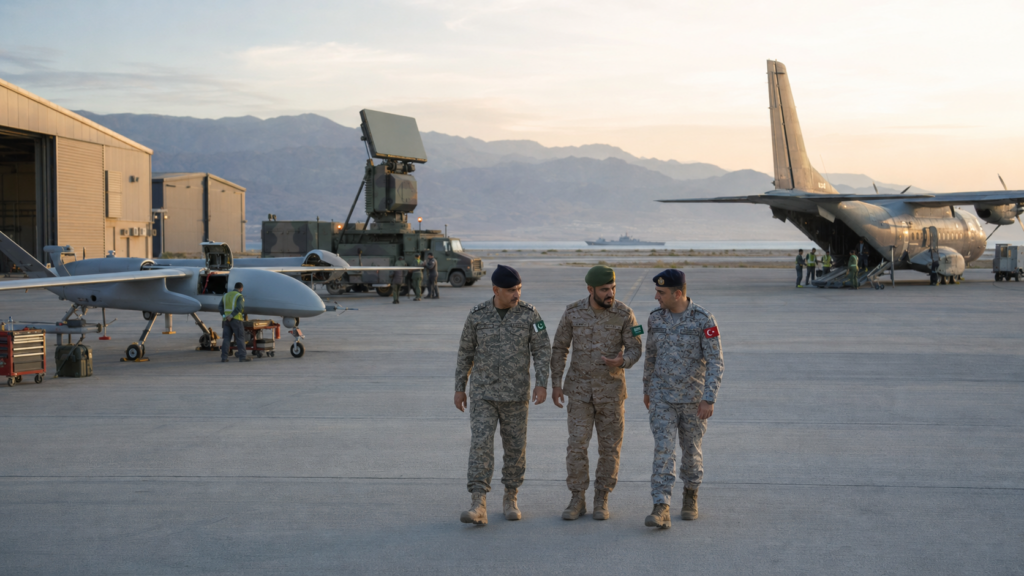
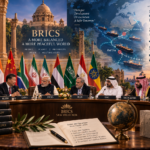
THE Makkah Joint Defence Agreement signed by Pakistan, Türkiye and Saudi Arabia could prove to be one of the most consequential developments in the strategic landscape of the Muslim world in recent years. On the surface, it is a defensive agreement under which an armed attack against one member is regarded as an attack against all three. But its larger significance lies in the possibility that it may become the foundation of a new regional security architecture. The agreement does not mean that the three countries have committed themselves to automatic war whenever one of them faces a security problem. Its purpose is deterrence and the nature of assistance would depend on the circumstances. Türkiye has described the mechanism as technically comparable to NATO’s Article 5, while also making clear that the agreement is not directed against Iran or any particular country.
Pakistan, Saudi Arabia and Türkiye are becoming one of the three pillars of a wider security arrangement. Saudi Arabia brings financial strength, energy resources and political influence; Türkiye contributes advanced defence technology and military capability; while Pakistan offers extensive military experience, defence capacity and strategic deterrence. This combination could enhance Pakistan’s regional influence and alter the calculations of any country contemplating military action against it. India, in particular, may have to consider the possibility that a conflict with Pakistan could acquire wider regional dimensions, raising the potential cost of aggression.
The agreement also has implications far beyond South Asia. For decades, the security of the Gulf has depended heavily on American military power and strategic guarantees. The emergence of a regional arrangement combining Saudi financial resources, Turkish technology and Pakistani military capability could gradually create greater indigenous capacity for the security of the Arab and Muslim world. This does not mean that the United States will suddenly disappear from the region, but it does suggest that the traditional security equation may begin to change. Iran will understandably examine the development with some apprehension. Pakistan must be particularly careful that the new arrangement does not evolve into an anti-Iran coalition. Pakistan shares a long border with Iran and has strong strategic reasons to maintain stable relations with Tehran. The long-term success of the Makkah framework may depend on whether it remains an inclusive defensive arrangement or develops into another bloc in an already divided region.
For this reason, the possible future inclusion of Iran could be strategically important for Pakistan. Türkiye has also spoken about the possibility of Egypt joining the arrangement, while other regional countries, including Qatar, could potentially become part of a broader framework. If such expansion takes place, the pact could gradually evolve from a three-country defence agreement into a wider regional security mechanism. Afghanistan will also have to reassess its regional policy. A stronger Pakistan supported by Türkiye and Saudi Arabia could change Kabul’s calculations regarding connectivity, trade and security. Afghanistan may eventually find greater benefit in allowing regional corridors to develop rather than remaining caught in competing geopolitical alignments. Pakistan’s western routes, particularly the development of Gwadar, could become increasingly important in connecting the Gulf with Central Asia and South Asia.
The implications for Israel are also significant. A stronger security relationship involving Saudi Arabia, Türkiye and Pakistan creates a new strategic factor in the Middle East. Israel will have to consider how this emerging alignment affects the regional balance, particularly if the framework expands to include other major Muslim countries. The pact could also strengthen Pakistan’s role in counterterrorism and regional security. Greater cooperation in intelligence, defence technology and military coordination could contribute to reducing terrorism and radicalization, provided that the cooperation remains focused on stability rather than confrontation. The real opportunity for Pakistan, however, is to convert strategic importance into economic strength. Gwadar, defence production, technology cooperation, minerals, energy and regional connectivity could all benefit if the country manages this new position intelligently. The Makkah pact should therefore not be viewed merely as a military arrangement. It could become a platform for broader economic and strategic cooperation.
The central challenge for Pakistan will be to maintain a delicate balance. It must strengthen its partnership with Saudi Arabia and Türkiye without alienating Iran; deepen its strategic importance without becoming involved in unnecessary regional conflicts; and expand its military role while preserving the strength of civilian institutions. If managed wisely, the Makkah pact could mark the beginning of a new regional balance in which Saudi Arabia provides financial strength, Türkiye contributes technology and Pakistan provides military expertise and strategic capability. Its ultimate purpose should not be to prepare the region for war, but to make aggression more difficult and regional cooperation more attractive. For Pakistan, this may be the beginning of a new phase in which its strategic importance rises substantially. The real test will be whether Islamabad can transform that strategic relevance into lasting peace, economic opportunity and greater regional influence.
Article Authors




Comments