



Hormuz Bargain
US President Donald Trump has reported progress on reopening the Strait of Hormuz, but Iran has instead confirmed a shipping route arrangement with Oman—where Iran would supervise inbound traffic and collect cargo…
AI Analysis
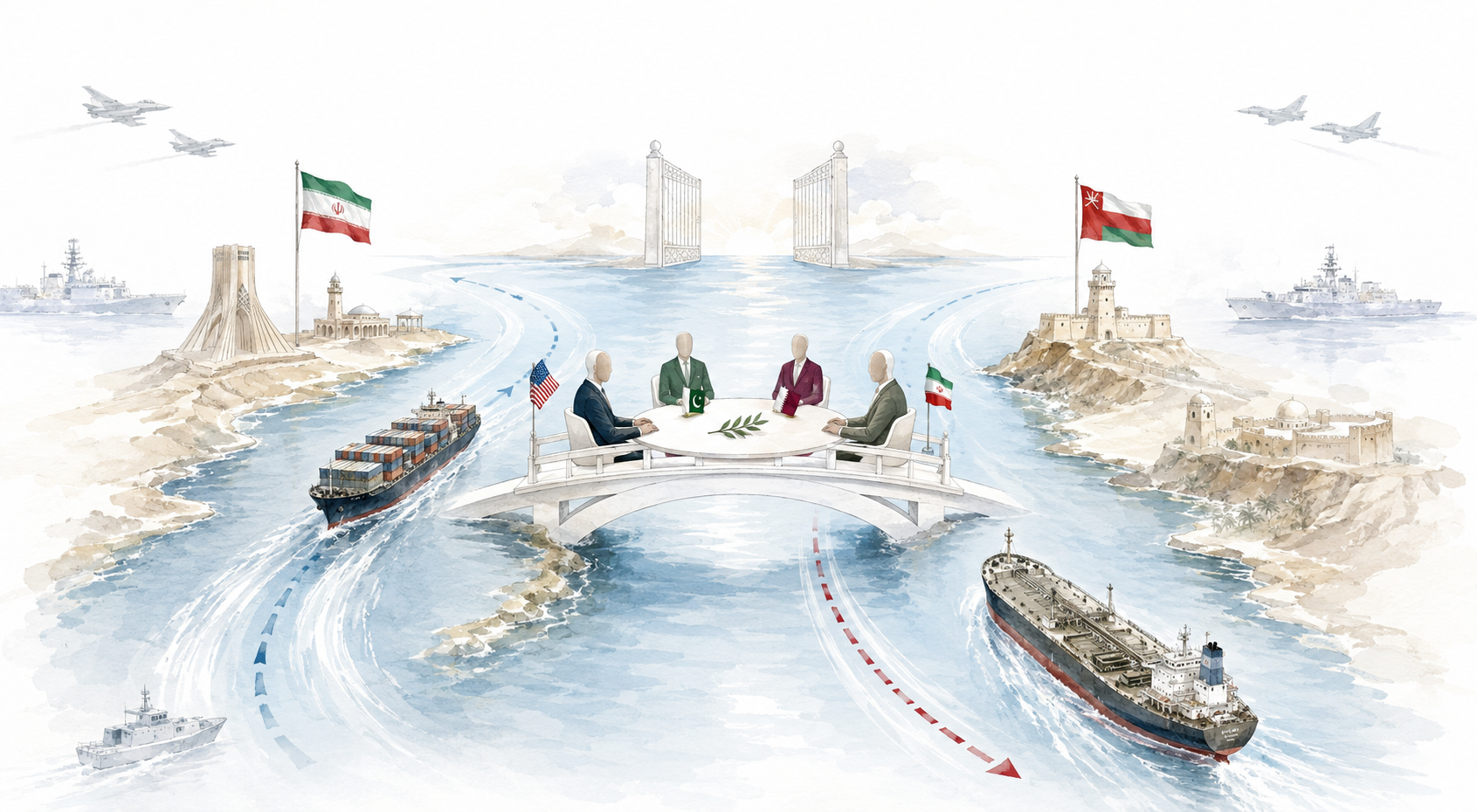
US President Donald Trump sounded hopeful when he referred to “all-day negotiation” on Tuesday, producing “a lot of progress” and bringing the reopening of the Strait of Hormuz within reach. While Tehran has not confirmed direct negotiations with Washington, it has announced something more concrete: Iran and Oman have reached an understanding on the geographical coordinates of a proposed shipping route through the strait.
The arrangement under discussion could allow Iran to oversee vessels entering the Gulf through an Iranian-administered route, while Oman would supervise outbound traffic. Tehran is seeking fees tied to cargo value while Washington seems to be holding ground on its position that there should be none. Before the war, Hormuz was an international waterway open to commercial shipping without Iranian tolls. If the eventual settlement grants Tehran a recognised supervisory role, it will not merely reopen a shipping lane. It will concede to Tehran a degree of regional leverage that months of American military pressure were supposed to diminish.
Still, that does not make an agreement undesirable. The fighting has neither forced Iranian capitulation nor eliminated its ability to disrupt the waterway. It has also failed to produce a durable settlement of the nuclear dispute. Shipping remains exposed, Gulf economies remain vulnerable, and the Red Sea has developed into another theatre of maritime coercion. A negotiated exit is preferable to another round of strikes whose political purpose becomes less convincing with every escalation.
But Washington should describe the bargain honestly. Mr Trump began this war speaking of “unconditional surrender” and even claiming authority over Iran’s future leadership. His administration now describes reopening Hormuz as the immediate phase, with the nuclear file to follow. That is a dramatic narrowing of objectives. It may also be the only realistic course left.
The president’s latest warning-that Iran will be hit “really hard” if it backs away-could yet (very easily and for the umpteenth time) unravel the frenzied diplomacy being carried out by Pakistan along with other regional mediators. Threats may create urgency, but diplomacy cannot be rebuilt every few days beneath a fresh bombing deadline.
Tehran, for its part, cannot demand the benefits of normal commerce while reserving the right to menace ships, impose coercive charges or use the strait as a weapon.
There remains an important distinction between mediation and direct negotiation. Iran and the United States are not confirmed to be sitting across the same table, even as Qatar and Pakistan are working continuously to bridge their positions and create conditions for direct dialogue. Their role is therefore not ceremonial. Pakistan, in particular, should continue facilitating communications as it has been doing for the last 150 days or so–with rolled sleeves, socks pulled up, head down and sans any chest-thumping.
Opening the strait would be an achievement because it reduces the immediate danger. It would not still be peace, which can only happen if both sides immediately take the off-ramp, abandon claims of imminent victory and allow the mediators to turn a narrow maritime compromise into a wider political settlement.
Article Authors

Editor
This contributor is identified as an editor. No further information about background or field of work is provided.
View Profile


Comments