



Video could not load. Press play to retry.
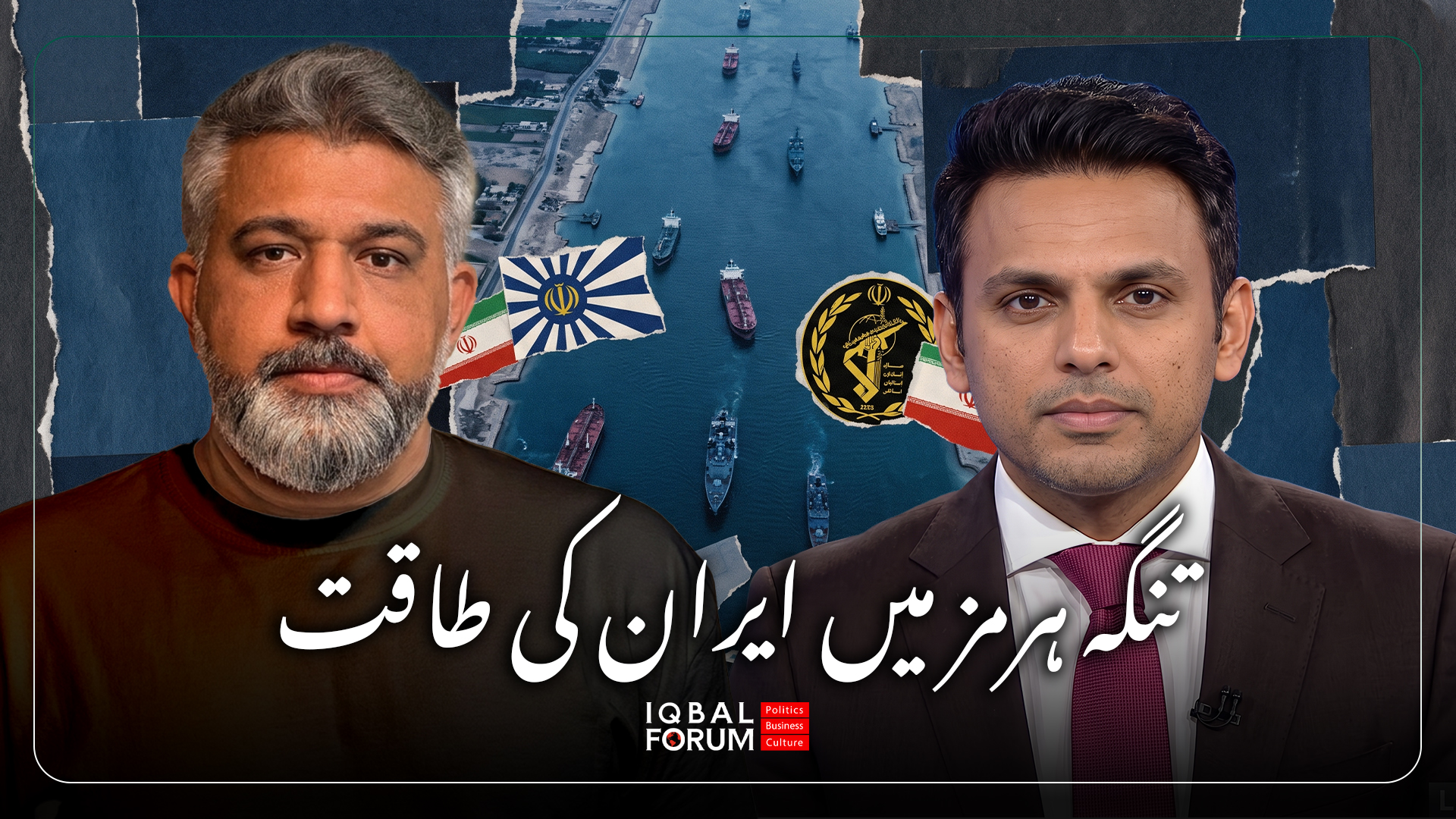
Analysis by Muhammad Hussain Baqeri , Head of the Iqbal Forum , in an Interview with Pakistan’s Popular Geo Network
In this interview, Mohammad Hossein Bagheri analyzed the recent confrontations between Iran and the United States in the Strait of Hormuz, as well as the reasons behind Iran’s continued resilience. He presented the roots of the current situation through the...

In this interview, Mohammad Hossein Bagheri analyzed the recent confrontations between Iran and the United States in the Strait of Hormuz, as well as the reasons behind Iran’s continued resilience. He presented the roots of the current situation through the following key points:
Historical Comparison with the Final Year of the Iran–Iraq War, 1988
Bagheri stated that in 1988, when Iran accepted United Nations Security Council Resolution 598, the commander of the Islamic Revolutionary Guard Corps at the time wrote to Imam Khomeini that Iran lacked the ability to confront U.S. naval forces because of America’s direct intervention in the Persian Gulf conflict.
Nearly 40 years later, however, the situation has completely changed. Although U.S. military technology has become significantly more advanced, the United States has allegedly been unable to guarantee the complete safety of vessels passing through this roughly 30-kilometer-wide waterway, even with the presence of its warships.
A Shift in Iran’s Military Balance of Power
According to Bagheri, the Islamic Republic has expanded its military capabilities beyond its own borders. As an example, he referred to recent Iranian attacks on U.S. bases and logistical facilities in Jordan and Syria.
He emphasized that today’s Iran is no longer a country that signs resolutions because of weakness along its borders. Instead, it now demonstrates its military capabilities throughout the Persian Gulf and the wider Middle East, which he described as deeply alarming to its adversaries.
The Strategic Importance of the Strait of Hormuz for the United States
Bagheri compared Iran’s control over the Strait of Hormuz to a “black hole” for the United States from which it cannot escape.
He argued that this is why Washington is attempting to activate alternative routes, such as the Oman Corridor, in order to eliminate Iran’s control over the Strait of Hormuz.
Reasons for the Renewed Confrontations and the Alleged Breach of Agreements
Bagheri stated that the Iranian people are a civilized nation and have never attacked another country throughout their history.
Following the signing of the recent memorandum of understanding, he said, 30 vessels passed safely through the Strait of Hormuz under Iranian supervision without a single shot being fired.
He identified the United States as primarily responsible for the renewed confrontations, arguing that Washington openly violated the memorandum by encouraging vessels to use the Oman Corridor and providing them with military escorts. Under the agreement, he said, all vessels were required to pass through the Strait of Hormuz under Iranian supervision.
According to Bagheri, this action challenged Iran’s security and national dignity, and Iran could not remain silent in the face of such threats.
The Costs of War and the Position of the Iranian People
Bagheri acknowledged that a prolonged war would not benefit Iran and would impose serious costs, including inflation, economic hardship, casualties, and the loss of lives.
However, he argued that when the security and survival of the country are at stake—when it becomes a matter of life and death—calculations of profit and loss are no longer relevant.
Bagheri’s Proposed Final Solution
The head of the Iqbal Think Tank identified the U.S. military presence in the Persian Gulf as the root cause of the Middle East’s problems.
He stated that if the United States, which he said maintains bases in the region to support Israel, were to remove its military installations and leave immediately, Iran would not fire a single bullet.
According to Bagheri, the United States maintains around 800 military bases worldwide and seeks to sacrifice the countries of the Persian Gulf in pursuit of its own strategic objectives.
He therefore argued that, rather than blaming Iran, international public opinion should hold the United States accountable.
