



Break up with Israel
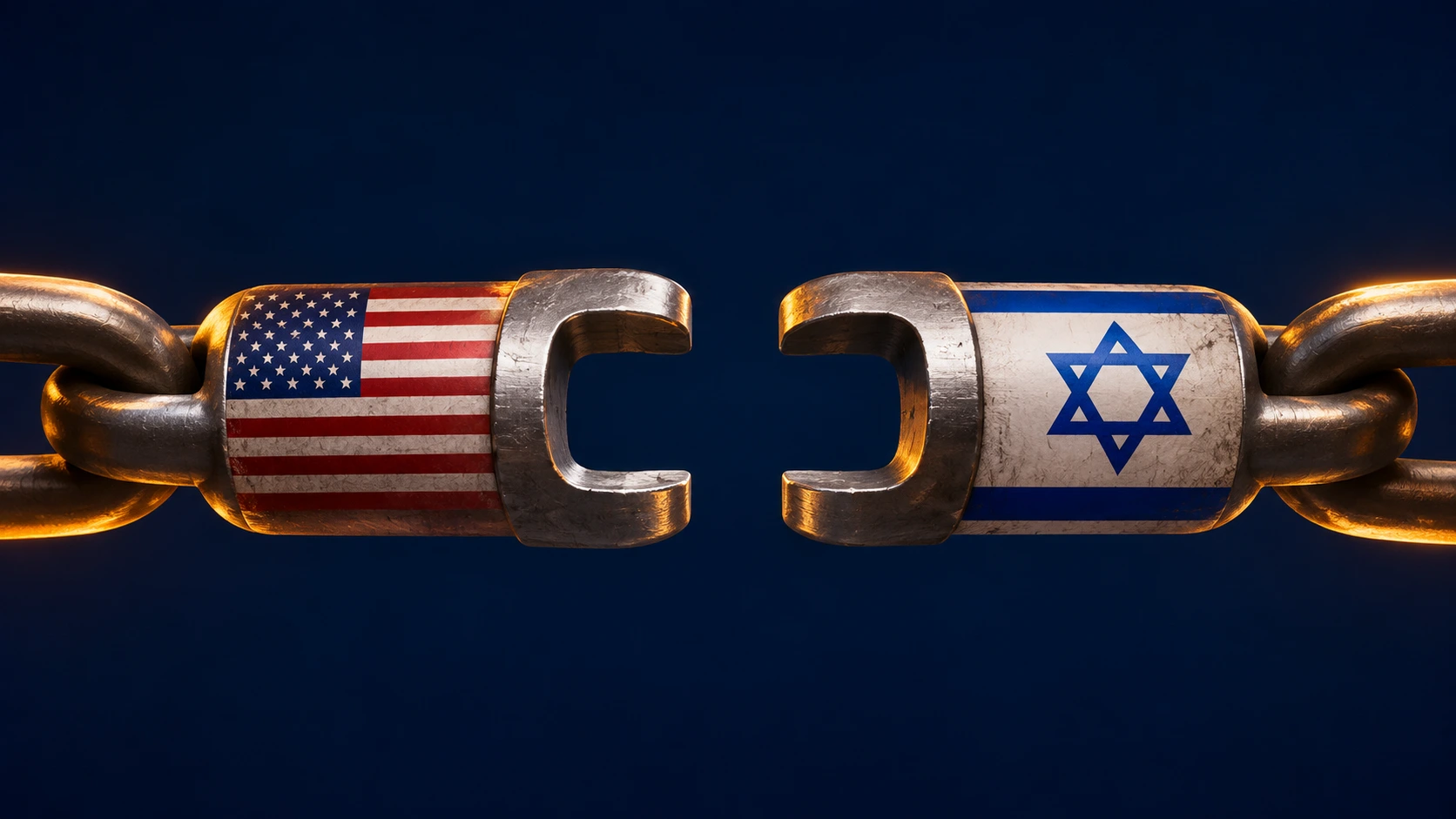
President Donald Trump announced on the morning of the US midterm elections that the United States would end its $4 billion annual aid package to Israel, though he simultaneously stated the US…
AI Analysis
Break up with Israel: The Cost of US Support
On the very morning of the critical US midterm elections, President Donald Trump made what seemed like a shocking announcement: no more aid to Israel.
“Bibi Netanyahu and I have made a deal that we give Israel $4 billion a year, and we made a deal months ago that we’re stopping,” Trump told Fox News’ Fox & Friends.
He goes on to make two seemingly contradictory assertions: “We won’t be paying Israel,” and “We’ll help Israel if they need it.”
In truth, there was little euphoria among those who have long campaigned against US funding of Israel. The lack of enthusiasm can be explained by two factors: Few take Trump’s pledges seriously, and his remarks were widely understood as a desperate attempt to stave off what was shaping up to be a disastrous election outcome.
The election ultimately delivered one of the most humiliating defeats in Republican Party history, with Democrats capturing both the Senate and House of Representatives and making sweeping gains across the country.
Republicans quickly turned against Trump, who made the unusual admission that the war on Iran had contributed to their defeat.
Vice President JD Vance, widely considered a potential presidential contender in 2028, was more explicit. “The reason we lost is the war,” Vance tweeted on November 4, calling for Republicans to “change our relationship to Israel.”
Though Vance was criticized by some within his party for naming Israel, the clearest indication that unconditional US support for Israel had become a major political liability came from Trump himself.
First, his rushed Election Day announcement was an unmistakable attempt to influence voters before they cast their ballots. Trump failed, but in doing so, he revealed that he and his party understood Israel had become a major factor in their political predicament.
Indeed, Trump described the $4 billion payment as “a bad talking point,” complaining that critics were using it against Republicans.
Second, Trump’s acknowledgment that the Iran War had hurt Republicans exposed the very Israel connection that Vance was prepared to articulate more openly.
The war on Iran was not America’s war. It was Netanyahu’s war, pursued as part of his longstanding quest to dominate the Middle East, with Washington paying the military, economic, and political price.
This is hardly hyperbole. Netanyahu has repeatedly presented Iran as an existential enemy, while his far-right allies have openly celebrated American military involvement.
Ironically, Washington’s own 2026 National Defense Strategy had identified defending the US homeland and asserting American interests throughout the Western Hemisphere as its foremost priorities. Yet the administration plunged into another devastating Middle Eastern war.
Thanks to independent journalists and analysts operating outside mainstream media, Americans have become increasingly aware of the damage this relationship has inflicted on their country’s economy, military standing, and international reputation.
According to Quinnipiac University, 48% of registered American voters now believe the US is too supportive of Israel, compared with just 16% in January 2017.
This growing awareness, coupled with the seismic shift in Congress following the midterms, is still not enough to guarantee tangible and irreversible change.
The midterm results nevertheless offer a major ray of hope that America is not a lost cause after all, and that ordinary people possess enough knowledge and determination to challenge the powerful interests, mega donors, and shadowy agendas shaping their country’s foreign policy.
There is a fundamental lesson here: Americans can no longer be satisfied with empty promises. And this brings us back to Trump’s announcement.
Israel has been the largest cumulative recipient of US foreign assistance, with the Council on Foreign Relations estimating that American aid since 1948 has exceeded $300 billion, adjusted for inflation.
Editor’s Note: This article was originally published in "The News", Pakistan, and has been republished on the Iqbal Forum website with attribution to the original author and publication. The views expressed are solely those of the author and do not necessarily reflect the position of Iqbal Forum.
About the Author

Ramzy Baroud
Journalist and writer
Ramzy Baroud is an American-Palestinian journalist and writer. He is the author of several books on the Israel-Palestinian conflict and the founder of news website Palestine Chronicle.
Profile and all publicationsHow to Cite This Article
Baroud, Ramzy. “Break up with Israel.” Iqbal Forum, November 14, 2026. https://iqbalforum.org/en/?p=55413.






Comments