



Is Trump Going To Double Down On His Strikes On Iran? The Signs Are There
The war in Iran has reached a volatile turning point as wild swings between diplomatic peace negotiations and military buildup create intense regional friction. Recent election defeats for key leaders involved in…
AI Analysis
The pendulum in the war in Iran has been swinging wildly over the past few weeks. On one end, there are reports of positive momentum in negotiations between Iran and the US, mediated largely through Qatar, while, on the other, reports of a massive US military buildup in the region, including threats of using highly destructive ordnance in Iran, have led to fears of yet another escalation, one that may result in steps being taken by either of the warring parties that could leave deep scars on the region for years to come.
Another significant set of developments has taken place in the past week: elections in Israel and the US and their implications for the war. In both elections, the main protagonists in initiating the war in Iran on February 28, Prime Minister Netanyahu and President Trump, have faced embarrassing defeats and are either on their way out or have been reduced to lame-duck leaders. The reason for their defeats in both elections, which the two leaders have grudgingly accepted, is the war in Iran.
Among the most trending reactions to these results is the phrase ‘regime change’. When the war was launched in Iran, regime change in Iran was one of the desired and declared goals. Despite the targeted assassination of its Supreme Leader, Iran’s regime has not only held on but is now under a more hardened and aggressive leadership. On the other hand, the governments (regimes) in the US and Israel are witnessing a huge turnaround, facing a severe backlash at home over an unnecessary war that is having global consequences and a severe impact on the daily lives of people.
The Peace Negotiations
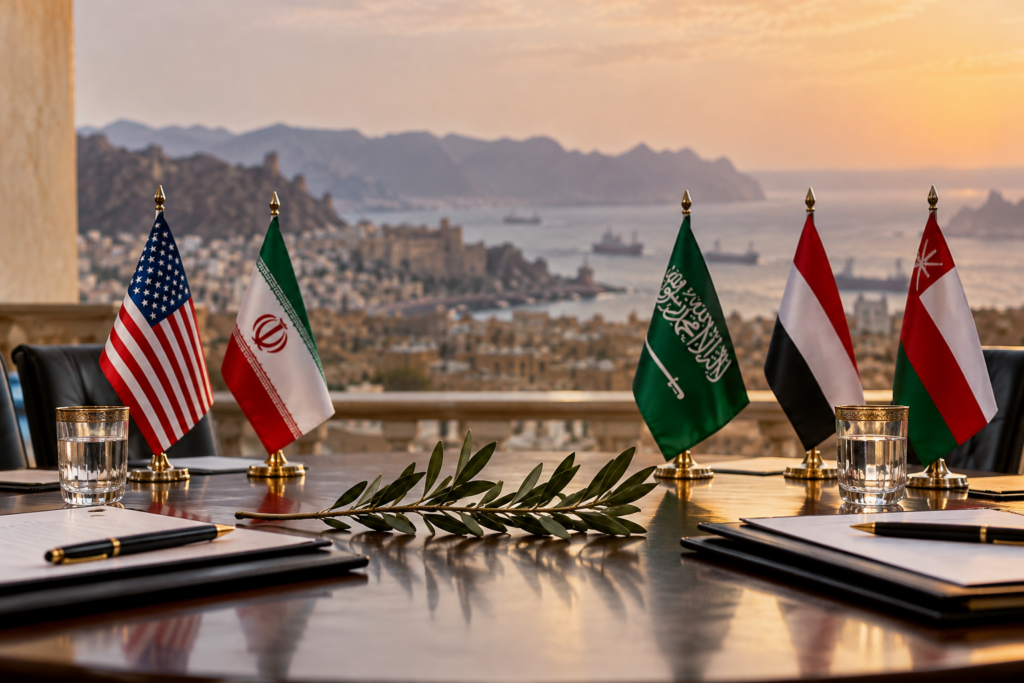
The talks on ending the war have been moving along multiple and often overlapping tracks over the past few weeks, all aimed at de-escalating and ending the war.
The visit by the Mecca Pact countries to Iran on October 26 is particularly interesting, as it is widely understood that the defence pact is aimed primarily against Iran. During the visit, Saudi Defence Minister Khalid bin Salman Al Saud, Pakistan’s Army Chief Asim Munir and Turkish intelligence chief Ibrahim Kalin met Mohsen Rezaei, Secretary of Iran’s Supreme National Security Council. The statement issued at the end of the visit said that the four states “agreed to continue the dialogue to strengthen cooperation amongst the four regional countries, including for peace and security in the region”. Pakistan reportedly presented a peace proposal on behalf of the US, which ‘could safeguard the interests of both Iran and the US’, too.
However, the most significant track is perhaps the one that is progressing under Qatar. A letter from US Vice President JD Vance is also important, as it was intended to explore whether a new diplomatic process could be initiated to prevent another round of military escalation. Delivered through Qatar, what was interesting was that this letter was addressed to Mohsen Rezaei and not to the Iranian political leadership. Though it did not make much headway, Iran welcomed the tone of the communication, describing it as more respectful than previous exchanges.
Qatar’s own ‘seven-day proposal’, presented to Iran on October 30, proposed a day-wise and step-wise de-escalation as a confidence-building measure, ultimately leading to the termination of the war and the opening of the Strait of Hormuz. Some of the regional countries would act as guarantors to ensure compliance.
Iran’s own ‘two-day plan’ was offered on November 2 by its Foreign Minister, Araghchi, under which the US would have to take a series of measures to ease sanctions and the naval blockade on the first day. In return, Iran would open the Strait of Hormuz on the second day, and traffic would return to what it was before the conflict. According to Araghchi, the US must meet the relevant conditions, all of which were mentioned in the Islamabad Memorandum of Understanding (MoU) of June 2026. These include releasing all frozen Iranian funds, ending regional wars, including in Lebanon, lifting the naval blockade, restoring sanctions waivers for Iranian oil exports, and lifting new sanctions imposed by the US after the Islamabad MoU.
On the same day, Iran publicly announced its ‘seven conditions’ for ending the war. These conditions are:
1. End all military hostilities across all fronts and regions, including Lebanon, Yemen, Iraq and Gaza.
2. Lift the US naval blockade of Iranian ports and maritime restrictions.
3. Release frozen Iranian assets held in foreign banks.
4. Remove economic and political sanctions against Iran.
5. Withdraw or reduce the US military presence and forces in the region.
6. Compensation and reparations for war-related damages.
7. An end to US threats, attacks and hostile rhetoric against Iranian territory and the regime.
The US has neither rejected nor commented on the plan, as it went to the midterm polls on November 3, the results of which have put the talks on the back burner, at least for the time being.
The Possibility of Escalation
The possibility of escalation, too, has been rising over the past few weeks. There were reports of the US War Secretary making a pit stop in Israel to meet Israeli Prime Minister Netanyahu to discuss the possibility of recommencing strikes just before the Israeli elections on October 27. However, reports of the Israeli Defence Forces Chief refusing to comply with Netanyahu’s order, citing no immediate or grave danger to national security, perhaps put an end to that attempt. In fact, Israeli aircraft flew near Iranian airspace in the days preceding the elections and even entered Iranian airspace to provoke a reaction, but Iran did not oblige.
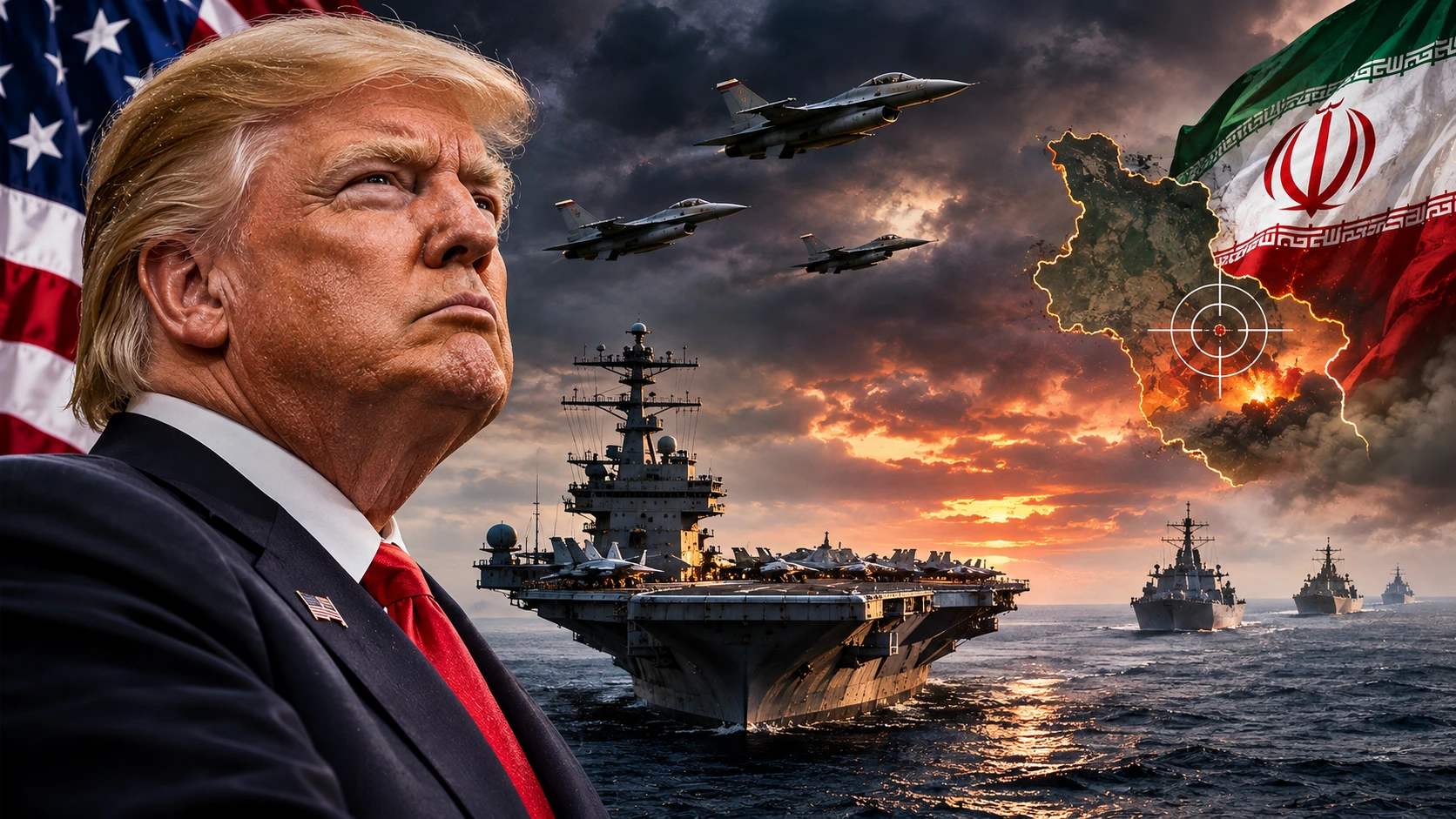
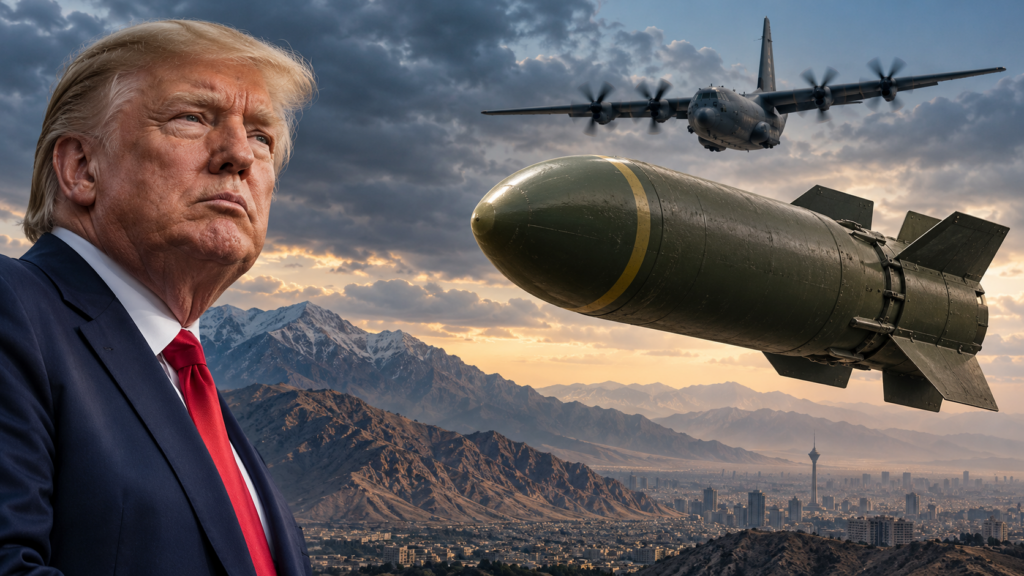
President Trump, too, has been making consistent threats of escalation. From using the GBU-43 (Massive Ordnance Air Blast bomb, popularly called the Mother of All Bombs) on Pickaxe Mountain, he has indicated that active kinetic options are still on the table, adding that there were still one or two sites in Iran to be taken out. There are also reports of refuelling aircraft being concentrated in the region, as well as a third aircraft carrier and amphibious forces being redirected towards the Persian Gulf. On November 2, a day before the midterm elections, the US bombed Qeshm Island and sites along the southern coast of Iran in a ‘defensive mission’. Once again, as in the case of Israel, Iran did not respond.
Iran, too, has been actively targeting ships trying to bypass its assigned routes in the Persian Gulf. According to estimates by the UK Maritime Trade Operations (UKMTO), more than 26 ships were struck by Iran in September alone, including at least three Very Large Crude Carriers (VLCCs), each capable of carrying 2 million barrels of crude oil. The Supreme Leader of Iran has issued directions to the armed forces to respond to any threat disproportionately and without any geographical limits. Reacting to the UK providing support for America’s military operations, Iran has declared the UK Army and Navy ‘terrorist organisations’ and warned of direct consequences if the UK supports any future strikes by the US.
What Now?
The war in Iran has reached a critical point of decision. The peace proposals are not making headway. Why? Because the US is insisting that Iran make concessions on nuclear issues first, while Iran is insisting that the US demonstrate sincerity by lifting the naval blockade first and easing sanctions. Having experienced betrayal by the US more than once in the past, Iran is not ready to make any first concessions.
As for escalation, the election results have made it difficult for both the US and Israel. In Israel, Netanyahu is likely to lose his prime ministership to his rival, Gadi Eisenkot. Eisenkot is no peace dove, but he has been an IDF chief and is unlikely to push the forces and the nation into a war that is not his and that does not augment Israel’s security in any manner. Instead, he is likely to focus on revamping measures in Israel’s immediate neighbourhood and on ‘healing’ a nation that is fatigued by constant military deployments and life in shelters.
On the American side, Trump is facing a severe backlash from within his party. Vice President JD Vance has made it very clear that they lost the elections because of the war in Iran and the consequent economic fallout back home. Trump himself has accepted Iran as a factor in the election debacle. The Pentagon, too, is feeling the heat of another failed military campaign and does not want to rush into another one. And therefore, the only thing that the US and Trump are perhaps looking for is a quick and face-saving exit.
Options for Exit
There are primarily two options available to the US. One is to carry out one intense strike on Iran, particularly on Pickaxe Mountain, declare that the target has been ‘obliterated’ and call it a successful end to the campaign. There is, however, a catch. Iran had reportedly refused such an ‘arrangement’ earlier and is likely to respond disproportionately, both in the scope and geographical reach of its retaliation, which will make it difficult to call it ‘an end’.
The second option is a regional solution, something that has been in the works for the past few weeks: an arrangement under which some of the Gulf nations declare that they have arrived at a viable understanding with Iran on regional security, ‘non-aggression’ and passage through Hormuz. The US takes credit for initiating it, declares ‘mission accomplished’ and lifts the naval blockade. The rest of the issues, such as unfreezing Iranian assets, compensation for war-related damages, easing of sanctions, etc., can follow later, overtly or discreetly, through the Gulf countries.
The war in Iran could go either way, but the next few weeks are crucial. A beaten Trump and an ousted Netanyahu may attempt to reclaim their lost pride through one last strike, but whether their political and military establishments will support it now is a big question. The US is finding itself caught in a quagmire from which only an ‘out-of-the-box’ and non-kinetic action can bring this war to an end soon.
About the Author

Col (Retd) Rajeev Agarwal
The author is a retired Army officer and a senior research consultant at Chintan Research Foundation
Profile and all publicationsHow to Cite This Article
Col (Retd) Rajeev Agarwal. “Is Trump Going To Double Down On His Strikes On Iran? The Signs Are There.” Iqbal Forum, November 7, 2026. https://iqbalforum.org/en/?p=54492.




Comments