



Trumpian Ambiguities
President Donald Trump’s second term continues his history of unpredictable foreign policy, clearly demonstrated by his conduct of the war with Iran. Abandoning guidelines like the Weinberger and Powell doctrines, Trump engaged…
AI Analysis
The other day, after signing a deal with President Vladimir Putin to buy diesel from Russia, President Donald Trump suggested to the Ukrainians to “get a new leader who can make a deal”. The Iranian leaders have been dealing with his ambiguous and fast-changing statements for the past seven months. Before he was sworn in as the 47th President of the USA, I had put in a piece that ‘unpredictability’ would continue to remain the calculated policy of President Donald Trump in leading the USA. This was my conviction, anchored in our experience with his ambiguous, unpredictable and fickle conduct as the USA leader in his first term. He has been more unpredictable in his second term, as demonstrated by his conduct of the war with Iran.
In the second half of the twentieth century, wars were the main feature of the USA’s foreign and security policy. The USA, as the leader of the so-called free world, vowed to fight godless communism in every corner of the globe, from Central America to greater Asia, the Middle East and Africa. The Americans never learnt a lesson from their humiliation in Vietnam. Besides Central American countries, Asian nations have witnessed more wars in their region, mainly involving the USA in one way or another. American military interventions in various regions have persisted unabated since the Second World War.
Following the humiliating defeat in Vietnam, the USA sent military forces to Lebanon to end the civil war there. President Ronald Reagan also wanted to intervene militarily in Central America to halt the advance of the Soviets in February 1984, despite resistance to his plan from half of his Cabinet, including Defence Secretary Caspar Weinberger. Their opposition was justified. A devastating suicide attack on the USA military headquarters in Lebanon, killing 241 personnel in October 1983, was still fresh in their minds. This had forced the USA leadership to resort to a hasty withdrawal of American forces from there.
While opposing President Reagan’s plan to send military forces to Central America, Weinberger produced a document on why and how to use American forces, which came to be known as his doctrine. His paper suggested certain conditions for the use of USA military forces: vital national interests must be at stake. Washington must be willing to commit the resources it would take to achieve victory; policymakers must gain the support of the American people and Congress through candour and consultation. Finally, Weinberger added, “the commitment of US forces to combat should be a last resort”. Young Powell, his military aide, helped him write the paper. President Reagan, in his memoirs, recalled that the document served as the guideline for his administration.
General Powell had risen to become Chairman of the Joint Chiefs of Staff when George Herbert Bush was putting in place a coalition to drive Saddam Hussein out of Kuwait. He added two more conditions to this doctrine: “the military plan has clear war objectives and a clear exit strategy, and international support”. This turned the document into the Powell Doctrine. The USA’s leaders used it as a principal guideline on why and how to go to war. President Donald Trump never felt bound by such a guideline.
Not a single condition stipulated in the Weinberger or Powell Doctrine was observed by him while joining Israel’s war on Iran. He did not seek authorisation for war from Congress. He never took the American people into his confidence. His war objectives were not clear. He had no exit strategy. He sought resources much later from Congress, calculated at between 37 and 47 billion dollars. He never consulted his NATO or Gulf allies. Rather, he showed the audacity to ridicule them. He just blindly believed what he was told by Netanyahu: massive decapitation, collapse of radical dictators, takeover by a regime friendly to Israel and the USA, leading to peace, democracy and human rights; all honey and milk flowing, with Israel trudging as the redeeming power in the Middle East.
His recorded statement was relayed at 3.00 am on 28 February, stating, “The United States military is undertaking a massive operation to prevent this very wicked, radical dictatorship from threatening America and our core national security interests.” He further added, “We are going to destroy their missiles, and raze their missile industry to the ground……we are going to annihilate their navy. We are going to ensure that [Iran’s] terrorist proxies can no longer destabilise the region or the world and attack our forces……and we shall ensure that Iran does not obtain a nuclear weapon.” Addressing the Iranian people at the end of his harangue, he added, “When we are finished, take over your government. It will be yours to take”.
In his 1995 memoirs, My American Journey, General Powell wrote, “Many of my generation, the career captains, majors, and lieutenant colonels seasoned in [the Vietnam War] vowed that when our turn came to call the shots, we would not quietly acquiesce in half-hearted warfare for half-baked reasons that the American people could not understand”.
An American columnist writes in Foreign Policy, “this is precisely the kind of warfare that Trump has undertaken. And so far, Congress has quietly acquiesced. It can, however, still change course. A true victory in Iran is unlikely. But a cataclysmic defeat is not just inevitable”. The American public has been angered by growing inflation and the rising cost of living. The global economy is on the verge of collapse. Netanyahu does not want to end the war. He has chipped away at strategic pieces of land from Lebanon and Syria. He is planning to annex the West Bank and Gaza, leaving Palestine with a narrow strip of land and burying forever the two-nation resolution.
What is the way out for President Donald Trump? As has been his wont, he could employ the mother of all ambiguities, declare victory and engage the Iranians in talks to end the war. He could trust President Masood Pezeshkian and Majlis Speaker Bagher Ghalibaf to reach a deal. The Iranian leadership, hopefully, would come down from its earlier maximalist position to three demands: an end to the war forever and in all places; the lifting of the blockade of their seaports; and sanctions relief and the release of some frozen assets. In this way, the world may be spared a devastating economic and financial recession.
About the Author
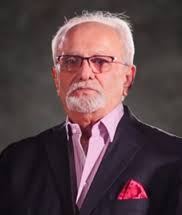
Ambassador M. Alam Brohi
The writer is a former member of the Foreign Service of Pakistan and has served as Ambassador for two terms. He is the author of five books.
Profile and all publicationsHow to Cite This Article
Brohi, Ambassador M. Alam. “Trumpian Ambiguities.” Iqbal Forum, October 17, 2026. https://iqbalforum.org/en/?p=52077.






Comments