



The pact enters the fray
Pakistan, Saudi Arabia, and Turkiye’s decision to rapidly deploy military forces under the Makkah Joint Defence Agreement marks a major regional escalation driven by renewed Yemen fighting, Houthi threats near the Bab…
AI Analysis
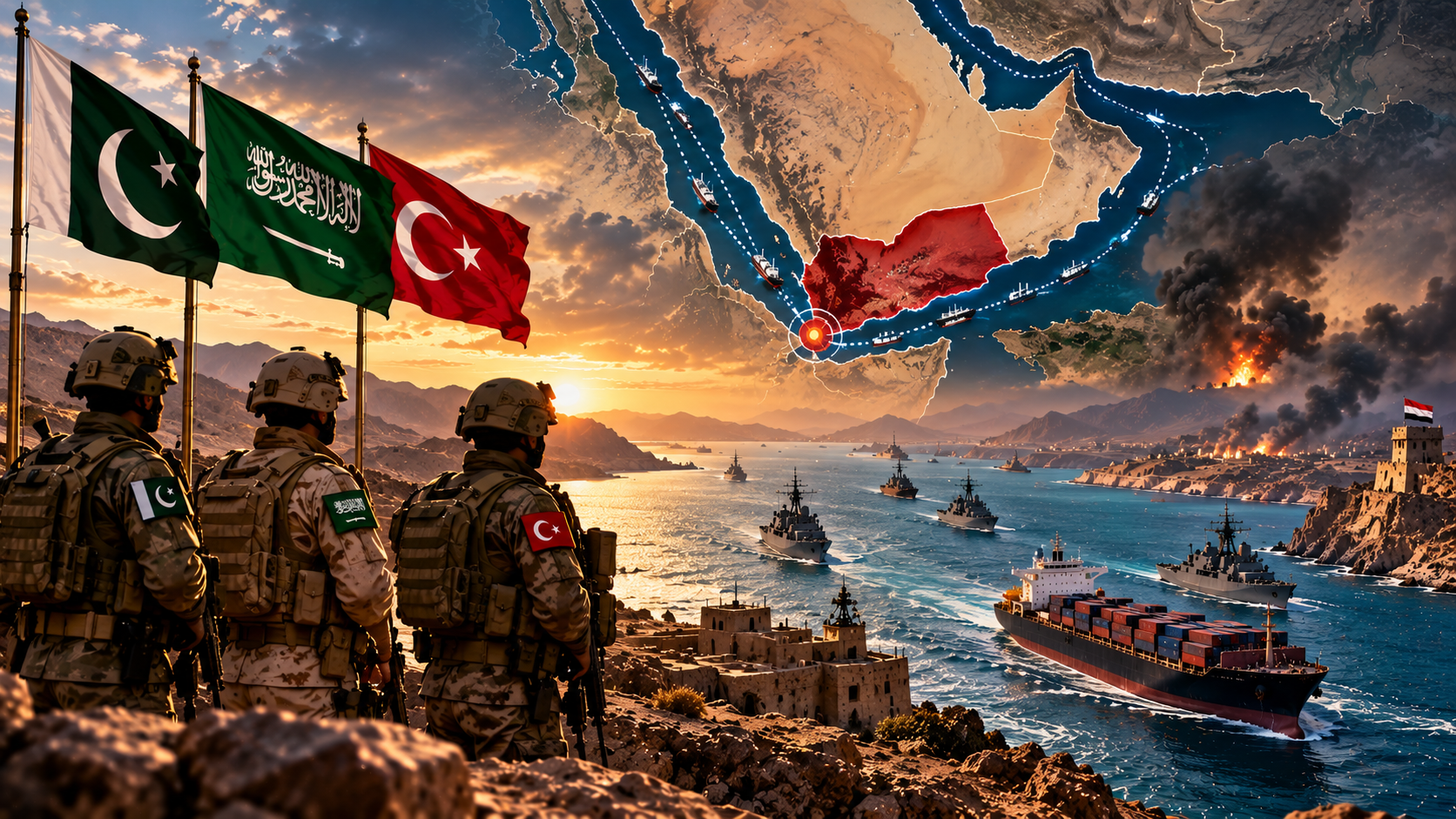
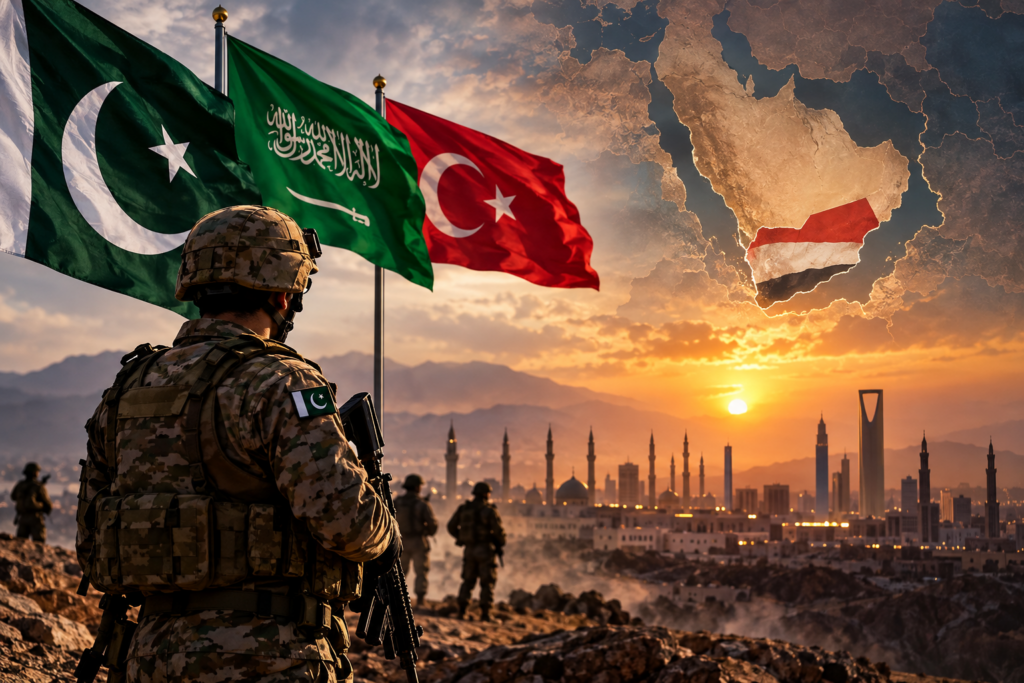
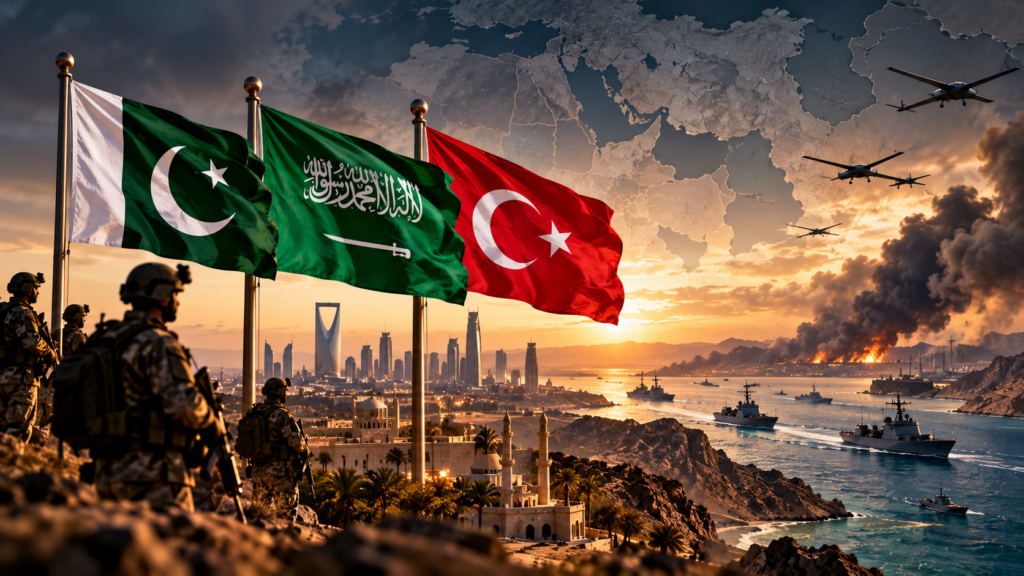
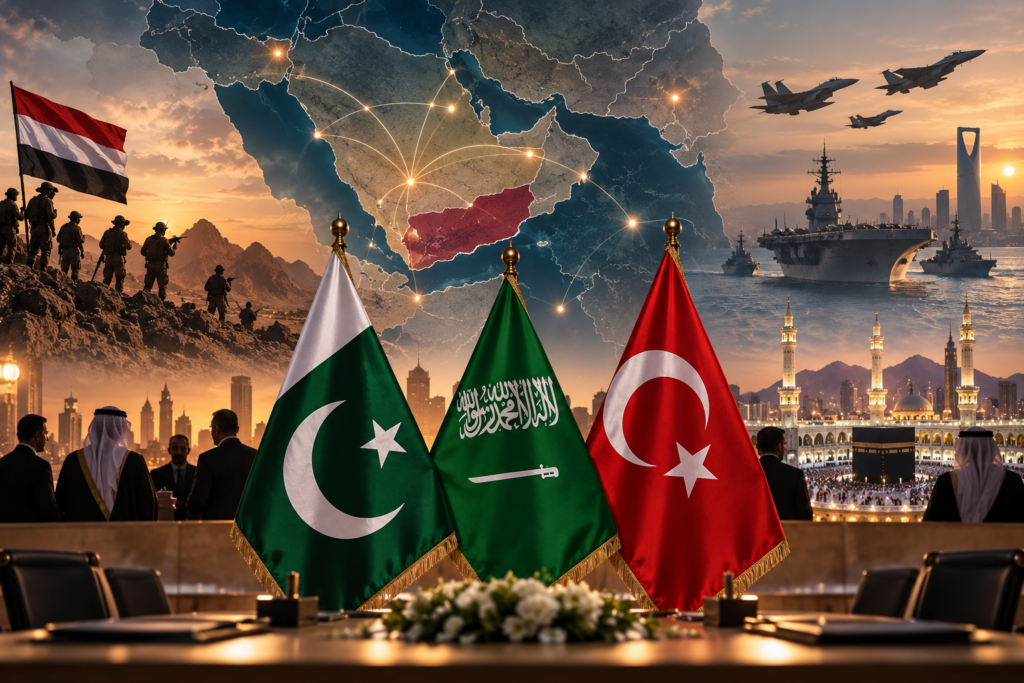
The decision by Pakistan, Saudi Arabia and Turkiye to move immediately towards implementing their collective defence commitments under the Makkah Joint Defence Agreement will rightly be seen as a rather major escalation in the regional security situation. At an emergency meeting in Riyadh on Monday, the three countries agreed to ensure the ‘rapid deployment’ of agreed military forces and capabilities in Saudi Arabia, under approved arrangements and in accordance with their national laws. The development comes against the backdrop of renewed fighting in Yemen, where the Saudi-led coalition has carried out a naval operation in the Red Sea governorate of Hodeidah. The immediate concern is not simply the defence of an ally but the security of a region through which vital global trade and energy supplies pass. The Houthis last month seized swathes of coastline along the Red Sea and the Bab al-Mandab Strait, one of the world’s most important maritime chokepoints for oil and cargo shipping. Yemen’s internationally recognised, Saudi-backed government says its forces have since retaken the Red Sea port of Mocha, which had been captured by the Houthis. Any prolonged disruption around Bab al-Mandab, particularly alongside the closure of the Strait of Hormuz, would have serious consequences for global energy markets and countries such as Pakistan that remain heavily dependent on imported fuel.
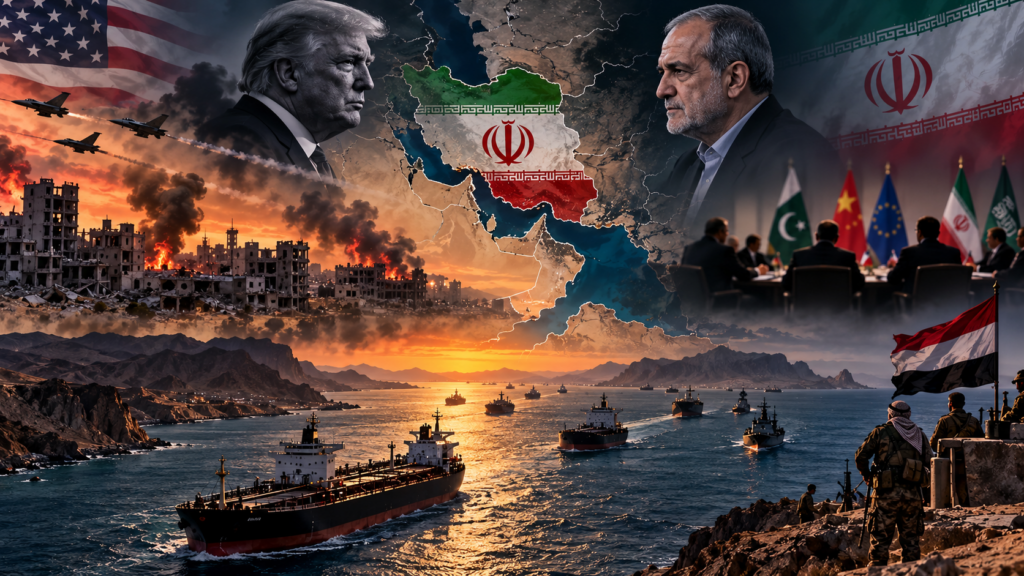
Yet the wider regional picture is considerably more complicated than a straightforward confrontation between Saudi Arabia and the Houthi movement. Pakistan recently conveyed a message to Iran asking it to use its influence to halt Houthi attacks on Saudi Arabia, but has been told that Iran does not control the Houthis. The Houthis are widely regarded as being backed by Iran, but there are also longstanding questions about the extent to which they act at Tehran’s behest. Recent reports of direct US contacts with the group add another layer of uncertainty. US officials met Houthi representatives in Oman last month, while President Donald Trump acknowledged that the Houthis had contacted his administration asking Washington to stay out of the Yemen war. All this is important because the regional escalation cannot be viewed in isolation from the wider confrontation involving Iran, Israel and the US. Saudi Arabia itself had chosen not to become directly involved in the US-Israel war on Iran, a position that effectively avoided opening another front in an already volatile region. If the Houthis’ actions against the kingdom intensify at precisely this moment, it is reasonable for regional countries to examine whose interests are ultimately being served by the escalation.
For Pakistan, therefore, support for Saudi Arabia should not automatically be interpreted as taking a position against Iran. Islamabad has clear interests of its own in containing the conflict. The closure or disruption of Bab al-Mandab, coming alongside the closure of the Strait of Hormuz, would compound Pakistan’s energy vulnerabilities and undermine a tentative economy. Pakistan also has a direct interest in preventing the regional escalation from expanding further, particularly if it creates space for Israel to exploit the divisions and instability. There have already been justifiable concerns about the possibility of false-flag operations and the manipulation of regional tensions. These circumstances make containment a more rational objective. The Makkah pact provides Pakistan and Turkiye with a framework through which they can assist Saudi Arabia while remaining within agreed commitments and national laws. Such involvement should consequently be understood not merely as an act of alliance solidarity but as an effort to protect regional stability, safeguard critical trade routes and prevent a conflict whose consequences would extend far beyond Yemen and Saudi Arabia. Pakistan’s challenge will be to support its ally without being drawn into a wider confrontation and while also maintaining its responsible relationship with Iran.
About the Author

Editor NEWS
No biographical details were provided for Editor News in the input data. This profile records the byline as an author entry, with no additional supplied facts.
Profile and all publicationsHow to Cite This Article
NEWS, Editor. “The pact enters the fray.” Iqbal Forum, October 8, 2026. https://iqbalforum.org/en/the-pact-enters-the-fray/.


Comments