



Trump’s Midterm Rebuff: Implications for America and Pakistan
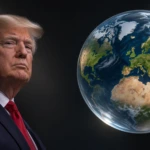
The American midterm elections of 3 November 2026 have delivered a major political setback to President Donald Trump and his Republican Party. Democrats have captured both the House of Representatives and the…
AI Analysis
The American midterm elections of 3 November 2026 have delivered a major political setback to President Donald Trump and his Republican Party. Democrats have captured both the House of Representatives and the Senate, ending two years of unified Republican control on Capitol Hill. The result signals voter discontent with the Administration’s domestic and foreign policies and makes the final two years of Trump’s presidency considerably more challenging.
The setback comes at a time when the United States is deeply involved in international conflicts and controversies, its relations with traditional allies are under strain, and its economic policies are generating uncertainty. The war with Iran, the resultant rising living costs, tariffs and concerns about the Administration’s conduct all contributed to Republican losses. The scale of the Democratic victory also suggests a desire among voters for stronger institutional checks on presidential power.
Trump has congratulated the Democrats but has shied away from accepting personal responsibility. He now faces an opposition-controlled Congress with the power to investigate his Administration, obstruct legislation, scrutinise spending and challenge his policies.
The American system, however, is not a parliamentary democracy in which losing a legislative majority deprives a government of executive authority. Trump remains President until January 2029 and retains substantial constitutional powers, particularly in foreign affairs and the command of the Armed Forces. A Democratic Congress cannot simply dictate his foreign policy or reverse his executive decisions.
It can, nevertheless, make his task considerably harder. Congress controls appropriations, authorisations and legislative oversight. The Senate also plays a crucial role in confirming senior appointments and approving trties. Investigations, budget disputes and resistance to legislation could consume the Administration’s attention and produce legislative paralysis.
Even impeachment proceedings cannot be ruled out, although their prospects would depend on the circumstances and the balance of support in Congress.
Trump’s political authority may, therefore, become increasingly contested, even where his formal powers remain intact.
The war with Iran illustrates most clearly how the midterm result could constrain Trump. The conflict has driven up energy costs, adding to inflation and the cost-of-living pressures facing American households. Even within Republican ranks, concern about rising fuel prices and the war’s duration has become increasingly evident.
There is also the question of national prestige. Trump once described America’s withdrawal from Afghanistan as one of the most humiliating episodes in its history. The prolonged stalemate with Iran now risks becoming an even greater embarrassment.
A superpower, assisted by an undeclared nuclear-armed regional power, has failed in more than eight months to bring to its knees a developing country that has endured decades of sanctions.
Far from being subdued, Iran has demonstrated considerable resilience and reinforced its standing as a consequential regional power. It would not be entirely out of place to suggest that the Democrats have Iran, at least in part, to thank for their sweeping electoral victory.
The new Congress is likely to demand greater clarity about the war’s objectives, duration, legal basis and cost. Democrats may press for congressional authorisation and a diplomatic settlement rather than allow military engagement to continue without a clearly defined political endgame. Control over defence appropriations and authorisations gives Congress considerable leverage, even if it cannot terminate military action simply by criticising it.
For Trump, continuing a costly war without a convincing explanation or exit strategy could become an increasingly difficult political proposition. The electoral setback may ,therefore, strengthen the case for negotiations, although it does not guarantee that the President will change course.
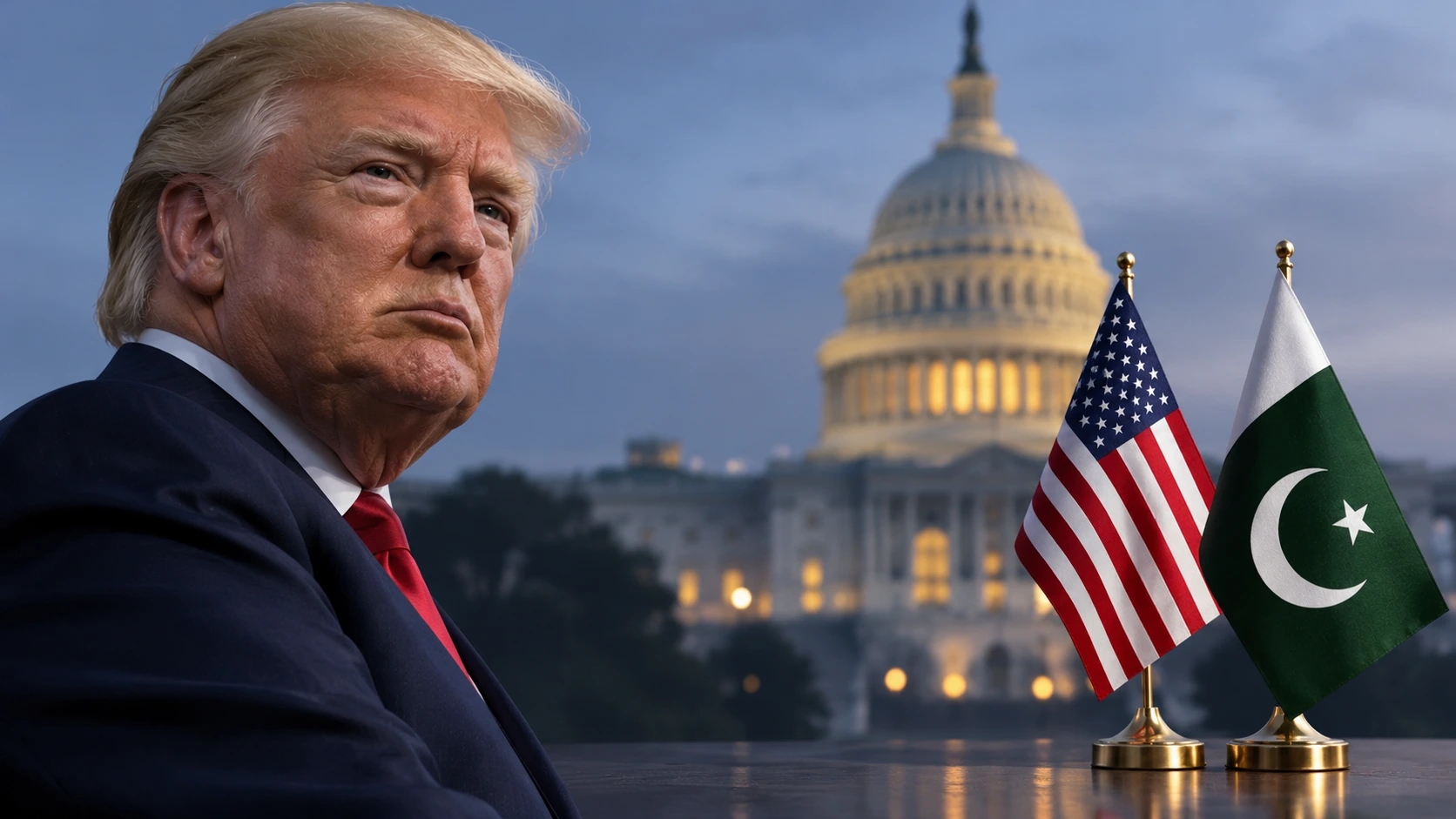
For Pakistan, the results deserve particular attention. Islamabad has invested considerable diplomatic capital in its relationship with Trump, reinforced by his unusually close personal rapport with Pakistan’s strong-man. White House meetings, public appreciation of Pakistan’s leadership and Islamabad’s role in facilitating contacts between Washington and Tehran have given Pakistan unusual diplomatic visibility.
A Democratic-controlled Congress could bring a more questioning approach. Lawmakers may scrutinise the emphasis on military-to-military engagement and raise concerns about Pakistan’s political and constitutional environment.
The treatment of a former Prime Minister, detention of political opponents, restrictions on freedom of expression, the weakening of democratic institutions and judicial independence could receive renewed attention. Control of congressional committees gives Democratic lawmakers greater scope to organise hearings and demand explanations.
This does not mean that criticism will necessarily translate into sanctions, suspension of assistance or a fundamental change in bilateral relations.
Nor should Pakistan expect a Democratic majority to alter Washington’s approach towards India. India’s strategic importance in the Indo-Pacific, particularly in the context of competition with China, remains a bipartisan consideration. Pakistan must recognise that its relationship with Washington cannot rest on the expectation that one American party will be more favourably disposed towards it than the other.
The economic relationship deserves equal attention. The United States remains one of Pakistan’s most important trading partners and its largest export market. Bilateral trade in goods and services reached an estimated $11.5 billion in 2025, according to US trade figures. This provides a practical foundation that should not be overshadowed by political differences.
Pakistan should place greater emphasis on economic diplomacy, including trade, investment, technology, renewable energy and commercial cooperation. It needs to demonstrate that it offers economic opportunities and a constructive regional partnership, rather than seeking American engagement primarily through security considerations.
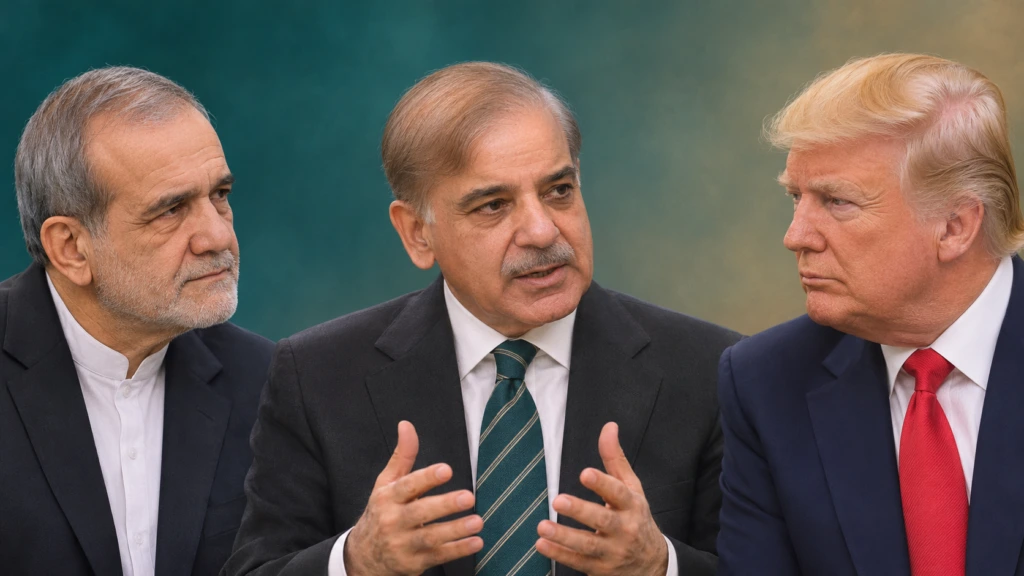
Perhaps the most immediate regional opportunity for Pakistan concerns Iran. Its geographical proximity, longstanding relations with Tehran and working relationship with Washington give Islamabad a potentially useful role in facilitating communication between the two sides.
But facilitating talks is not the same as being a neutral mediator. Pakistan’s close ties with the United States inevitably raise questions about how far Tehran can regard it as an impartial interlocutor.
A Democratic Congress may strengthen pressure for a negotiated settlement, particularly if the costs of the conflict continue to rise. Pakistan should capitalise on this opening by encouraging dialogue, restraint and a sustainable regional arrangement. Its diplomatic usefulness, however, will depend on the trust it can command on both sides. It must avoid becoming an instrument of either party or assuming responsibilities beyond its diplomatic capacity.
A peaceful outcome would serve Pakistan’s interests in border security, regional stability, energy cooperation and economic connectivity. Equally, Islamabad must ensure that its engagement does not compromise relations with other important regional partners.
Pakistan’s diplomacy towards the United States has too often revolved around personal relationships with whoever occupies the White House. Such ties may yield immediate dividends, but they remain vulnerable to changes in political leadership and the balance of power in Washington.
Pakistan needs a more institutionalised and bipartisan approach, extending beyond the Presidency to the State Department, Pentagon, congressional committees, lawmakers from both parties, American businesses, universities and policy institutions. Building bridges with the incoming Democratic leadership should be a priority, without treating it as a repudiation of the relationship established under Trump..
The midterm elections do not necessarily signal a reversal of American foreign policy or diminish Trump’s considerable executive authority. They do, however, introduce new constraints and uncertainties into the remaining years of his presidency. Pakistan should neither discard the diplomatic gains made under Trump nor become hostage to them..
Washington’s political fortunes will fluctuate; Pakistan’s national interests will endure. The lesson is simple: build relationships with countries, not merely with the leaders who happen to govern them.
About the Author

How to Cite This Article
Niazi, Khizar. “Trump’s Midterm Rebuff: Implications for America and Pakistan.” Iqbal Forum, November 9, 2026. https://iqbalforum.org/en/?p=54726.




Comments