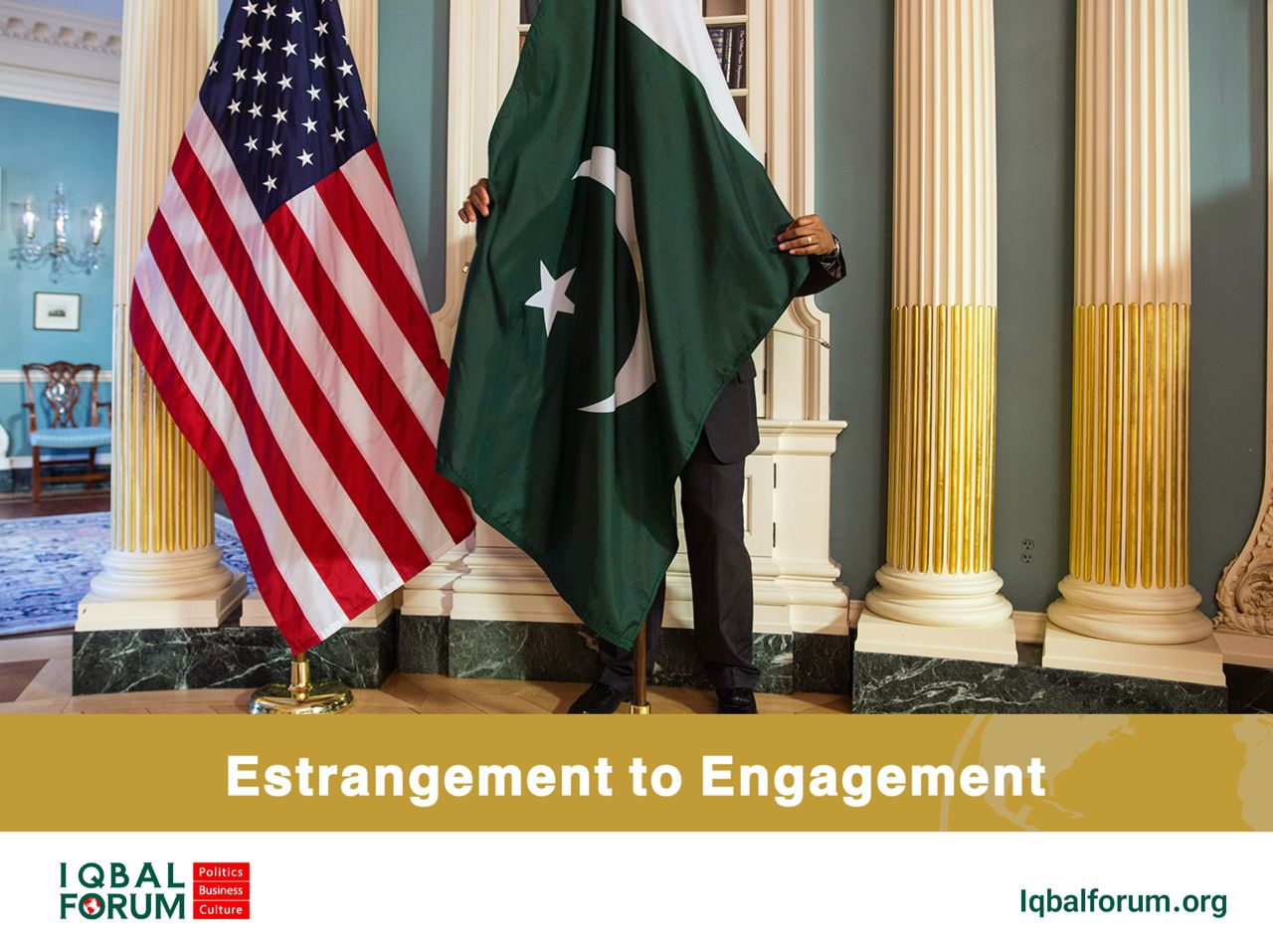
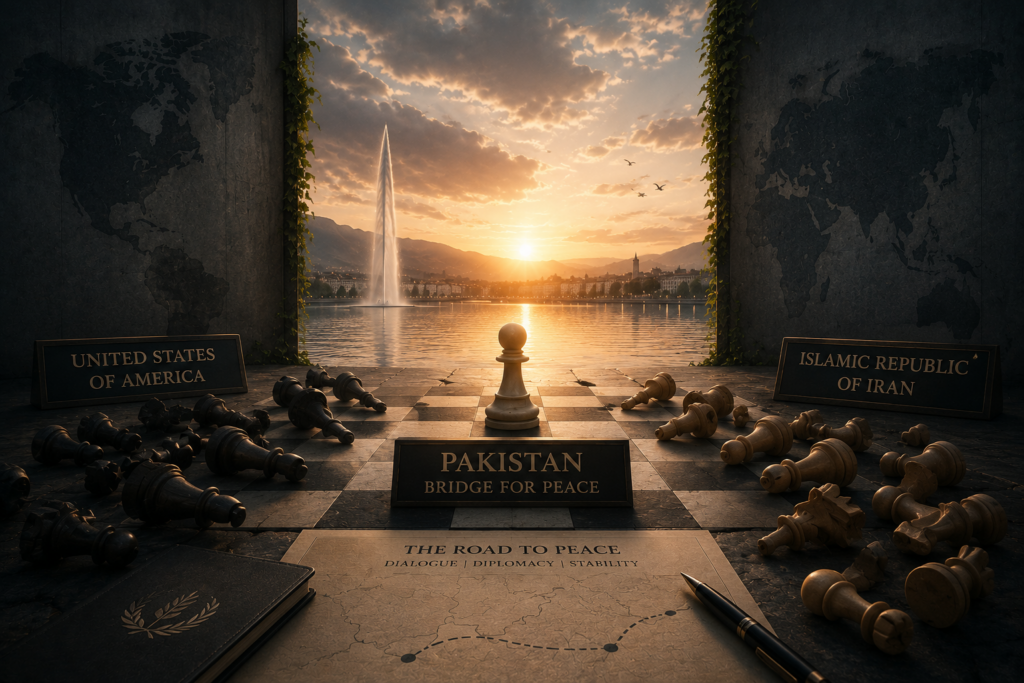
In the Post 9/11 era, Pakistan-United States relations have been swaying like the pendulum of Grandpa’s old clock.
From ‘The Frontline Ally’ to ‘The Ally from Hell’, our wavering interstate relations have become disoriented to the core. Washington’s preferences towards Islamabad have always been issue-driven and meant business. While the US, at times, refused to see Pakistan from the same prism, the outcome has been inconducive, portraying an aura of deceit and guile.
A case in point is the ‘War against Terror’, wherein Pakistan has been the primary sufferer and major victim, yet it was declared as ‘Frenemy’ and promoter of ‘FOIN’ (a sarcastic antonym of COIN where ‘F’ denotes the word Fomenting); our national security concerns were completely ignored, and our core national concerns were barely acknowledged. To add salt to injury, a streak of strategic, economic and diplomatic accords were initiated and finalized with India. Islamabad was, nonetheless, lectured, ‘We don’t view our relationship with Pakistan, and on the other hand, we don’t view our relationship with India as in relation to one another.’
The very first sign of positivity in US comportment about Pakistan appeared as President Donald Trump during his Joint Congressional Address in March, lauded Pakistan’s efforts in apprehending and handing over of Muhammad Sharif Ullah (alias Jaffar), an ISIS-K operator accused of planning 2the 021 suicide bombing at Kabul Airport, to the US authorities. The bombing had killed 13 US servicemen and over 170 Afghans. Thereafter, the commonality of interests were seen as Pakistan’s role was appreciated during the Pahalgam incident, Operation Sindoor and Operation Bunyan Al Marsoos, and the resilience of its armed forces, media and civil society was eulogised by the United States.
Pakistan not only stood firm against India’s intransigence, hubristic and stage-managed rhetoric, but also responded with a bloody nose to India, breaking its myth of regional hegemony.
Pakistan certainly called India’s bluff of choreographing a war to entertain its populace. Subsequently, Pakistan’s acknowledgement of the United States’ role in facilitating a ceasefire, at a critical stage of war with India, contrasted with Delhi’s outright denial, has been a key factor in shaping Washington’s assessment of judging as to which country’s actions are more consistent with established international norms of peace and stability.
Some additional factors that may have contributed to this policy shift could be:
Sheer disappointment from a strategic partner (India), who was blatantly defying the United States’ assertions by buying the Russian S-400 Missile Defense System and importing Russian Oil despite the Kremlin being under sanctions.
India’s stance, hubristic defiance of all international norms and failure to prove the involvement of Pakistan in the Pahalgam incident did not go well in the annals of their interstate relationship. Subsequently, Pakistan’s strategic and lethal response in self-defence came as a blow to India’s so-called image as an emerging global power.
India exposed an entire plethora of weaknesses and shortcomings in all the elements of its national power, including Defense, Legislative and Foreign Policy.
Likewise, its electronic media was the main source of embarrassment at home and abroad. The short war with Pakistan has isolated India both in the region and internationally. The US is, therefore, impelled to follow suit.
Analysts argue that President Trump’s second-term is about realigning US strategy. It is shifting toward transactional diplomacy, reduced military engagement abroad and rewriting established norms of alliance cooperation, a transformation deemed deep and enduring by national security experts. It has also been viewed that Trump is dismantling long held norms. If considered in the light of the above, recent frictions with India clarify the basis for the shift.
Some of the recent developments that impacted the US mindset are the four-day duel between India and Pakistan and the Iran-Israel 12-day war.
Likewise, Russia’s recognition of the Taliban-led interim government on 3rd July 2025, has once again underscored Pakistan’s geo-strategic significance.
The United States, thus, wants to reassert its leadership position vis-à-vis Pakistan, to strategically contain China, constrain Russia’s influence and preserve leverage over India.
Another factor for this policy shift could be the US’s newfound interest in the mineral resources of Pakistan for its critical technologies.
Seems a bit far-fetched, but the recently held talks and signing of MOUs / deals in joint mining and oil explorations are indicative of the significance of this factor.
Potential challenges confronting Pakistan arising from these developments and a recommended course of action are:
Given past experience of the United States’ issue-based and short-term engagement with Pakistan, it is imperative to tread cautiously, maintaining relations in a formal and interest-driven manner, while safeguarding national sovereignty.
Pakistan’s diplomatic, strategic and economic relations with China tend to come under strain whenever the US seeks to re-engage with Pakistan.
This challenge must be approached with greater prudence and strategic clarity. Pakistan must keep the Chinese government always on board and should ensure that this re-engagement is used to bridge differences between the two superpowers, rather than appearing as an act of containment or encirclement.
Pakistan’s unwavering diplomatic and moral support to Iran in its recent war with Israel has brought both countries closer.
This affinity should be exploited to its maximum to improve Pakistan’s security situation along the South-western borders, and re-engagement with the US should not compromise the communion with Iran.
Within the context of the evolving ‘Great Game’, India’s strategic centrality and economic landscape continue to attract international attention.
Leveraging this position, India has consistently navigated crises to its advantage. Pakistan, therefore, must approach the current situation with heightened awareness and strategic foresight.
Capitalising on this renewed opportunity, Pakistan must encourage the United States to play a meaningful role in resolving the Kashmir Dispute. The Government of Pakistan should also capitalise on this opportunity of reduced external pressures and economic stability to put its house in order. Aspects such as improving governance, political stability and national cohesion need immediate and priority handling