



Flames of war
Escalating attacks across the Middle East are transforming a bilateral confrontation into a regional conflict, where Iran’s military has warned neighboring countries that acting as a defensive shield for the US risks…
AI Analysis
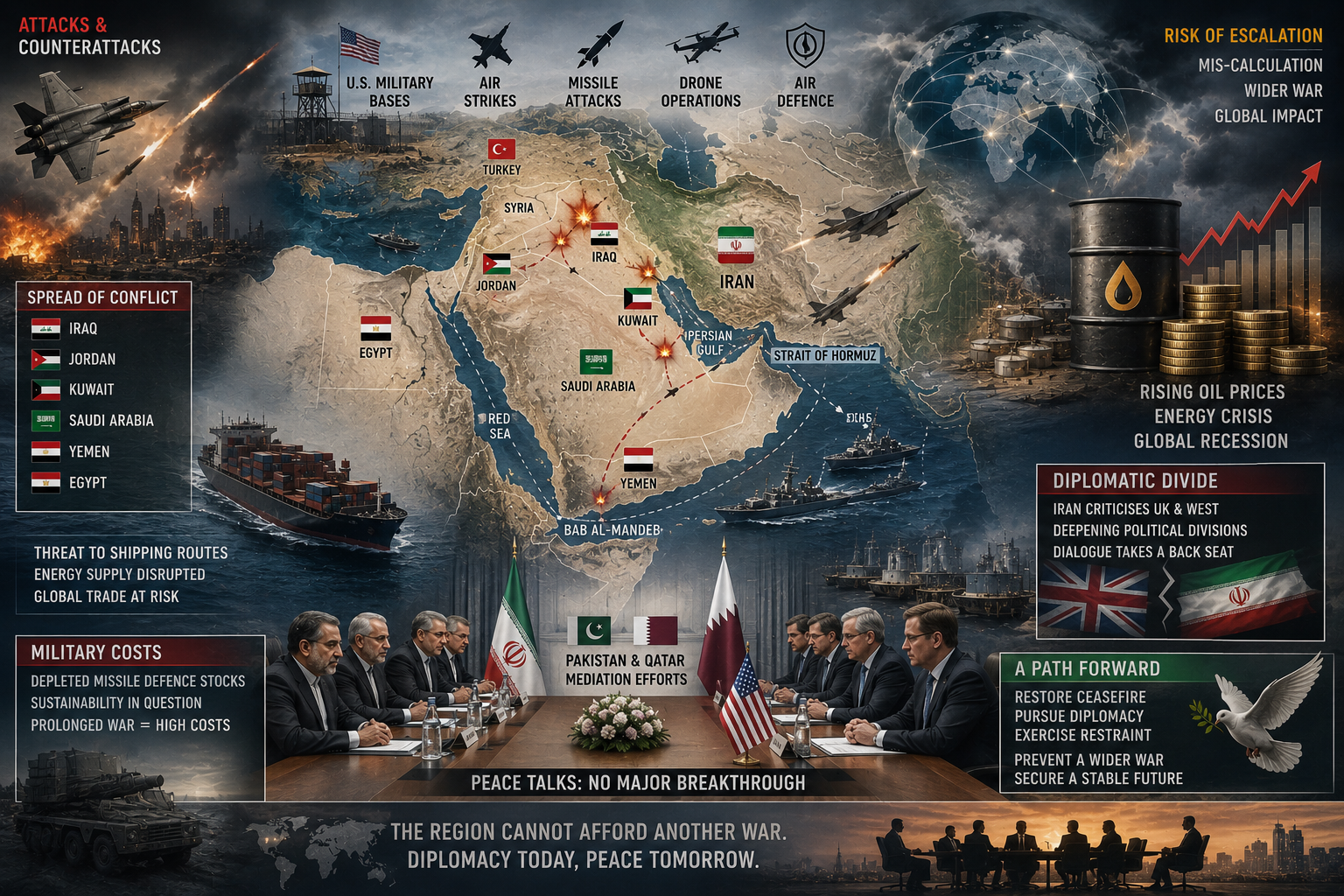
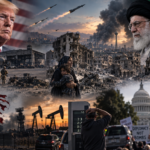
With attacks and counterattacks spreading across multiple countries in the Middle East, what was once a bilateral confrontation is increasingly becoming a regional conflict with potentially global consequences. Iran’s military has accused the US of escalating tensions and warned neighbouring countries against cooperating with Washington, saying that any state acting as a defensive shield for the US would find the region engulfed in the flames of war. While such rhetoric is not uncommon during conflict, the warning points to the rather disturbing reality that further escalation is unlikely to remain confined to Iran or Israel. With military activity stretching from Iraq and Jordan to Kuwait and Saudi Arabia, it is increasingly difficult to argue that this remains a contained conflict. Every additional theatre of confrontation raises the risk of miscalculation and makes diplomacy more difficult. The military dimension is not the only concern. Reports in the US media suggest that months of conflict have depleted American stocks of missile-defence interceptors, forcing Pentagon planners to reassess whether the current pace of retaliatory strikes can be sustained. Even the world’s most powerful military is not immune to the costs of prolonged warfare.
Diplomacy, meanwhile, appears to be moving in the opposite direction. Iranian Foreign Minister Abbas Araghchi has criticised Britain’s decision to designate the IRGC as a state threat and condemned British involvement in US-Israeli military action against Iran. Such developments deepen political divisions at a time when dialogue should be taking precedence over confrontation. There are, however, faint signals that another path remains possible. Iranian parliament speaker Mohammad Bagher Ghalibaf has declared that Iran has “won the war” and should now focus on consolidating that victory while maintaining hope for a brighter future. Whether aimed at domestic audiences or the international community, such remarks could also be interpreted as an opportunity to shift attention from conflict towards reconstruction. If that is indeed Tehran’s objective, restoring and preserving the ceasefire should become an international priority.
Yet the political environment remains deeply fragile. Israeli Prime Minister Benjamin Netanyahu’s recent meeting with US President Donald Trump has fuelled concerns among critics that military pressure, rather than diplomacy, will continue to shape regional policy. Those concerns are heightened by fears that additional countries could eventually be drawn into direct confrontation. The economic consequences alone should serve as a warning. The 40-day conflict inflicted severe disruption on global energy markets following the closure of the Strait of Hormuz. Should the conflict widen further, particularly if the Bab al-Mandeb shipping route also comes under threat, the resulting energy shock could reverberate far beyond the Middle East, fuelling inflation and disrupting trade across the world. Regional governments therefore have every reason to press both Washington and Tehran to return to meaningful negotiations before events spiral beyond anyone’s control. It is no exaggeration that the US bears responsibility for perpetuating the conflict through continued military strikes. Whatever competing narratives exist over responsibility, continued military escalation offers no sustainable solution. The Middle East has endured decades of devastating wars whose consequences have reached every corner of the globe. Another prolonged regional conflict would carry costs that neither the region nor the international community can afford. Restoring the ceasefire, pursuing diplomacy and exercising restraint are now essential.
Article Authors

Editor
This contributor is identified as an editor. No further information about background or field of work is provided.
View Profile

Comments