


Iran and Türkiye: The Powers Destined to Reshape the Middle East
The conflict surrounding Iran may ultimately mark the decline of American and Israeli dominance, as Iran's survival demonstrates that Western military power can no longer guarantee political obedience. Despite facing intense military…
AI Analysis
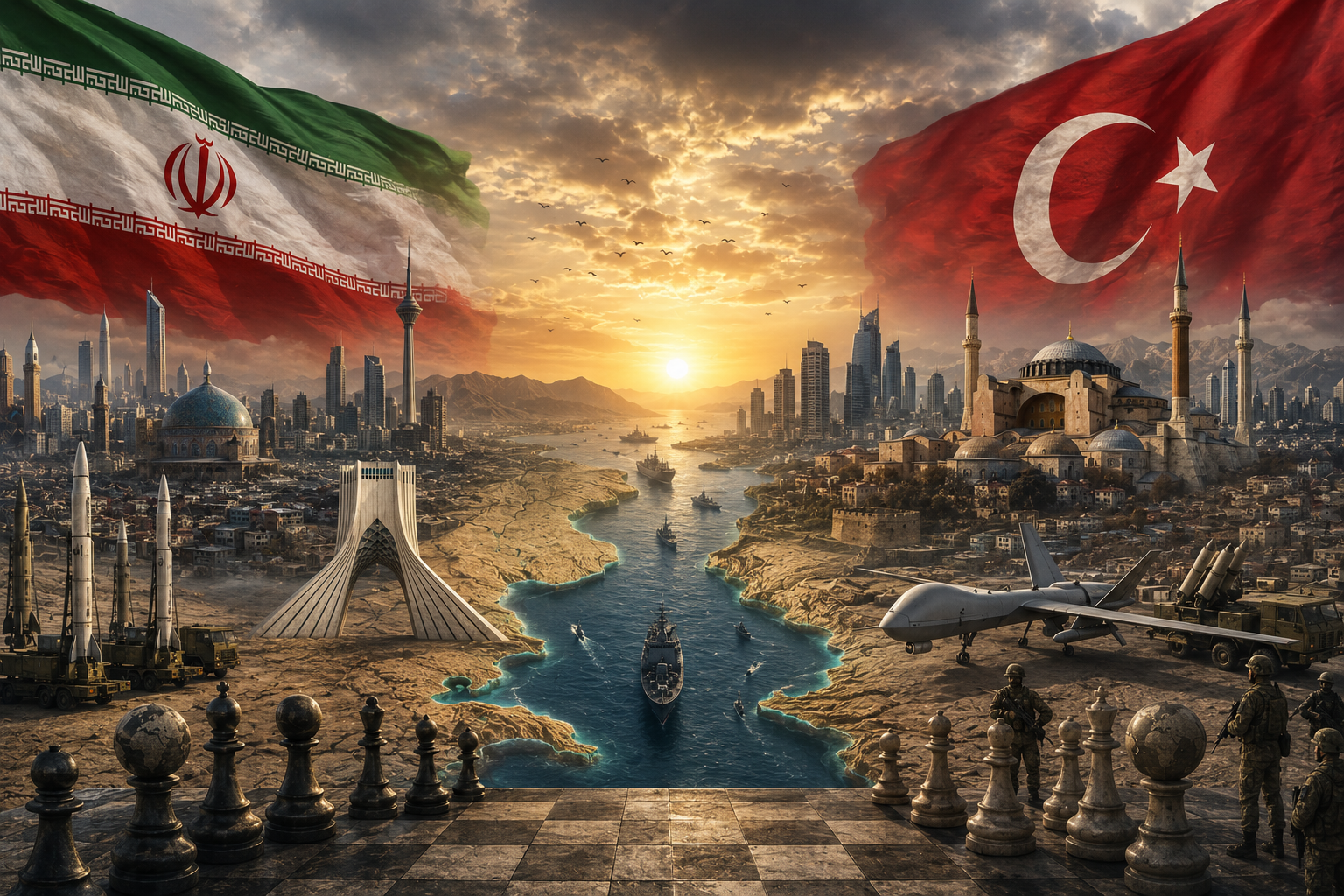
The war against Iran may ultimately be remembered not as the conflict that restored American and Israeli dominance, but as the turning point that accelerated its decline. Retired US Army Colonel Douglas Macgregor has advanced a compelling theory: when the present conflict ends, Iran and Türkiye will emerge as the two principal powers shaping the Middle East for decades. Macgregor’s argument is not based merely on military inventories, economic statistics or temporary diplomatic alignments. It rests on a broader historical judgment: the period during which Western powers could enter a region, deploy overwhelming force and compel weaker countries to surrender is ending.
Military technology has proliferated, ancient civilizational states have recovered their confidence, and countries once treated as subordinate actors can now impose intolerable costs on even the strongest military powers. Iran’s survival and Türkiye’s resurgence provide the clearest evidence of this transition. Iran has faced an extraordinary concentration of military, economic and political pressure. The United States and Israel have attacked its military installations, missile sites, air defences, command centers and infrastructure.
Sanctions have restricted its trade and weakened its economy. Washington has demanded limitations on its nuclear programme, ballistic missiles, regional influence and control over the Strait of Hormuz. Israel has treated Iran as its principal strategic enemy, while Saudi Arabia, Bahrain, Kuwait and the United Arab Emirates have opposed different aspects of Tehran’s regional policies. American military bases surrounding Iran have provided operational support for the campaign against it. Yet Iran has refused to surrender.
Its government continues functioning. Its armed forces retain the ability to launch missiles and drones. Its underground installations have protected essential capabilities. Its leadership continues negotiating from a position of sovereignty rather than submission. Even after sustained attacks, Tehran has not accepted externally imposed terms from Washington, Tel Aviv or the Gulf monarchies. That resistance is itself a demonstration of power. A country does not need to destroy a superpower’s military to defeat its political objective. It succeeds when it prevents that superpower from imposing its will. Iran has therefore converted endurance into deterrence.
Iran’s strength is rooted partly in its geography, its missile forces, command systems and industrial capacities which are dispersed across numerous locations, including deeply fortified underground facilities. Its greatest strength, however, may be national resilience. Iranians who may oppose particular state policies do not necessarily support the destruction of their country or the imposition of foreign authority. Iran demonstrated that a determined nation can absorb severe punishment without surrendering its independence.
That lesson will influence every government in the region. By demonstrating that it can restrict, regulate or threaten passage through Hormuz, Iran has acquired leverage that aircraft and bombs alone cannot eliminate. This changes the balance between conventional military strength and strategic influence. Consequently, Gulf governments cannot indefinitely treat Iran merely as a state to be contained. They must eventually negotiate with it as an indispensable regional power. Macgregor’s central contention is that the age of Western military bullying is over. Iran has provided the evidence. The United States can destroy installations, sanction companies, deploy aircraft carriers and launch precision weapons. What it can no longer guarantee is political obedience.
The enormous gap in military expenditure has not produced an equivalent gap in political results. Iran’s comparatively inexpensive missiles and drones have forced the United States and its allies to expend costly interceptors. American bases, once viewed as instruments of protection, have become potential targets that expose their host countries to retaliation.
The longer the conflict continues, the more difficult it becomes to distinguish between an asset that projects American power and a liability that attracts Iranian fire. The war has therefore weakened the psychological foundation of hegemony: the belief that resistance is futile. Iran has shown that resistance is not only possible but can produce leverage.
Other countries will study that experience and conclude that military and technological preparation can protect political independence. The second pillar of Macgregor’s theory is Türkiye. Türkiye possesses the population, geography, military tradition, industrial capacity and historical consciousness required for regional leadership. The Ottoman Empire once governed the Levant, Arabian Peninsula, Egypt, North Africa, the Balkans and significant parts of the wider Islamic world.
Modern Türkiye is not recreating that empire territorially, but its strategic outlook remains informed by centuries of statecraft and regional engagement. Türkiye fields one of NATO’s largest armies and has developed an increasingly independent defence industry. Its drones, naval vessels, missiles, armoured vehicles and electronic-warfare systems have strengthened its capacity to act without complete dependence on foreign suppliers. Its geography is unmatched. Türkiye connects Europe with Asia, the Black Sea with the Mediterranean and the Caucasus with the Middle East.
It can influence Syria, Iraq, Lebanon, Libya, Central Asia and the Eastern Mediterranean simultaneously. Türkiye has also demonstrated that it will not permanently subordinate its national interests to Washington, Brussels or Tel Aviv. It cooperates with NATO while maintaining relations with Russia. It trades with Iran, engages the Gulf, supports the Palestinian cause and asserts its position in Syria and the Mediterranean. This strategic flexibility enables Türkiye to operate across divisions that restrict other regional powers. Iran and Türkiye are not identical and will not agree on every regional question. They represent different peoples, religious traditions, political systems and historical experiences. But these differences do not invalidate Macgregor’s theory.
They strengthen it. Iran’s power derives from resilience, missiles, energy, strategic geography and its demonstrated willingness to resist Western pressure. Türkiye’s power comes from its conventional military, industrial base, diplomatic reach, geographic position and historical connections throughout the former Ottoman space. Iran dominates the strategic environment surrounding the Persian Gulf and Hormuz. Türkiye commands the crossroads linking the Middle East to Europe, the Caucasus, the Black Sea and Central Asia. Together, their influence extends across nearly every critical arena of Western Asia. Israel and the Gulf monarchies will remain important, but they will increasingly be required to adjust to decisions taken in Tehran and Ankara. Financial wealth and foreign military protection cannot substitute permanently for population, geography, indigenous military capacity and civilisational depth. Macgregor’s theory is therefore not a romantic return to history.
It is a recognition of the emerging balance of power. Iran has already demonstrated that it cannot be bullied into submission. Türkiye has already established itself as an independent military and diplomatic actor. The future Middle East will not be dictated solely from Washington, Tel Aviv or the wealthy Gulf capitals. It will increasingly be shaped by Iran and Türkiye—two resilient civilisational powers reclaiming the strategic influence that history, geography and their own national strength have prepared them to exercise.
Article Authors
Qamar Bashir
The writer is a former press secretary to the president; former press minister to the Embassy of Pakistan to France and former MD (SRBC).
View Profile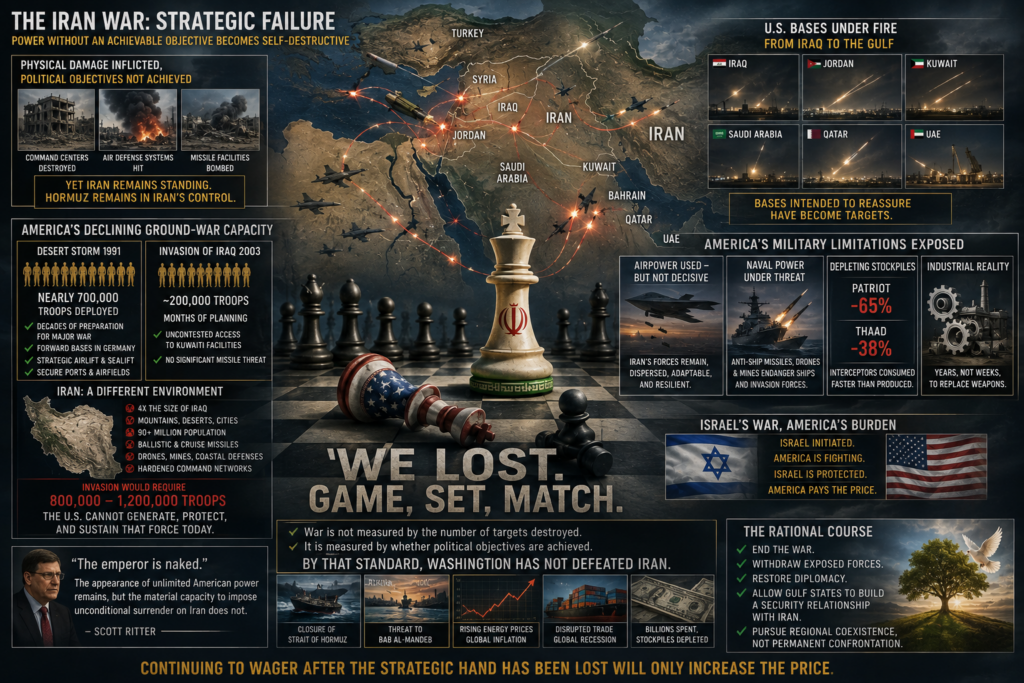


Comments