

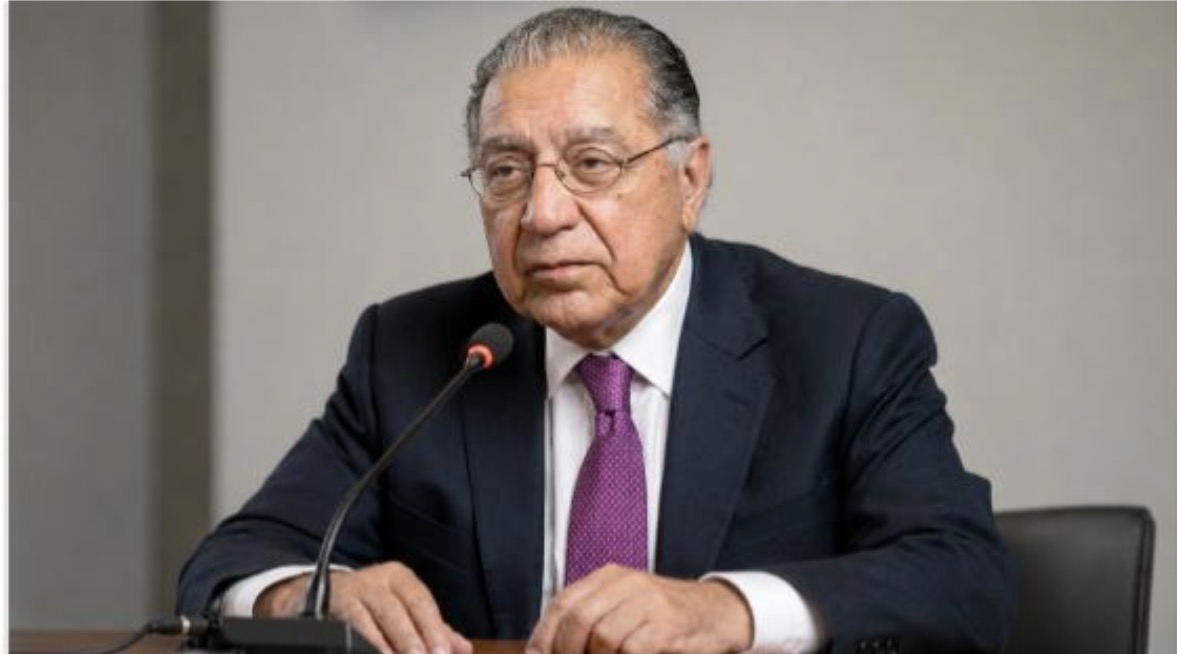
Mr. Munir Akram
Former Ambassador of Pakistan to the United Nations and former President of the United Nations Security Council
View ProfileThe relationship between Pakistan and Iran is embedded in geographical proximity, a common faith and the vast historical and cultural influence Persia enjoys among the Pakistani people. Iran was the first country to formally recognize Pakistan on 22 August 1947. The two countries were members of several security alliances during the Cold War. Pakistan, Iran and Turkey were the founding members of the Economic Cooperation Organization ( ECO) which now includes the states of Central Asia.
Pakistan was the first country to recognize the government of the Islamic Republic of Iran after the 1979 Revolution. At the UN and in other international bodies, Pakistan has consistently opposed the unjust pressure and sanctions imposed against the Islamic Republic of Iran; and voted against every Western resolution to censure Iran on human rights and other issues. Pakistan remained impartial during the Iran Iraq War. And, it has upheld Iran’s right under the NPT to a civilian nuclear program and opposed the unjust sanctions which were imposed against Iran. Pakistan strongly condemned the Israeli and US aggression against Iran in June 2025 and again on February 28th 2026
During the current ongoing Israeli/US-Iran conflict, Pakistan’s priority has been to secure the earliest end to the aggression and the conclusion of a comprehensive agreement which would assure durable security for Iran, the Persian Gulf and West Asia. Pakistan’s mediation of the conflict would not have been possible without the trust and confidence reposed in it by the Iranian leadership and people.
The Islamabad MOU
The signature of the Islamabad MOU on 17th June 2026 was the outcome of painstaking negotiations. It is not perfect; but it provides a balanced and realistic framework to end the aggression, advance Iran’s legitimate security and economic objectives and realize durable peace in the Persian Gulf region.
The subsequent violations of the MOU were due to misrepresentation and bad faith. Pakistan, together with other mediators, has worked hard to prevent the horizontal or vertical escalation of the war. There is reason to hope that the continuing mediatory endeavors will lead to the resumption of the ceasefire agreement, reopening of the Strait of Hormuz, revival of the negotiating process and conclusion of the final agreement envisaged in the MOU. This will inter alia result in the complete lifting of all international and unilateral sanctions unjustly imposed against Iran and mobilization of massive investment for Iran’s reconstruction and development.
Today, the Persian Gulf region is at the dawn of a new era. Iran’s asymmetric military strategy and the heroic resilience of the Iranian people have demonstrated that weaker States can successfully resist coercion and dictation by the major powers. It has also demonstrated that dependence on major powers for security can become a liability.
A new security architecture
The recent conclusion of the Pakistan- Turkey- Saudi Arabia defense agreement at the Mecca Summit is an attempt by these Islamic countries to build an alternate security architecture for the region independent of the great powers. The three countries have declared that this agreement is defensive in nature; it is not aimed against any country or countries, and is open for participation by other States of the region.
Israel and some Western circles have attempted to sow sectarian and strategic division among the region’s Islamic countries. These insidious efforts have failed. Iran’s response to the trilateral agreement has been mature and balanced, declaring that Tehran sees no threat to itself from this Accord. It is worth recollection that when the Pakistan Saudi Defense Pact was signed last year, President Pezeskian welcomed it and referred to Iran’s longstanding proposal for the conclusion of regional security arrangement which would include Iran and the Arab states of the Persian Gulf. The trilateral agreement could serve as a first step and a possible avenue to build an alternate security architecture for the region, one which includes the Islamic Republic of Iran as a major and indispensable member.
Such a regional security architecture will become possible only if there is continued mutual trust and confidence and expanding cooperation between Pakistan and Iran. Indeed, this new era of cooperation in the region should be constructed on the foundation of close cooperation between these two brotherly Islamic Republics.
Over the past four decades, bilateral relations between Pakistan and Iran have often been constrained by the Western campaign to isolate and coerce Iran and Pakistan, geopolitically and economically. Pakistan’s efforts to expand economic ties with Iran -such as the Iran Pakistan gas pipeline—have confronted explicit threats of financial sanctions and political penalties against Pakistan.
Today, as Iran is poised to break out of the chains of international and unilateral sanctions, there are immense prospects to realize the full potential of Pakistan-Iran relations.
Trade
Bilateral trade can be expanded immediately. The official target of $30 billion in trade is too modest. Pakistan can supply Iran: rice, wheat, meat, livestock and dairy products, seafood, processed food, pharmaceuticals, medical supplies and surgical instruments. Iran can supply: petrochemicals and petrochemical products, fertilizer, steel and metals, industrial machinery and construction materials. The border markets can be expanded to this end. Trade could be vastly enlarged through integrated agriculture and food cold chain logistics.
Pakistan-Iran Regional Economic Corridor (PIREC)
The governments and business enterprises of the two countries should be more ambitious. They should build a comprehensive structure of mutual economic interdependence to accelerate the rapid growth and development of both countries. To this end, borrowing from China’s example, they could adopt the concept of a Pakistan-Iran Regional Economic Corridor, consisting of :a maritime corridor ,a land corridor ,an energy corridor and an industrial corridor .
Maritime Corridor
Gwadar and Chahbahar should not be competing ports but complementary nodes in a regional Logistics Network. There is already movement in this direction in the MOU signed in May 2026 by the Gwadar and Chahbahar authorities. Cooperative and Joint activities could cover :joint shipping services, container transshipment, port to port feeder services, joint logistics companies, warehousing and distribution, joint maritime services, ship repair and maintenance, fisheries and aqua culture, digital port customs systems.
Land Corridor
Transit trade offers the most immediate and actionable opportunities. Pakistan’s new transit framework of April 2026 has activated the 2008 Pakistan-Iran Road Transport framework. Iran’s goods can transit through the CPEC to China and through Pakistan’s ports to East Asia and Africa. Pakistan’s goods can transit through Iran to Central Asia and Russia and across Iran to Turkey and Europe And, the land route would complement the maritime corridor.
Energy Corridor
Iran already supplies electricity to Gwadar. This can be expanded significantly, especially along the Balochistan border areas. More importantly, the Iran-Pakistan gas pipeline must be completed quickly on the Pakistani side, feeding into Pakistan’s nation-wide gas supply network. Beyond this, Iran can supply sizable quantities of oil to Pakistan regularizing and expanding the informal cross border oil trade. Iran can also supply petrochemical products, especially fertilizer, as well as plastics and industrial and agricultural chemicals.
Industrial Corridor
There are a number of sectors in which Pakistan and Iran could set up joint Industrial and manufacturing ventures: oil, gas and chemicals; pharmaceuticals, where Pakistan has sizeable manufacturing capacity; surgical instruments ; healthcare (hospitals diagnostics, biotechnology R&D );mining (copper, zinc, chromite, rare minerals) especially in Balochistan. Economic Zones could be set up, especially along the border regions, for joint ventures in food processing, construction materials, cold chain logistics and storage, textile production, agricultural processing, petrochemicals .
Counter Terrorism
The ambition to advance growth and development through mutual cooperation and the creation of a Pakistan Iran Regional economic corridor will require that the two countries also collaborate closely to address the threats to their national security and stability. Islamabad and Tehran can enhance intelligence cooperation and security arrangements along the Balochistan border to prevent Insurgent groups from operating against each other from across the border. Similarly, they can enhance joint efforts to eliminate the threat posed to both countries by the terrorist groups operating from the territory of Afghanistan, including Daesh, the TTP and the BLA. These common threats are known to be funded and sponsored by certain external powers and their proxies. Eliminating such subversion and the terrorists which threaten the security and stability of both countries is a task that needs to be accorded highest priority by both neighboring countries.
The path is now open for a dynamic and positive new era in Pakistan-Iran relations.
Former Ambassador of Pakistan to the United Nations and former President of the United Nations Security Council
View Profile
AI Assistant
Fast and reliable answers