



From Istanbul to Islamabad
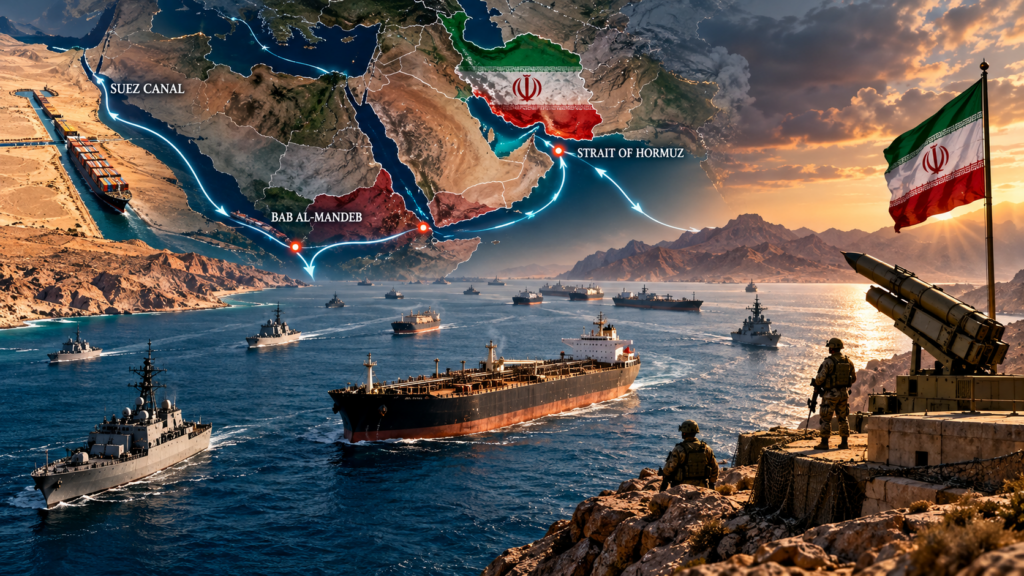
Escalating military threats among Washington, Tehran, and Tel Aviv place commercial shipping, energy supplies, and civilian lives in severe danger, exposing the Straits of Hormuz and Bab al-Mandab to immediate confrontation. Reopening…
AI Analysis
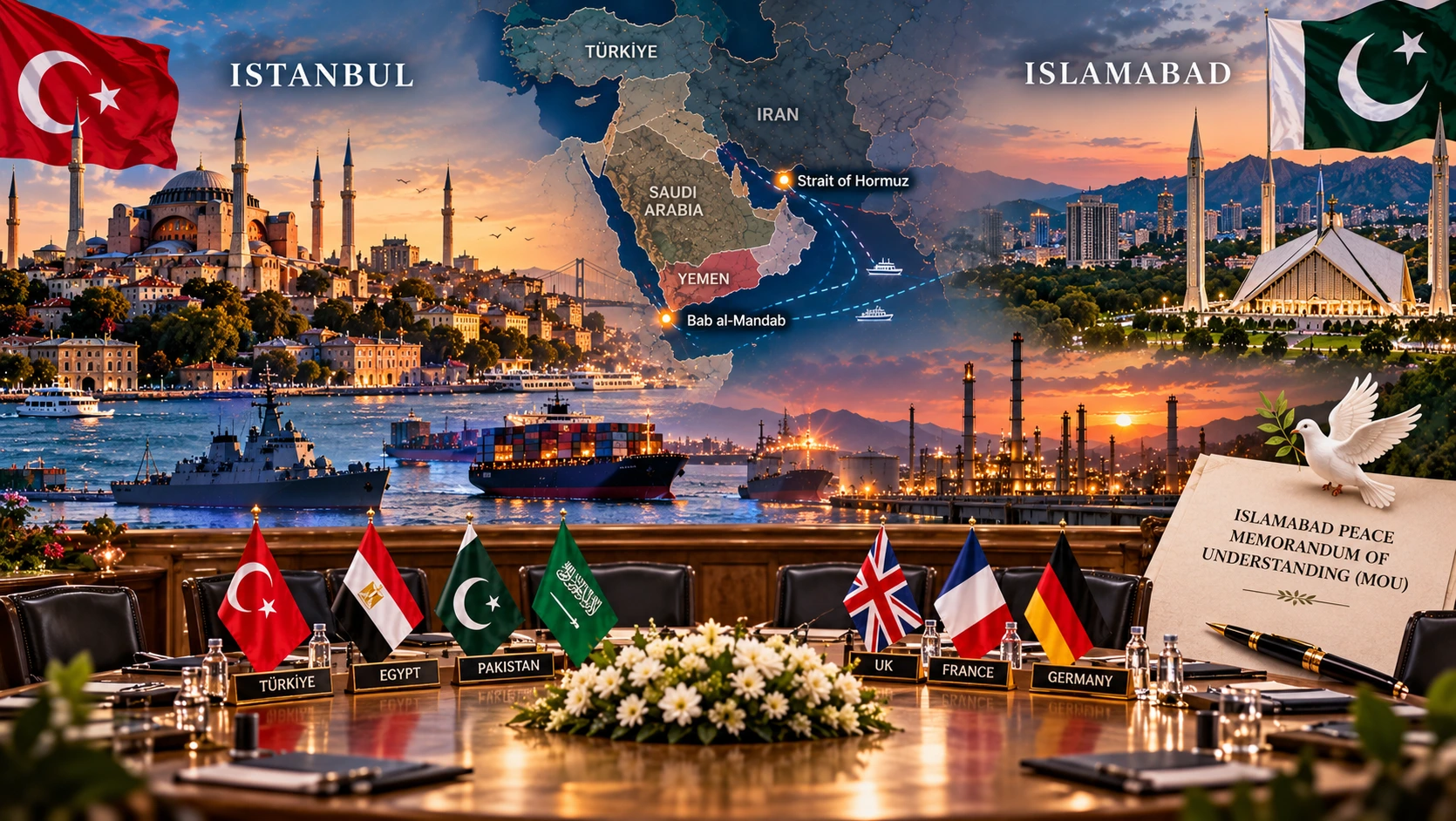
Washington, Tehran and Tel Aviv are exchanging threats as commercial shipping, energy supplies and civilian lives face growing danger. The Strait of Hormuz and the Bab al-Mandab, at the southern entrance to the Red Sea, are both exposed to confrontation. Opening both waterways to safe navigation and stopping further escalation must be the immediate priorities. The R4 and the European E3 have an opportunity in Istanbul to move beyond general appeals for calm and launch a practical peace initiative. Its centrepiece should be Pakistan’s proposal to revive and update the Islamabad Peace Memorandum of Understanding (MOU), using the new grouping to bring the United States and Iran back to a negotiated framework, while pursuing parallel de-escalation with Israel.
The case for such an initiative is urgent because the existing diplomatic track has not held. Brokered with Pakistan’s mediation and signed by Washington and Tehran on 17 June 2026, the 14-point MOU was an interim ceasefire and bridge to a comprehensive settlement. It provided for the cessation of military operations on all fronts, reciprocal respect for sovereignty and non-use of force, and a 60-day period of negotiations. It addressed the naval blockade, oil exports, frozen assets, Hormuz passage and dialogue among Iran, Oman and Gulf states on maritime arrangements. On the nuclear file, Iran reaffirmed that it would not seek nuclear weapons; the disposition of enriched material and Iran’s nuclear needs were to be handled through a mutually agreed, IAEA-supervised process as part of a final agreement. It envisaged monitoring and UN endorsement of a final deal.
The MOU was not a finished peace treaty: difficult issues remained, and the parties disagreed over sequencing, verification and Hormuz arrangements. The 60-day period elapsed on 17 August without agreement; fighting and attacks on shipping resumed. Tehran has said it will not enter talks on terms it considers unacceptable; Washington insists that the nuclear question cannot be postponed. Yet an expired interim arrangement is not a reason to discard its work. It is a starting text whose gaps should be addressed openly. Pakistan should make its revival the central proposal it takes to Istanbul.
War’s cost would extend well beyond Iranian targets. Against overwhelming US-Israeli air power, CNN reports that Pentagon planners are considering the 9,000-kilogram “Mother of All Bombs” for strikes on Iranian energy infrastructure and nuclear sites—a contingency, not an announced decision. Iran’s Supreme National Security Council secretary has threatened retaliation against Gulf oil facilities and undersea cables; another senior adviser described Tehran’s posture as “zero red lines”. Such escalation could endanger GCC energy and digital infrastructure, disrupt both straits and harm civilians and the global economy. Brent settled at $113.17 a barrel on 22 October and traded near $114.50 the next morning. One scenario analysis estimates renewed-war prices at $135–150 a barrel; Bank of America warns of a $150 tail risk if energy infrastructure is hit. These are stress scenarios, not baseline forecasts.
The R4 is a consultative mechanism, not a treaty-based alliance. It brings together Türkiye, Egypt, Pakistan and Saudi Arabia at a moment when conflicts across the region have underscored the need for greater regional ownership of security. The four foreign ministers first met in Riyadh on 18 March 2026, and have since consulted in Cairo on 21 June and on the sidelines of the United Nations General Assembly in New York on 21 September. They aim to coordinate diplomacy and support regional stability; their value lies in relationships and political weight, not an ability to impose a settlement.
The distinction between the R4 and the Makkah Joint Defence Agreement is important. Türkiye, Pakistan and Saudi Arabia signed that defence agreement in August; Egypt is not a party. The R4 is a wider diplomatic forum, not a military pact or joint command. Its 11 October statement condemning Houthi attacks on Saudi Arabia and supporting Riyadh’s security showed that members can coordinate on security concerns. That solidarity may help deter attacks. For a peace initiative, however, it must be balanced with engagement: Iran and Yemen’s parties should see an open diplomatic door, rather than a new bloc organised against them.
The E3 has a different history and a potentially complementary role. Britain, France and Germany began coordinating in 2003 to address international concerns over Iran’s nuclear programme. Their Tehran Declaration that year offered a diplomatic route: Iran would cooperate with the International Atomic Energy Agency and suspend certain enrichment-related activities while the E3 recognised Iran’s right to peaceful nuclear energy under safeguards and promised cooperation. E3 diplomacy later widened to include the European Union and the major powers, contributing to the 2015 Joint Comprehensive Plan of Action (JCPOA). The JCPOA showed the value and limits of negotiated restraints. The E3 brings nuclear expertise, though trust is low after sanctions and
repeated breakdowns.
The seven-country meeting is scheduled in Istanbul on 23 October. Hakan Fidan is to host an R4 session followed by the first joint R4+E3 meeting; no exact hour was announced. The agenda includes Palestine, Hormuz, Yemen, the Russia-Ukraine war and future coordination. Turkish briefings also cited Bab al-Mandab navigation, Saudi security, Syria and diplomacy on US-Iran tensions. Though not formally about the MOU or nuclear file, its ceasefire, maritime and nuclear provisions make it
directly relevant.
About the Author

Ambassador G. R. Baluch
Ambassador G. R. Baluch is an author for whom only limited biographical information is available. The source identifies Baluch with the ambassadorial title, while nationality and further life details are not specified.
Profile and all publicationsHow to Cite This Article
Baluch, Ambassador G. R. “From Istanbul to Islamabad.” Iqbal Forum, October 25, 2026. https://iqbalforum.org/en/?p=52916.





Comments