



Hormuz: the battle for waterways ( Part – I )
The war involving the US, Israel, and Iran demonstrates that geography and control over strategic maritime chokepoints—specifically the Strait of Hormuz, Bab al-Mandeb, and the Suez Canal—can offset immense military disparities, showing…
AI Analysis
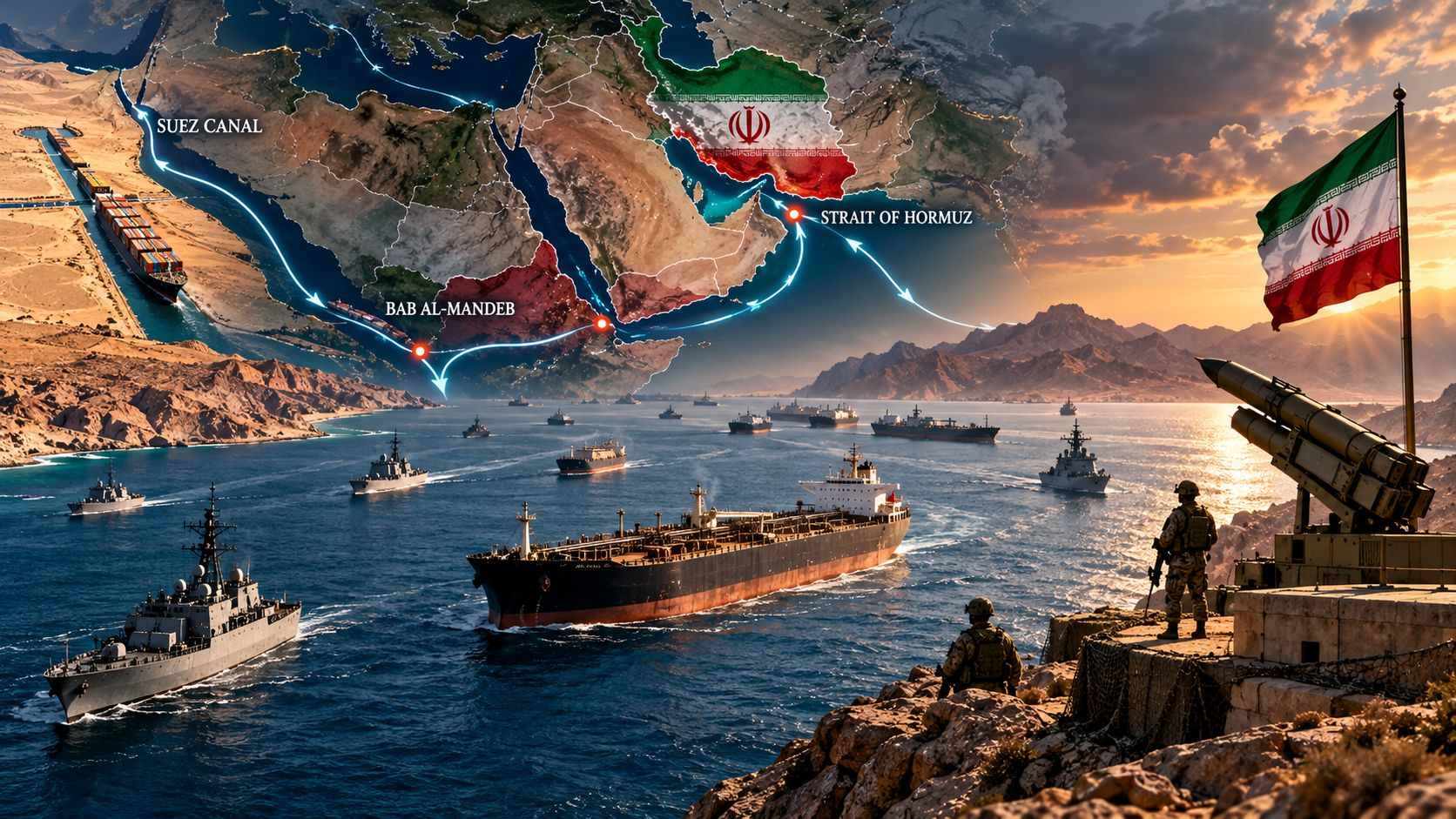
The war between the US, Israel and Iran has produced many lessons about military power, deterrence and geopolitics. Perhaps the most consequential, however, lies not in the number of missiles fired or aircraft deployed, but in the strategic importance of three narrow waterways: the Strait of Hormuz, Bab al-Mandeb and the Suez Canal.
These waterways show that, in contemporary warfare, geography can sometimes compensate for an enormous disparity in military power. A state or non-state actor does not necessarily have to defeat a great power militarily to impose enormous costs upon it. It may only have to disrupt the arteries through which energy, trade and strategic supplies move. The Iran war has highlighted many states’ vulnerabilities that are likely to affect the region and beyond in the future.
First, the war has exposed the limits of military superiority. The US possesses unmatched military capabilities. Yet the war in Iran shows that military superiority does not automatically produce political capitulation. Washington has inflicted enormous damage, but military pressure has not necessarily translated into the political outcome it sought.
The Iranian interpretation of the conflict is particularly revealing. Tehran has treated Hormuz not simply as a commercial waterway but as part of the wider strategic contest. Whether or not one accepts the Iranian interpretation, it matters because it shapes Iranian behaviour. The material available for this analysis notes that Iran increasingly viewed maritime routes through the prism of its national security calculations. That perception cannot simply be wished away.
Second, Hormuz showed how a narrow waterway can become a strategic instrument. The Strait of Hormuz is geographically narrow but economically immense. A large proportion of Gulf energy exports passes through it. Any prolonged disruption therefore affects not merely Iran and the Gulf states but Asian economies, European consumers, shipping companies, insurers and global financial markets. The war showed that freedom of navigation is not exclusively a military problem.
This was one of the most important lessons of the June 2026 Islamabad Memorandum of Understanding. The document reportedly envisaged removing the US naval blockade and arranging safe passage, while also bringing Oman and the Gulf littoral states into discussions on Hormuz’s future administration and security. The conceptual importance of that provision deserves greater attention: the country capable of disrupting Hormuz had to be part of the conversation about keeping it open.
Third, it has become obvious that freedom of navigation and military confrontation cannot be separated indefinitely. The Islamabad MOU faced hiccups as Tehran and Washington interpreted provisions concerning the Strait differently. Iranian officials understood the arrangement as involving future maritime arrangements with Oman and the Gulf states, while Washington interpreted it as unrestricted passage.
Any future agreement must define precisely what it means by freedom of navigation, commercial passage, military transit, sanctions enforcement, and the rights of littoral states. Ambiguity may be useful in diplomacy when it helps parties reach an agreement. But ambiguity over the security of a vital international waterway can eventually become a source of conflict.
Fourth, Bab al-Mandeb has demonstrated the same principle from another direction. The Houthi movement illustrates how a comparatively weaker non-state actor can acquire disproportionate strategic influence through geography. The Houthis do not possess the military capabilities of Saudi Arabia, let alone those of the US. Yet their ability to threaten shipping in and around the Red Sea has imposed economic and strategic costs on much stronger actors. Their significance derives partly from geography. Control or influence over portions of Yemen’s Red Sea coastline gives the movement the capacity to affect maritime traffic far beyond Yemen itself.
Fifth, Iran has provided the Houthis with weapons, technology and training, and the relationship has clearly expanded over time. But this should not automatically be interpreted as evidence that Tehran dictates every Houthi decision. The Houthis have their own Yemeni political and strategic objectives. At times those objectives overlap with Iranian interests; at other times the movement’s calculations are primarily local. This distinction matters because treating every action by an Iranian partner as an order from Tehran oversimplifies the strategic environment.
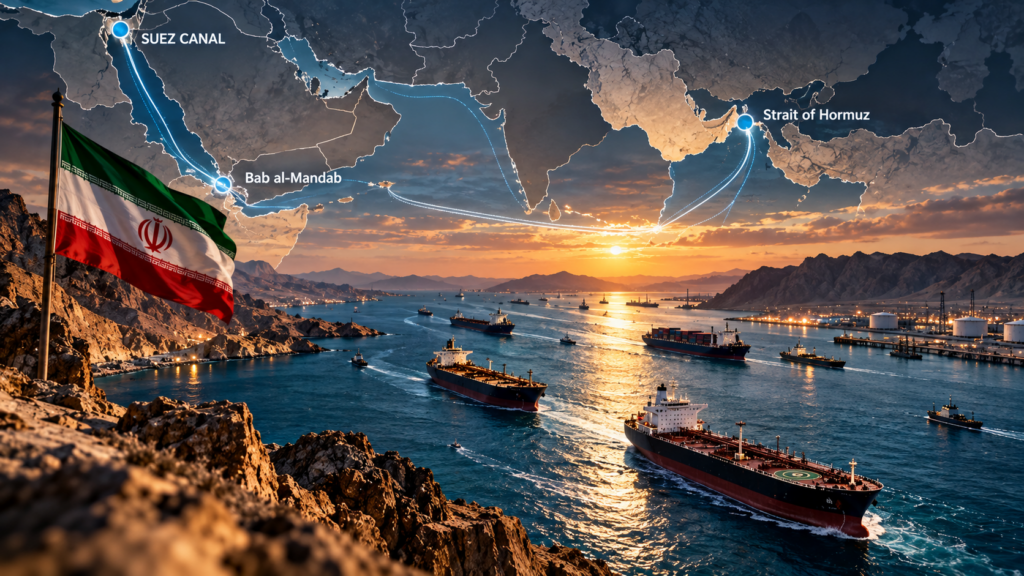
Sixth, Suez completes the picture. Hormuz connects the Gulf to the Indian Ocean; Bab al-Mandeb connects the Red Sea to the Gulf of Aden; and Suez connects the Red Sea to the Mediterranean. Together, they form a strategic chain linking the energy-producing Gulf with the major markets of Europe and Asia. Disruption at any point can force ships to take longer routes, raise insurance and freight costs, delay deliveries and increase energy prices. The consequences ripple through the global economy. This is why these waterways’ strategic significance extends far beyond the countries bordering them.
Seventh, the war has demonstrated that the geography of trade can change remarkably quickly. When established maritime routes become dangerous, commercial actors search for alternatives. Pipelines, ports, railways, overland corridors and alternative suppliers suddenly acquire strategic importance. Sustained disruption of Hormuz could eventually encourage investment in alternative energy routes and infrastructure, reducing the strait’s leverage. This creates an important paradox. A state may use geography to exert pressure today, but excessive weaponisation of that geography can encourage others to invest in ways of bypassing it tomorrow.
Eighth, the war has therefore transformed the meaning of strategic vulnerability. For decades, discussions of Gulf security concentrated on military balances: aircraft, missiles, naval fleets, bases and defence systems. The current conflict suggests that vulnerability must now be measured differently; an actor with relatively modest military capabilities may acquire considerable strategic influence if it can threaten a critical chokepoint. This is the paradox of 21st-century warfare: battlefield strength does not necessarily equal resilience in the wider strategic system.
Ninth, the implications extend beyond the Middle East. The pressure generated by disruption of Hormuz, Bab al-Mandeb or Suez does not stop at the shoreline. Asian manufacturing economies face higher energy and transport costs. European markets face supply disruptions. Gulf producers face difficulties exporting energy. South Asian economies face higher import bills. Shipping companies face higher insurance premiums. Developing countries bear the consequences through inflation and deteriorating trade balances. In other words, the waterways of West Asia have become arteries of the global economy. Their security is therefore not merely a regional concern.
Tenth, the central lesson is that maritime security cannot be achieved through military power alone. Naval forces remain necessary. Missile defence remains important. Intelligence cooperation and surveillance will remain indispensable. But none of these can permanently substitute for political arrangements. The experience of the Iran war suggests that a durable solution requires the participation of the countries that possess the geographical capacity to disrupt these waterways, as well as those whose economies depend upon their uninterrupted operation.
This does not mean accepting every claim made by Iran, Saudi Arabia, Israel, the Houthis or any other actor. It means recognising a basic reality of international politics: a durable security arrangement cannot simply exclude actors capable of undermining it.
That is the real lesson of Hormuz. And it is why the question now before West Asia is not merely how to reopen a waterway after a war, but how to construct a regional order in which closing that waterway becomes increasingly unnecessary, costly and politically unacceptable.
About the Author
Asif Durrani
The writer is a former ambassador of Pakistan to Iran and the UAE. He is also a former special representative of Pakistan for Afghanistan and currently serves as a senior research fellow at the Islamabad Policy Research Institute (IPRI).
- Politics
How to Cite This Article
Durrani, Asif. “Hormuz: the battle for waterways ( Part – I ).” Iqbal Forum, October 8, 2026. https://iqbalforum.org/en/?p=51056.





Comments