



Hormuz: the battle for waterways ( Part – II )
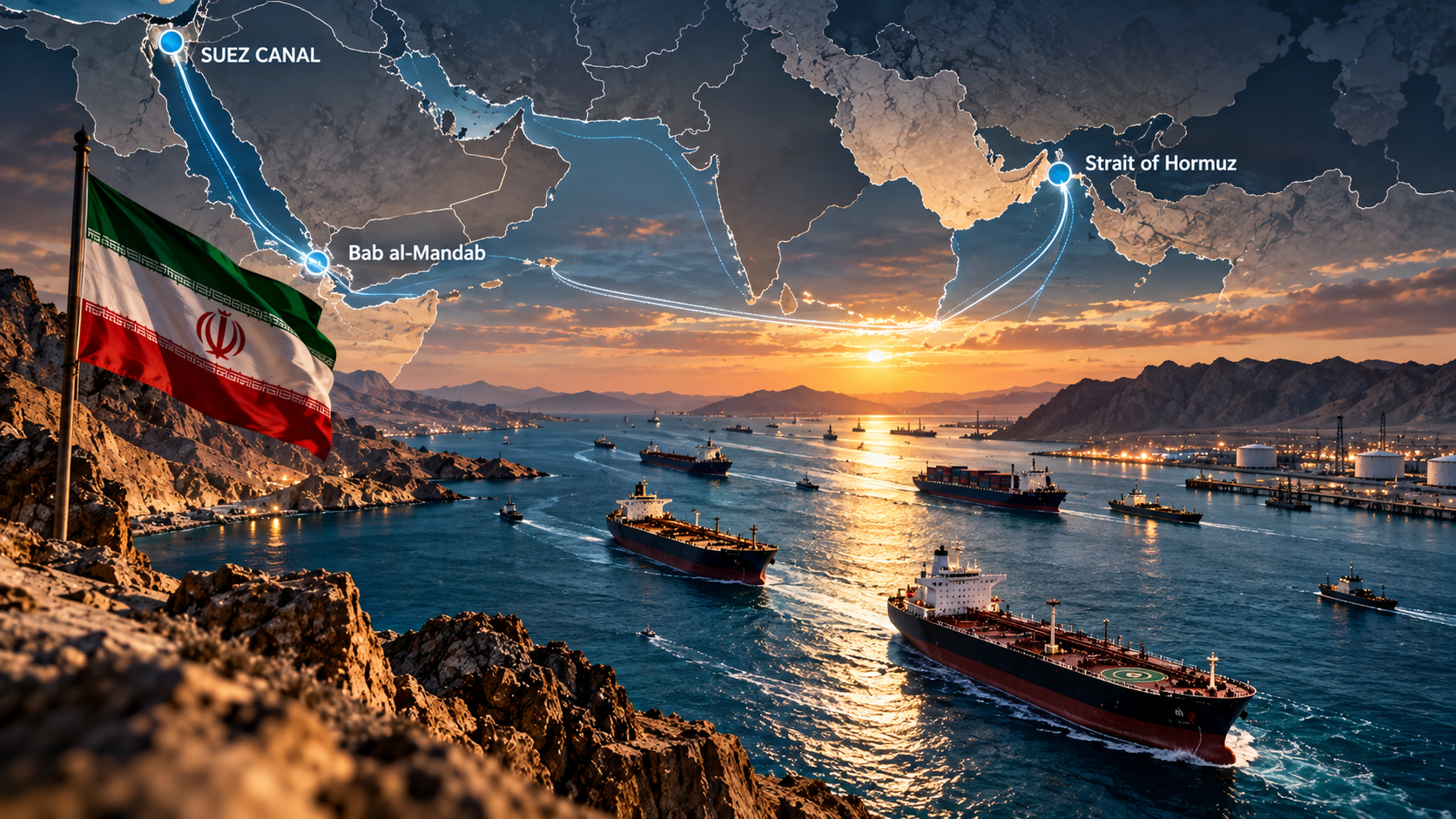
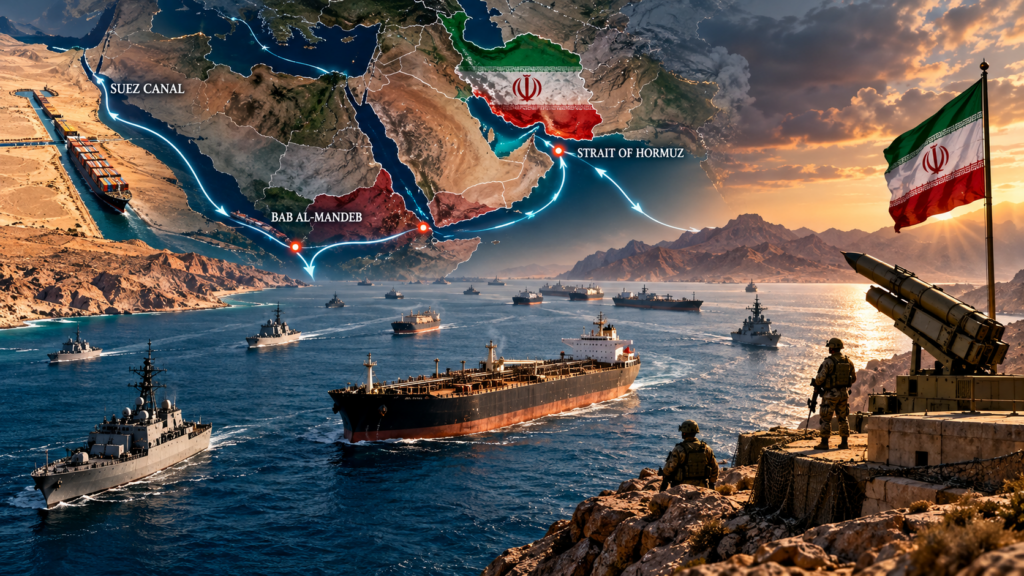
The Iran war has exposed the limits of relying on external military power to guarantee West Asian security and highlighted the need for regional ownership of maritime security. Waterways such as Hormuz,…
AI Analysis
The Iran war has demonstrated a disturbing reality: the security of West Asia cannot be guaranteed indefinitely by external military power.
The US remains the region’s most capable external military actor. Yet the conflict has exposed the limits of an architecture that depends too heavily on an outside power to guarantee regional security.
The question, therefore, is whether the countries of the region can develop mechanisms that reduce their dependence on external military intervention while preserving freedom of navigation and preventing another war from closing the region’s vital waterways. States would need to take multiple actions to establish maritime normalcy.
First, the countries of the region need to accept a basic principle: waterway security is a common interest. Hormuz is not exclusively Iranian. Nor is it exclusively Saudi, Emirati or American. Bab al-Mandeb is not merely a Yemeni issue. Suez is not simply an Egyptian concern. Their importance transcends national boundaries. Any interruption affects all countries that export, import, or transport goods through these routes. This creates the foundation for a common-interest approach.
Second, the region should initiate a maritime dialogue. The immediate objective should not be a grand political settlement covering every dispute in West Asia. The starting point should be narrower and more practical: preventing the closure or disruption of major waterways. Iran, Saudi Arabia, Oman, the UAE, Qatar, Bahrain, Kuwait, Iraq and Yemen should eventually have a place in such a conversation, alongside Egypt and other states whose trade depends directly upon the Red Sea and Suez. External powers, including the US, European states and China, could participate as supporting partners rather than sole guarantors.
Third, the Islamabad MOU offers a useful starting point. The MOU attempted to create a process before seeking a final settlement. It separated complicated issues – including military operations, sanctions, the nuclear question and Hormuz – rather than requiring the parties to solve everything simultaneously. That approach deserves consideration. Regional diplomacy often fails because negotiators try to resolve the entire strategic dispute before creating mechanisms to manage the immediate crisis. The better approach may be incremental. First, keep the waterway open. Then establish communication mechanisms. Then address maritime incidents. Then negotiate the larger political questions.
Fourth, establish a permanent maritime incident-prevention mechanism. The Gulf and Red Sea need something comparable in principle to the mechanisms used elsewhere to prevent military incidents from escalating. Naval commanders should have reliable communication channels. Commercial shipping authorities should have emergency contacts; warning procedures should be established. Rules concerning military exercises, missile tests and naval deployments should be communicated in advance. The objective would be simple: prevent an incident from becoming a war.
Fifth, the principle of reciprocal restraint should be incorporated, as freedom of navigation cannot coexist indefinitely with unrestricted military escalation. A regional arrangement could be envisaged for reciprocal commitments, including, inter alia, that commercial shipping should remain free from attack, while military actors should avoid actions that deliberately transform commercial waterways into theatres of war. Such arrangements may not eliminate political disagreements. They could create firebreaks between political disagreements and global commerce.
Sixth, Iran must be part of the regional dialogue. Excluding Iran may make a diplomatic formula more comfortable for some states, but it would make the arrangement less durable. The same principle applies to Yemen. Any serious attempt to secure Bab al-Mandeb must eventually address the political reality in Yemen and the Houthis’ capacity to influence maritime security.
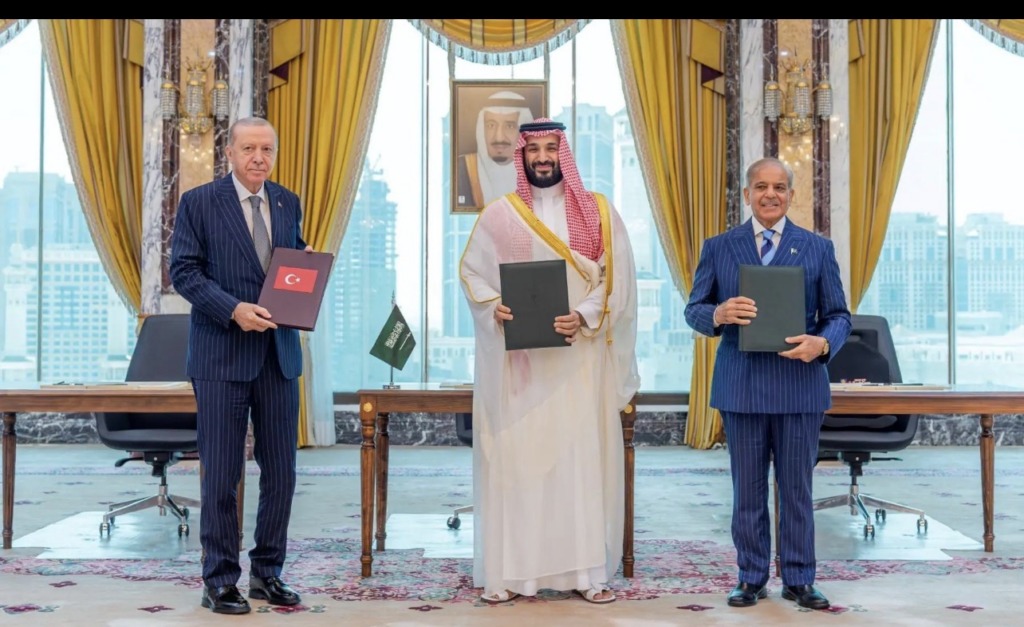
Seventh, the Arab states should continue diversifying their security relationships, but diversification should complement, not replace, regional dialogue. Saudi Arabia has been developing relationships with multiple external powers. Turkiye and Pakistan have acquired greater regional agency. Israel has developed security relationships with some Arab states. The US continues to provide major military capabilities. This diversification is understandable. But a collection of bilateral defence relationships does not automatically constitute a regional security architecture. Indeed, without dialogue, competing security partnerships may create precisely the uncertainty that they are intended to reduce.
Eighth, mediation should be institutionalised rather than improvised. The experience of Pakistan, Oman and Qatar demonstrates the value of states that can communicate with opposing sides. Their importance lies exactly in their ability to speak to actors who may not speak directly to one another. A permanent regional contact group could therefore be created, comprising states acceptable to the principal parties.
Pakistan’s geographical position, political relationships and experience with both Gulf and wider Muslim states could give it a useful role in such a mechanism. Oman’s established tradition of quiet diplomacy and Qatar’s mediation experience could complement this effort. Turkiye could add another dimension through its relationships with both Western and regional actors.
Ninth, the region should distinguish between regional security and regional alignment. A new security architecture should not require every state to share the same foreign policy. Iran does not have to become an ally of Saudi Arabia. Saudi Arabia does not have to abandon its relationship with the US. The UAE does not have to sever its relationship with Israel. Pakistan does not have to choose between its traditional partners. Turkiye does not have to abandon its own strategic interests. The purpose should be narrower: states should agree on rules governing those areas in which their interests overlap.
Tenth, alternative trade routes should be developed, but not as substitutes for diplomacy. Pipelines bypassing Hormuz, alternative ports, rail corridors and new energy routes may reduce vulnerability. But diversification may be viewed as insurance, not as a replacement for political accommodation. If every crisis produces another effort to bypass a strategic waterway, the international community may eventually build an increasingly fragmented and expensive trading system.
Eleventh, the war’s greatest lesson may be that regional security ultimately requires regional ownership. For decades, West Asian security has depended heavily upon external military guarantees. The result has been an extraordinary concentration of military power but a persistent inability to resolve the political disputes that repeatedly produce conflict. The current war has exposed that contradiction. The region does not lack weapons. It lacks sufficiently institutionalised mechanisms for preventing those weapons from being used against one another.
Finally, the region needs a new bargain. The bargain should begin with a simple proposition: No country should be allowed to weaponise the region’s vital waterways against the wider international community, but no outside power should assume that military force alone gives it the right to determine their political future. That principle requires concessions from everyone.
Iran would have to recognise that international commerce cannot remain hostage to political disputes. The Gulf states would have to accept that lasting security cannot be built exclusively through external military guarantees. The US would have to recognise that regional ownership is preferable to permanent military management. Israel would have to understand that military superiority cannot indefinitely substitute for political accommodation with its neighbours and the wider Muslim world.
And the Arab states, Iran, Turkiye, Pakistan and other regional actors would have to recognise that their security is increasingly interconnected. The alternative is a region in which every crisis threatens Hormuz, Bab al-Mandeb or Suez, and every maritime crisis threatens the global economy. The choice before West Asia is therefore not simply between war and peace. It is between continuing to manage crises after they erupt and creating institutions capable of preventing them from reaching the waterways on which the region and much of the world depend.
About the Author
Asif Durrani
The writer is a former ambassador of Pakistan to Iran and the UAE. He is also a former special representative of Pakistan for Afghanistan and currently serves as a senior research fellow at the Islamabad Policy Research Institute (IPRI).
- Politics
How to Cite This Article
Durrani, Asif. “Hormuz: the battle for waterways ( Part – II ).” Iqbal Forum, October 9, 2026. https://iqbalforum.org/en/?p=51170.





Comments