



Geopolitics’ Inflection Point (Part 2)
The concept of a “shot across the bow” in nuclear strategy refers to a deliberate, limited nuclear demonstration intended to restore deterrence, signal resolve and control escalation without immediately triggering full-scale nuclear…
AI Analysis
The term “shot across the bow” is derived from the naval practice of firing a cannon shot ahead of an adversary’s ship to force it to stop, change course or submit itself to the firing ship’s diktat. It is a proactive coercive measure. This term has been borrowed for use in nuclear strategy, where it refers to a deliberate, low-casualty, low-yield or non-lethal use of a nuclear weapon. It demonstrates political resolve, will and the requisite capacities, capabilities and competencies to deter further aggression, without triggering an all-out nuclear exchange/war. However, it also reflects a willingness to go right up the escalation ladder to full-scale nuclear war if an adversary refuses to yield. This may generally apply to cases where both belligerents are nuclear powers. However, if the aggressor is the only nuclear power in the conflict, the core objectives become distinct: one, restore deterrence. Shock the adversary into halting its conventional or strategic aggression by demonstrating the political and military will to cross nuclear thresholds; two, escalation control. To signal that the nation does not seek a full nuclear exchange but will not back down either; three, communication. Send an unambiguous message of unrelenting political resolve and will when all other options, moral, diplomatic, economic and conventional military, have failed. However, where the immediate capitulation of a resolute, unyielding belligerent is required, it may be used against it even though it may not possess nuclear weapons. The nuclear strikes on Hiroshima and Nagasaki during World War II literally unleashed Armageddon upon them/Japan. These civilian population centres were ruthlessly obliterated without any warnings/shots across the bow!
The shot across the bow could be manifested in different ways. It could be a High-Altitude Detonation over an ocean, desert or the upper atmosphere (to generate an Electromagnetic Pulse, EMP) without causing direct casualties. It could also be a Remote Military Target, such as an isolated outpost in an unpopulated area, a naval fleet at sea or a strictly battlefield/strategic asset. (The Pickaxe Mountains in Iran?). It could also be the employment of a single, low-yield Tactical Nuclear Warhead, rather than a high-yield strategic weapon. In certain circumstances, it could even be carried out in one’s own territory, a desert or other unpopulated area, to demonstrate one’s capabilities, resolve and will to cross the Rubicon, if needed!
Hermann Kahn, in his famous 44-rung Escalation Ladder, gives a conceptual framework to describe how a minor political conflict can gradually/rapidly escalate into an all-out thermonuclear war, threatening widespread annihilation of mankind. It can be summarised into three stages: one, an intense conventional conflict that does not give decisive victory to either belligerent; two, either belligerent resorts to a shot across the bow; three, panic ensues, a miscalculation occurs and an all-out strategic war breaks out! The risks of a shot across the bow are undeniable. It could lead to involuntary escalation, full-scale nuclear war and cause unlimited environmental and collateral damage. On the other hand, if successful, it could obviate further aggression, avoid total destruction of a country and yet preserve the credibility of nuclear deterrence.
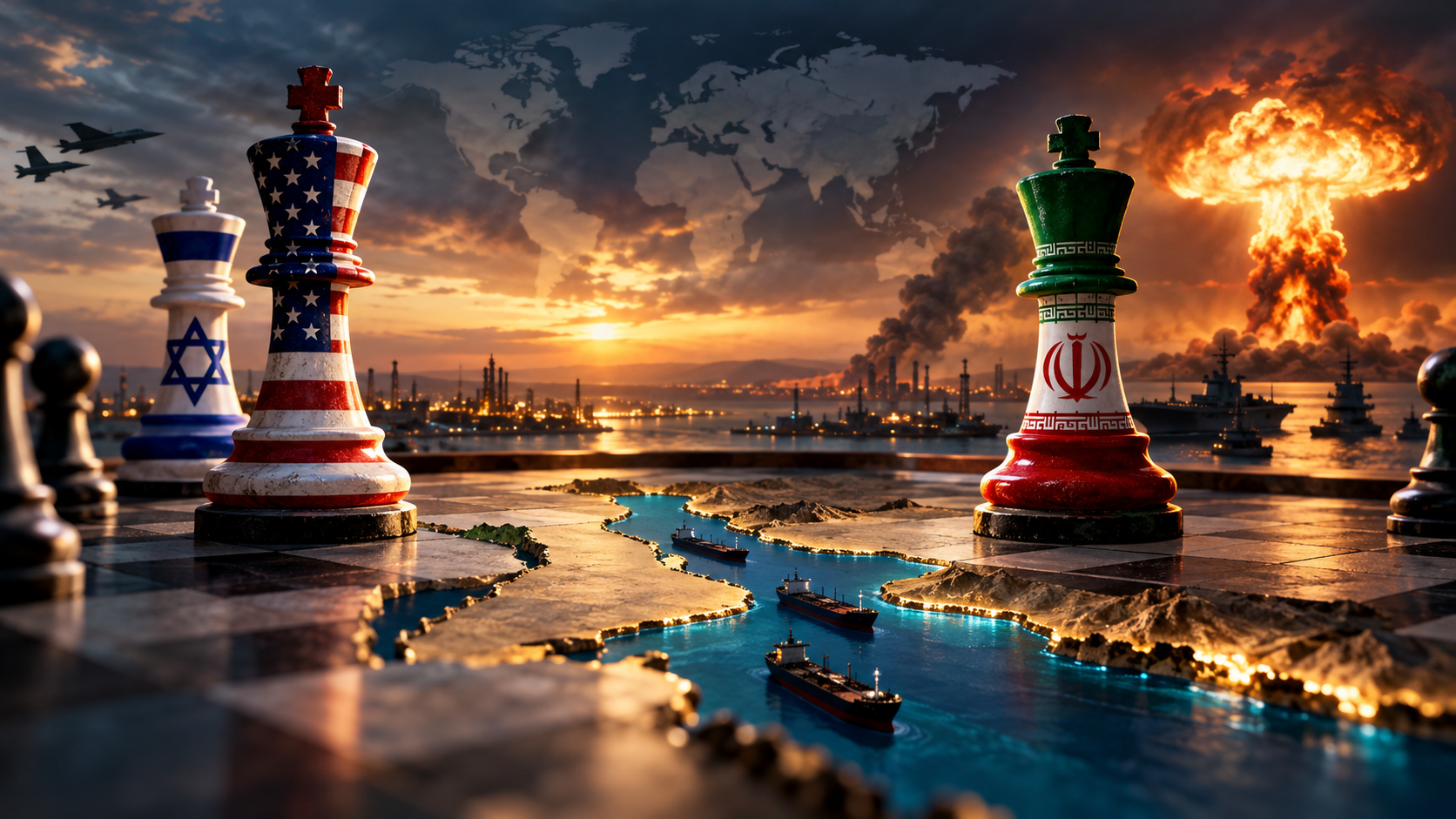
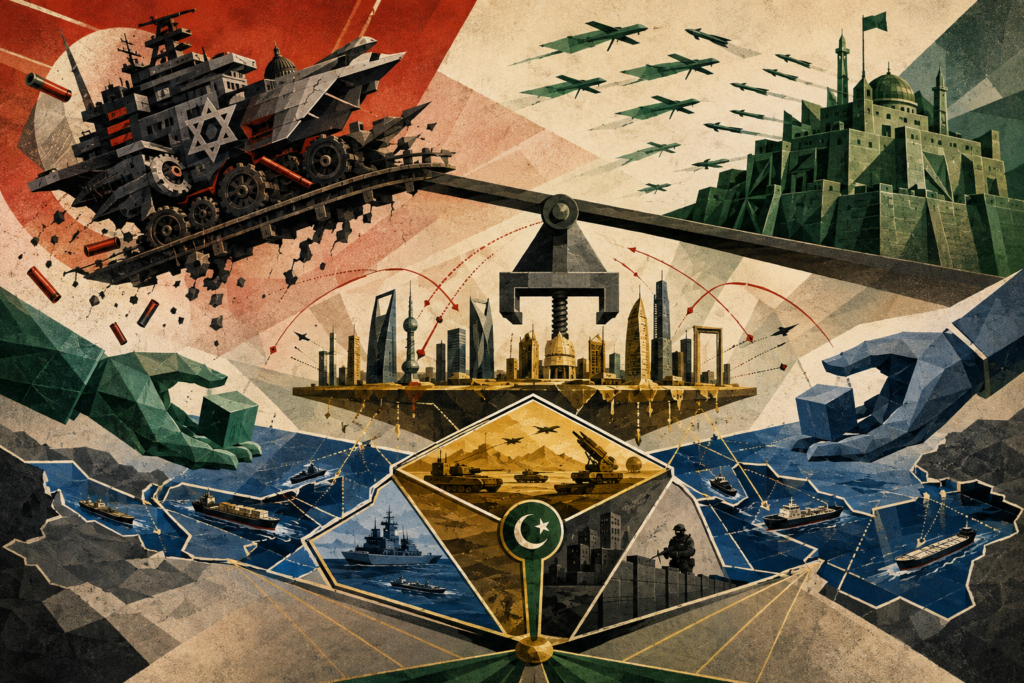
Presently, however, the US-Israel Combine finds itself in a dire strategic cul-de-sac. In sheer desperation, it has been compelled to threaten Iran with annihilation, perhaps through non-conventional means/weapons. Iran is likely to remain unperturbed. Critically, under no circumstances should President Trump become a victim of his own fiery rhetoric or PM Netanyahu’s unrelenting harangues and allow the strategic environment to so deteriorate that a resort to non-conventional means becomes inescapable. Furthermore, a major development with phenomenal strategic implications may already be afoot in the Persian Gulf. The US is moving out of Iraq, and this may be interpreted by other Gulf Arab states as a precursor to the US’ eventual, total egress from the region, too. They are duly worried. This war has failed spectacularly to achieve any of its strategic objectives. No regime change has taken place. On the contrary, Iran has defied all odds and denied the US-Israel Combine any modicum of victory: military, economic, diplomatic or even moral. The Gulf Arab states now look furtively at an emboldened Iran (potential regional hegemon?) with de facto control over the Hormuz Straits and the Bab el Mandab and, by implication, over their economies. (Battles for the Waterways, by this scribe, The Nation, 19 & 20 September 2026.)
The US cannot possibly egress the region without resolving this emerging, potentially explosive economic imbroglio of its own making. Therefore, it becomes imperative for it to bring this war to a mutually acceptable closure and resolve the issue peacefully. Veiled threats to employ non-conventional means must never be operationalised. Period. The world, and in particular the ME, can ill-afford the after-effects of nuclear strikes/explosions. The collateral damage to Iran’s neighbours (including Pakistan), to regional and global economies and their supply chains of oil and gas, to the environment and peace will be colossal, unbearable, even irreversible.
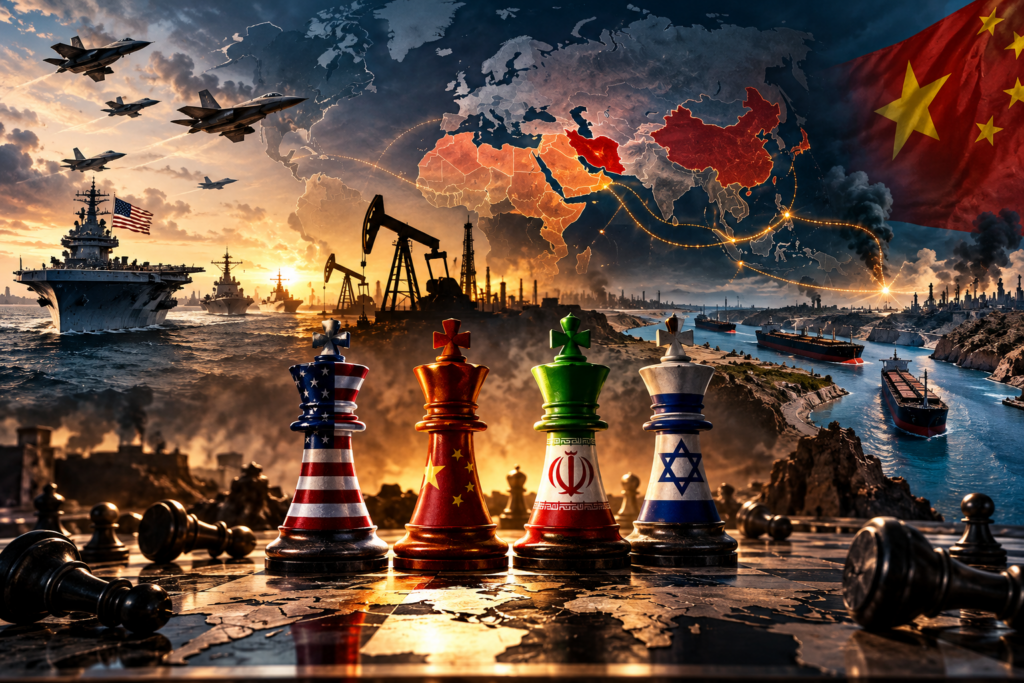
Furthermore, such rhetoric alone, much less a practical manifestation of it, might give alarming ideas/options to paranoid, irrational, high-strung, extreme right-wing leaders like PM Netanyahu in the ME and PM Modi in South Asia, potentially spelling disaster for all humanity! Sanity needs to prevail. The US-Israel Combine and Iran must come to a viable, swift, mutually agreeable closure to the war. Diplomacy must replace abrasive rhetoric and any devastating escalation of the war. Both belligerents must step back. The mediation and diplomatic approach must be reinforced with China joining the current mediators, Pakistan and Qatar. They must not only help prevent further war in the Persian Gulf region but also create and preserve peace, progress and prosperity therein!
About the Author

Imran Malik
Retired BrigadierThe writer is a retired brigadier of the Pakistan Army.
- Politics
How to Cite This Article
Malik, Imran. “Geopolitics’ Inflection Point (Part 2).” Iqbal Forum, October 9, 2026. https://iqbalforum.org/en/geopolitics-inflection-point-part-2/.




Comments