



The real winner in the US election
A sweeping Democratic midterm victory captured both chambers of Congress, inflicting a major electoral defeat on Donald Trump driven by dissatisfaction over inflation, living costs, and particularly the Iran war. Vice President…
AI Analysis
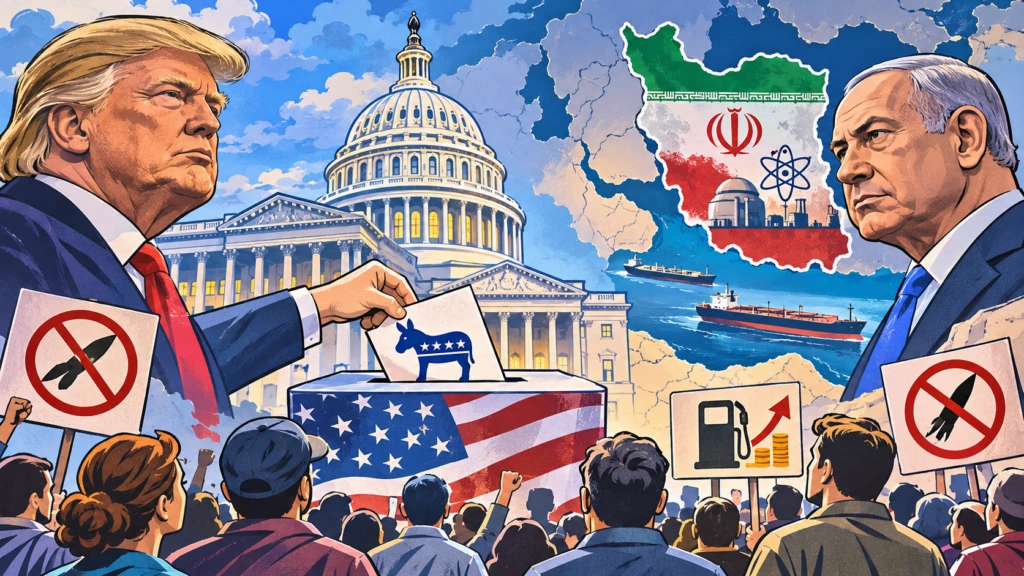
A blue tsunami has swept across the US. Democrats have captured both chambers of Congress, overturned Republican strongholds and inflicted a major electoral defeat on US President Donald Trump.
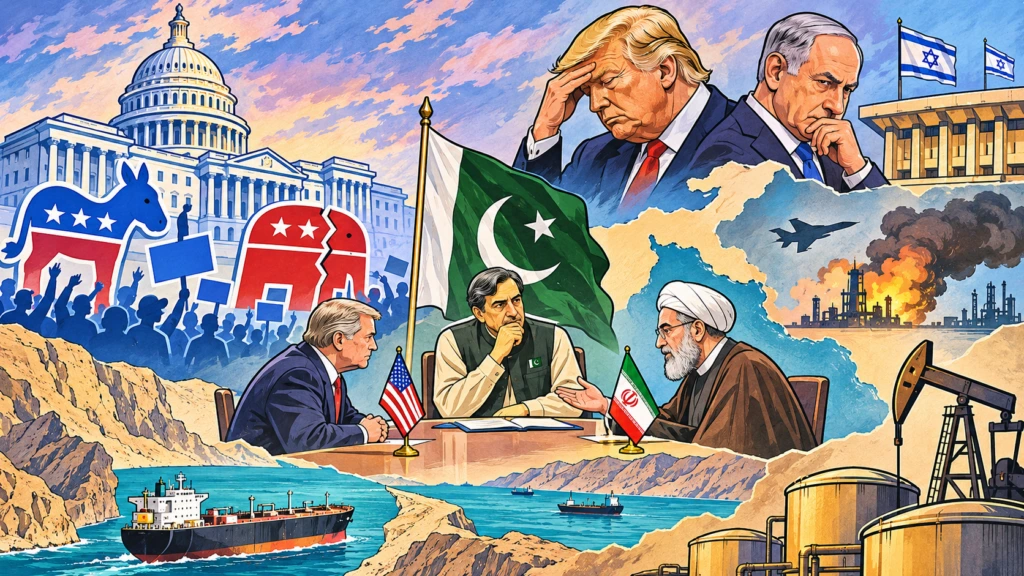
The results reflect widespread dissatisfaction with his presidency, particularly over the Iran war, inflation and the rising cost of living. The most striking admission came from Vice President JD Vance, who declared: “The reason we lost is the war”. He went further, challenging anyone defending the conflict to explain whether losing control of the Senate for the next six years was worth the price. His statement was remarkable, not least because it acknowledged that Trump’s foreign-policy gamble had alienated voters within his own coalition.
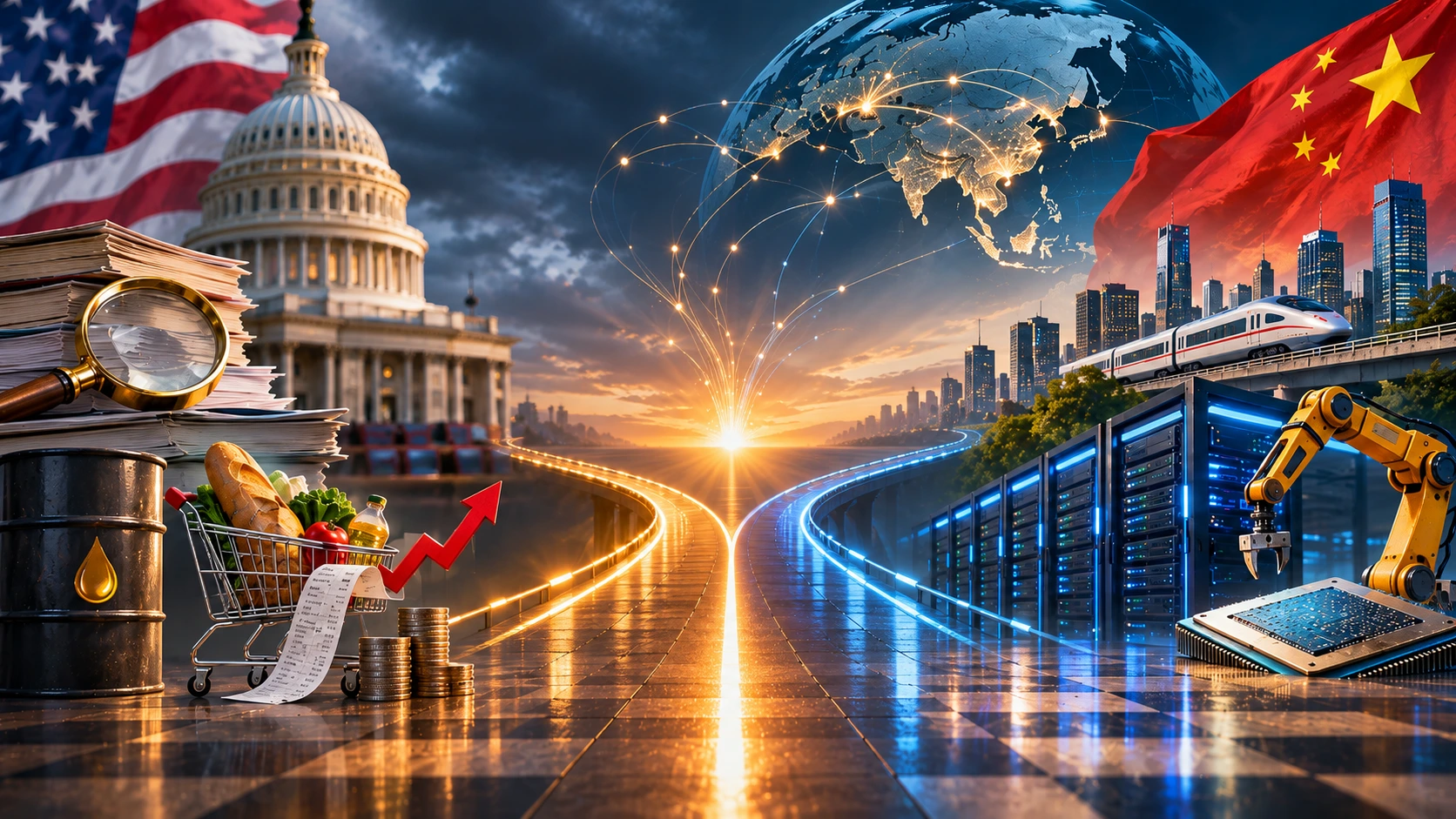
Washington now faces two years of investigations, political confrontation and legislative gridlock. But the consequences may extend far beyond American domestic politics: the real strategic beneficiary of the midterms could be China.
The Iran war exposed a fundamental contradiction in Trump’s political project. He returned to power promising to put America first, end costly foreign interventions and concentrate on domestic economic priorities. Instead, the US has become embroiled in another major Middle Eastern conflict, with consequences for energy markets, shipping and household costs.
Vance’s assessment also identified three other concerns among voters who had deserted the Republicans: inflation and living costs, the failure to put America first and dissatisfaction with Washington’s relationship with Israel. The war was a major political liability, but it was not the only reason for the Republican defeat. Economic discontent and anger over the administration’s conduct were equally important.
The immediate consequences for Trump are substantial. Democratic control of both chambers gives the opposition powerful investigative and oversight powers, as well as the ability to block much of his legislative programme. Congressional investigations, spending disputes and battles over executive authority are likely to dominate Washington. Trump retains the presidency and considerable executive powers, but governing will become considerably harder. The Republican Party, meanwhile, faces difficult questions about its dependence on Trump and the political costs of defending his decisions.
For Beijing, an America absorbed by domestic political conflict presents an opportunity. But the election has also highlighted a separate vulnerability in America’s global position: growing resistance to the economic and physical infrastructure underpinning its technological ambitions.
This was not the principal issue determining the midterm results. The Iran war, inflation and dissatisfaction with Trump’s presidency were much more immediate electoral concerns. Yet opposition to data centres and the growing power of technology corporations point to a potentially more enduring constraint on American competitiveness.
Artificial intelligence has become central to Washington’s strategy for maintaining economic and military supremacy over China. Technology companies are committing hundreds of billions of dollars to computing infrastructure, betting that access to processing power will determine who leads the next industrial revolution. But the physical foundations of this ambition are becoming a source of political friction.
Data centres consume enormous quantities of electricity and water. Their expansion is straining local power grids, raising concerns about household utility bills and provoking resistance from communities expected to accommodate them. The economic gains are concentrated among technology companies and their investors, while ordinary consumers bear some of the costs.
The scale of public resistance is striking. A University of Pennsylvania Annenberg survey of 1,320 American adults, conducted between June and July 2026, found that 61 per cent opposed building new data centres in their communities, up from 49 per cent in February and March. Crucially, the same survey found that broader attitudes towards AI had not changed significantly. The resistance is therefore not necessarily a rejection of technological progress; it is increasingly a question of who pays for its infrastructure and who captures its benefits.
The midterms gave this issue greater political visibility. In Texas and Georgia, Democratic candidates who campaigned partly against the expansion of data centres won important gubernatorial contests. Reuters reported that the results could encourage tighter regulation and complicate investment decisions in an industry central to the AI boom. This is an emerging political constraint, not evidence that opposition to data centres was the principal cause of the Democratic victory.
The implications for American technological leadership could nevertheless be considerable. The US needs to expand computing capacity, electricity generation and transmission networks rapidly if it is to maintain its lead over China. Local opposition, regulatory uncertainty and growing scrutiny of the technology industry could make that expansion slower and more expensive. The dilemma for Washington is how to reconcile public concerns about energy costs, environmental effects and corporate power with the infrastructure investment required to compete globally.
China faces no comparable electoral constraints. Its government can coordinate energy policy, infrastructure development, industrial investment and technological priorities with a degree of central direction that the American political system finds difficult to replicate. Its manufacturing base and ability to mobilise resources around strategic sectors provide important advantages in a competition where electricity, computing capacity and industrial scale matter as much as software innovation.
This does not make China’s technological victory inevitable. The US retains formidable advantages in semiconductor design, research universities, private capital and entrepreneurial innovation. China faces its own serious obstacles, including restrictions on advanced semiconductor technology and structural weaknesses in its economy. But the competition will not be decided by technological breakthroughs alone. It will also depend on which country can build infrastructure, sustain investment and translate innovation into industrial and economic power.
The Iran war adds another dimension to this strategic contest. A prolonged military engagement in the Middle East risks consuming American military resources, diplomatic bandwidth and political capital that Washington would otherwise devote to the Indo-Pacific. It also raises questions among Asian allies about the consistency of American strategic priorities. China does not need to exploit a military vacuum to benefit; a divided and distracted Washington is already an advantage.
There is a wider diplomatic cost. Governments in Europe, Asia and the Middle East must make long-term decisions about trade, technology, energy and security. An American administration preoccupied with domestic political survival and increasingly uncertain about its foreign policy direction offers less predictability. Other countries may consequently seek to diversify their economic and strategic relationships, creating additional room for Chinese influence.
The Democrats now face their own test. Their victory gives them greater power to investigate and obstruct, but they must also offer a credible alternative on energy, AI, industrial policy and America’s international role. Scrutiny of powerful technology companies is justified. But regulation that makes investment prohibitively difficult could undermine America’s ability to compete. The challenge is to reconcile public interests with technological ambition rather than allow political confrontation to paralyse both.
The US is not about to surrender its technological leadership. Its research capabilities, financial markets and capacity for innovation remain formidable. Nor is China free of economic and political constraints. But strategic advantage is relative. A competitor does not need to surpass its rival in every field if that rival becomes increasingly incapable of mobilising its own strengths.
That is the larger significance of these midterms. The Iran war has exacted a political price from Trump and his party. Economic discontent has reinforced the electoral backlash. The resulting confrontation in Washington threatens to divert attention from America’s longer-term strategic priorities. Meanwhile, resistance to the expansion of AI infrastructure is exposing the domestic constraints on its technological ambitions.
Democrats may have won the election and Trump may have lost much of his political room for manoeuvre. But the country best positioned to benefit from America’s inward turn may be China.
Beijing did not need to participate in the American election. It may nevertheless emerge as its most consequential strategic beneficiary.
About the Author

Yousuf Nazar
The writer is former head of Citigroup’s emerging markets investments and author of ‘The Gathering Storm’.
Profile and all publicationsHow to Cite This Article
Nazar, Yousuf. “The real winner in the US election.” Iqbal Forum, November 6, 2026. https://iqbalforum.org/en/?p=54376.


Comments