



Shifting sands of ME & stakes for national security
Reignited military friction between the U.S. and Iran has pushed the Middle East toward a dangerous tipping point, triggering global economic anxiety over trade, financial markets, and potential supply disruptions through the…
AI Analysis
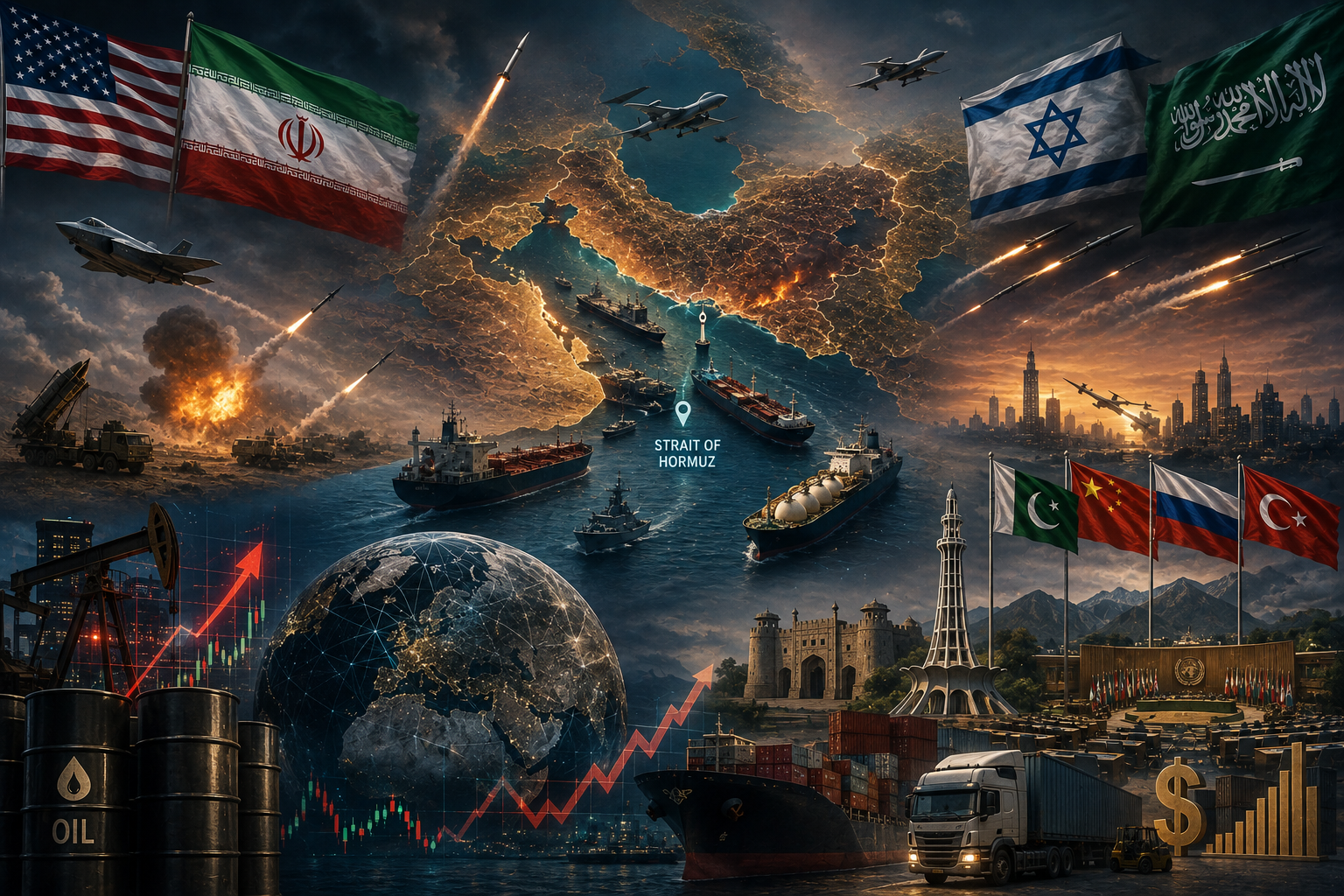
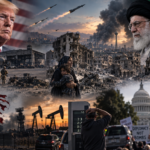
THE reignited military friction between the U.S. and Iran has pushed an already unstable Middle East toward a dangerous tipping point. Since the start of July, a sharp uptick in missile and drone exchanges has fueled fears that the region is sliding toward a full-scale war. This escalating tension is no longer just a spat between two nations; its ripples are being felt across global energy markets, trade, investments and the international financial system. From the corridors of power to global financial hubs, everyone is asking the same question: will diplomacy prevail, or is the world hurtling toward a fresh military catastrophe?
The Middle East has always been the nerve center of global politics. Its vast oil and gas reserves, vital maritime routes, strategic geography and deep religious sensitivities keep it at the heart of international affairs. Any tremor in the Gulf reverberates far beyond the region, echoing in Washington, Beijing, Moscow, London, Paris, Berlin and Tokyo. While Gulf States maintain close security ties with Washington, they remain deeply concerned that the further escalation could draw them into the conflict despite recent efforts to improve ties with Tehran. Meanwhile, public sentiment inside Iran has hardened, strengthening the leadership’s resolve to resist mounting military and economic pressures.
On the diplomatic front, recent moves have added layers of complexity. Donald Trump’s contact with Iraq’s newly elected President, Ali Zaidi aimed at curbing Iranian influence—and his meetings with Syrian leader Ahmed Al-Sharaa regarding Israel’s efforts against Hezbollah in Lebanon, suggest a strategy that could widen the conflict and draw in more players. Israel, for its part, has made it clear that any direct strike from Iran will be met with a heavy hand. Simultaneously, rumors of plots to destabilize Tehran or trigger “regime change” continue to circulate.
Many observers believe Israel views the current cycle of tension and retaliation as strategically advantageous, preferring sustained confrontation over regional reconciliation. At the same time, any collapse of peace efforts between Saudi Arabia and the Houthis could further widen the conflict. The Strait of Hormuz remains the most critical flashpoint. As a major share of the world’s oil shipments passes through this narrow waterway, any disruption would send energy prices soaring, disrupt global supply chains and fuel inflation worldwide. For import-dependent Pakistan, the economic consequences could be severe. Pakistan’s strategic location further heightens its vulnerability. Sharing borders with Iran and Afghanistan, maintaining a close partnership with China and enjoying deep historical, religious and economic ties with the Gulf and the wider Arab world, Pakistan occupies a pivotal geopolitical position. While this geography enhances its regional importance, it also exposes the country to proxy conflicts, hybrid warfare and external interference.
The China-Pakistan Economic Corridor (CPEC) is the backbone of our economic future. It isn’t just about asphalt and harbors; it’s a gateway to industrial growth, energy security, job creation and trade routes reaching into Central Asia. Simultaneously, maintaining a productive relationship with the United States—spanning trade, education, technology and counter-terrorism—remains vital to our national interest.
Success in the future depends on a delicate balancing act. Our long-standing defense partnership with Saudi Arabia and our traditionally cordial ties with Iran mean that our foreign policy must remain even-handed. We must avoid being dragged into military entanglements while actively working to promote regional stability.
The current atmosphere of uncertainty has already sent shockwaves through global markets, driving up oil prices and raising serious concerns about the security of international supply chains. In this climate, Beijing has sharpened its rhetoric, accusing the U.S. of “interventionist” policies that destabilize various regions. Washington, however, maintains that its military footprint is essential to protect allies, ensure the freedom of navigation in vital waterways and deter regional aggression.
Adding another layer of tension, the US has accused China and Russia of providing Iran with military intelligence, a move that complicates an already volatile geopolitical landscape. Yet, critics of American policy argue that decades of military interventions and attempts at “regime change” have often backfired, creating chaos rather than a lasting peace. In the eyes of India and Israel, prolonged instability in the Middle East offers a chance to reshape the strategic balance in Asia. Their hope seems to be that Pakistan will get militarily bogged down in a widening conflict involving Saudi Arabia, Iran, or the Houthis, thereby draining our resources and distracting us from our own strategic priorities. Our adversaries should be clear: avoiding such traps is a cornerstone of Pakistan’s national security policy.
Recent diplomatic movements—such as high-level engagements with Turkey and the Iranian Interior Minister’s visit to Islamabad—show that Pakistan is committed to keeping communication lines open with its neighbors. Despite these efforts, there is no denying that Pakistan is currently navigating some of the most complex security challenges in its entire history. Pakistan is currently facing a perfect storm of challenges, ranging from foreign-backed proxy conflicts and hybrid warfare to cross-border terrorism. This is all happening against the backdrop of a rapidly shifting geopolitical environment that stretches from South Asia all the way to the Middle East.
In today’s world, the very definition of national security has evolved. It’s no longer just about traditional military strength; cybersecurity, artificial intelligence, the battle for media narratives and the protection of digital infrastructure have become just as critical. The reality is that if an adversary manages to sow seeds of doubt, despair and division within a nation’s public, they can achieve their goals without ever stepping onto a traditional battlefield. This makes it vital for Pakistan to urgently invest in its capabilities across cyber defense, AI and information warfare.
Additionally, the rise of a multipolar global order presents Pakistan with a unique set of both risks and opportunities. By combining careful diplomacy with a strong defense and internal stability, Pakistan can do more than just counter external proxies. It can step up as an indispensable regional stabilizer, bridging South Asia, Central Asia and the Middle East. In doing so, the country can secure a dignified, strong and influential position for itself in the new global landscape.
Article Authors

M Abdullah Hamid Gul
M Abdullah Hamid Gul is an author about whom limited public professional information has been provided. Details regarding biography, nationality, and professional rank are Not specified in the supplied source.
View Profile


Comments