



The Simmering Strategic Quagmire (Part 1)
The US-Israel war on Iran has devolved into an aimless, strategic stalemate, as a tenacious Iran keeps the US trapped in a Middle Eastern quagmire without viable exit options or offensive momentum.…
AI Analysis
The US-Israel Combine’s rather misfiring war on Iran continues to trudge along pedantically and aimlessly. Its vaunted military has failed to achieve any of its objectives at the geopolitical and geostrategic levels. A destabilising, disruptive stalemate confounds the region and the world, with no viable exit strategies evident for either belligerent. The US’ increasingly “start-stop” war on Iran indicates that it is not maintaining momentum in its offensive operations, an inviolable principle of war. A lack of strategic clarity and ample and timely replenishments of costly, hi-tech weapon systems, munitions, missiles, etc., has left it wallowing in abject strategic vacuity. A tenacious Iran has the US fixed in the Middle East (ME), disallowing it any egress, honourable or otherwise. President Trump has now been reduced to merely reinforcing failure. Period. It is a prime example of how a war must never be blundered into or fought. PM Netanyahu manipulated the US into this strategic quagmire, then smartly manoeuvred Israel out of direct combat with Iran and left it, along with the Gulf Arab states, to face Iran’s ferocious, unrelenting retaliation!
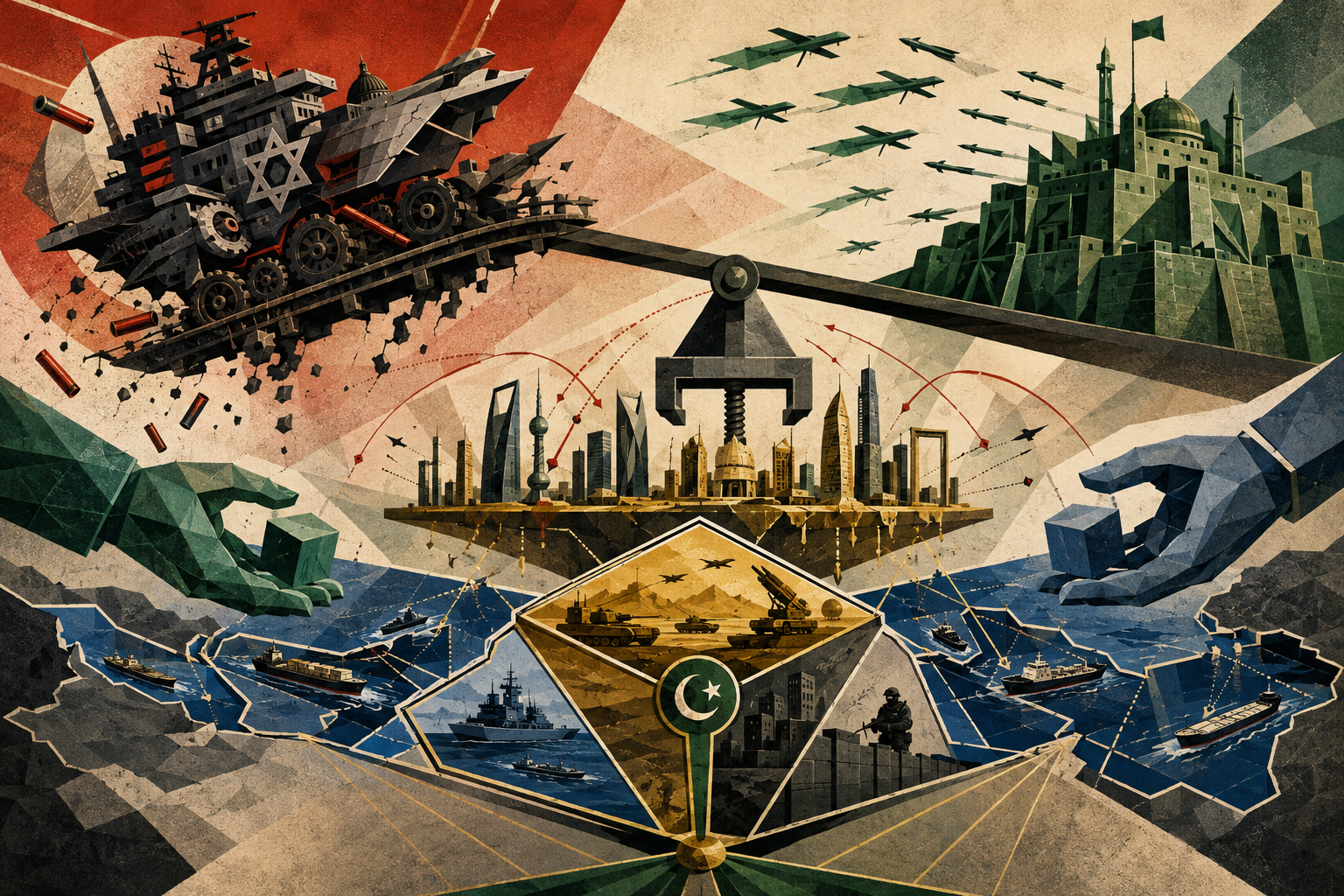
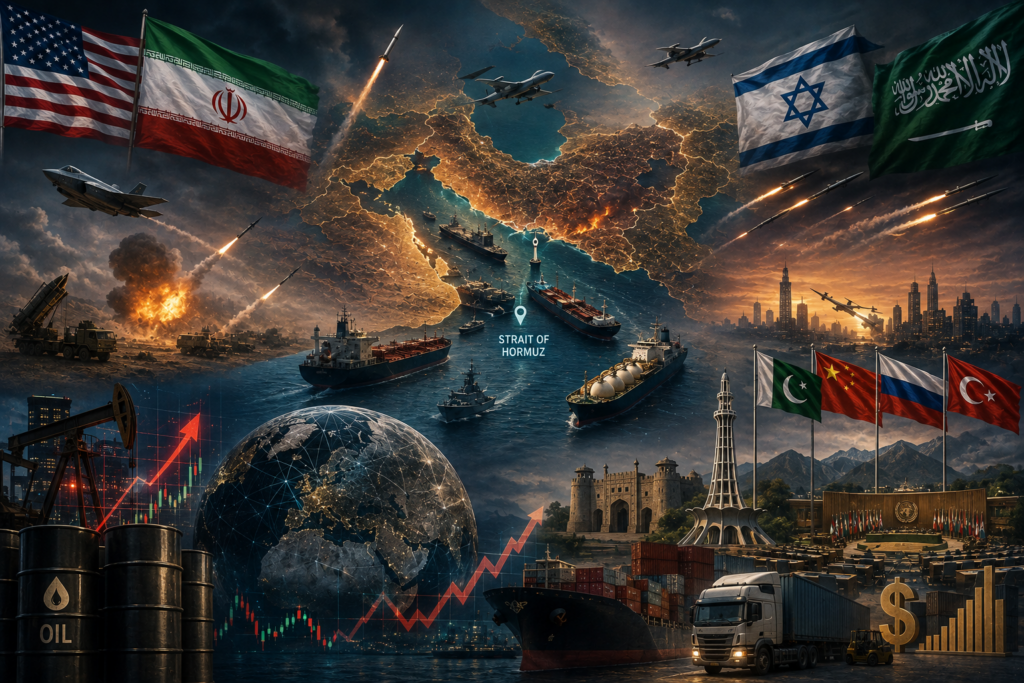
The geopolitical and geostrategic environments in the ME are undergoing rapid paradigm shifts. Currently, the Gulf Arab states are facing a treble jeopardy. The US bases on their territories are attracting relentless Iranian missile and drone attacks, while the Sea Lines of Communication (SLOC) and trade routes through the Strait of Hormuz and the Red Sea-Gulf of Aden-Bab el-Mandab complex are becoming increasingly hazardous for all shipping. These choke points are seriously undermining international trade in oil, gas, fertilisers, petrochemicals, food grains, etc. However, the Gulf Arab states face yet another gargantuan geopolitical dilemma with critical geostrategic implications. Portentously, the US, their supposed ally and avowed net stabiliser and security provider in the region, is itself guilty not only of subjecting them to rampant political, diplomatic and economic coercion, but also of orchestrating (un)controlled chaos and/or attacks on most of them. The US has applied a variety of operational methodologies to that end: one, attacking them directly without allies (currently Iran); two, facilitating, arming and supporting Israel to carry out aggression against them (Palestine, Gaza and the West Bank—genocide, Syria, Lebanon, Iran, Iraq and Qatar); three, acting in connivance with Israel (Iran, June 2025 and February 2026); four, outsourcing aggression to its allies (“leading from behind”, while NATO, France and the UK attacked Libya in 2011); five, instigating, fuelling and sustaining bilateral wars between them (the Iran-Iraq War, 1980–88); and six, acting with the help of allies and Coalitions of the Willing (Iraq in 1991 and 2003, and Afghanistan in 2001). The US-led West’s support for Israel’s wanton, merciless genocide of the Gazans-Palestinians has further marred its relationships with the Arabs, the region and the world at large. All this is to satiate Israel’s perpetual, ersatz insecurities! The Gulf Arab states now interpret these as unacceptable, unjust and untenable existential threats. They now feel compelled to re-evaluate their respective foreign policy imperatives, engage in serious self-analysis, critical thinking, decision-making and policy (re)formulations to (re)chart their respective strategic directions. They are very likely to (re)ascertain their vital national interests unambiguously and pursue them single-mindedly. They might seek alternatives to the US’ overwhelming presence in the ME.
Crucially, the US’ bias in defending Israel rather than the Gulf Arab states, its ostensible allies, has had critical ramifications. It has apparently lost a great deal of stature, credibility, trust and confidence with the latter. They might not be able to practically ditch it straight away, but are now more inclined to hedge their bets elsewhere as well. “Die Sekunde der Wahrheit ist da”—the moment of truth and reckoning has arrived for them and for the US, too. Therefore, without prejudice to their alliance with and dependence upon the US, they are now looking for other, more trustworthy strategic partners at the regional and global levels. Ominously, this trust deficit is bound to resonate adversely with the US’ strategic allies in the ME-Greater Middle East Region (ME-GMER) complex, Indo-Pacific Region (IPR), Europe/NATO and elsewhere as well. This will grossly impair the attainment of the US’ geopolitical and geostrategic objectives in the future!
Ignoring the potentially volatile, critical and fast-evolving strategic environment of the ME is not an option for either China or Russia. The Gulf Arab states will expect them to exploit the emerging strategic spaces and project the requisite power and influence to rectify the acute strategic imbalance in the region. Israel will remain the overwhelming military-nuclear-missile-drone power and hegemon in the ME for the foreseeable future. Its rank monopoly on nuclear weapons will instigate a race among regional states to seek nuclear programmes, nuclear umbrellas, nuclear stationing and/or sharing. (The Nuclear Factor, by this scribe, The Nation, 16 and 17 May 2026). The already hair-trigger strategic environment will thus become increasingly vitiated and fragile. The Gulf Arab states will seek strong deterrents to forestall all forms of aggression and coercion by regional and external hegemons. China and Russia could pursue any of the following three options: one, enter into defence and security agreements with individual countries and enhance their military, technological and deterrence capabilities and capacities; two, adopt a regional approach and facilitate regional powers such as Pakistan, KSA, Egypt and Türkiye to incorporate most regional states into well-knit regional defence and security alliances and support them comprehensively; or three, seek a combination of both!
Pakistan is faced with a trilateral dilemma, too. It needs to come to KSA’s defence under the Strategic Mutual Defence Agreement (SMDA). This means deploying land and air forces on mainland KSA and naval and air forces in the Red Sea-Gulf of Aden-Bab el-Mandab complex, while tackling the scourge of terrorism at home, too. To that end, a critical strategic balance, sublime diplomacy and a stable internal environment will be inevitable for Pakistan!
Article Authors


Comments