



Two Nations — Single Mandate
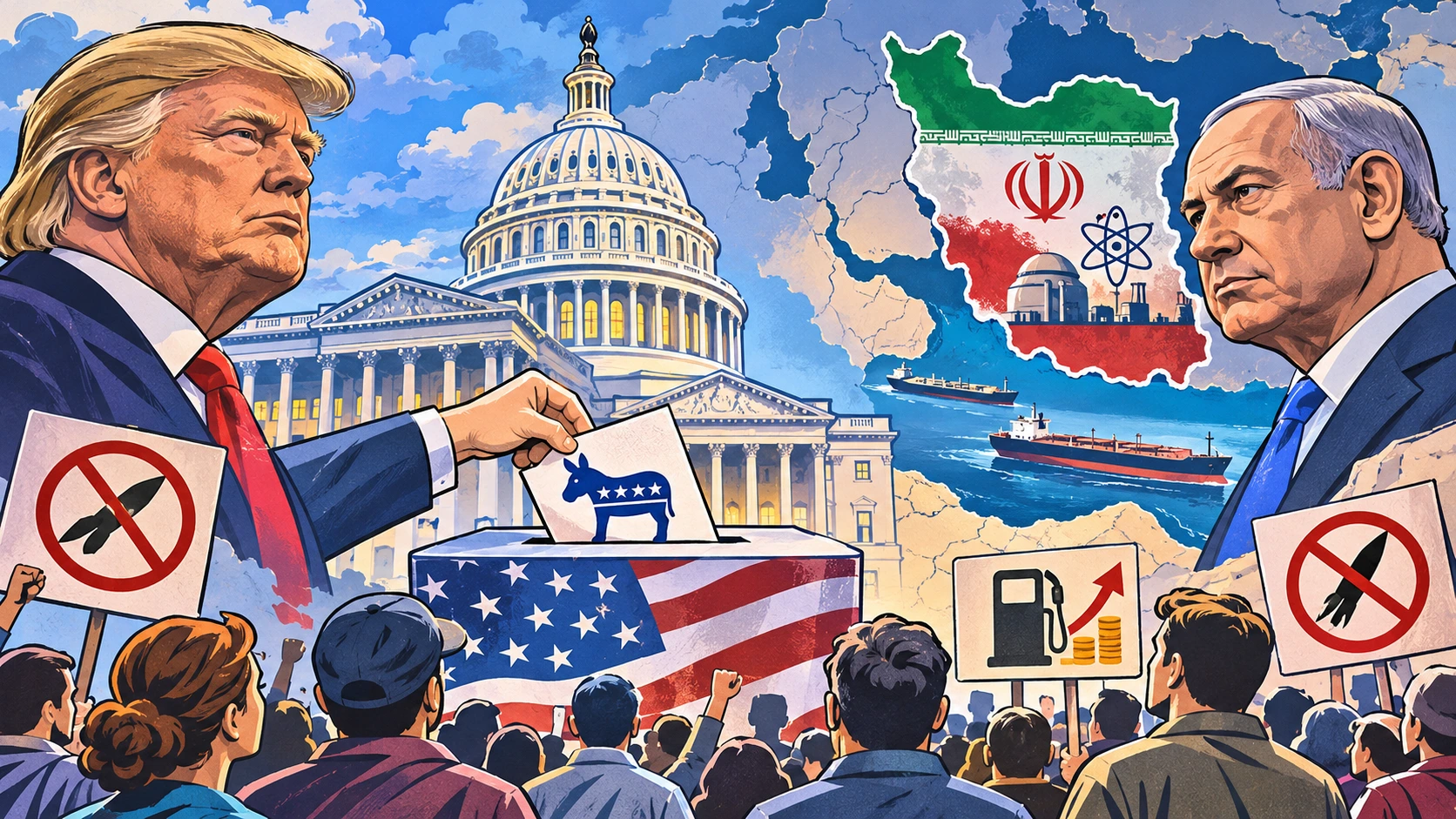
Following the US midterms, where voters expressed significant opposition to military action against Iran due to rising fuel costs, the Democrats captured control of Congress, creating a divided government that can challenge…
AI Analysis
On November 3, American voters handed Congress to the party that opposes the war on Iran. Major US networks were already projecting Democrats to be in control of both the House and the Senate pending Congress’s sitting in January 2027. By the time this piece was filed, Democrats had already flipped Republican Senate seats in Texas, Kansas, Ohio, Iowa, North Carolina, South Carolina and Maine. The Senate’s tally stands at 54 Senate seats for Democrats to 44 for the Republicans, with Alaska and Mississippi uncalled. In the House, 231 seats for Democrats are being reported, which is well past the 218 required.
The American heartbeat is pumping with euphoric results coming to the fore. Texas elected James Talarico, its first Democratic senator since 1988. Kansas elected Adam Hamilton, its first since 1932. Troy Jackson defeated Susan Collins in Maine. In Michigan, Abdul El-Sayed becomes, in the words of CBS News, “the nation’s first Muslim senator.”
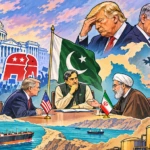
This triangle of desperate ruling leaders of defeated parties, still in power and eight weeks window of opportunity does not augur well for the world peace.
The President has indirectly named his administration’s decision to go to war with Iran as one of the reasons for these midterm results by stating that “Iran was a piece of it”. But he refuses to retreat. His adamancy is based on two perceptions: one that he was right in going to war and the other that people did support his war decision but did not accept the short-term cost of higher fuel prices. The exit polls support the first half of his reading and not the second. The majority of voters were of the opinion that he made the wrong decision in taking military action against Iran. They based their worries on rising fuel prices for the opposition to the attack on Iran. It makes it clear that voters did not delink the war from its bill.
What changes in Washington? It is a divided government returning in January. The larger shift is war authority. Senate Democrats, led by Tim Kaine and Chuck Schumer, forced war powers votes again and again this year. In June, both chambers passed a concurrent resolution, which was non-binding and legally defanged. A Democratic Congress can now pass a binding measure, which can still be vetoed by President Trump. An override therefore needs 67 senators, whereas Democrats will hold 56 at the most. They would need at least 11 Republicans to side with them, and that’s the fight shaping up for 2027.
Take a look at the Israeli ballot. In the October 27 election, Netanyahu’s bloc won 53 of 120 seats, according to final Central Elections Committee figures reported by The Times of Israel. The opposition bloc led by Gadi Eisenkot won 48. Arab-led parties won a record 19 seats, but no side reached the magic figure of 61. Netanyahu stays on as the Prime Minister while talks with the opposition go on. Eisenkot had pledged before the vote not to serve under Netanyahu, even in a rotation deal. Despite Netanyahu also calling out the elections as “stolen”, the election committee has certified the results after an audit of a few thousand polling stations, labelling the elections as “accurately reflecting the will of the voters.”
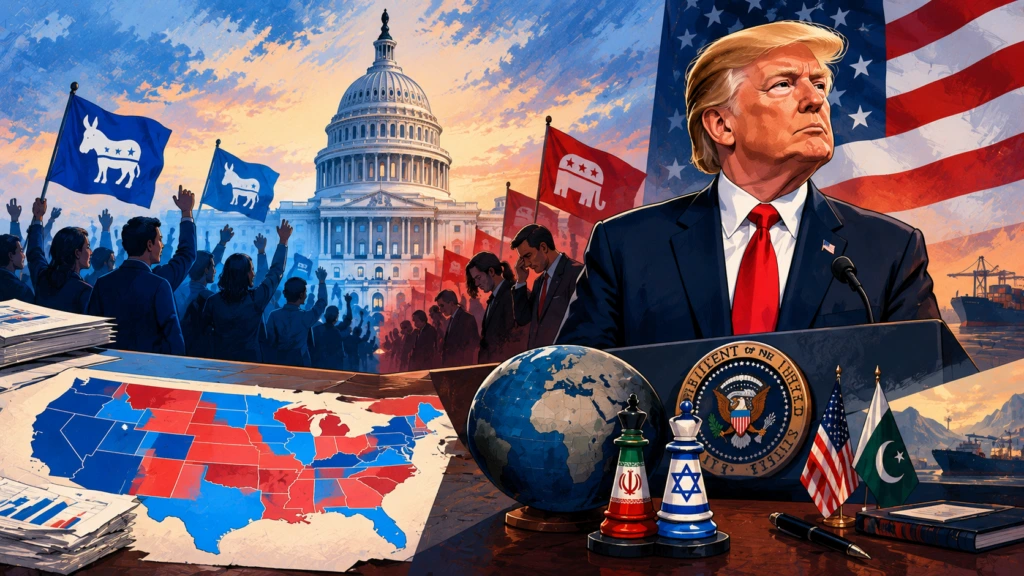
So, the two governments that launched this war have both lost ground at home within a span of one week, based on their decisions of past years. Both conceded seats to their oppositions but both didn’t lose offices. This is where the risk appears starker. With Netanyahu already pressing Washington to launch new strikes on Iran after the midterms, a full-scale war can help him form a war cabinet. Although President Trump claims there are no immediate plans to strike despite being prepared, he can again backtrack on this assurance. The outgoing Republican Congress sits until January 3, affording almost eight weeks before President Trump answers to a Congress that has so far blocked binding limits and that, in fact, for the time being, favours him. This triangle of desperate ruling leaders of defeated parties, still in power and eight weeks window of opportunity does not augur well for the world peace.
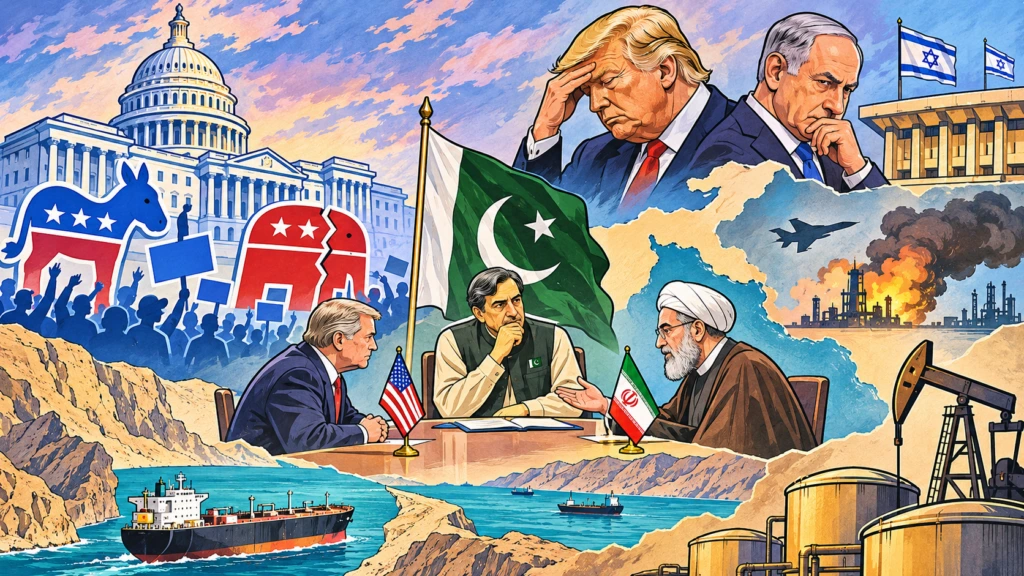
Tehran interprets the result as expected, “conscience or the cost of living, Americans said NO TO WAR, and we endorse this message,” states the Parliament Speaker Mohammad Bagher Ghalibaf. Iran’s foreign ministry announced it could reopen the Strait of Hormuz within two days if Washington accepts its terms. A new list could be a stronger reiteration of the previous one, like lifting the naval blockade, getting the sanctions repealed and guaranteeing an end to strikes and a regional ceasefire. However, media sources like Reuters maintain that the two sides still remain far from a deal. In my opinion, Iran has a reason to wait, expecting that a President Trump checked by Congress in January may offer better terms than the one free to act in November.
For the world, the first signal came from markets. US stock futures fell overnight and then recovered; Yahoo Finance reported Brent crude stood at $104.36 a barrel. Pakistan, which helped broker the April 8 ceasefire and hosted US-Iran talks in Islamabad, has a major and direct stake in the emerging situation. The rising fuel prices in the country since the start of the war have crippled the economy and unleashed soaring inflation, sending many down the path of poverty. A reopened strait can result in lowering our fuel bill. A region in peace is the utmost desire of Pakistan to unleash its efforts to revive its economy. Any extra regional forces operating along our borders are undesirable.
Three tests will decide what these elections deliver. First, choose a deal or strikes before January? Second, can anyone form a government in Israel? Third, can a Democratic Congress turn a war powers vote into law over a veto?
American voters did not end the war on Tuesday; they just changed who gets a say in it. Israeli voters did the same a week earlier. The next eight weeks will make us see whether these two leaders accept or reject a single mandate by two nations.
About the Author

How to Cite This Article
Shirazi, Zulfiqar Ali. “Two Nations — Single Mandate.” Iqbal Forum, November 5, 2026. https://iqbalforum.org/en/?p=54181.





Comments